

Chinese chipmaker CXMT allegedly used a written roadmap to steal Samsung DRAM tech — South Korean court says 'Project Hefei' lifted 620-step recipe to build 10% global market share
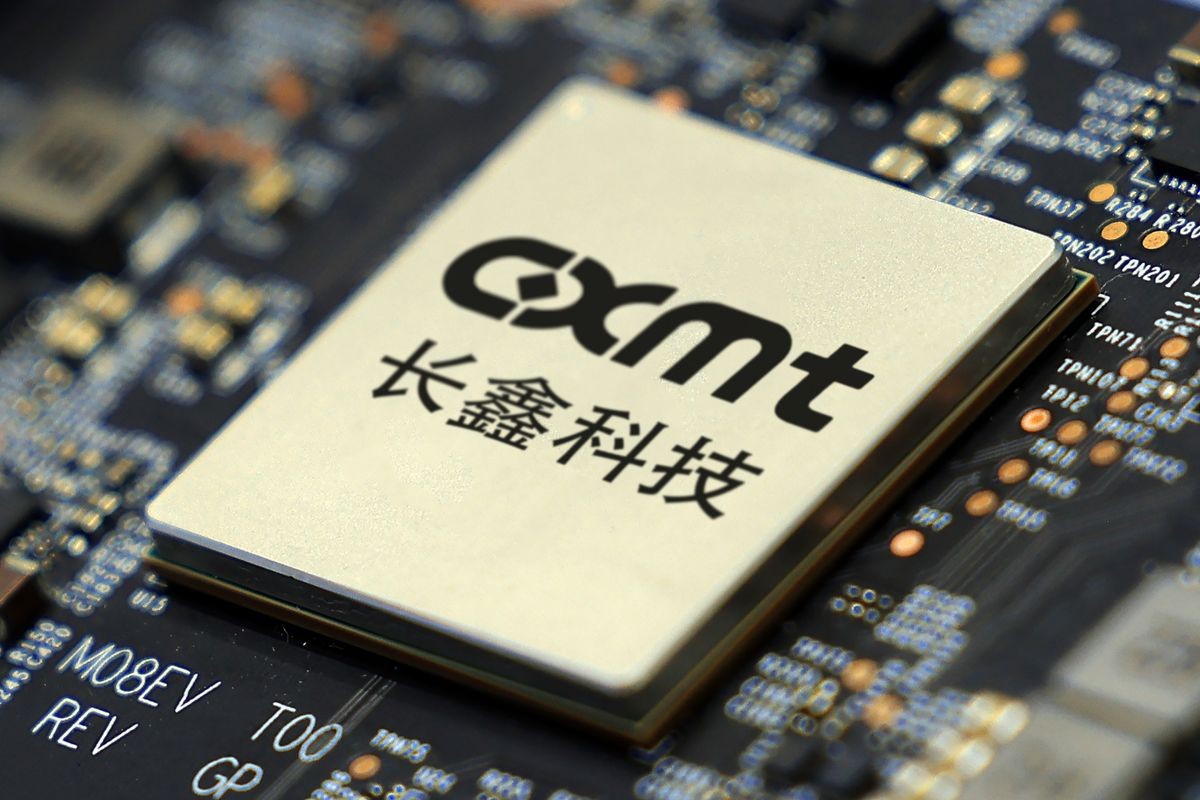
 (Image credit: Getty Images)
The saga involving Chinese DRAM maker CXMT's alleged theft of Samsung's trade secrets is going strong. The South Korean court case already includes multiple convictions, two of which carry prison sentences for ex-Samsung engineers. The latest chapter is a doozy, though. Korean publication NoCut News spilled the chips on Project Hefei, a purported CXMT roadmap outlining long-term planning about said technology "acquisitions," personnel poaching, and production tape-out — all key pieces that may have directly led to CXMT's ascension to 10% of the global DRAM market.
Go deeper with TH Premium: Memory
According to leaked court documents, the prosecution says that Project Hefei was CXMT's entire DRAM development plan and was spearheaded by the firm's head of development (formerly Samsung's DRAM development lead), around August 2016 — not much longer after CXMT itself was created in June 2016.
In brief, the purported plan was to nab Samsung's Process Recipe Plan (PRP) by September 2016, poach key Samsung engineers by October 2016, have R&D complete in July 2017, and start making DRAM wafers by August 2018 at a rate of 10,000 a month. NoCut says the PRP dataset comprises 620 steps in DRAM manufacturing and includes data on equipment, consumables, and production methods.
The report states that in August 2016, CXMT first attempted to make wafers of 18nm chips by relying on the collective memories of the Samsung engineers it had hired away. Those recollections apparently proved insufficient, so after allegedly gaining illicit access to Samsung's PRP, CXMT prepared its own document in September 2016. The leaked data even included specific equipment suppliers and model numbers.
CXMT's "new" PRP was then handed out to key specialists, many of them ex-Samsung engineers, whom the prosecution says ought to have immediately recognized the data as originating from the Korean firm. The document apparently included notation and notes on process developments that were all unique to Samsung. A convicted ex-Samsung researcher with the surname Jeon, previously sentenced to 7 years in prison for manually copying parts of the PRP before leaving for CXMT, testified in this case as a witness.
The whole CXMT debacle has been playing out in South Korean courtrooms since January 2024 and is arguably far bigger than just "a company stole some tech from another." A decade ago, most of the DRAM market was taken by the Big Three: Samsung, Micron, and SK hynix. CXMT was created in June 2016 in Hefei (hence the project name), with a modest government investment of around $1.9 billion USD, allegedly with no R&D facilities whatsoever or any plan for research.
Going from zero facilities and institutional expertise to DRAM wafer production in little over two years would be an unprecedented feat, and presumably nigh impossible without the alleged IP theft; getting just the memory fab up and running usually takes two to four years, let alone any time for research. The firm claimed in 2019 that it designed its then-new 8 Gb DDR4 chips entirely in-house as a "leapfrog, independent" technology and began selling DRAM chips locally.
Get Tom's Hardware's best news and in-depth reviews, straight to your inbox.
Then the AI locusts charged in and ate every chip on the planet. This demand resulted in explosive growth for CXMT, from an estimated 4% of the global DRAM market in Q2 2025 to around 10% in Q2 2016, marking the first time in over a decade that the Big Three held less than 90% of the pie.
Production capacity expanded to three 12" wafer fabrication facilities, expected to churn out a collective 350,000 wafers until the year is done — close to the same figure that Micron produces, of 375,000 to 385,000. CXMT is also planning to open a second fab in Beijing, aiming to produce over 600,000 wafers per month once it's online.
Furthermore, CXMT's gains aren't coming just from its DRAM market share. Revenue grew 716% in Q2 2026 alone, and its IPO on the Shanghai STAR Market in July 2026 saw its stock climb 466%, netting the firm a cool $8.6 billion USD and making it the most valuable chipmaker in the Chinese stock market.
About 70% of that money is reportedly going towards further expansion of DRAM production, rather than pricier, more complicated HBM. However, the firm has supplied HBM3E samples to Alibaba's T-Head and Cambricon, even as Samsung and SK hynix enter HBM4 production.
As of the South Korean prosecution's last tally in December 2025, Samsung's damages due to CXMT's alleged machinations ascended to "at least tens of trillions of won." A back-of-the-envelope extrapolation, considering quite a while has passed, might suggest a figure in the range of ₩40 trillion, or $29.5 billion, and rising exponentially.
The lasting impact on the memory market and technology in general is going well beyond plain number descriptors, though. All things considered, if the allegations are true, then CXMT's machinations resulted in a geopolitical-scale economic event. Dr. Evil would be proud.

Follow Tom's Hardware on Google News, or add us as a preferred source, to get our latest news, analysis, & reviews in your feeds.
Bruno Ferreira is a contributing writer for Tom's Hardware. He has decades of experience with PC hardware and assorted sundries, alongside a career as a developer. He's obsessed with detail and has a tendency to ramble on the topics he loves. When not doing that, he's usually playing games, or at live music shows and festivals.
What's Your Reaction?
 Like
0
Like
0
 Dislike
0
Dislike
0
 Love
0
Love
0
 Funny
0
Funny
0
 Wow
0
Wow
0
 Sad
0
Sad
0
 Angry
0
Angry
0











Comments (0)