

Control Resonant Fails At Nearly All of Its Ambitions | Review
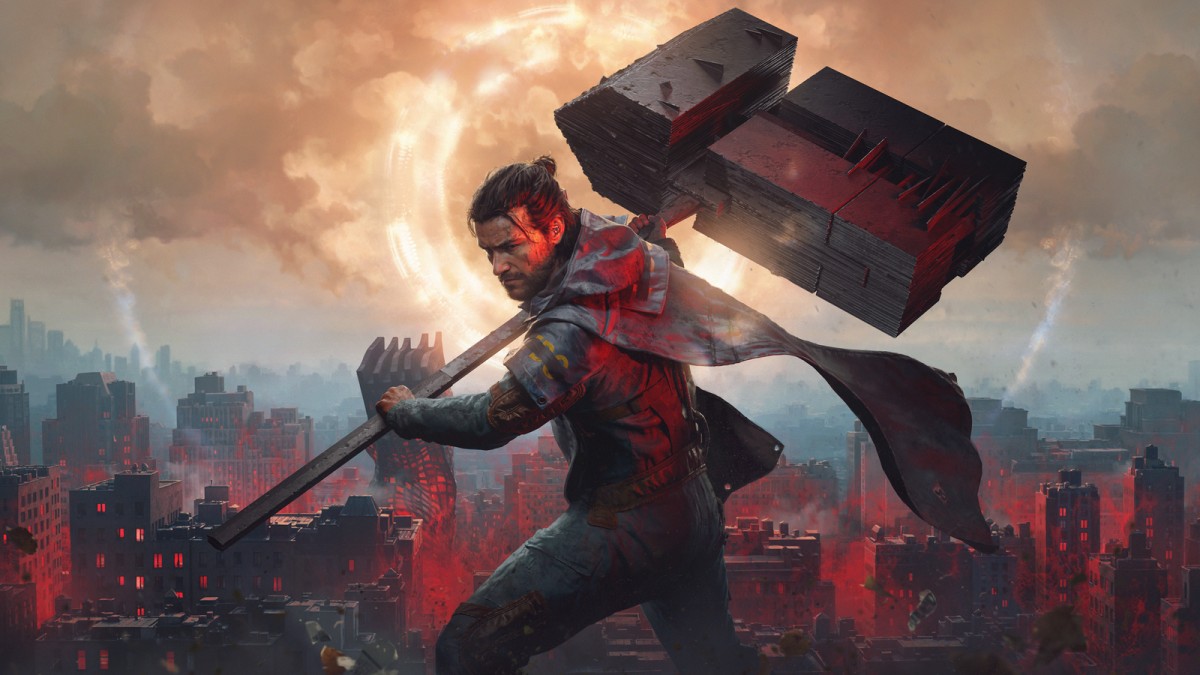
Finnish developer Remedy Entertainment works a certain magic with its games. Even when they are rough around the edges, the worlds Remedy create compel you like nothing else. That is true of 2023's Alan Wake 2, and even of middlingly received games like 2016’s Quantum Break, but I think it is best exemplified by 2019's Control.
As Jesse Faden, players explored the depths of The Oldest House, a government facility filled with supernatural phenomena pulled straight from the X-Files, and staffed by even stranger bureaucrats who study them. The action was serviceable and Jesse's motivations were weak, but the labyrinthian building it all took place in was one of the finest pieces of environmental level design and storytelling in recent years. You were compelled to dig deeper, perhaps by something as paranatural as the objects within The Oldest House.
This high bar sets equally high expectations for Control Resonant, Remedy's latest and a direct sequel to the 2019 original. It is also a major swing for the studio, as its first open-world game and the first to focus on melee combat. Resonant may be a more technically perfect game than its third-person shooter predecessor — combat is sharper, the story is given more depth, and the expanded world has been designed with a perfectionist's eye — but missing is that all-important Remedy magic that makes its games so compelling. Without it, Control Resonant completely falls apart.
On the town
Seven years have passed since Control, both in the real-world and in the game. Within The Oldest House, the Federal Bureau of Control has attempted to contain a supernatural enemy known as The Hiss; this mission was spearheaded by Director Jesse Faden. At the game's start, that mission has failed. The Hiss have escaped and Jesse is MIA. Her brother Dylan (Sean Durrie) awakes from a coma to take her place as Resonant's protagonist. The FBC is hesitant to trust Dylan, as he kind of killed a whole lot of people in the first game, but he's trying to get better, and desperate times call for desperate measures.
With little preamble, he is let loose in a twisted version of New York City, divided into distinct zones, with the simple mission of stopping the threat. As Remedy's first open-world game, Resonant is an utter disappointment. Yes, there are some fascinating things happening aesthetically. A new enemy class, the titular Resonants, have caused distortions across the city that turn it into something out of Inception. But while this leads to some stunning cityscapes, this world is filled with almost nothing of value to engage with. Sure, if you look at the map you'll see numerous icons indicating points of interest and side activities, but they have the depth of your average 2010s open-world RPG: chests to unlock, FBC agents to protect, even some dogs to make friends with. Each zone has a world score that grants even more upgrades for Dylan, incentivizing you to grind these activities.
 Image: Remedy Entertainment
Perhaps it is the New York setting combined with the empty-calorie busywork that makes it impossible for me to shake flashbacks to The Division, Ubisoft’s open-world shooter set in a plague-ridden Manhattan. Each zone may have one mission that briefly engages me, but these moments are fleeting. Resonant's New York lacks a defining personality of its own, something The Oldest House had in spades. On a much smaller scale, Remedy made a brutalist office building burst with potential. Resonant is grander and there is statistically more to do, but its streets don't inspire a sense that something unknown may be around every corner.
Traversing the city is similarly frustrating. Dylan collects new movement abilities over the course of his journey, allowing for new ways to explore New York. He can double jump, float, manipulate gravity, and use a grappling hook ability. Yet while each individual skill is satisfying on its own, they lack fluidity when strung together. (It again forces a negative comparison, this time to Sucker Punch's Infamous series.) Even compared to its predecessor, there is nothing in Resonant that feels as good as flying through the open lobbies of The Oldest House.
Missing the hits
 Image: Remedy Entertainment
Of course, Dylan's path through New York isn't unobstructed. The Hiss, and a few more enemies, litter the streets of the city. Wielding The Service Weapon, Jesse's story took the form of a third-person shooter. Dylan wields The Aberrant, a shape-shifting rod that fuels a character action-game with Devil May Cry aspirations.
You'll choose from three forms of the weapon at the game's start; I chose a scythe-like form that gave me better crowd control. Eventually, you'll be given the chance to unlock the other two, as well as a secondary form, and telekinetic abilities to mix up combat. Each weapon form comes with an extensive skill tree to fine tune how the Aberrant unleashes pain on anything unlucky enough to get in its way.
On paper, this is Remedy's most ambitious combat system to date. A winding upgrade path, multiple weapon forms, and plenty of variations of enemies are meant to make fighting across New York feel engaging, which would be good, considering just how often hordes of enemies get in between Dylan and the objective. Yet even with all the puzzle pieces, combat lacks the important weight a character action game requires. Enemies are damage sponges and neither combos nor skills amount to much, with each fight feeling the same as the next no matter what foe you are facing. Resonant can tell me a stat percentage went up all it wants, but it doesn't make combat feel any better. More than once, I felt the urge to take advantage of the game's extensive accessibility options (which other developers should study) if only to speed up the onslaught of monotonous fights that blur together.
Dylan is ultimately a protagonist that never managed to elicit a strong emotion in me. Jesse felt like a friend; Dylan feels like that co-worker you begrudgingly tolerate.
Combat comes closest to reaching its potential in the game's climactic Resonant boss fights. Remedy's eye for design shines in the monstrous beauty of each of these hulking creatures. They also have complex attack patterns and phases. This makes them infinitely more impressive than the run-of-the-mill fodder but comes with a drastic difficulty spike. One of the first Resonants you'll face is the gigantic severed head of an artist, with floating debris evoking a halo surrounding her. As she shoots projectiles at Dylan, it turns the encounter into something out of a bullet hell game, putting just as much emphasis on dodging and movement as it does getting hits in. The gulf between moment-to-moment combat and boss fights only makes me wish that normal enemies could have a shred of the tension and creativity that Resonants are given.
The favorite child
 Image: Remedy Entertainment
Whereas the expanded combat and open-world of Resonant are instances of Remedy stepping outside of its comfort zone, the studio should be at home in crafting a captivating narrative. The effectiveness of the story ultimately falls entirely on the shoulders of Dylan, which turns out to be the game's single biggest misstep. Dylan is ultimately a protagonist that never managed to elicit a strong emotion in me. Jesse felt like a friend; Dylan feels like that co-worker you begrudgingly tolerate. Part of that is due to Durrie's performance. He attempts to portray the awkwardness of a man that is effectively being forced into semi-normal social interactions for the first time in his life, while also going through a journey of redemption and self-forgiveness. It's a tall order that Remedy's poor script and Durrie's flat line delivery can't make good on.
Dylan's story also relies on the constant use of tired and predictable narratives about trauma of all kinds, somehow turning the complex, inventive world of Control into yet another game about a sad guy with a sad past. This culminates in a narrative trick clearly meant to blow players' minds that I'm sure will be one of the game's most talked about moments. Yet the entire time I played through this section, which goes on far too long, the only thing I found myself thinking was that I couldn't wait for it to end.
Jesse was a charismatic lead, but her story wasn't all that gripping. Control made up for it by allowing the player to unravel the endlessly fascinating history of the FBC and The Oldest House. Dylan's story taking center stage pushes the FBC to the side, with the most interesting story elements being relegated to those rare optional missions that breathe life into Resonant. Even Durrie's off-kilter performance manages to work when he's performing karaoke in a standout moment.
Throughout all of this, I got progressively angrier about how Resonant feels like a betrayal of Jesse. While she briefly appears in traversal puzzles called Faults throughout the game, with Courtney Hope returning to the role, she is an afterthought. The original Control ended right as Jesse's story was beginning, but all that potential has been thrown to the side in favor of trying and failing to make players care about Dylan.
 Image: Remedy Entertainment
There is one section of Control Resonant that offers a vision of the game that could have been. Just about halfway through, Dylan enters an area that evokes the wonder of The Oldest House. Its twisting landscape makes use of all his movement abilities in a way that feels fluid and exciting. Combat takes a back seat to a story about a group of FBC agents who find themselves at the mercy of a paranatural force. During this section, I couldn't put the controller down. I wish I had more memories of Resonant like this.
With all my disappointment in Control Resonant, I can still say it is a perfectly serviceable game. But that is exactly the problem. As games like Final Fantasy 16, Star Wars Outlaws, and this year's Marvel's Wolverine have made abundantly clear, it is no longer enough to rehash the same handful of game templates that have become standard for the medium.
There is a moment in Control where Dylan shares his dreams with Jesse. "We were in a game, and it was a fucking boring game," he says. With Control Resonant, Remedy has made Dylan's dream a reality.
Control Resonant will be released Sept. 24 on PlayStation 5, Windows PC, and Xbox Series X. The game was reviewed on PS5 using a prerelease download code provided by Remedy Entertainment. You can find additional information about Polygon’s ethics policy here.
What's Your Reaction?
 Like
0
Like
0
 Dislike
0
Dislike
0
 Love
0
Love
0
 Funny
0
Funny
0
 Wow
0
Wow
0
 Sad
0
Sad
0
 Angry
0
Angry
0







Comments (0)