

Coronation Street's Tracy Shaw, 52, says 'there's nothing normal about life anymore' as she opens up about the side effects of chemo after her breast cancer diagnosis
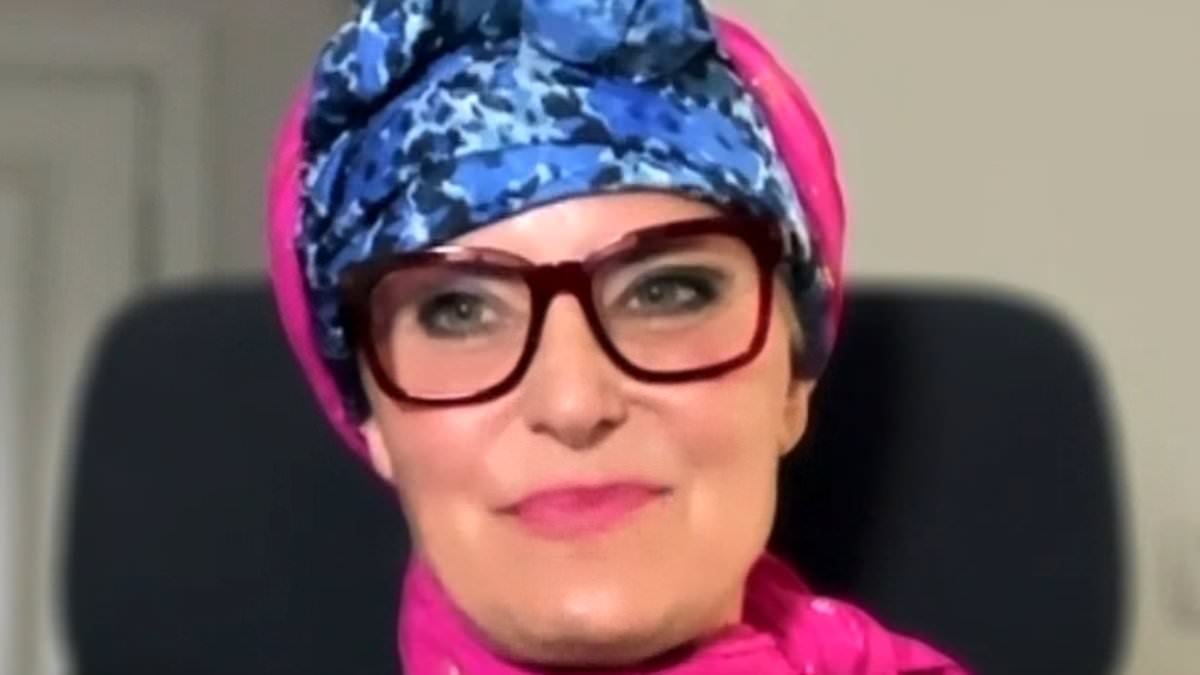
Coronation Street Tracy Shaw has admitted there's 'nothing normal about life anymore' after opening up about the side-effects of her chemotherapy.
The actress, 52, was diagnosed with breast cancer in April, and shared on Instagram last month she'd had her first round of chemotherapy.
Since then the star has spoken about the side-effects of her treatment, including suffering from thrush and also has had terrible bouts of diarrhoea.
Now, the soap star has spoken to Lorraine Kelly about the impact of her treatment, saying she had 'no idea how her body would react' to the chemotherapy.
She said: 'I'm doing OK today, it isn't an easy path, and I'm only sharing it because there are millions, millions of ladies and gentleman who are going through the same thing, and it's just not a nice part of the disease, chemo really.
'The first dose, they don't really know how your body's gonna react, so it's a real big tester, and they now know, basically it's like chicken pox.
Coronation Street Tracy Shaw has admitted there's 'nothing normal about life anymore' after opening up about the side-effects of her chemotherapy
'I had a reaction and thrush all over me. You think you're out of the woods with the chemo and then the next minute you get all the side effects, it's just not pleasant.'
Tracy shared she was diagnosed with cancer after finding a lump in her breast, but explained she'd visited the doctor about a different health concern when she was referred for a mammogram.
She said: 'Because it was underneath my breast, not on the breast itself, I thought well it can't be so I postponed it just thinking it'll be OK, but actually this lump it was kind of on top of my rib, so I went to the doctors and they were more concerned about my cysts, because I was on HRT, so the HRT was feeding the cancer, it doesn't cause it but it was feeding it.
'So the cysts were tight and sore, so that's the reason I went, it wasn't necessarily because of the lump, and the mammogram discovered the lump.'
Tracy has been documenting her breast cancer battle on social media, and she told Lorraine she'd been overwhelmed with messages of support from others going through the same thing.
She added: 'The whole family and all the people who are following and messaging, there's mothers with sons, younger sons, sons my age, the family members are messaging.
'Everyone is affected and sometimes just by sharing what the effects are, they understand how that person might be feeling?
'You don't know, the survivors are just amazing, the ones who are really reaching out and giving me advice and tips, and unless you've been there you don't really know how it feels, because there's nothing normal about your life anymore when you're going through chemo.
The actress was diagnosed with breast cancer in April, and shared on Instagram last month she'd had her first round of chemotherapy
The soap star has spoken to Lorraine Kelly about the impact of her treatment, saying she had 'no idea how her body would react' to the chemotherapy
'I consider myself very very lucky and very fortunate because there are so many people who are worse off than I am, there are people being diagnosed terminal.
'There are people who are suffering much more than me, every day I just wake up and thank god I'm being given this opportunity.'
On Sunday, Tracy revealed she was had to take herself to A&E after struggling with the side-effects of her chemotherapy treatment.
Tracy gave an update on Instagram on Sunday, 10 days after completing her round of chemotherapy.
While she was assured by doctors she was ok and also given more medication, Tracy fought back tears as she revealed she 'feels as vulnerable as a baby'.
The actress said she had cream all over her face as she was suffering from thrush and also has had terrible bouts of diarrhoea.
She said: 'Being day 10, my son had to go to a wedding. I thought I'd be absolutely fine at home alone but I had to go to A&E today.
'There's no strength left. In my head, I thought there may be a break, maybe a week after chemotherapy.'
Tracy said she is struggling to eat anything and her diet consists of six eggs, plain crisps and bread.
Talking about the side effects she experienced, Tracy continued: 'These are the effects that the chemo has had on the body. The chemo kills everything, including the lining of my stomach. There is no strength.
'It feels like I'm as vulnerable as a baby. It's very difficult being around people, around noises. [My ears], they're so sensitive.'
Tracy played Maxine Peacock on Corrie from 1995 to 2003, before she was murdered by serial killer Richard Hillman.
She had previously shared that doctors told her she would need chemotherapy after tests revealed she has HER2 in her cells.
HER2 is a protein that promotes cancer cell growth and is found in more aggressive types of the disease.
The actress added that after a course of chemotherapy, she hoped to have surgery to remove lumps and lymph glands, so more tests can be done, which could lead to further surgery before radiotherapy.
Breast cancer is one of the most common cancers in the world and affects more than two MILLION women a year
Breast cancer is one of the most common cancers in the world. Each year in the UK there are more than 55,000 new cases, and the disease claims the lives of 11,500 women. In the US, it strikes 266,000 each year and kills 40,000. But what causes it and how can it be treated?
What is breast cancer?
It comes from a cancerous cell which develops in the lining of a duct or lobule in one of the breasts.
When the breast cancer has spread into surrounding tissue it is called 'invasive'. Some people are diagnosed with 'carcinoma in situ', where no cancer cells have grown beyond the duct or lobule.
Most cases develop in those over the age of 50 but younger women are sometimes affected. Breast cancer can develop in men, though this is rare.
Staging indicates how big the cancer is and whether it has spread. Stage 1 is the earliest stage and stage 4 means the cancer has spread to another part of the body.
The cancerous cells are graded from low, which means a slow growth, to high, which is fast-growing. High-grade cancers are more likely to come back after they have first been treated.
What causes breast cancer?
A cancerous tumour starts from one abnormal cell. The exact reason why a cell becomes cancerous is unclear. It is thought that something damages or alters certain genes in the cell. This makes the cell abnormal and multiply 'out of control'.
Although breast cancer can develop for no apparent reason, there are some risk factors that can increase the chance, such as genetics.
What are the symptoms of breast cancer?
The usual first symptom is a painless lump in the breast, although most are not cancerous and are fluid-filled cysts, which are benign.
The first place that breast cancer usually spreads to is the lymph nodes in the armpit. If this occurs you will develop a swelling or lump in an armpit.
How is breast cancer diagnosed?
- Initial assessment: A doctor examines the breasts and armpits. They may do tests such as a mammogram, a special X-ray of the breast tissue which can indicate the possibility of tumours.
- Biopsy: A biopsy is when a small sample of tissue is removed from a part of the body. The sample is then examined under a microscope to look for abnormal cells. The sample can confirm or rule out cancer.
If you are confirmed to have breast cancer, further tests may be needed to assess if it has spread. For example, blood tests, an ultrasound scan of the liver or a chest X-ray.
How is breast cancer treated?
Treatment options which may be considered include surgery, chemotherapy, radiotherapy and hormone treatment. Often a combination of two or more of these treatments are used.
- Surgery: Breast-conserving surgery or the removal of the affected breast depending on the size of the tumour.
- Radiotherapy: A treatment which uses high energy beams of radiation focused on cancerous tissue. This kills cancer cells, or stops them from multiplying. It is mainly used in addition to surgery.
- Chemotherapy: A treatment of cancer by using anti-cancer drugs which kill cancer cells, or stop them from multiplying.
- Hormone treatments: Some types of breast cancer are affected by the 'female' hormone oestrogen, which can stimulate the cancer cells to divide and multiply. Treatments which reduce the level of these hormones, or prevent them from working, are commonly used in people with breast cancer.
How successful is treatment?
The outlook is best in those who are diagnosed when the cancer is still small, and has not spread. Surgical removal of a tumour in an early stage may then give a good chance of cure.
The routine mammography offered to women between the ages of 50 and 71 means more breast cancers are being diagnosed and treated at an early stage.
For more information visit breastcancernow.org or call its free helpline on 0808 800 6000
What's Your Reaction?
 Like
0
Like
0
 Dislike
0
Dislike
0
 Love
0
Love
0
 Funny
0
Funny
0
 Wow
0
Wow
0
 Sad
0
Sad
0
 Angry
0
Angry
0










Comments (0)