

Crypto Wallet vs Exchange: Statistics, Risks and Key Differences in 2026
A crypto wallet and a crypto exchange can both show a Bitcoin balance. Both let you send crypto, and both offer a phone app. But they work in very different ways.
The main difference is who controls the private keys. On a centralized exchange, the exchange usually holds them. In a self-custody wallet, you do.
This choice affects security, account recovery, fees and regulation. This article uses data from Chainalysis and other sources to show how the risks compare in 2026.
Key Statistics on Crypto Wallet and Exchange Risk
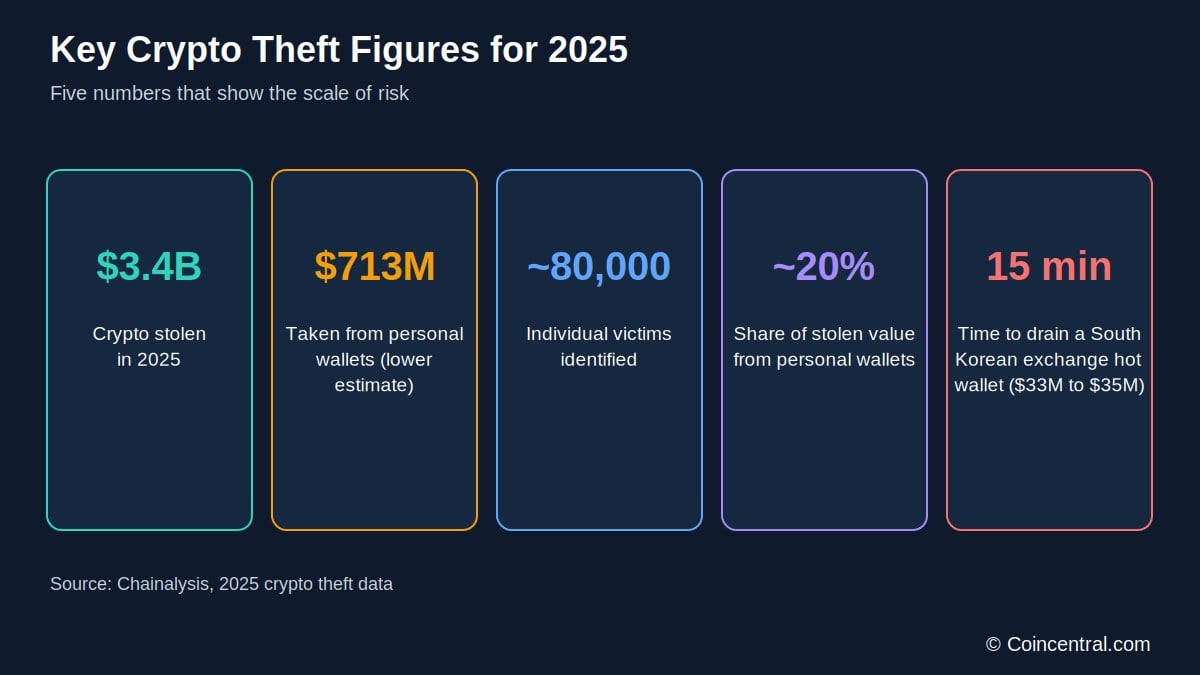
Chainalysis estimates that about $3.4 billion of crypto was stolen in 2025. Not all of that came from exchanges. Some came from individual users and other targets.
Personal wallet compromises made up about 20% of the value stolen. In its lower estimate, Chainalysis counted about $713 million taken from individual victims. Around 80,000 individual victims were identified.
Attacks on exchanges can happen fast. In 2025, attackers drained about $33 million to $35 million from a hot wallet at a major South Korean exchange. The theft took about 15 minutes.
Dividing $713 million by 80,000 victims gives an average loss of about $8,900 per person. This is a simple calculation from the reported figures. Chainalysis did not publish it as an average.
| Crypto stolen in 2025 | About $3.4 billion | Chainalysis |
| Share from personal wallets | About 20% | Chainalysis |
| Personal wallet theft (lower estimate) | About $713 million | Chainalysis |
| Individual victims identified | About 80,000 | Chainalysis |
| South Korean exchange hot wallet theft | $33 million to $35 million in about 15 minutes | Chainalysis |
| Average loss per individual victim | About $8,900 (calculated) | Coincentral calculation |
Figure 1: Key crypto theft figures for 2025, based on Chainalysis data.Crypto Wallet vs Exchange: Side-by-Side Comparison
A crypto exchange is mainly a marketplace where users buy, sell and trade crypto. A self-custody wallet gives the user direct control of the private keys needed to move the crypto. The table below shows how the two compare.
| Main purpose | Buy, sell and trade crypto | Hold and use crypto directly |
| Controls private keys | Exchange | User |
| Password recovery | Usually yes | Often impossible without a recovery method |
| Identity verification | Usually required | Usually not required to create a wallet |
| Bank deposits and withdrawals | Usually supported | Usually needs another service |
| Advanced trading | Strong | Limited, or through DEXs |
| DeFi access | Limited | Strong |
| Counterparty risk | Yes | Minimal from a custodian |
| User-error risk | Lower in some areas | Higher |
| Seed phrase responsibility | Exchange handles it | User handles it |
| Transaction reversal | Internal moves may sometimes be recoverable | On-chain transfers are generally irreversible |
| Exchange bankruptcy exposure | Yes, though regulation can reduce risk | No direct exposure |
| Hardware wallet option | No | Yes |
| Best suited to | Trading and easy fiat access | Long-term ownership and on-chain use |
Neither option is universally safer. An exchange takes technical work away from the customer, but it adds a reliance on a third party. A self-custody wallet removes that reliance, but it moves the responsibility to the user.
The whole difference can be summed up in one question: who controls the keys? On an exchange, it is usually the exchange. In a self-custody wallet, it is you.
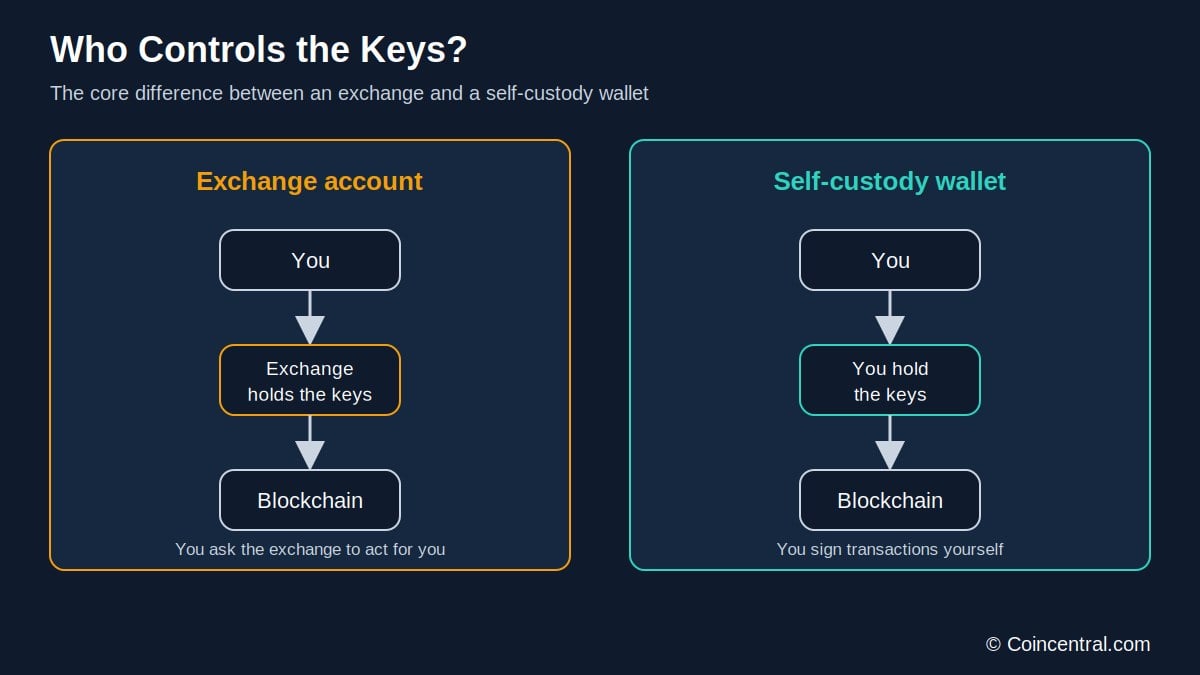 Figure 2: The exchange usually holds the keys. In self-custody, the user does.
How a Crypto Exchange Holds Your Crypto
A crypto exchange is a platform that connects buyers and sellers. Centralized examples include Coinbase, Kraken, Binance, Crypto.com and Gemini. A customer can deposit euros, dollars or other currencies and buy crypto.
A typical user might deposit €1,000 and buy Bitcoin. They could then sell part of it for Ethereum, convert the Ethereum back into euros and withdraw the money to a bank account. The exchange handles the systems behind each step, which makes it an easy starting point for beginners.
When crypto stays on a centralized exchange, the user generally does not control the private keys. The exchange keeps them. Coinbase describes this as a custodial or hosted wallet, where the customer logs in with an email address, a password and an authentication method.
A balance of 1 BTC in an exchange account does not mean one blockchain address holds exactly 1 BTC for you alone. Exchanges can pool customer crypto across several types of wallets. The platform’s internal records show how much each customer is owed.
- Cold-storage wallets
- Hot wallets
- Omnibus wallets
Kraken notes that deposited crypto can move between cold and hot wallets. A withdrawal may therefore come from a different address than the one used for the deposit.
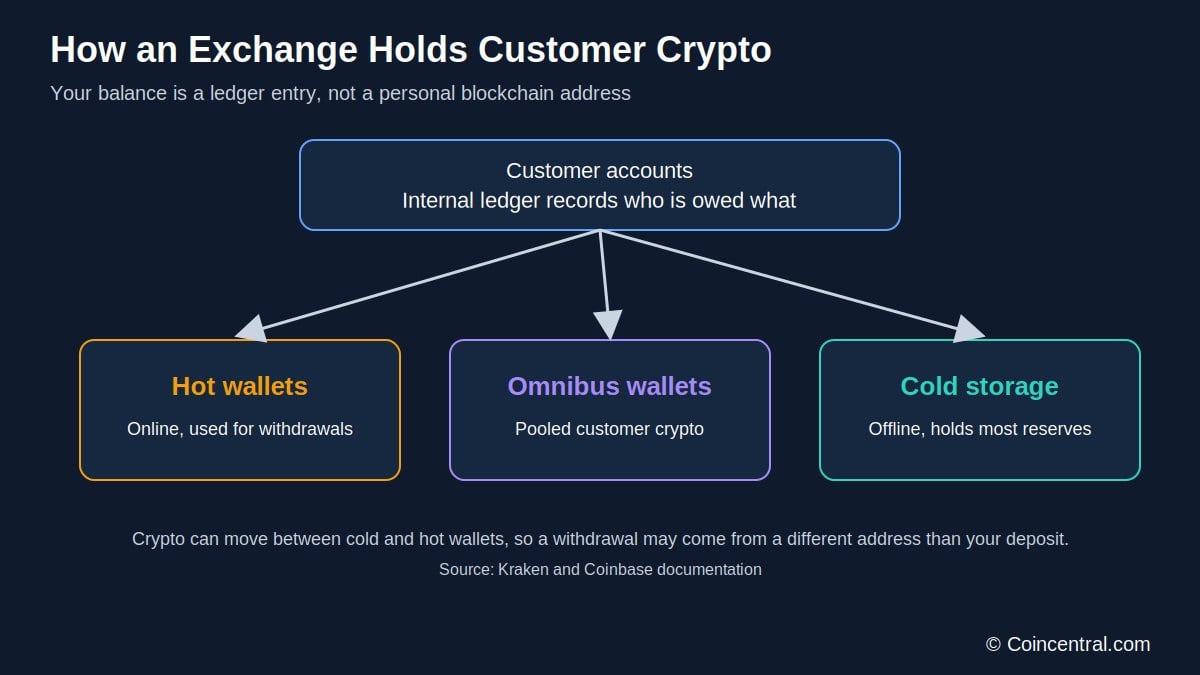 Figure 3: Exchanges track customer balances in an internal ledger and spread crypto across wallet types.
How a Crypto Wallet Works
Many people think a wallet literally holds crypto. It does not. The crypto exists on the blockchain, and the wallet manages the cryptographic information needed to control it.
Ethereum.org describes a wallet as a tool for interacting with an account. It lets users view balances, send transactions and prove they control assets. Coinbase explains that a wallet mainly protects the private key that gives a user authority over blockchain assets.
Three Terms That Are Easy to Mix Up
| Wallet address | Lets others send you crypto, much like a bank account number | Safe to share |
| Private key | Proves you can spend the crypto tied to an address | Keep it secret at all times |
| Recovery phrase | Usually 12 or 24 words that can rebuild the wallet | Keep it secret and store it safely |
A recovery phrase is also called a seed phrase or secret recovery phrase. Depending on the wallet, it can rebuild the keys for several crypto accounts. Anyone who gets the phrase may be able to recreate the wallet on another device.
This is where the saying “Not your keys, not your coins” comes from. It is a simple phrase, and regulated custody has made it less exact. Still, it points to a real idea: if another company controls your keys, you depend on that company to give you access.
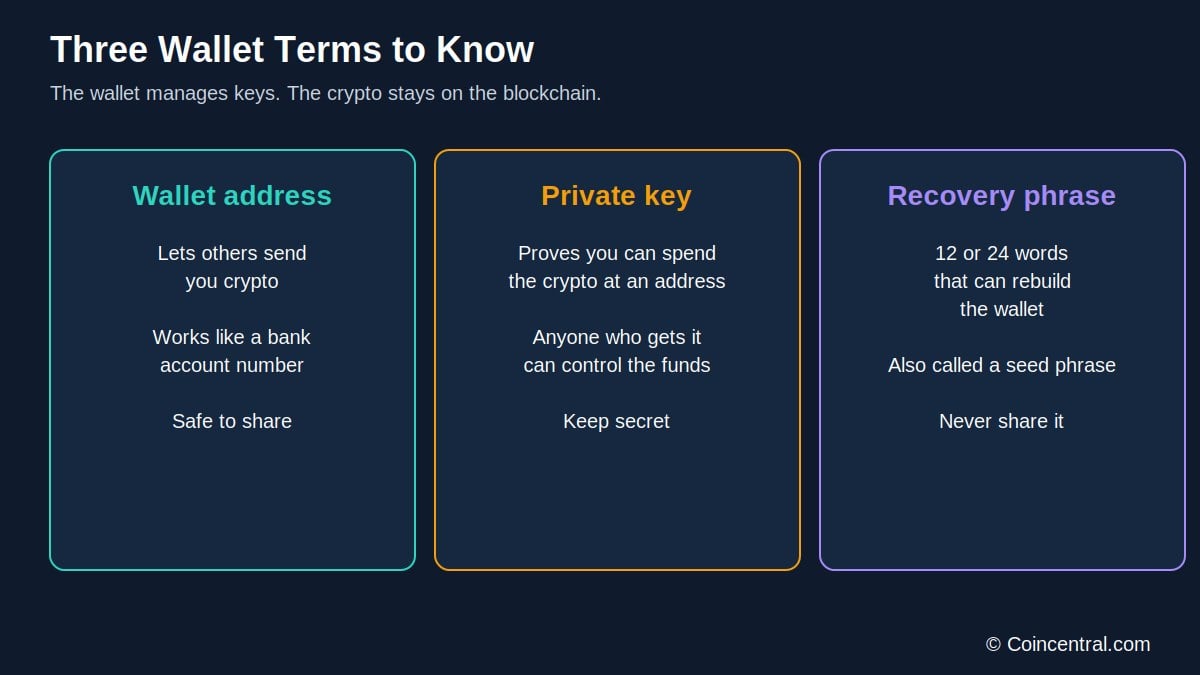 Figure 4: The address is public, while the private key and recovery phrase must stay secret.
What Exchange Hacks and Wallet Thefts Look Like
Custodial exchanges attract attackers because they can hold huge pools of crypto. An attacker does not need to break into thousands of accounts if one key exchange wallet falls. The South Korean hot wallet case shows how quickly that can happen.
Well-run exchanges use several layers of protection. These include:
- Cold storage
- Hot-wallet limits
- Multi-signature controls
- Withdrawal monitoring
- Two-factor authentication
- Security teams
- Transaction screening
Moving crypto off an exchange does not make it secure by default. Chainalysis estimates personal wallet compromises were about 20% of the value stolen in 2025. That works out to about $713 million at the lower estimate.
Self-custody users face their own list of threats:
- Phishing
- Fake wallet software
- Malware
- Malicious browser extensions
- Seed-phrase theft
- Clipboard attacks
- Malicious smart-contract approvals
- Physical theft
- Poor backups
A hardware wallet can improve security a great deal. It cannot protect someone who gives their recovery phrase to a scammer.
Bitcoin.org points to counterparty risk when coins stay with an exchange. The holder relies on the custodian’s security, solvency and withdrawal rules. The crypto failures of 2022 showed that a balance in an app does not guarantee quick access to the assets when a company runs into financial trouble.
If an exchange shuts down, Bitcoin held in your own hardware wallet stays on the Bitcoin blockchain. The exchange does not control it.
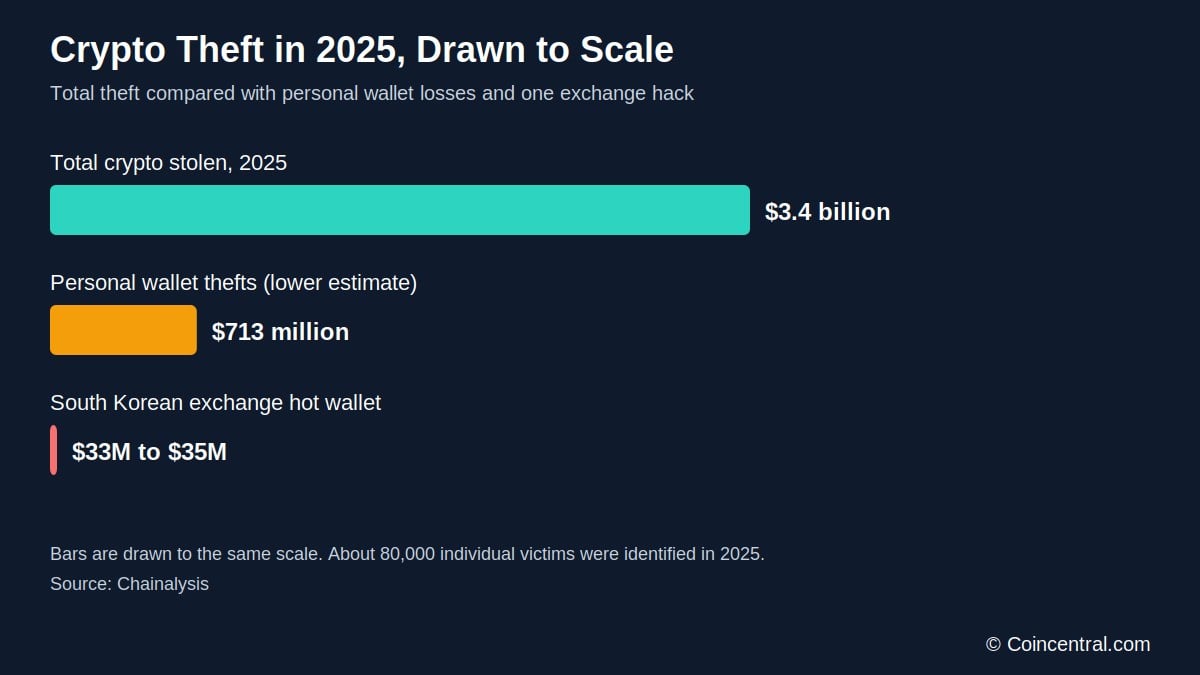 Figure 5: Total theft, personal wallet theft and one exchange hack, drawn to the same scale. Source: Chainalysis.
Hot Wallets and Cold Wallets
Self-custody wallets fall into two broad groups: hot wallets and cold wallets. The difference is whether the keys sit on a device connected to the internet.
A hot wallet runs on an internet-connected device. Examples include mobile wallets, browser extensions and desktop wallets. They work well for payments, DeFi, NFTs and frequent transfers, but their constant internet exposure gives attackers more ways in.
A cold wallet, or hardware wallet, keeps signing keys on a separate physical device. Ethereum.org describes hardware wallets as a way to keep crypto offline and generally treats them as very secure. Cold storage suits large, long-term holdings that do not need to move often.
Hardware wallets are not always better. A person who buys a genuine device, creates the wallet on their own, stores backups safely, never shares the phrase and checks each address can reach strong security.
A person who stores the phrase in a cloud note, photographs it and clicks phishing links may be safer on a reputable regulated exchange. Security depends partly on the user. That point is often missed in debates about self-custody.
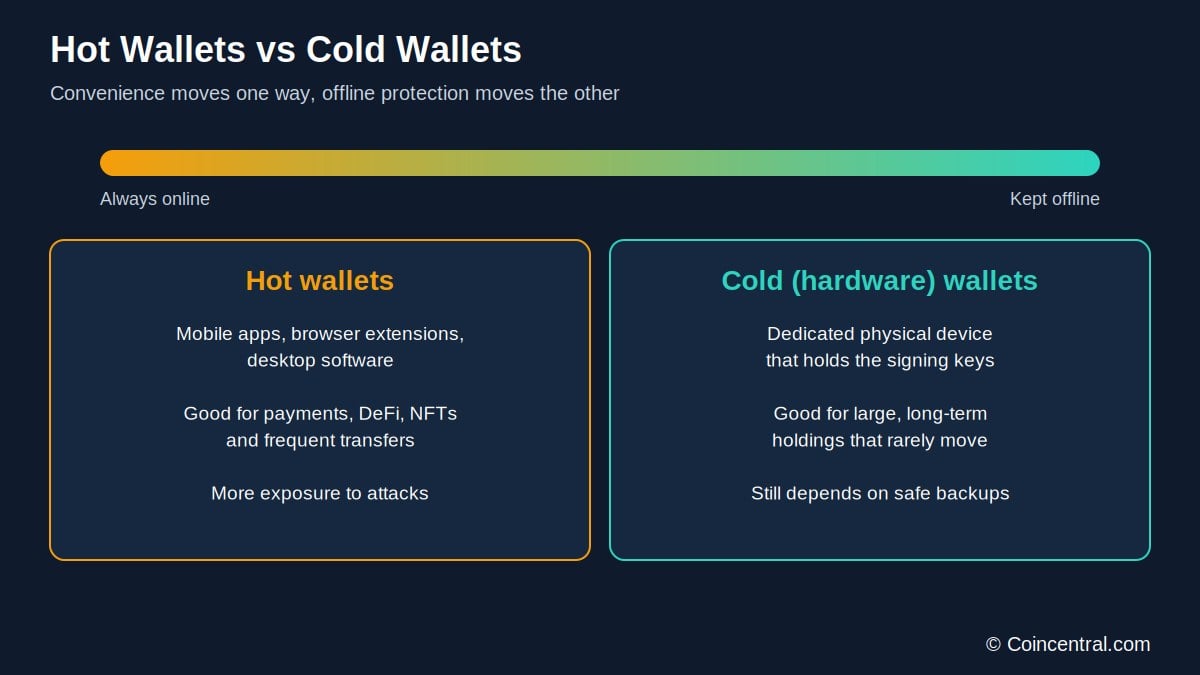 Figure 6: Hot wallets favor convenience. Cold wallets favor offline protection.
Trading, Fees and Identity Checks
For frequent trading, an exchange is the more practical tool. It keeps liquid order books and can run trades quickly between assets such as Bitcoin, Ethereum, Solana and USDC. Users may also get market orders, limit orders, stop orders, charts, futures, options, margin and recurring purchases.
A self-custody wallet does not contain an exchange by itself. It may connect to a swap service or decentralized exchange. Those trades run through on-chain protocols and can involve network fees, slippage and smart-contract risk.
Fees work differently as well. Exchanges charge for trading, conversions, withdrawals and card purchases. A self-custody wallet may charge little or nothing to hold crypto, but sending Bitcoin needs a miner fee and sending ETH needs Ethereum gas.
Internal exchange transfers can be cheaper. If two people use the same exchange, the platform may move value between their accounts without creating a blockchain transaction. The trade-off is that the value stays in the platform’s own ledger until it is withdrawn on-chain.
Identity Checks and Privacy
Centralized exchanges increasingly work like regulated financial firms. Users usually give their name, date of birth, address and identification documents. This process is called Know Your Customer, or KYC.
A basic self-custody wallet can often be created without a name, email address or passport. Coinbase notes that a traditional self-custody wallet generally does not need personal information to set up. Rules can still apply when crypto moves between self-hosted wallets and regulated exchanges.
Wallets are also not anonymous bank accounts. Blockchain addresses are usually pseudonymous. Bitcoin.org notes that anyone can inspect addresses and transactions.
An address may become easier to trace once it is linked to a person. That can happen through an exchange withdrawal, a merchant payment, a public post or blockchain analysis.
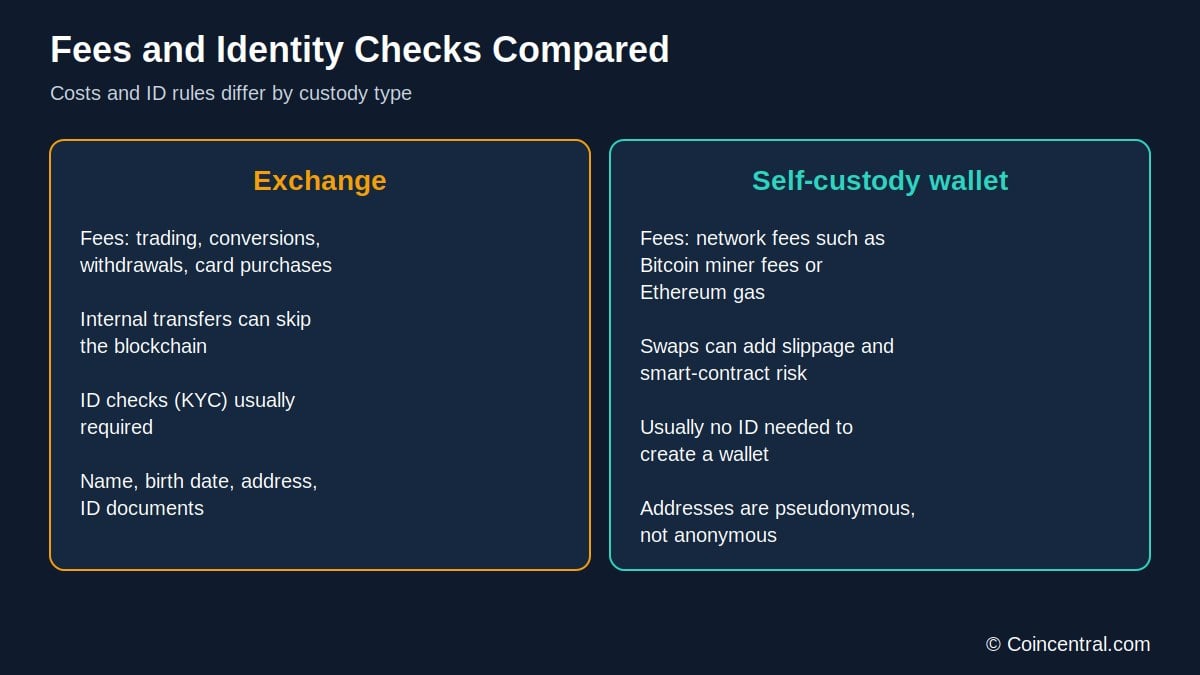 Figure 7: Fees and identity rules differ between exchanges and self-custody wallets.
How MiCA Changed Exchange Custody
The risk picture for exchanges is different in 2026 than it was a few years ago. The European Union’s Markets in Crypto-Assets Regulation, known as MiCA, sets duties for regulated crypto-asset service providers. Custodians must keep records of client positions, set a custody policy and separate client crypto from their own assets.
MiCA says client crypto held in custody should be legally separate from the provider’s estate. This means creditors generally cannot claim those assets if the custodian becomes insolvent. Providers must also protect clients’ ownership rights and avoid using client assets for their own account.
This is quite different from an unregulated offshore exchange with unclear custody arrangements. Still, regulation does not make exchange custody the same as holding your own keys. The customer still relies on the provider’s systems.
MiCA treats regulated providers differently from software that enables true self-custody. Custody rules apply to the providers, while non-custodial wallet software can fall outside those specific rules. Coinbase also notes that users of self-custodial products do not get all the protections that apply to MiCA-regulated custodial services in the EEA.
That does not make self-custody illegal or unsafe. It means the user, not a regulated custodian, is responsible for the assets.
Some wallets are also changing the old model. Newer options include encrypted backups, passkeys, social recovery, multi-party computation, smart-contract recovery and embedded wallets. Kraken now supports both seed-phrase wallets and embedded self-custodial wallets that use supported sign-in methods while still letting users export private keys.
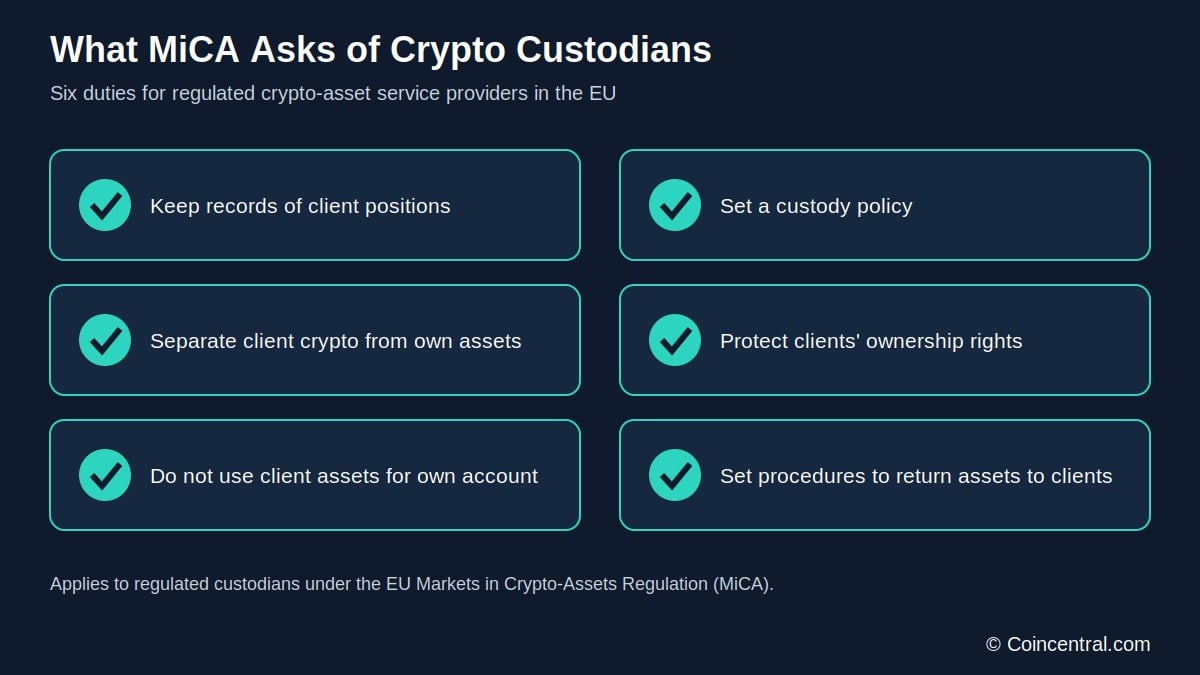 Figure 8: Custody duties for regulated providers under EU MiCA rules.
What Happens If You Forget or Lose Your Login
Recovery is where the two models differ most. The table below shows how each one handles common problems.
| Forgot password | Use the forgot password option. The exchange checks identity and restores access | The recovery phrase, not a company, restores the wallet |
| Lost phone, phrase saved | Recover the account through identity checks | Install compatible software on a new device and restore with the phrase |
| Lost device, no backup | Often fixable through account recovery | The provider usually cannot rebuild the keys. The crypto may be permanently inaccessible |
| Password or phrase stolen | Two-factor checks, withdrawal limits, device checks and account freezes may slow an attacker | An attacker can recreate the wallet and move everything. No fraud team can reverse the transfer |
Coinbase states that if the recovery phrase of a traditional self-custody wallet is lost and no other valid recovery method exists, the provider cannot restore access. Ethereum.org gives a similar warning that users must protect their own keys and recovery information.
A recovery phrase is more sensitive than an ordinary online password. It should never be emailed, messaged, uploaded to random websites, shared with support or typed into suspicious software.
With an exchange, you trust the company. With self-custody, you trust yourself. Neither is automatically safer.
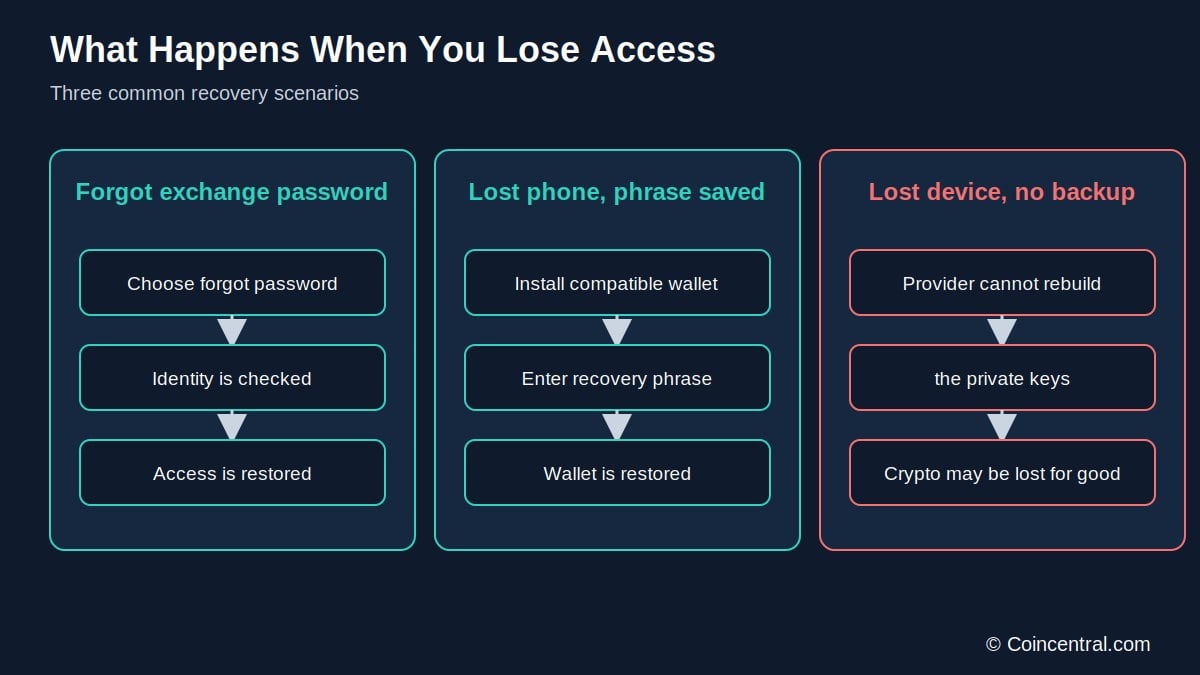 Figure 9: Three recovery scenarios and how each ends.
The Hybrid Approach and Who Each Option Suits
Many experienced users do not pick only one. An investor might keep €2,000 on an exchange for trading and €40,000 in a hardware wallet for long-term storage. When they want to sell, they send part of the crypto back to the exchange.
In that example, about 4.8% of the €42,000 sits on the exchange and about 95.2% is in self-custody. This lowers exposure to exchange risk while keeping trading easy. No rule says an investor must choose 100% exchange custody or 100% self-custody.
Someone planning to hold Bitcoin for 10 years and rarely trade gets less value from leaving everything on an exchange. Self-custody removes the need to trust an exchange for a decade. The holder must then handle backups, seed security, device security and inheritance planning.
An Exchange May Suit You If
- You are a beginner
- You are likely to lose a seed phrase
- You want password recovery
- You trade often
- You use a highly reputable regulated provider
- You understand account-security practices
Self-Custody May Suit You If
- You understand private-key security
- You hold a large long-term position
- You use secure hardware
- You keep proper backups
- You want to remove exchange counterparty risk
- You want direct blockchain access
Poor self-custody is often the worst combination. Moving crypto from a well-secured regulated exchange into a badly protected wallet does not improve security.
Wallets also offer things an exchange cannot. An Ethereum wallet can connect directly to apps such as Uniswap, Aave, NFT marketplaces, games, staking protocols and lending protocols. Ethereum.org describes wallets as tools for signing in to blockchain apps and proving identity.
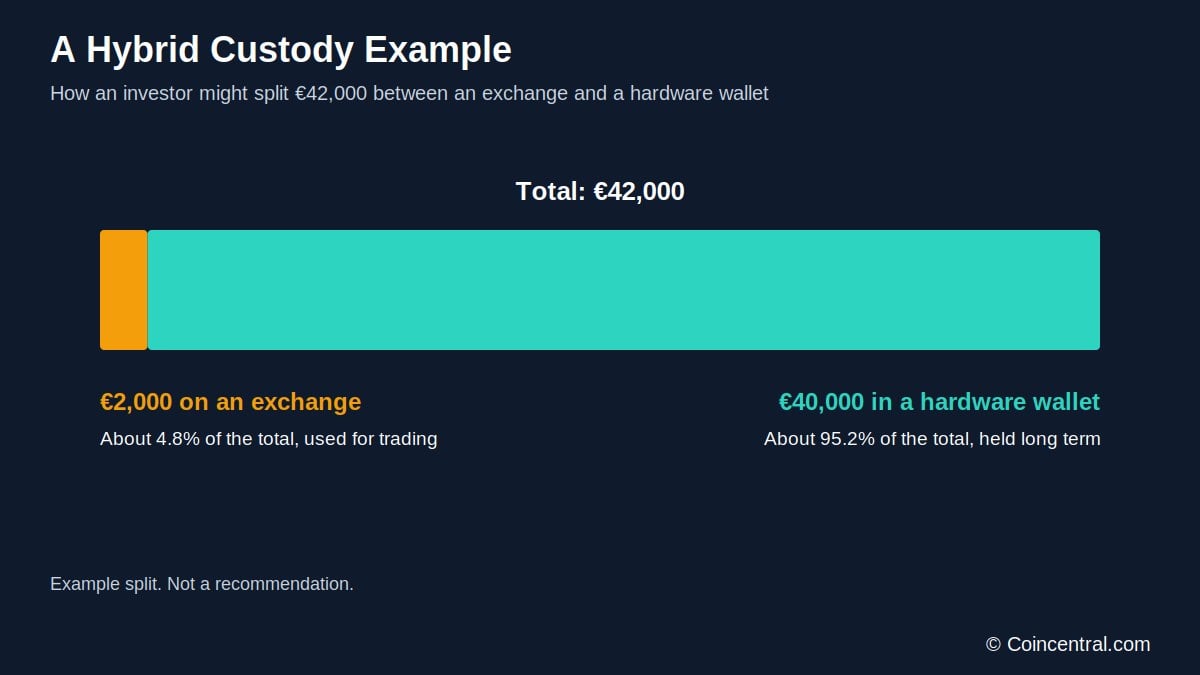 Figure 10: An example split of €42,000 between an exchange and a hardware wallet. This is an illustration, not advice.
Questions to Ask and Steps for Beginners
For a small beginner portfolio, keeping crypto on a strong regulated exchange can be reasonable. As the value grows, it matters more to understand custody rather than leave assets somewhere out of habit. These questions can help:
- Is the exchange regulated?
- Where is it licensed?
- How are client assets kept separate?
- What happens if the company becomes insolvent?
- Does it use cold storage?
- What account protections are available?
- Can withdrawals be whitelisted?
- Do I understand self-custody well enough to do better?
A beginner who buys €100 of Bitcoin does not need an offline-custody setup right away. Learning it too soon can raise the risk of mistakes. A sensible path looks like this:
- Learn how an exchange works.
- Turn on strong two-factor authentication.
- Learn about blockchain addresses and network selection.
- Learn how recovery phrases work.
- Create a self-custody wallet.
- Send a tiny test transaction.
- Consider hardware custody as the portfolio grows.
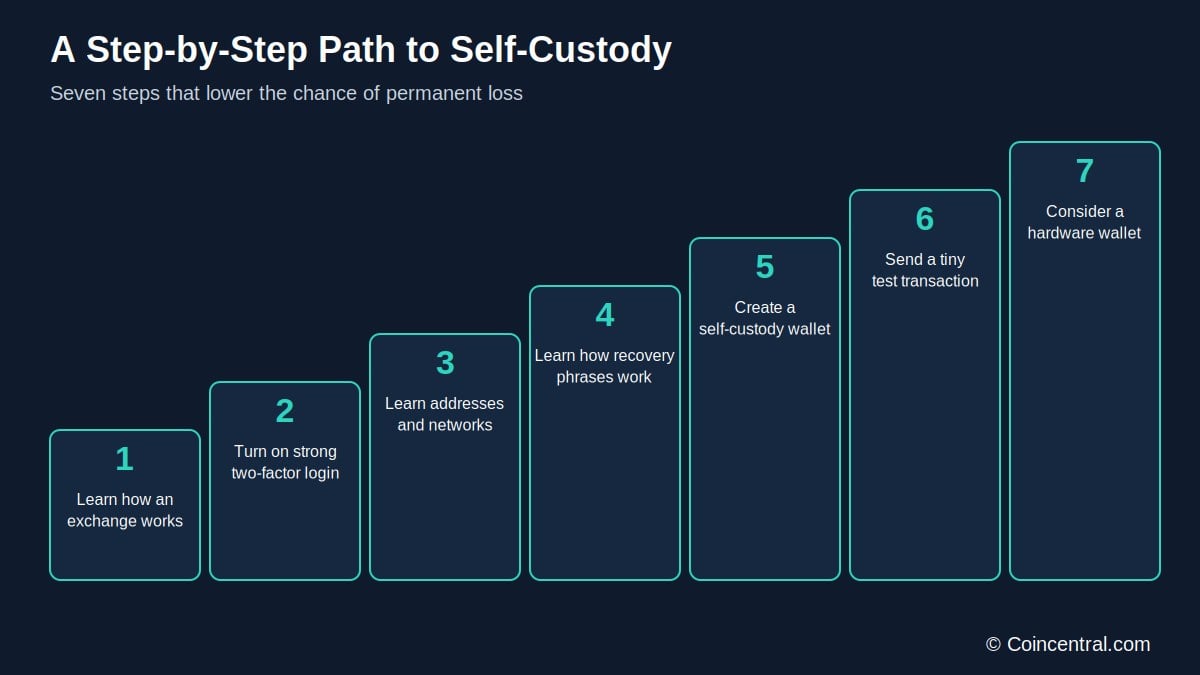 Figure 11: A step-by-step path from exchange use to self-custody.
The Bottom Line
The difference between a crypto wallet and an exchange comes down to purpose and control. An exchange is built for buying, selling and trading, and it usually holds the keys for you. A self-custody wallet gives you direct control of the keys, while the assets stay on the blockchain.
Self-custody has one clear advantage: an exchange cannot lose, freeze or become insolvent with crypto it does not control. It also brings a clear duty. If you lose or expose the keys, nobody may be able to help.
Regulation has strengthened reputable exchange custody. Under MiCA, authorized custodians must protect clients’ ownership rights, keep custody procedures and separate client crypto from their own assets. Yet cyber and operational risks remain on both sides, as the 2025 theft data shows.
Chainalysis estimates that about $3.4 billion of crypto was stolen in 2025, and personal wallet compromises made up roughly $713 million of it. So neither “never leave crypto on an exchange” nor “self-custody is too dangerous” is a complete rule.
For many investors, a mix makes sense. Use a reputable exchange for fiat deposits, purchases and trading. Use secure self-custody for large long-term holdings when you know how to protect the keys.
An exchange trades convenience for trust. A wallet trades trust for responsibility.
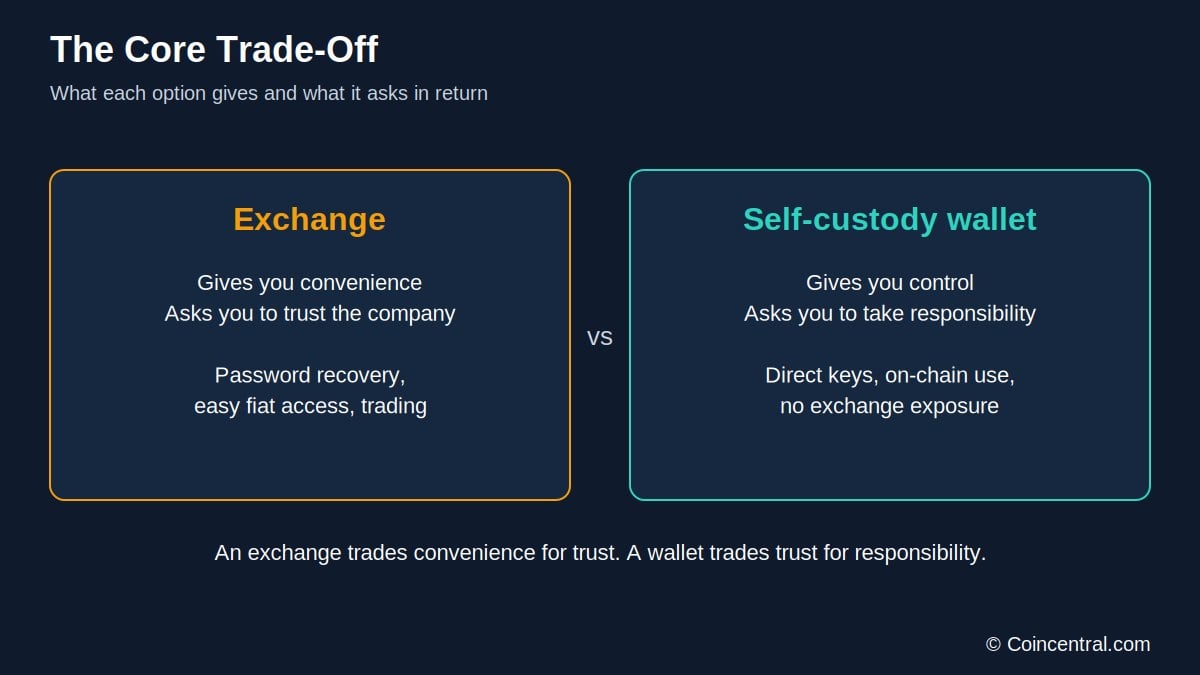 Figure 12: What each option gives, and what it asks in return.
Sources
- Coinbase: Exchanges and Self-Custody Wallets
- Ethereum.org: Crypto Wallets Explained
- Bitcoin.org: Some Things You Need to Know
- Kraken: Difference Between Kraken Wallet and Kraken Exchange
- Kraken: Custodial Exchange vs Wallet Service
- Kraken: Self-Custody and Embedded Wallets
- European Union: Markets in Crypto-Assets Regulation
- ESMA: MiCA Article 75, Custody and Administration of Crypto-Assets
- ESMA: MiCA Article 70, Safekeeping of Client Assets
- Chainalysis: 2025 Crypto Theft Reaches $3.4 Billion
The post Crypto Wallet vs Exchange: Statistics, Risks and Key Differences in 2026 appeared first on Blockonomi.
What's Your Reaction?
 Like
0
 Dislike
0
 Love
0
 Funny
0
 Wow
0
 Sad
0
 Angry
0









Comments (0)