

Crysis 2 had problems, but it got one thing right: destruction
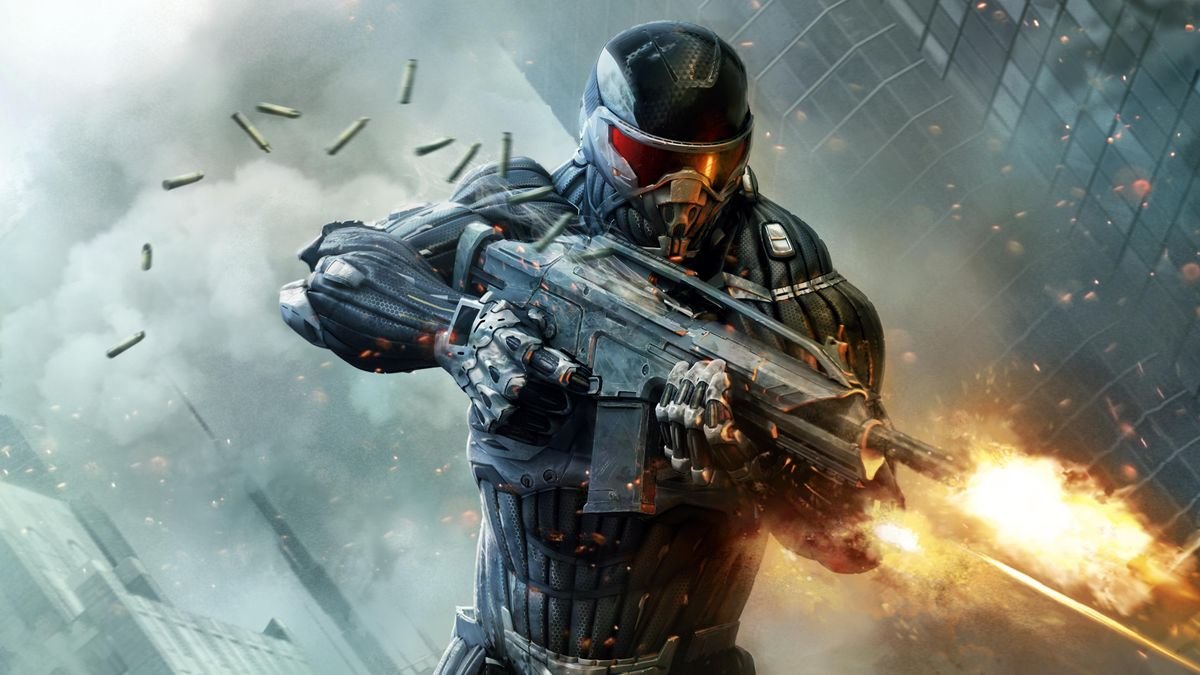
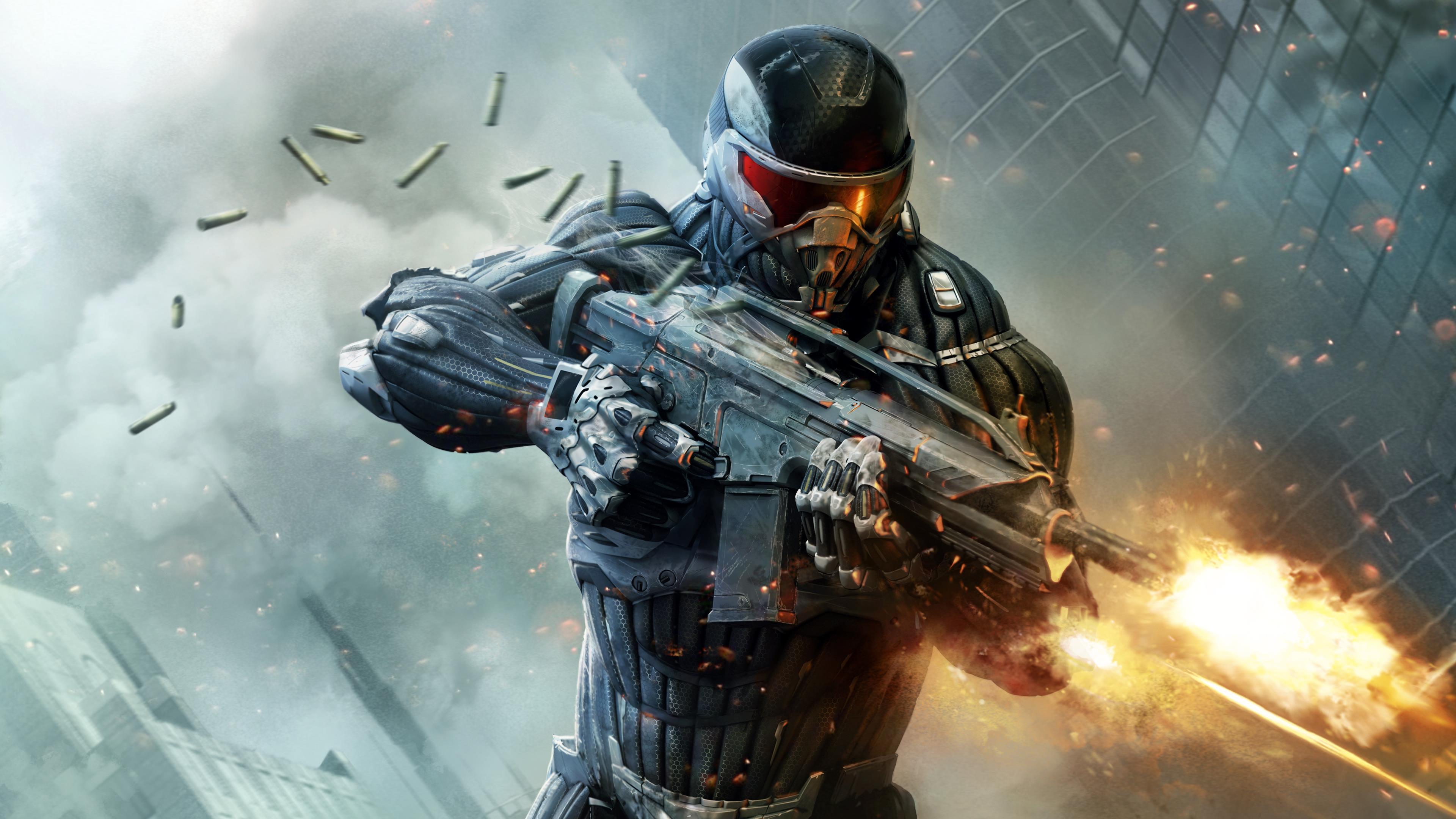 (Image credit: Crytek)
From the archives: This story originally ran in PC Gamer (UK) #279.
REINSTALL
Reinstall invites you to join us in revisiting PC gaming days gone by. Today, Rick revisits the gorgeous mess that is Crysis 2.
Crysis 2 gets a lot wrong. Its AI is criminally stupid. Its story is a convoluted mess. Its characters are hackneyed archetypes. Worst of all, its narrower environments and more limited nanosuit restrict the potential for emergent play, which was the essence of the original game. As far as sequels go, many of Crytek's design decisions for Crysis 2 are utterly baffling.
Yet for all its mistakes, Crysis 2 gets one thing right: destruction. From its low-key beginning to its apocalyptic final act, this grim fairytale of New York is a master-class in disaster fiction. If you embrace this theme of obliteration rather than fighting it, Crysis 2 is at times even more enjoyable than the original.
The game puts you in the boots of US marine and personality vacuum Alcatraz. Within five minutes he’s seen half his platoon massacred by the alien menace known as the Ceph, been shot half to pieces himself, and been given the task of saving New York by Prophet, the nanosuited squad leader from Crysis 1.
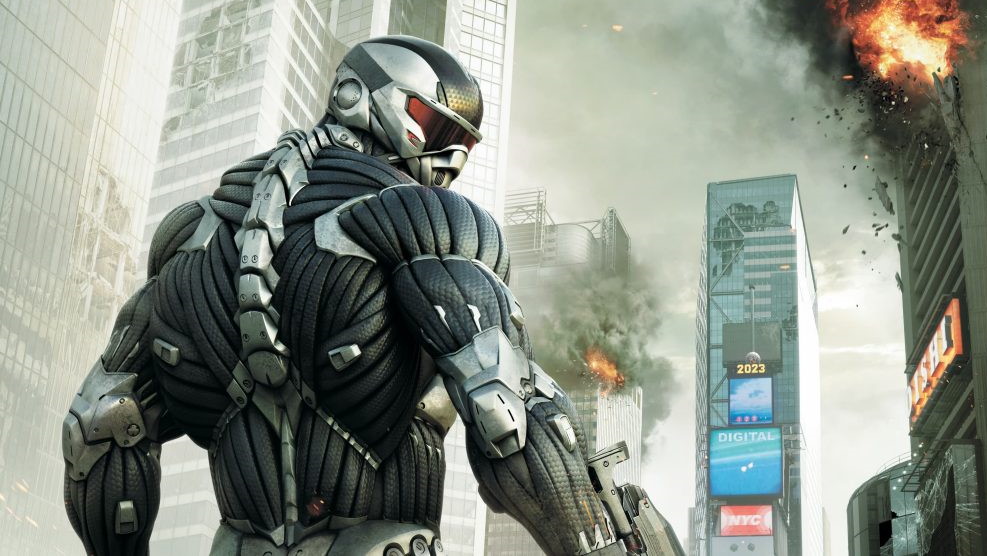
Crytek recognised that the most interesting aspect of the first game was the nanosuit, and so built Crysis 2's story almost entirely around it. The nanosuit is the game's real hero, synthesising a cure for the alien virus as the story progresses.
Alcatraz is merely a bag of leaky meat who provides the suit with locomotive abilities to get from objective to objective. Our FPS protagonists are often defined by their suits and little else (Half-Life and Halo are two notable examples) so why not give the suit some of the credit for once?
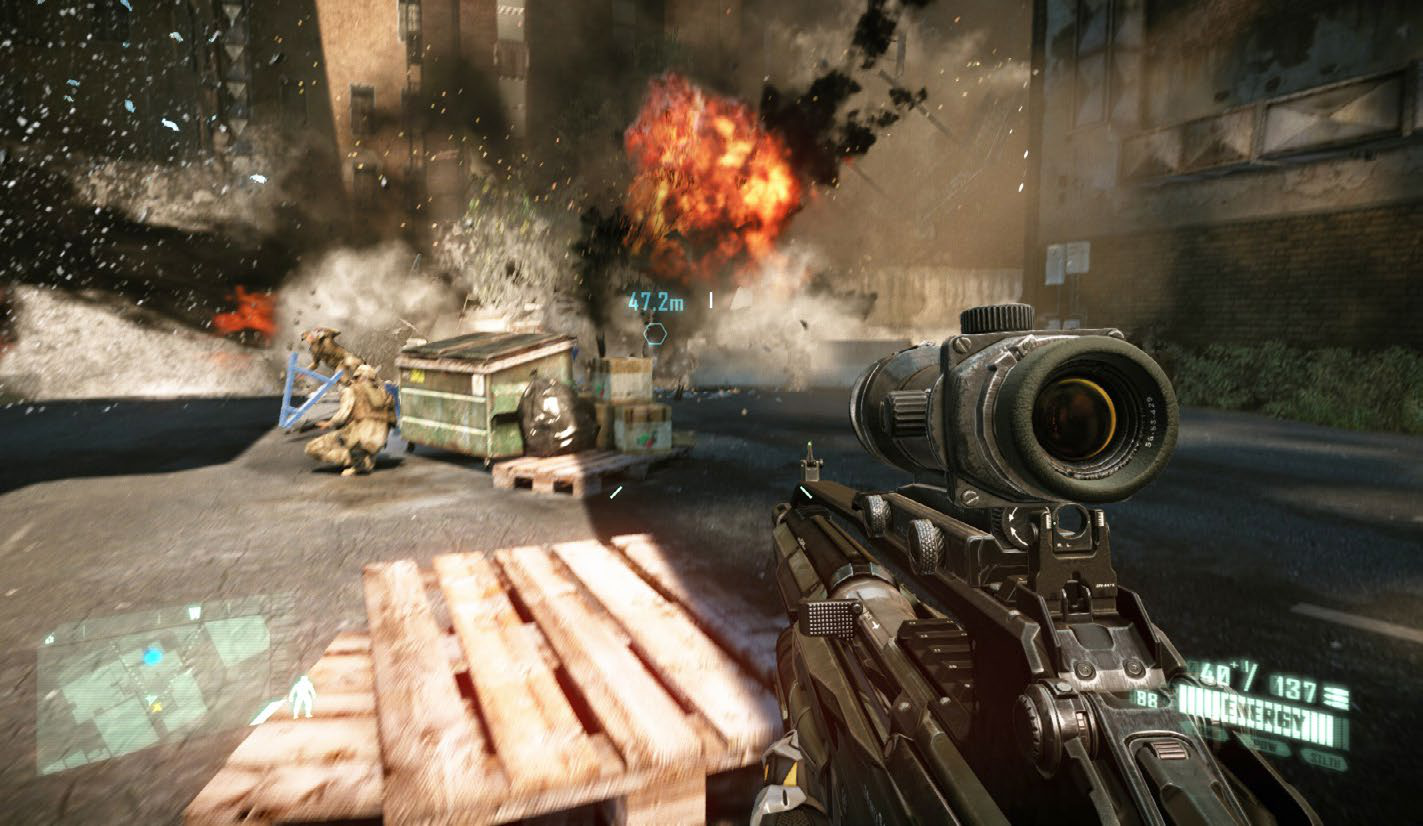
The nanosuit is the hero, Alcatraz a bag of leaky meat
It's a fun idea, but Crysis 2 fails to walk its talk. During play it actually reduces the suit's functionality from that of the first game. It decreases the number of active abilities from four to two, armour mode and cloak, while speed and strength become passive abilities with little impact on how you play.
Keep up to date with the most important stories and the best deals, as picked by the PC Gamer team.
There are no walls to punch through, and chucking objects and enemies about is fiddly and unsatisfying. You can Power Kick cars and certain objects, which feels good. But having played the game three times, I’ve never once used this successfully in combat.
Cloaking, meanwhile, is almost too effective, letting you waltz past enemies as they forget about you the moment line of sight is broken. It's always tempting to exploit Crysis 2's artificial idiocy, but I’d strongly advise against it, simply because a pure stealth approach isn’t the way to get the most out of the game.
Instead, use Cloak to navigate your way to the nearest mounted machine gun. Tear it off its mounts. Then activate armour mode, identify a target, and let rip. Feel the kick of the HMG judder up your mouse arm as it spits bullets the size of table knives, listen to the stomp of your feet as the nanosuit’s hardened shell collides with the tarmac. Marvel as CELL troopers and Ceph alike crumble in the face of your merciless onslaught.
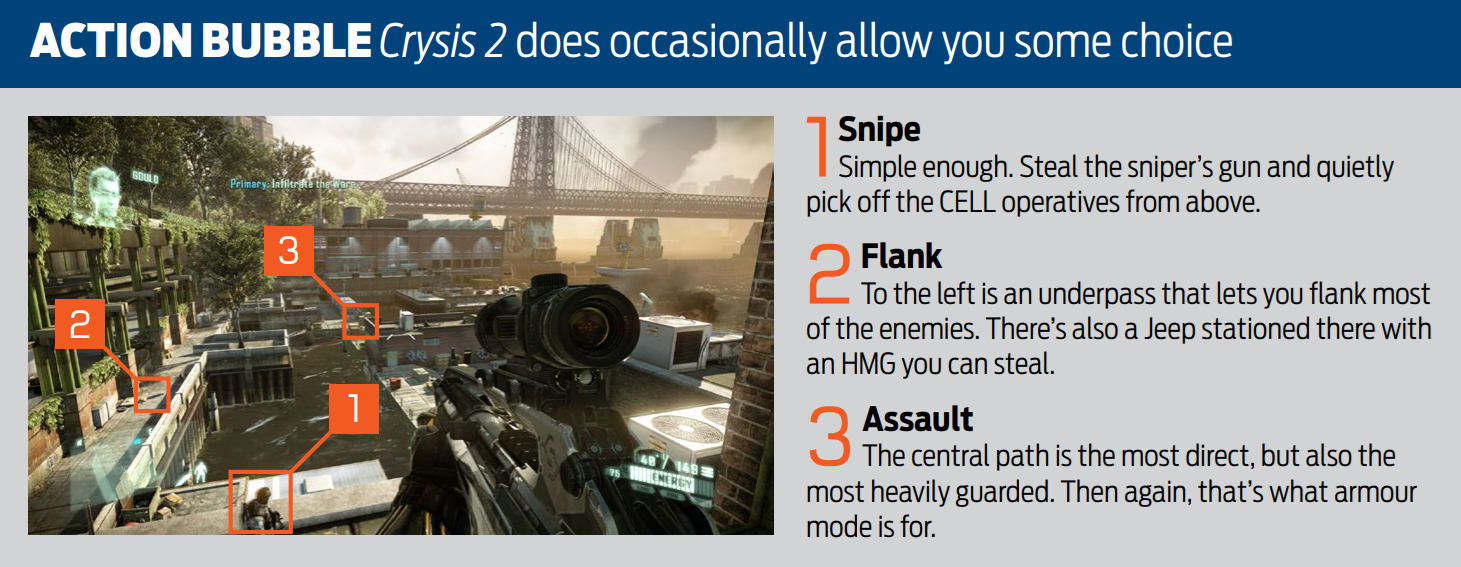
This is what Crysis 2 is really about: glorious devastation, using your cloak to place yourself in a position of supremacy, and then ripping through the enemy ranks before they have time to blink. It simply takes a while to make this fact obvious.
Yet there are glimmers of a love for breaking things in the first few hours. Early on a beleaguered alien spacecraft smashes into a skyscraper, tearing a huge hole in its upper floors. A couple of levels later, a whole section of the FDR highway collapses before your eyes, leaving a thick cloud of dust that you can use to quietly pick off mercenaries investigating the cause. Yet these are merely scripted vignettes interspersed between long stretches of small-arms combat, as you evade and engage groups of CELL mercenaries on your mission to meet up with a hacker known as Gould.
It's only when you regroup with the marines, around a third of the way through the game, that Crysis 2 kicks into its highest gear. The familiar grid-like streets of Manhattan are transformed into canyon-like gouges in the earth, as the city is slowly torn apart by the alien's root-like virus dispersal pipelines. Your arsenal become more powerful and your enemies larger and more numerous.
Additionally, your role in the game turns much more defensive, as you assist the army with the evacuation of the city. A standoff against a thunderous assault by the Ceph concludes with you bringing down one of their mighty gunships, while the best level in the game —'Unsafe Haven'—sees you fighting through the Ceph battle-lines in order to prime and detonate demolition charges on a multi-storey building, bringing it crashing down across the Ceph’s artillery trajectory.
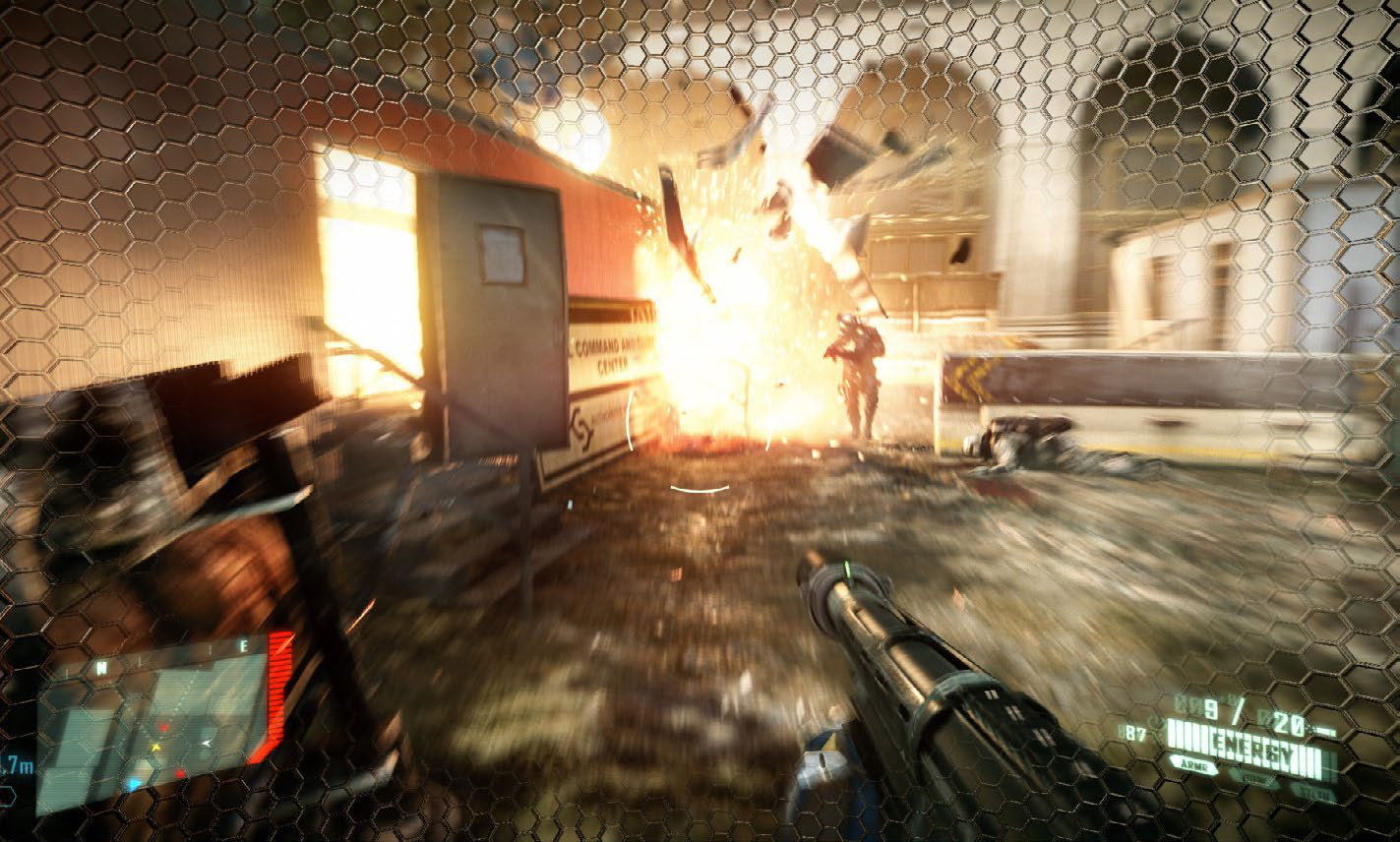
It's this gradual escalation that makes Crysis 2 so satisfying for me. The city's destruction becomes an inversely-proportional progression tracker. As the fight becomes more and more desperate, the city becomes less and less recognisable. It's reminiscent of Half-Life 2's 'AntiCitizen One' and 'Follow Freeman' chapters, but drawn out over a longer period. Also, rather than being on the assault, you're on the back foot, simply trying to buy time as you attempt to get the city's populace to safety. Crysis 2 excels at making the Ceph feel like a genuine threat, always capable of matching and exceeding Alcatraz’s own superhuman capabilities.
Unfortunately, while the mid-to-late section is excellent, the final mission is a massive anticlimax. Once again it lets you breeze past most of the enemies, and the ending is a big dollop of nonsense that leaves you mystified and disappointed.
Although I like the slower start, and admire it for not frontloading its action, that failure to build to a satisfying climax damages the game considerably.
In the end, Crysis 2's limitation on emergent play proved to be an error in judgement, one that Crytek tried (and failed) to rectify in the undercooked Crysis 3. But there are still moments of greatness in there. Crysis 2 gets a lot wrong, but we shouldn’t let that obscure the things it got right.
Rick has been fascinated by PC gaming since he was seven years old, when he used to sneak into his dad's home office for covert sessions of Doom. He grew up on a diet of similarly unsuitable games, with favourites including Quake, Thief, Half-Life and Deus Ex. Between 2013 and 2022, Rick was games editor of Custom PC magazine and associated website bit-tech.net. But he's always kept one foot in freelance games journalism, writing for publications like Edge, Eurogamer, the Guardian and, naturally, PC Gamer. While he'll play anything that can be controlled with a keyboard and mouse, he has a particular passion for first-person shooters and immersive sims.
What's Your Reaction?
 Like
0
Like
0
 Dislike
0
Dislike
0
 Love
0
Love
0
 Funny
0
Funny
0
 Wow
0
Wow
0
 Sad
0
Sad
0
 Angry
0
Angry
0







Comments (0)