

Marvel's First Animated Series Turns 60 This Year


Published Jun 20, 2026, 5:01 PM EDT
Richard Craig is a Senior Author at Screen Rant covering film and TV. Richard has also written extensively about horror and film soundtracks, contributing a chapter to the first major academic collection on the folk horror genre, The Routledge Companion to Folk Horror. Richard is also a performing musician and holds an MA in Music and Sound Art.
The very first animated Marvel show ever premiered 60 years ago, leaving a legacy still felt today. Marvel's dominance of popular culture can make it easy to forget just how different the company once looked. Today, the brand is synonymous with billion-dollar MCU movies, prestige streaming shows, blockbuster video games, and a seemingly endless roster of superheroes. Six decades ago, however, Marvel was still primarily known as a comic book publisher trying to establish itself as a major force in entertainment.
The 1960s proved to be a transformative decade for the company. Characters such as Spider-Man, the Fantastic Four, Hulk, Thor, and Iron Man quickly became some of the most recognizable heroes in comics. Their popularity naturally led to efforts to expand beyond the printed page and reach entirely new audiences.
Animation was an obvious next step. Television was becoming increasingly important to children's entertainment, and superhero cartoons were beginning to emerge as a viable genre. Bringing Marvel's heroes to television presented exciting opportunities, even if the technology and budgets available at the time were considerably more limited than modern audiences might expect. The result was The Marvel Super Heroes, a groundbreaking show that celebrates its 60th anniversary in 2026.
The Marvel Super Heroes Was Marvel's First Animated Series

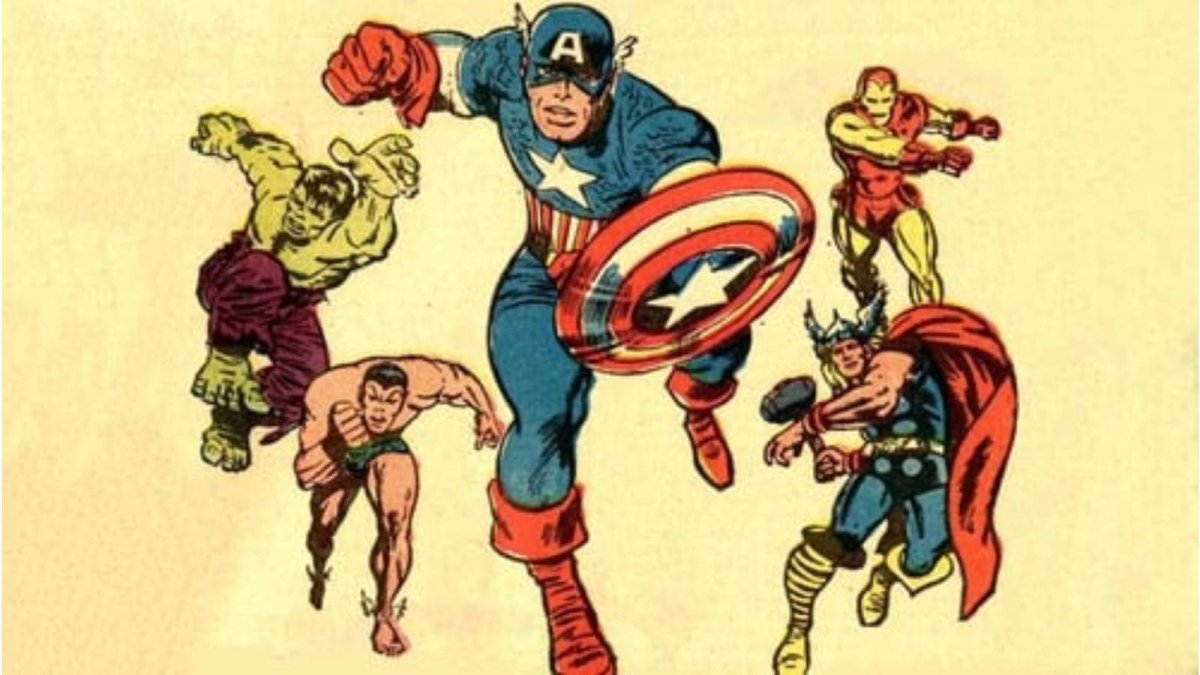
Premiering in 1966, The Marvel Super Heroes marked Marvel's first venture into animated television. Rather than focusing on a single hero, the series was divided into segments starring Captain America, Hulk, Iron Man, Thor, and Namor the Sub-Mariner. This structure allowed audiences to sample several of Marvel's biggest characters within a single program.
 Related
6 Classic '80s Kids Shows That Would Never Fly Today
Some beloved '80s kids shows were far stranger, darker, and more controversial than viewers remember, and wouldn't survive modern TV standards.
Instead of using fully animated sequences throughout, the show employed a technique often called "motion comics." Original comic book artwork was adapted and manipulated with limited movement, creating a presentation unlike anything else on television. It was largely a budgetary necessity, but it also gave The Marvel Super Heroes a unique visual identity.
The tone stayed remarkably faithful to Marvel's Silver Age comics. Heroes delivered dramatic speeches, villains announced elaborate schemes, and every adventure felt suitably larger than life. By modern standards, it can appear delightfully stilted, but it captured the spirit of Marvel's early stories surprisingly well.
Why The Marvel Super Heroes Was So Important

The Marvel Super Heroes may not have possessed the animation quality of later classics, but its importance to superhero television cannot be overstated. At a time when comic book adaptations were still relatively uncommon, the series demonstrated that audiences were eager to watch superheroes on a regular basis.
Its success helped establish a foundation for future animated adaptations throughout the late 1960s and 1970s. Marvel itself would follow with shows featuring Spider-Man, Fantastic Four, and other popular characters, while rival publishers also expanded their television presence. The superhero animation boom that followed owed a great deal to these early experiments.
The Marvel Super Heroes also introduced many young viewers to Marvel's heroes for the first time. Not every child buying comics had access to a local comic shop, but television brought these characters directly into living rooms across North America. Without The Marvel Super Heroes taking that first step in 1966, the long history of Marvel animation that eventually led to shows like X-Men: The Animated Series and Avengers: Earth's Mightiest Heroes might have looked very different indeed.

Release Date September 5, 1966
What's Your Reaction?
 Like
0
Like
0
 Dislike
0
Dislike
0
 Love
0
Love
0
 Funny
0
Funny
0
 Wow
0
Wow
0
 Sad
0
Sad
0
 Angry
0
Angry
0








Comments (0)