

Everything announced at Apple WWDC 2026 - including Siri, iOS 27 dev beta, and more

Follow ZDNET: Add us as a preferred source on Google.
ZDNET's key takeaways
- Apple's WWDC kicked off on Monday, June 8.
- The company unveiled new features across its software ecosystem.
- We recap everything you need to know below.
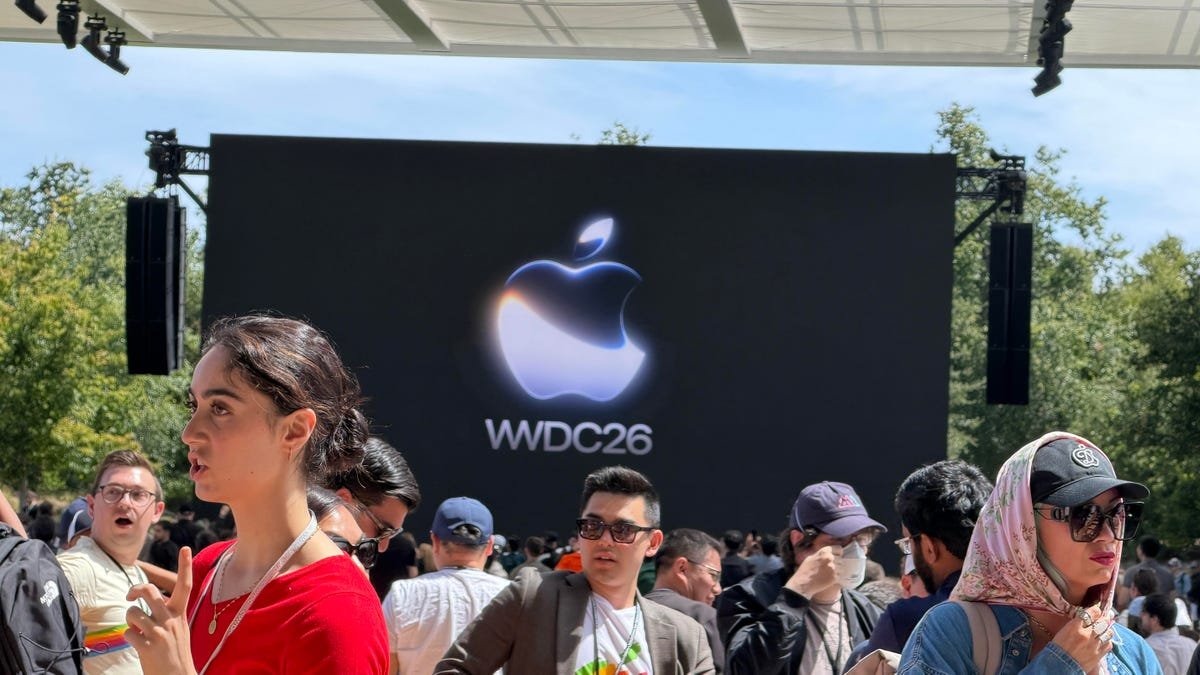
Apple's annual Worldwide Developers Conference (WWDC) took place this week, starting on June 8. Onlookers and Apple fans went into the event hoping for updates on the company's somewhat stalled Apple Intelligence rollout, and they got exactly that in a shorter but more straightforward developer keynote this year.
Also: iOS 27 is here: How to download the developer beta now
Like previous developer conferences, WWDC this year focused on software, particularly Apple's new suite of Siri AI capabilities -- while most hardware announcements, like the iPhone 18, happen at Apple's September event. We reported from the ground at Apple Park for the rest of the week, and you can catch everything we learned below.
How to watch WWDC 2026
The keynote address kicked off on June 8 at 10 a.m. PST/1 p.m. ET. You can stream the replay on YouTube, Apple's website, Apple TV, and in the Apple Developer app. ZDNET's sibling site, CNET, also livestreamed the event, featuring commentary from the site's writers and editors before and after the keynote.
Latest news
By Kerry Wan, Editor in Chief / June 8 at 9:30 p.m. ET
The floodgates have opened for developers and enthusiasts to enroll in Apple's Developer Beta program and start testing the newly announced software platforms for feedback. By the looks of it, it's a whopping 20GB update on the iPhone that gets you earlier access to new features like the Liquid Glass slider, Spatial Reframe, and Siri AI (when you pass the waitlist).
Also: Every iPhone model that supports the iOS 27 update (and which older ones don't)
We've got guides up for how to update your eligible iPhone, Mac, or iPad to the latest developer betas, but as always, proceed with caution, as these early-stage software programs can include frequent bugs and glitches -- in the worst case, wiping your device's data.
For more coverage on the latest features here, see below:
By Kerry Wan, Editor in Chief / June 8 at 5:11 p.m. ET
Following the WWDC keynote, Apple held a private technical deep dive with members of the media, where the company executives, including Craig Federighi and Mike Rockwell, shared some specifics on how the new Siri AI works and why it doesn't experience the same security and privacy vulnerabilities as cloud-based services like Gemini.
Notably, in response to a question about Apple's stance on agentic AI, Federighi suggested that the autonomous workflow remains an "exciting experiment," and that while Apple has the agentic architecture in place with Siri, it's still early days for "long-horizon agentic tasks."
Also: iOS 27's Shortcuts upgrade makes automations easy to build - and will save me so much time
Apple's core philosophy for Apple Intelligence continues to rely on deterministic, highly structured app protocols. Essentially, developers have to explicitly build "app intents" so Siri can safely execute a command, so it's reasonable for the company to hold back on diving into agentic AI capabilities at the start.
By Nina Raemont, Health and Wearables Editor / June 8 at 2:27 p.m. ET
And that's a wrap. Tim Cook concludes his last WWDC with a final, fleeting farewell. He says "the best is still ahead" for the company, as he prepares to pass the baton to future Apple CEO John Ternus in September. Cook's work advancing Apple's mission of creating some of the world's best products has been, in his words, "the honor of a lifetime."
By Radhika Rajkumar, Senior Editor, Senior Editor / June 8 at 2:21 p.m. ET
In addition to confirming rumors about new Enhance and Extend photo features, Apple announced a new editing tool called Spatial Reframing. It uses a combination of on-device spatial models and facial recognition to optimize a photo of, for example, your family members, giving it a different angle or perspective than the photo you actually took – if it works. We'll have to test it.
By Nina Raemont, Health and Wearables Editor / June 8 at 2:10 p.m. ET
I'm a big Shortcuts user, but it's one of those apps that has a steep learning curve. A new update makes it easier for people to use, regardless of their level of Shortcuts experience. Now, iPhone users can simply describe the Shortcut they'd like to create, instead of configuring every setting in the app themselves.
Originally, users would plug in "do," "if," and "when" prompts to initiate a Shortcut. Now, they can type in their desired Shortcut, such as "When I leave the office, Message John that I'm on my way home, and include my ETA."
By Nina Raemont, Health and Wearables Editor / June 8 at 2:06 p.m. ET
Your emails and notes are about to get way more grammatically correct. Automatic proofreading is coming to more apps, including Slack and Mail, and it's powered by Apple's next-generation Siri. This grammar tool will be available in hundreds of apps.
By Radhika Rajkumar, Senior Editor, Senior Editor / June 8 at 2:02 p.m. ET
In Safari, Apple Intelligence will now help manage your chaotic and quickly multiplying tabs by organizing them into topics in real time. Safari will now "automatically monitor a page on your behalf" with Notify Me, but doesn't share that browsing data anywhere, said Beth Dakin, software engineering manager.
By Nina Raemont, Health and Wearables Editor / June 8 at 1:58 p.m. ET
Apple's Camera app is getting smarter. Users can now activate the shutter button to let Siri AI, powered by Visual Intelligence, see what you're seeing, ask it questions, and respond with helpful answers. Use the camera to learn about the nutrition information in your lunch or split the bill evenly among friends, VP of software Sebastian Marineau explained.
By Radhika Rajkumar, Senior Editor / June 8 at 1:50 p.m. ET
With new features like automatic proofreading in messages and mail and event detail detection in Calendar, Siri AI and Apple Intelligence are doing what users have come to expect from third-party AI tools like ChatGPT and Claude, as well as built-in assistants like Gemini that act natively in the apps they use every day.
Apple's main distinguishing factor here, as always, is privacy -- the data from whatever you use Apple's AI for won't be shared, even with the company. If the features work competitively, that factor could be enough to persuade privacy-conscious users to leave other assistants behind.
By Radhika Rajkumar, Senior Editor, / June 8 at 1:49 p.m. ET
Mike Rockwell, VP of Siri engineering, said "we've rebuilt Siri with powerful AI at the core," introducing Siri AI, a blend of Siri and Apple Intelligence.
Users can access the new Siri by saying "Hey Siri" as always, but now it will be a "profoundly more capable assistant" you can converse with, including via a new dedicated Siri app. It's in Spotlight on MacOS, and Visual Intelligence is here too.
In a demo, Rockwell showed Siri drawing on current public information to answer a question about a local concert, with the answer displayed on Rockwell's home screen. With on-screen awareness and using personal context, Siri can identify a location from a photo you've pulled up and answer follow-up questions related to the location, including directions, for which Siri opens Apple Maps to display.
For the last demo, Rockwell told Siri to share only select photos featuring certain people in a family group chat. Another demo showed Siri handling more than one-off tasks, going from request to request to plan a watch party the way you'd use ChatGPT or Gemini, echoing some of the capabilities Google showed Gemini Spark handling at I/O last month.
These demos showed the revamped assistant doing "the things you'd expect Siri to do," as Rockwell put it.
By Nina Raemont, Health and Wearables Editor / June 8 at 1:43 p.m. ET
Before it introduced its new Siri AI, Apple emphasized privacy as a core tenet of its AI approach. This seems to be how it will differentiate its AI offerings from competitors in an already flooded AI space.
By Nina Raemont, Health and Wearables Editor / June 8 at 1:38 p.m. ET
New Screen Time limitations allow parents to restrict access to certain apps on their kids' phones. Time Allowances enable parents to set screen time limitations during the day, so their kids can stay focused at school or stop scrolling late at night. The features can be adjusted based on age and development. The screen time restriction feature is one way Apple plans to give more control back to parents and curb unsafe phone use among kids.
By Radhika Rajkumar, Senior Editor, / June 8 at 1:36 p.m. ET
To help incentivize boundaries around tech use by younger users, Apple made several child-specific updates to its trust and safety features.
Raja Bose introduced new Child Accounts, which let parents sandbox their kids' use of Apple products and services using age-based restrictions, including in the App Store. These settings let parents set limits around what kids can see, with whom they can interact, and how much time they can spend on their devices.
Starting this year, the new settings give kids access to certain essential apps determined by a parent and expand them over time as the child grows older. As Ann Thai explained, kids can request to download apps with their parents' permission, while a similar Ask to Download feature routes them through parental controls before accessing a new site. Ask to Browse and Ask to Buy are on by default for kids under 13.
Communication Safety, another new feature, censors photos that may contain nudity or violence when detected in messages.
By Nina Raemont, Health and Wearables Editor / June 8 at 1:30 p.m. ET
Apple Maps is getting a visual upgrade. Apple announced that it's sharpening the graphics in its navigation platform, so users can get aerial views with finer detail. Visual Intelligence powers the Apple Maps upgrade. Expect to see fuller trees, light reflected off of skyscrapers, and an enhanced view of city streets the next time you pop into Apple Maps.
By Nina Raemont, Health and Wearables Editor / June 8 at 1:15 p.m. ET
One year after Apple introduced Liquid Glass, the transparent design interface is getting a welcome upgrade. You can now adjust Liquid Glass through a handy slider in Settings for more or less transparency, Shubham Kedia, Apple's human interface designer, announced at WWDC. This will make the design interface as clear or tinted as you prefer, and create more depth and separation between apps, tabs, and backgrounds.
By Nina Raemont, Health and Wearables Editor / June 8 at 1:24 p.m. ET
Apple is bringing more of its features to Android devices. One of the first announced today is the inclusion of Android users in Apple's Shared Albums. This further illustrates Apple's new era of collaboration across iOS and Android devices.
By Radhika Rajkumar, Senior Editor, Senior Editor / June 8 at 1:29 p.m. ET
Stacey Lysik, vice president of software, noted several responsiveness improvements across multiple systems, including iOS 27. Launching and swiping through apps is now faster, and "new photos appear up to 70% faster," Lysik said. AirDrop transfers also happen 80% faster now.
By Nina Raemont, Health and Wearables Editor / June 8 at 12:27 p.m. ET
Only a few weeks ago, at Google's own developer conference, did we see the company demo several features on… iPhones? This came as a big surprise. Historically, Apple and Google have stayed in their own lanes, creating products exclusively for iOS or Android users, respectively.
That subtle flash of an iPhone during I/O symbolizes the start of a new, collaborative era between two tech rivals. Apple needs Google's Gemini to revamp its fledgling Siri, and Google gets to take advantage of Apple's compromised AI position and introduce Android features to devout iOS users.
By Nina Raemont, Health and Wearables Editor / June 8 at 12:04 p.m. ET
It's high time Apple debuts an AI-powered health coach that breathes new life into its uninteractive Health app. I am increasingly confident that today could be the day Apple introduces this health coach to the world, because of the company's partnership with Google.
I recently tested Google Health Premium, the company's paid health coach subscription. Used alongside the Fitbit Air that records exercise, tracks sleep, and measures daily readiness, Google's AI Health Coach has proven to be a thoughtful enhancement to the health tracker.
I can ask the Coach why my Readiness score is low, request stretch exercises before an upper-body workout, and take photos of meals to receive nutrition data. Information I would have logged across different tabs of the Google Health app now can be performed by chatting with the Health Coach.
Apple is reportedly flirting with a similar health assistant. It's expected to arrive through the rumored Health+ app and will focus on personalized health recommendations.
By Kyle Kucharski, Senior Editor / June 8 at 11:43 a.m. ET
What's new in MacOS 27? According to rumors, it's looking like a "Snow Leopard" update. This nickname comes from 2009's MacOS Snow Leopard, which Apple famously touted as having "zero new features" -- instead focusing on performance improvements and software polish.
At the time, Apple also dropped support for machines running PowerPC processors as the company focused on Intel-based architectures. Fast forward to MacOS 27, and it now looks like the end of the road for Intel, as MacOS 27 will require an Apple M1 chip or newer to run.
In terms of optimization, Apple appears to be refining the Liquid Glass interface in MacOS, which isn't as polished as on the iPhone or iPad. Siri is also getting a redesign, imbued with multimodal AI and agentic features that, if they make their way to MacOS 27, will give MacBooks a whole lot more AI power.
By Nina Raemont, Health and Wearables Editor / June 8 at 11:41 p.m. ET
Tim Cook's first product launch in 2011 included the debut of Apple's Siri. Today, the digital assistant is reportedly getting an AI makeover, turning the 15-year-old assistant into an AI agent powered by Gemini. As Cook passes the baton over to Apple's next CEO, John Ternus, he will say goodbye to Siri as he knows it to usher the company into an actualized AI era - one that finally fulfills its long-awaited AI promises.
By Nina Raemont, Health and Wearables Editor / June 8 at 11:33 a.m. ET
ZDNET Editor-in-Chief, Kerry Wan, just touched down at Apple Park. He'll be on the ground today as Apple announces its latest software news. You can see what Kerry is up to by following along here, of course. He'll also be sharing videos of Apple's most notable news on ZDNET's Instagram, TikTok, and YouTube. Be sure to follow along for more.
By Nina Raemont, Health and Wearables Editor / June 8 at 11:12 a.m. ET
There are several helpful AI features I look forward to Apple introducing today. One rumor suggests it's building a Grammarly-adjacent AI grammar checker for iOS 27 and iPadOS 27, which could come in handy while drafting in the Notes app, sending a text in Messages, or writing an email in the Mail app.
But one feature I hope Apple abandons is its useless AI-generated text responses. I don't mind Gemini-suggested email responses in Gmail, for example, where professional conversations often follow similar response patterns and goals. People text, on the other hand, to interact with friends, coworkers, family group chats, and more -- and I don't think I'm alone in admitting I don't text my aunt the same way I do my best friends.
Also: The Apple Watch needs a better Siri more than the iPhone right now
Predictive text works better for professional communications, where a limited set of topics follows a more formulaic pattern: meeting scheduling, task confirmation. Personal texts, on the other hand, are too unpredictable and involve more personality and emotion that AI has yet to effectively reproduce.
By Nina Raemont, Health and Wearables Editor / June 8 at 10:45 a.m. ET
We're hours away from learning the latest software updates across Apple's ecosystem, and I'm hopeful for a few health- and fitness-related updates to WatchOS 27.
Apple debuted Sleep Scores on its newest smartwatches in September, and I'm hoping the tech giant builds upon its momentum to introduce new ways to quantify rest, recovery, and activity. Most of the wearables I've tested include a sleep, activity, and readiness score -- some even calculate daily stress.
Also: The 10 Apple Watch features that convinced me to switch to the wearable full-time
The company could easily implement an activity score by finessing its Exercise, Stand, and Move rings to spit out a daily activity rating. It could also improve its Training Load feature by rating recovery out of 100, instead of rating training intensity as well below, below, steady, above, or well above.
By Kerry Wan, Editor in Chief / June 7 at 5:15 p.m. ET
Much of the anticipation around WWDC centers on how Apple handles its AI narrative for the rest of the year, but Apple has a chance to do something even bigger tomorrow: reveal its upcoming hardware products in some way, shape, or form. Give me a teaser video, a graphic tucked in the corner of the iOS 27 bento box, or even Ternus putting on a pair of smart glasses as he leaves the stage.
Also: Apple's Meta Ray-Bans killer is only one of four major launches in 2027 - here's the list
We've heard rumors for years now that the company is working on a pair of smart glasses, competing against the likes of Meta, Spectacles, and now, Google and Samsung. The Cupertino giant will eventually find itself competing similarly when it releases a foldable iPhone. But there's one advantage that Apple has, and I hope it leans heavily into it leading up to September: developers.
While competitors have set the stage for foldables and smart glasses, they're still mostly lacking a quality app ecosystem. Apple, on the other hand, can leverage WWDC as the opportunity to get developers excited, excited enough to build intuitive, thoughtful, and convincing software around these newer form factors. You've got the framework already with iOS, iPadOS, and VisionOS.
By Radhika Rajkumar, Senior Editor / June 7 at 5:00 p.m. ET
Apple has been breadcrumbing us with a supposed AI-first Siri revamp for at least two years now, but it's finally expected to land on Monday, backed by a partnership with Google -- specifically its Gemini assistant.
The only reason to believe this now more than in previous years is that Gurman's latest report on the matter included Bloomberg-rendered mockups of what the new Siri could look like, based on information Gurman obtained.
Also: This handy Apple Intelligence feature saves me over $200 a year
A revamped Siri would function more like a full AI agent, able to assess what's on your screen and use it as context for your queries. With autonomous capabilities, it would edit images or share files for you, similar to the agents we've become used to over the last 6 months or so, including the ever-controversial OpenClaw.
It will allegedly have its own app, similar to how you'd access another chatbot like ChatGPT or Claude on your phone.
By Radhika Rajkumar, Senior Editor / June 7 at 4:55 p.m. ET
WWDC will give us a look at the new operating systems coming in the fall, including iOS 27, iPadOS 27, MacOS 27, TVOS 27, WatchOS 27, and VisionOS 27.
We expect these to come with some new AI features as well, based on Gurman's reporting: similar to the new Siri, natural language updates will let you tell Apple Intelligence to intuitively run tasks for you, like creating shortcuts.
Also: The first settings I immediately change on every new iPhone - and why
For WatchOS 27 specifically, Gurman predicts a sleeker, simpler face for Ultra. On the VisionOS front, while the company will likely wait another year to release new hardware, the Vision Pro will get some new accessibility features announced in May, such as controlling wheelchairs with eye movement.
Current rumors, again from Gurman, also anticipate new AI photo editing tools, called Extend, Enhance, and Reframe. The first will mimic generative fill-style features that other AI applications offer, while Enhance could function similarly to a Google Photos AI tool that adjusts elements like color and lighting. Reframe uses 3D spatial data to change the perspective of images.
By Radhika Rajkumar, Senior Editor / June 7 at 12:02 p.m. ET
Apple may release a high-end line of "Ultra" devices (Gurman's terminology) this year, balancing out the company's new budget Neo laptop. The Ultra name calls back to Apple's existing Apple Watch Ultra and M-series Ultra chips, as well as CarPlay Ultra.
A foldable phone could be the next addition to that tier, mimicking a smaller iPhone when closed but looking more like an iPad when unfolded.
However, this and other devices in this potential lineup, including a touchscreen MacBook, may not come until Apple's September event, which is more hardware-focused.
What's Your Reaction?
 Like
0
Like
0
 Dislike
0
Dislike
0
 Love
0
Love
0
 Funny
0
Funny
0
 Wow
0
Wow
0
 Sad
0
Sad
0
 Angry
0
Angry
0







Comments (0)