

Female film-makers still being squeezed out of industry, London film festival director says
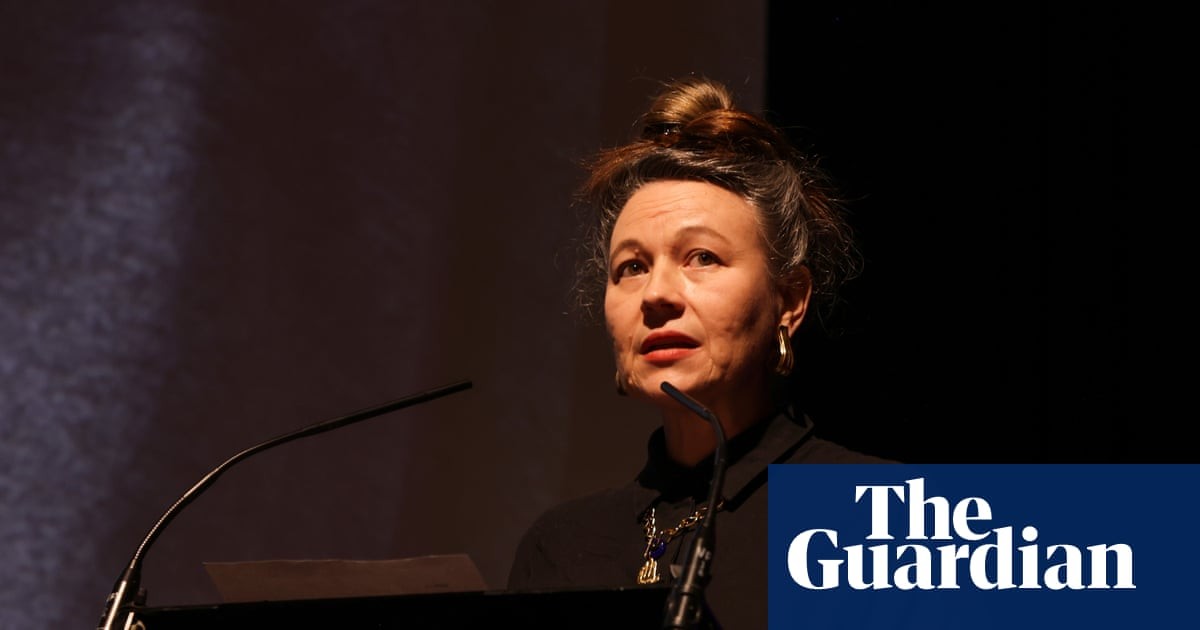
Female film-makers are still being squeezed out of the industry as they progress beyond their debut films, the director of the London film festival has said, adding that “the dial does not seem to be moving”.
Kristy Matheson’s comments came as LFF announced its full programme for this year’s event, which runs from 7 to 19 October. Of the 251 titles, 109 (43%) are made by female film-makers, but only two of the 21 gala films are directed by women.
The figure comes as the Venice film festival faces renewed scrutiny over its lack of female directors in the competition. Maggie Gyllenhaal, the president of the Venice jury, said on Wednesday that there was a “systemic problem” preventing women from getting opportunities, including access to financing.
Speaking about LFF, Matheson said programmers had no difficulty finding strong films by women at the beginning of their careers, but numbers declined sharply thereafter.
“The statistics are not where you would want them to be,” she said. “We have no problem finding incredible films by female directors. We could make a whole Sutherland competition [recognising directorial debut] easily and have only female directors.
“Then it really drops off. So short films, first films, you’re just seeing all of this incredible talent. Second films, it starts to drop off. This is not something new to this year. It seems the dial does not seem to be moving.”
Matheson said the disparity was particularly visible in the festival’s higher-profile sections.
“You’ll find less female film-makers in the gala section, for example,” she said. “How many female directors get to make big-budget films? How many get to make fourth films, fifth films?”
The festival will also feature screen talks with Andrew Scott, Ava DuVernay, Cynthia Erivo, Jesse Eisenberg, John Malkovich, Sofia Coppola, Brad Bird, James Gray, Mahershala Ali, Naomi Ackie and Danny Boyle.
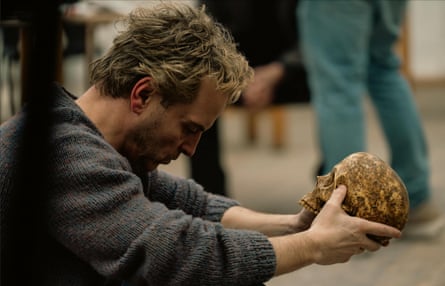
Opening and closing this year’s festival are films about theatre, creativity and the communities people build around them.
Simon Stone’s Elsinore, receiving its European premiere, will open the festival with the story of the actor Ian Charleson and stars Andrew Scott and Olivia Colman. Jesse Eisenberg’s comedy The Debut, a love letter to community theatre, will close it with its UK premiere, starring Julianne Moore and Paul Giamatti.
“To make theatre is to be with others. It’s an act of community,” Matheson said.
“Elsinore and The Debut are two very different films in tone. But in both, you get a sense of what creative community means, and how nourishing and enriching that can be. What they share is this idea of transformation. They’re both films about people on the precipice of something.”
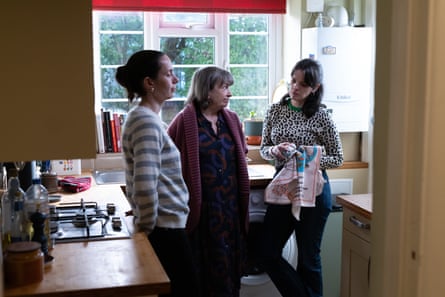
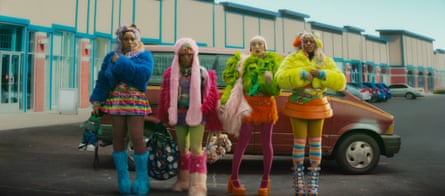
Labour emerged as another theme, Matheson said, with films showing people at work opening up bigger questions about society. Mike Leigh’s Tender Loving Care follows two flatmates working in social care, while Boots Riley’s I Love Boosters, starring Keke Palmer and Demi Moore, turns a confrontation between professional shoplifters and a ruthless fashion mogul into a story about unionising.
Other films focus more explicitly on community and “radical care”, Matheson said. All of a Sudden, set in a nursing home, uses the relationship between two women to explore friendship and what it means to belong.
after newsletter promotion
Elsewhere, the programme explores political themes. Boyle’s Ink, premiering at the Mayor of London’s Gala, revisits Rupert Murdoch’s acquisition of the Sun and its impact on British politics and western democracy. Martin McDonagh’s Wild Horse Nine returns to the eve of Pinochet’s 1973 coup in Chile, while Sergei Loznitsa’s Imperium reworks footage shot in Russia in the early 1970s into a meditation on empire.
“They’re using history to process now,” Matheson said.
The Match, a documentary about the 1986 England-Argentina World Cup quarter-final, is structured like a thriller while examining politics, colonialism and ownership. Josephine, which premiered at Sundance, uses thriller conventions to explore trauma after a violent sexual assault witnessed by a young girl.
“There are films that are not usually the subject matter of a thriller, but are using this genre to explore topics in an engaging and enticing way,” Matheson said.
Among the festival’s international premieres is Tony Gilroy’s Behemoth!, starring Pedro Pascal, Olivia Wilde and Will Arnett, and set in the world of classical music.
World premieres include Anthony Wonke’s British boxing biopic In the Shadows and Michael Winterbottom’s The Trip to the Northern Lights, starring Rob Brydon and Steve Coogan.
Additional galas include Rodrigo Sorogoyen’s The Beloved, Paweł Pawlikowski’s Fatherland, Cristian Mungiu’s Fjord – winner of the Palme d’Or in Cannes in May – Taika Waititi’s adaptation of Kazuo Ishiguro’s Klara and the Sun, and Susanna White’s adaptation of Suzie Miller’s acclaimed play Prima Facie.
There is also Luca Guadagnino’s Artificial, Jordan Firstman’s Cannes breakout Club Kid, James Gray’s Paper Tiger, and Andrew Haigh’s adaptation of Colm Tóibín’s short story A Long Winter.
What's Your Reaction?
 Like
0
Like
0
 Dislike
0
Dislike
0
 Love
0
Love
0
 Funny
0
Funny
0
 Wow
0
Wow
0
 Sad
0
Sad
0
 Angry
0
Angry
0





Comments (0)