

Fujifilm X half Review: The 1990s Point-and-Shoot Experience, Reborn in Digital and Ridiculously Fun
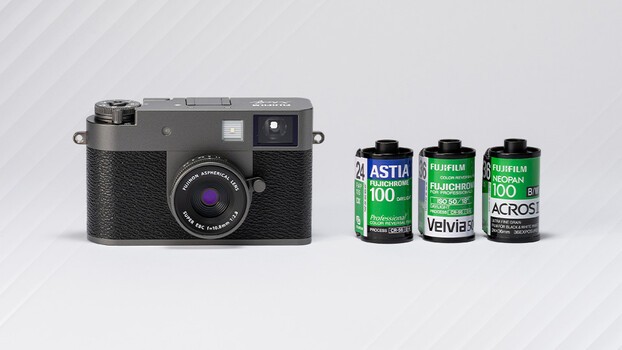
The Fujifilm X half is a machine for time travel, and the destination is roughly 1997. It takes the experience of a cheap, cheerful point-and-shoot film camera, the kind you took on school trips and to parties and then left in a drawer, and rebuilds the whole thing in digital form: the vertical half-frame photos, the wind-on lever, the roll you have to finish before you can see anything, even the little date stamp burned into the corner. It is not trying to make better pictures than your phone. It is trying to make taking pictures fun again, the specific analog kind of fun a lot of us have not felt since we were kids, and against my expectations, it absolutely succeeds.
The X half is a pocketable digital compact built around that one idea. It shoots vertically by default, it can pair two frames into a single diptych the way a half-frame camera splits a strip of 35mm in two, and it wires all of it to a companion app and Fujifilm's film simulations. There is a mode that makes you shoot an entire roll before it will let you see a single frame, and then you develop that roll in the app afterward, like picking up prints from the drugstore counter. I tested the silver model over several weeks, carried the way it wants to be carried, in a jacket pocket and a bag, on ordinary days rather than on assignments.
I came into this skeptical, because I have a reflexive distrust of nostalgia sold as a feature, and because I am a working photographer who knows exactly what a 1-inch sensor can and cannot do. None of that survived contact with the thing. The X half is not a good value on paper and it is not a serious tool, and I found that I did not care, because I had more fun shooting it than I have had with any camera in years. That is the whole review. Everything below is really just an attempt to explain why, and to be honest about what you give up for it, because you do pay for this, in money and in capability, and whether the trade is worth it comes down to how badly you want to feel that old feeling again.
Specifications and Configuration
The numbers are not the reason to buy this camera, but they set the boundaries of what it can and cannot do, so here is the full picture of the configuration I tested.
- Sensor: 1-inch type back-illuminated CMOS, oriented vertically in a 3:4 aspect ratio, approximately 13.3 x 8.8 mm
- Resolution: 17.7 megapixels, single image 3648 x 4864 (a 2-in-1 diptych composite spans 7296 x 4864)
- Lens: fixed 10.8mm f/2.8 prime, equivalent to 32mm in full frame terms, 6 elements in 5 groups
- Aperture: f/2.8 to f/11, controlled by a physical aperture ring
- ISO: 200 to 12,800
- Shutter: lens (leaf) shutter, 4 seconds to 1/2000 second in Program mode, with longer exposures available in other modes
- Viewfinder: optical direct-vision window (reverse Galilean), 0.38x magnification, approximately 90 percent coverage, no framelines or information overlay
- Rear display: 2.4-inch vertical touchscreen, 0.92 million dots, 3:4 aspect ratio, with a small adjacent "film window" sub-display for swiping through and previewing film simulations
- Film simulations: 13, plus a Grain Effect and three new film-inspired effects (Light Leak, Halation, Expired Film) and additional filters derived from the instax line
- Film Camera mode: select a 36, 54, or 72-frame roll, advance with the frame lever after each shot, no in-camera review, "develop" the roll in the app
- 2-in-1 / diptych: pairs two vertical frames into a single image in-camera via the frame lever, or in the app, with a customizable divider
- Companion app: Fujifilm X half app for developing rolls, browsing, building 2-in-1 images, social sharing, and instax printing
- Image formats: JPEG and HEIF, no raw
- Video: vertical Full HD (1080 x 1440) at 24p, plus a 48 fps high-speed mode for 2x slow motion, MOV/MP4, film effects apply
- Battery: NP-W126S, USB-C charging, rated up to approximately 880 frames per charge in Economy mode (fewer in normal use)
- Storage and connectivity: single SD/SDHC/SDXC (UHS-I) slot, USB-C 2.0, Wi-Fi (802.11ac / Wi-Fi 5), Bluetooth 5.2
- Dimensions and weight: 105.8 x 64.3 x 45.8 mm, 240 g with battery and card
- Colors: silver, black, charcoal silver
- Price: $649.99
Design and Handling
The first thing that lands is how small the Fujifilm X half is. It genuinely disappears into a jacket pocket, and after the first day I stopped thinking about whether to bring it, which is the highest compliment I can pay a camera like this. It is the anti-mirrorless-kit, the thing you have on you when the real camera stayed home. At 240 grams it is light enough that it never announces itself, and the vertical body sits in the hand differently than any other digital camera I own, more like a phone than a Leica.
Pick it up and start shooting and nothing about the handling gets in the way. The aperture ring clicks like the ones on Fujifilm's more serious cameras, and the build is exactly what it should be for a camera like this, light and unfussy rather than a machined precision instrument you are afraid to knock around. The one thing genuinely worth flagging is the price. At around 850 dollars you are paying serious-camera money for a 1-inch compact, and that, not the feel of the thing, is what you have to make peace with before you buy. It helps to be clear-eyed about what that money is actually for: not sensor size or lens speed, but the experience itself, the ritual and the fun of shooting this way. The price only makes sense if that experience is the thing you want, and the rest of this review is really about whether it is.
That said, the design is genuinely charming, and charm is not nothing on a camera whose entire reason to exist is charm. The vertical proportions, the dials, the little film-box window on the back, it all coheres into an object with real presence, something built to be enjoyed rather than merely operated. It comes in three finishes, silver, black, and a darker charcoal silver, and all of them lean into the same retro character.
The Two Screens and the Film Window
The back of the X half has the normal vertical touchscreen and, next to it, a small secondary display that shows the film simulation currently loaded, like the little window on the back of a film camera where the box end used to go. You swipe it to scroll through the simulations and watch each one preview in real time. It sounds like a gimmick, and it partly is, but it changed my behavior in a way I did not expect. Because choosing a look is a physical little ritual on its own screen, I found myself committing to a simulation before I raised the camera rather than shooting flat and deciding later. That is a small thing that nudges you toward the film mindset of deciding first and living with it, and it is one of the smarter design ideas on the camera, the part of the interface I ended up loving most.
The main screen is bright and responsive enough, and the vertical orientation stops feeling strange faster than I thought it would. It helps that so much of what you would do with these files, share them to a phone, post them vertically, already lives in a portrait frame. This is a camera built for the shape of the screens we actually look at, and after a few days the horizontal habit of every other camera I own started to feel like the odd one.
The Optical Viewfinder
There is an optical viewfinder, but you should understand exactly what it is before you get excited about it. It is a plain direct-vision window, a piece of glass you look through that shows you roughly what the lens sees. It is not coupled to the lens, it has no framelines, no focus confirmation, no exposure information, nothing. It is the viewfinder from a disposable camera, elevated slightly.
For anyone who grew up on 90s point-and-shoots, none of that is a problem. A plain window you look through, and a button you press when the moment feels right, is exactly how these cameras always worked, so the finder was second nature the moment I raised it. You are not chimping a live histogram and micro-adjusting, you are just looking at the world and shooting. It does mean the finder does not see what the lens sees, so in theory you could fire a frame with the cap on, but accept it for what it is and it reinforces the entire pitch of the camera. If you have only ever known a through-the-lens finder it takes a beat to trust; if you remember film point-and-shoots, it feels like coming home.
Film Camera Mode: The Heart of the Thing
This is the feature the whole camera is organized around, and it is the purest hit of the 1990s the X half delivers. You choose a film simulation and a roll length, 36, 54, or 72 frames, and then the camera locks you in. You shoot through the optical window, you thumb the frame lever after every shot, and you cannot see a single image until the roll is finished and you develop it in the app. The ISO and the look are fixed for the whole roll, exactly as they would be with a real cartridge. On paper it is a list of things a modern camera should never do to you. In practice it is a blast.
Shooting this way pulled me straight back into a mindset I had forgotten. Without the safety net of instant review, I slowed down, I composed like each frame cost something, and I waited for moments instead of machine-gunning at them. The not-knowing was not stressful, it was delicious, the same low-grade suspense that used to make dropping a roll at the counter exciting. When I developed a roll the next morning and the frames scrolled up one at a time, it genuinely felt like an event, a little Christmas morning, in a way that flicking through a memory card never has. For whole afternoons this was the most present and the most delighted I have been with a camera in years, and Film Camera mode is, hands down, my favorite thing about the X half.
I will be honest about the other edge of this, because the constraint is real and it is not for everyone. The same rules that create the magic can also cost you a picture. Lock your exposure and color for 72 frames and you cannot chase the light when it shifts, and a moment you cannot repeat is a nerve-wracking thing to shoot blind. Some experienced reviewers have started a roll in this mode and bailed partway through, deciding the friction was not worth the aggravation. I never did; even when the light changed on me mid-roll, the constraint felt authentic and fun rather than punishing, part of the deal rather than a flaw in it. But whichever way you land, that debate misses what the camera is for. You do not buy the X half to nail the shot, you buy it to enjoy taking it, and Film Camera mode is the best expression of that anywhere in digital photography, because it does not fake the feeling with a filter, it earns it by making you shoot for real.
Developing in the App
The developing step lives in the Fujifilm X half app, and it is a bigger part of the experience than it sounds. You connect the camera, the roll transfers, and the app walks you through revealing the images, then hands you a contact sheet. There is a deliberate theater to it that I found charming rather than annoying, and the app is also where you build diptychs, browse your rolls, share to social, and print to instax. It is not the fastest workflow in the world, and it only lets you export ten photos at a time, so pulling a full roll off the camera takes several rounds of it. Images shot in Film Camera mode also carry restrictions, they cannot be printed directly to instax the way ordinary frames can, and they are kept in separate folders on the card. But the app is central to the pitch, not an afterthought, and it mostly earns its place.
The Two-Frame Diptych
The half-frame heritage shows up most literally in the 2-in-1 feature. A half-frame film camera splits a single 35mm frame into two vertical exposures, and the X half recreates that by letting you pair two shots into one image, either in-camera using the frame advance lever or later in the app, with a divider you can style. When it works, it is a small joy. You start thinking in pairs, a wide and a detail, a face and a place, a before and an after, and the camera rewards a kind of visual sentence-making that no other digital camera encourages.
It is also the first feature whose novelty faded for me. Composing deliberate diptychs is fun for a weekend, and then I noticed I was reaching for it less. That is not a knock exactly, plenty of features are seasonal, but if the 2-in-1 is a major part of why you are buying the camera, go in knowing that the delight is real and the delight is finite.
Film Simulations and Effects
Film simulations are the thing Fujifilm does better than anyone, and the X half leans on them hard. You get 13 of them, the familiar cast including Provia, Velvia, Astia, and Classic Chrome, though a few from the broader X-series lineup did not make the cut. On top of those, there are new film-inspired effects, Light Leak, Halation, and Expired Film, plus a Grain Effect with adjustable intensity and additional filters pulled from the instax world. Halation in particular, the soft glow that blooms around bright light sources, is the kind of thing that used to require a filter or a plugin and here is just a setting.
I liked these more than I expected to, and I also wished for more control over them. The effects are presets, and I kept wanting to dial the light leak halfway or tune the halation, which you cannot really do. Used honestly, though, and matched to the right subject, they produce images with a genuine mood straight out of the camera, and since there is no raw file to fall back on, the simulation you choose is the picture you get. That is the whole bargain. Commit up front, live with it, and the constraint does some of the creative work for you. If you want to go deeper on shooting with intention across different situations rather than fixing everything later, Fstoppers' The Well-Rounded Photographer is a good primer on making decisions in-camera.
Image Quality
This is where you have to be clear-eyed. The X half has a 1-inch type sensor, and it behaves like one. In good light, at low ISO, with a subject that suits the format, the files are lovely, full of the character the simulations bake in, and more than good enough for the screens and prints this camera is aimed at. The 32mm-equivalent field of view is a natural, unfussy everyday focal length, and the vertical 3:4 files have a look that feels intentional rather than cropped.
Push it, though, and the limits arrive quickly. Highlights clip easily, dynamic range is modest, and it pays to keep the ISO low, generally at the bottom of the range, to keep the files clean. Because there is no raw, there is very little latitude to recover a blown sky or lift a crushed shadow after the fact, so exposure discipline matters more here than on almost any other digital camera. The f/2.8 maximum aperture also means low light is a real constraint. Indoors at night, the X half asks for compromises, and it is not the camera for a dim restaurant or a concert.
None of this bothered me for a second, and none of it is really a criticism, because you do not come to a camera like this for image quality. You buy the camera Fujifilm actually built, not the one a spec sheet might imply. This is a bright-light, low-ISO, commit-to-the-look camera. Shot inside those lines, it is a delight. Shot outside them, it struggles exactly where you would expect a small sensor and a moderate lens to struggle.
Video, Printing, and the Small Stuff
Video is present and squarely on-brand: vertical Full HD at 24p, with a 48 fps high-speed mode for short bursts of slow motion, and the film effects and grain applied. It makes for pleasant little social clips and nothing more ambitious than that. There is a date-stamp function that burns the date into the corner exactly like a 1990s point-and-shoot, and I love it more than I can rationally defend. It is the single most nostalgic touch on the camera, the small detail that turns any frame into something that looks pulled straight from a shoebox of old prints, and I left it switched on the majority of the time. The instax printing integration means you can push frames to a Link-series printer for physical prints, with the caveat that Film Camera mode images cannot be printed directly. These are not headline features, but they are consistent with the personality of the camera, which is more than a lot of feature checklists can say.
Battery and Everyday Practicality
The battery is the familiar NP-W126S, and Fujifilm rates it at up to roughly 880 frames per charge in its most efficient mode, which is generous for a camera this size and lined up with my experience of not thinking about it much across a day of casual use. It charges over USB-C, which is genuinely great, you top it up from the same brick as everything else, and the single SD card slot is fine for the volume of shooting this camera invites. In practice the X half is an easy thing to live with day to day. The friction it introduces is all deliberate, in the shooting experience, never in the logistics.
Summary
The X half is not a camera you evaluate, it is a camera you decide whether you want. Everything about it is a choice to trade capability for feeling, and how you score it depends entirely on whether that is a trade you were looking to make.
What I Liked
- It is the most fun I have had with a camera in years, a genuine hit of 1990s point-and-shoot joy.
- It is genuinely pocketable and charming, the camera you actually have on you.
- Film Camera mode is the rare gimmick that changes how you shoot, not just how the files look, and nails the ritual of shooting and developing a roll.
- The film-simulation window makes choosing a look a deliberate, tactile decision before the shot.
- The film simulations and new effects (halation especially) produce real mood straight out of camera.
- The date stamp in the corner is the most nostalgic touch on the camera, and I left it on far more than I expected to.
- The vertical 3:4 format suits the way we actually view and share images now.
- The two-frame diptych encourages a kind of visual storytelling nothing else digital does.
- Developing a roll in the app restores a sense of anticipation that digital erased.
- Strong battery life and painless USB-C, SD-card practicality.
What I Didn't Like
- At around $650, it is expensive for the hardware, a 1-inch fixed-lens compact. You are paying a premium for the experience, not the sensor, so the price only makes sense if that experience is what you are after.
- The companion app exports only ten photos at a time, so getting a full roll off the camera means several rounds of it, a genuine chore.
Buy it with your eyes open: the constraints that make Film Camera mode special are the whole point, not a flaw, so know why you are buying it rather than expecting a flexible everyday shooter. So who is it for? Not the working photographer looking for a capable second body, and not the current X-series owner hoping for a smaller serious camera. Both of those buyers will find a toy where they wanted a tool, and they will resent the price. It is for the person who misses the feeling of photography from before it got so good, the point-and-shoot fun of the 90s, the ritual of a roll and the little thrill of not knowing. The X half is expensive for what it is, and I am not going to pretend otherwise. But you are not paying for the sensor or the lens, you are paying for the experience, and the experience is genuinely, repeatably fun in a way almost nothing else on the market is. If that is what you are after, and you can make peace with the premium, this is one of the few cameras I can think of that will make you want to go take pictures for no reason at all. For the right person, that is worth a lot.
What's Your Reaction?
 Like
0
Like
0
 Dislike
0
Dislike
0
 Love
0
Love
0
 Funny
0
Funny
0
 Wow
0
Wow
0
 Sad
0
Sad
0
 Angry
0
Angry
0






Comments (0)