Gigabyte GO27Q24G 27-inch OLED 240 Hz QHD gaming monitor review: Tremendous bang for the buck
Oct 12, 2026 - 19:10
01
The Gigabyte GO27Q24G leaves out a few peripheral bits but delivers incredible performance and image quality for a super low price. It’s a competition weapon and gamers’ dream for sure.
Reasons to buy
+
Brighter than the competition
+
Accurate color with calibration
+
Premium video processing with options for slower systems
+
Premium styling and build quality
+
Terrific value
Reasons to avoid
-
Light gamma and warm color temp out of the box
Why you can trust Tom's Hardware
Our expert reviewers spend hours testing and comparing products and services so you can choose the best for you. Find out more about how we test.
OLED or LCD? This is a question many monitor shoppers ask themselves. When you consider the pros and cons of each, there isn’t a clear winner. OLED has better image quality thanks to its extreme contrast. But LCDs are brighter and less expensive. So, what if you could move the needle further towards one of the best OLED gaming monitors?
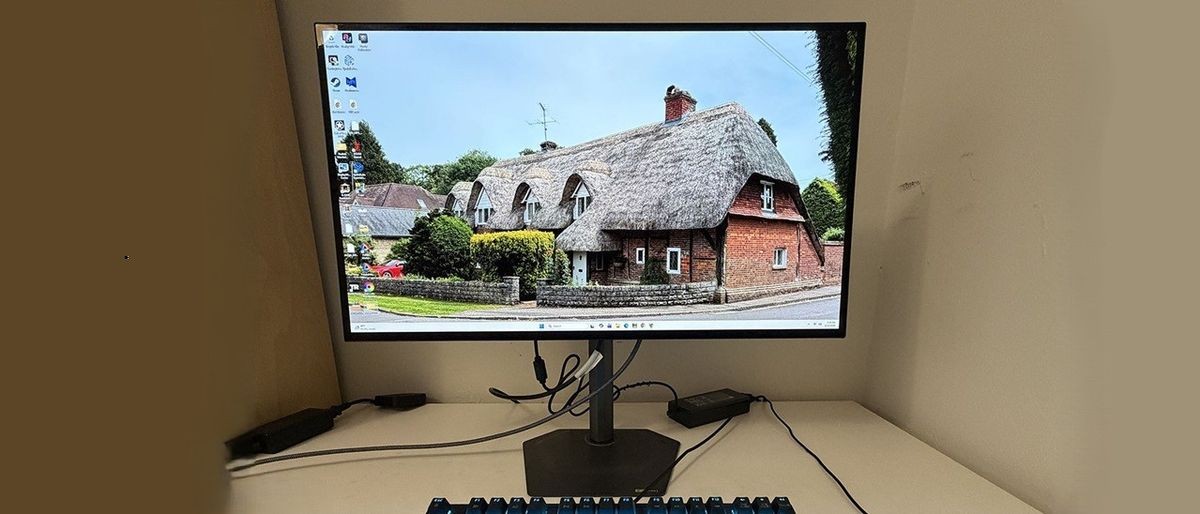
Gigabyte has done this with the GO27Q24G. This 27-inch QHD 240 Hz OLED delivers brightness over 1,300 nits for a shockingly low price of just $350 as I write this. Cutting corners? That’s a hard nope. You get 240 Hz, FHD gaming modes, wide gamut color, Adaptive-Sync, gaming aids, HDR10 and premium build quality. Let’s take a look.
Gigabyte GO27Q24G Specs
Swipe to scroll horizontally
Panel Type / Backlight
Organic Light Emitting Diode (OLED)
Screen Size / Aspect Ratio
27 inches / 16:9
Max Resolution and Refresh Rate
2560x1440 @ 240 Hz
Row 3 - Cell 0
FreeSync and G-Sync Compatible
Native Color Depth and Gamut
10-bit / DCI-P3
Row 5 - Cell 0
HDR10
Row 6 - Cell 0
DisplayHDR 400 True Black
Response Time (GTG)
0.03ms
Brightness (mfr)
275 nits full field
Row 9 - Cell 0
1,300 nits 1.5% window
Contrast
Unmeasurable
Speakers
None
Video Inputs
1x DisplayPort 1.4
Row 13 - Cell 0
2x HDMI 2.1, 1x USB-C
Audio
3.5mm headphone output
USB
None
Power Consumption
30.5w, brightness @ 200 nits
Panel Dimensions
WxHxD w/base
23.8 x 15.5-20.6 x 7.4 inches
(604 x 394-523 x 188mm)
Panel Thickness
2.1 inches (54mm)
Bezel Width
Top/sides: 0.3 inch (8mm)
Row 20 - Cell 0
Bottom: 0.4 inch (11mm)
Weight
12.3 pounds (5.6kg)
Warranty
3 years
The GO27Q24G saves some cost by omitting USB ports, internal speakers, and LED lighting. But there is nothing else critical missing from this impressive display to meet the low price point. The refresh rate is 240 Hz with Adaptive-Sync and certified G-Sync and FreeSync operation. There’s an anti-flicker option to prevent image pumping during rapid frame rate transitions. And you can turn on black frame insertion to keep motion blur at bay when frame rates drop. Video processing gives nothing away to more expensive monitors.
Latest Videos FromTom's Hardware
There’s plenty of color and contrast from the WOLED panel. WOLED, or white OLED, achieves color with filters rather than RGB stripes or Quantum Dots. There’s a definite cost saving and you won’t quite get the huge color gamuts found in higher-priced displays. But you do get 96% of DCI-P3 by my measurements, and that’s a colorful image. Accuracy is there as well, with solid results in my tests that you can read about on pages four and five.
The panel’s high brightness comes from a Micro Lens Array, which is essentially a textured layer over the pixels that amplifies light. Each pixel has around 5,000 of these lenses over it, and given the numbers I saw in testing, it clearly works. This approach also reduces power consumption and improves viewing angles.
The GO27Q24G’s screen is glossy but includes an optical coating that deepens black levels and cuts reflections. There’s a lot of metal used here, both behind the panel and in the stand, which is one of the nicest bits I’ve seen in a while. You would never imagine the price tag being so low.
In addition to pro-level video processing, there are gaming aids like reticles, timers and a frame counter. OLED care options are plentiful, with pixel orbiting, logo and perimeter protection, and screen refresh. Variable brightness is available too, which helps bump up the impact of small highlights to as much as 1,300 nits.
Stay On the Cutting Edge: Get the Tom's Hardware Newsletter
Get Tom's Hardware's best news and in-depth reviews, straight to your inbox.
If you’ve been fancying an OLED but didn’t want to spend $600 or more on a 27-inch monitor, the GO27Q24G is a compelling option.
Assembly and Accessories
The GO27Q24G comes packed in crumbly foam in three parts. I was impressed by the stand, which is all-metal and super solid. Everything assembles tool-free. The accessory bundle includes an external power supply and a DisplayPort cable. If you want to use an arm, there’s a 100mm VESA mount, but you’ll need to source your own fasteners.\
Product 360
Image 1 of 3
(Image credit: Gigabyte)
(Image credit: Gigabyte)
(Image credit: Gigabyte)
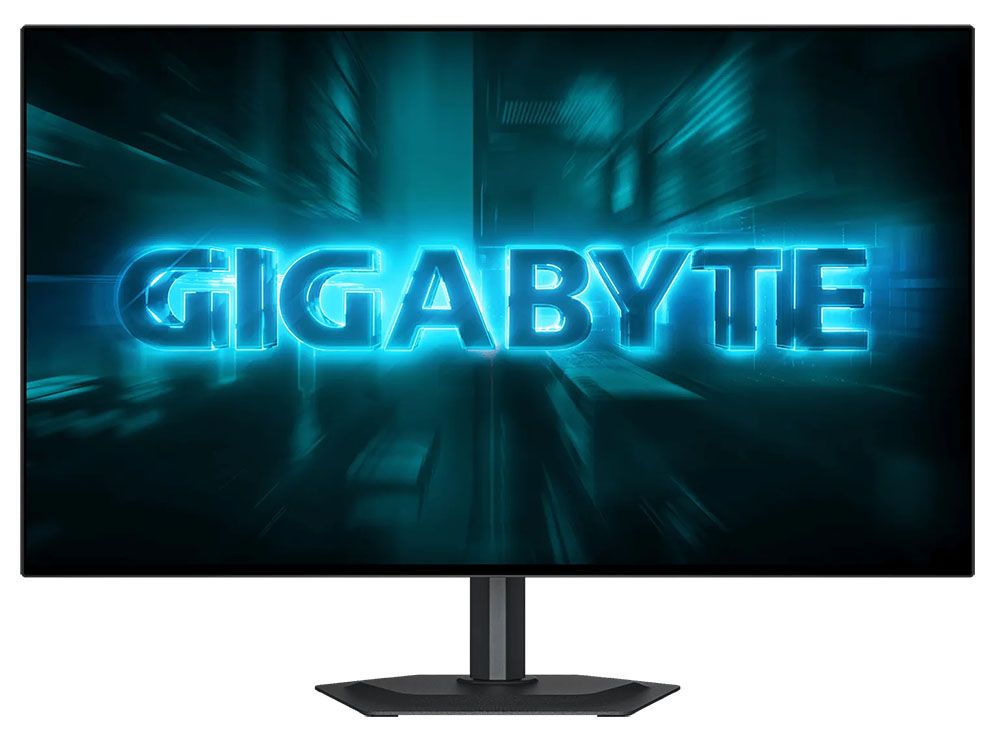
The GO27Q24G’s styling and build is minimalist in all the right ways. From the front, you only see the image surrounded by a very narrow flush bezel of 8-11 millimeters. There is no plastic trim anywhere in sight and no logos either. Even the power LED is tucked well underneath where you won’t be distracted.
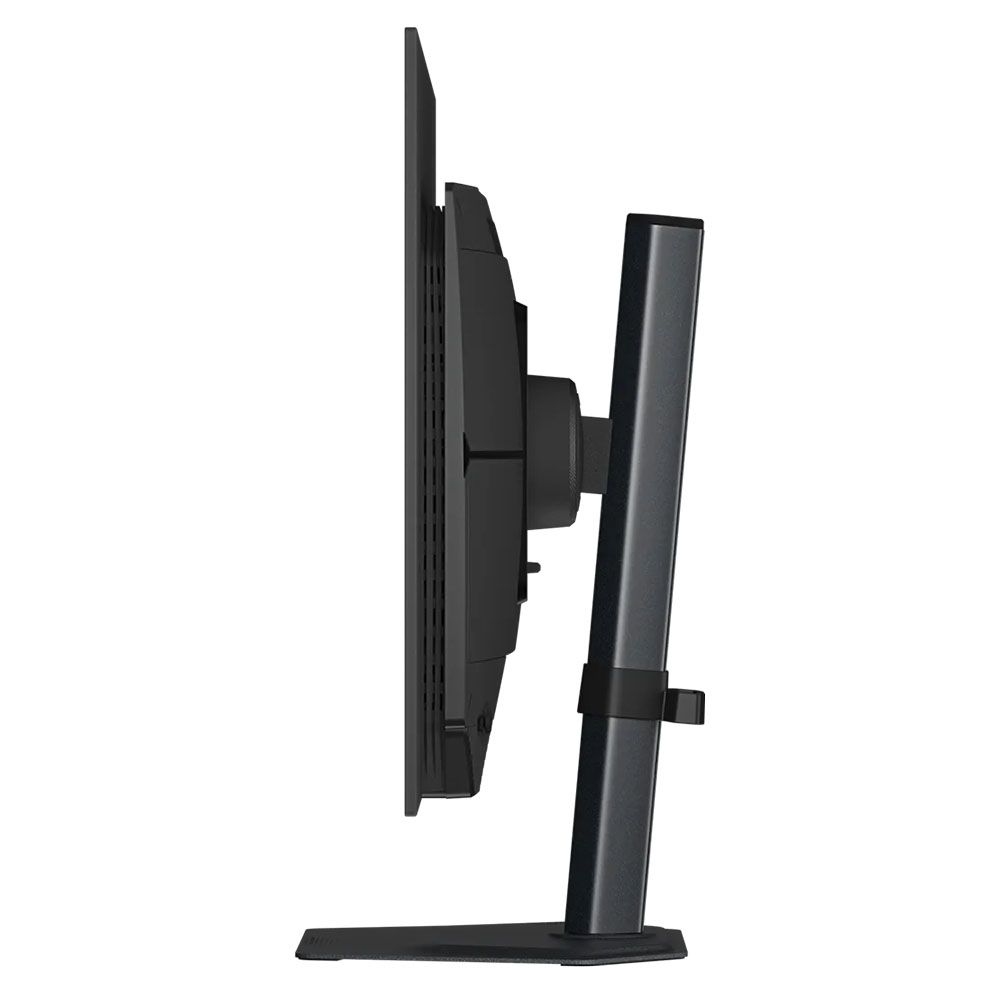
The base is a stamped steel plate with a gray satin finish. Its footprint is small, but with rubber feet and an ideal shape, it’s very stable. The upright is all-metal with very smooth movements and the same gray satin finish. The GO27Q24G includes full ergonomics with 5/21 degrees of tilt, 15 degrees swivel, a 90-degree portrait mode, and a 5.1-inch height range. A small cable clip is included to keep your wires tidy.
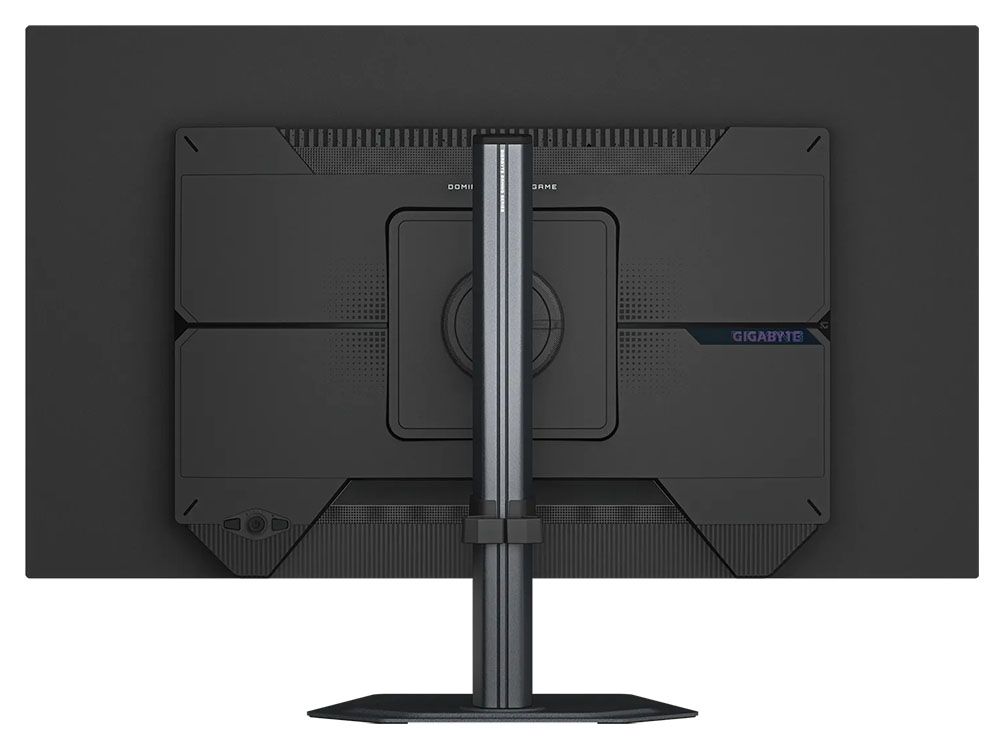
The only plastic used is in the back, where a small component bulge is trimmed with generous ventilation and a small Gigabyte logo. There’s a joystick flanked by two buttons and the input panel. It features two HDMI 2.1 ports, one DisplayPort 1.4 with DSC, and a USB-C input which has 15 watts of power. There are no additional USB ports or internal speakers, but you do get a 3.5mm headphone jack.
OSD Features
A single joystick controls the GO27Q24G’s OSD. Two flanking buttons toggle power and switch between aspect ratio modes.
Image 1 of 8
(Image credit: Tom's Hardware)
(Image credit: Tom's Hardware)
(Image credit: Tom's Hardware)
(Image credit: Tom's Hardware)
(Image credit: Tom's Hardware)
(Image credit: Tom's Hardware)
(Image credit: Tom's Hardware)
(Image credit: Tom's Hardware)
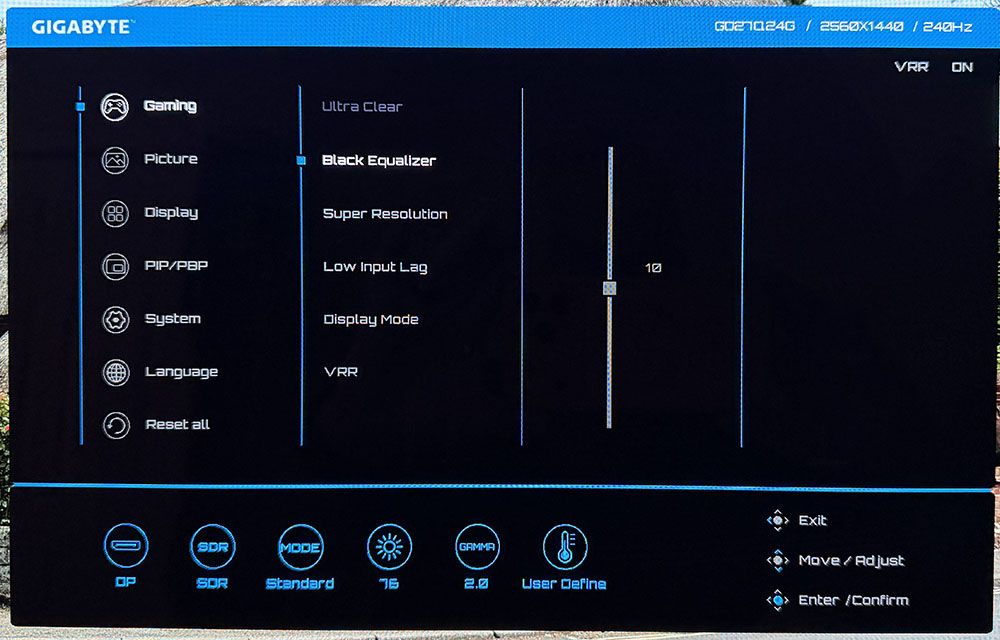
The OSD screen is well appointed with information. Resolution and refresh numbers are at the top while other parameters are at the bottom. You can quickly check the active input, SDR/HDR status, picture mode, brightness level, gamma setting, and color temp mode.
The GO27Q24G’s Gaming menu has Ultra Clear, which is Gigabyte’s term for black frame insertion. It effectively eliminates motion blur below 120 Hz. It also cuts brightness by around 40%, but it’s a great solution for slower PCs and consoles that operate at low frame rates.
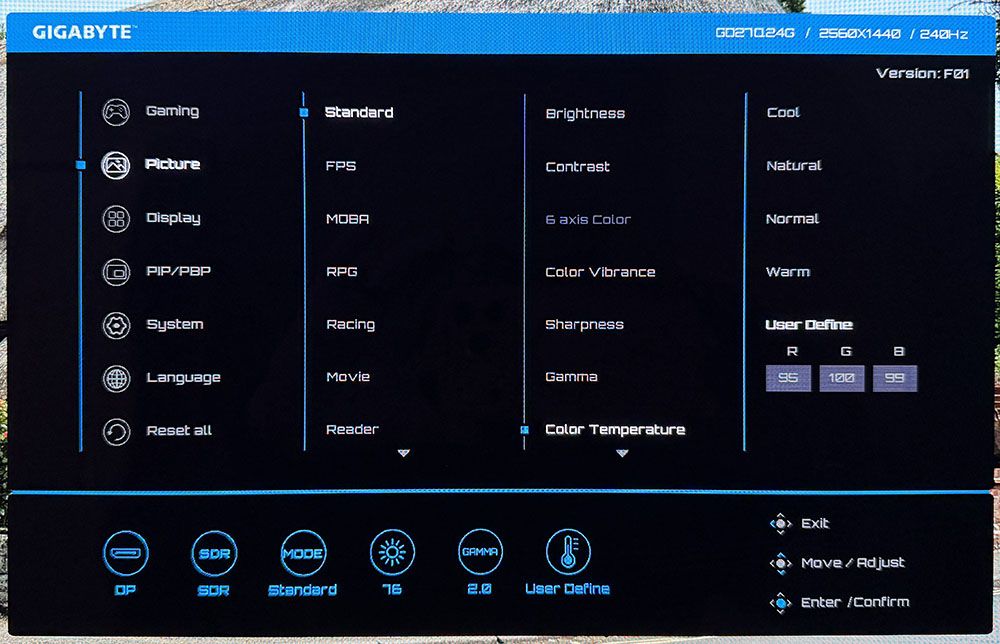
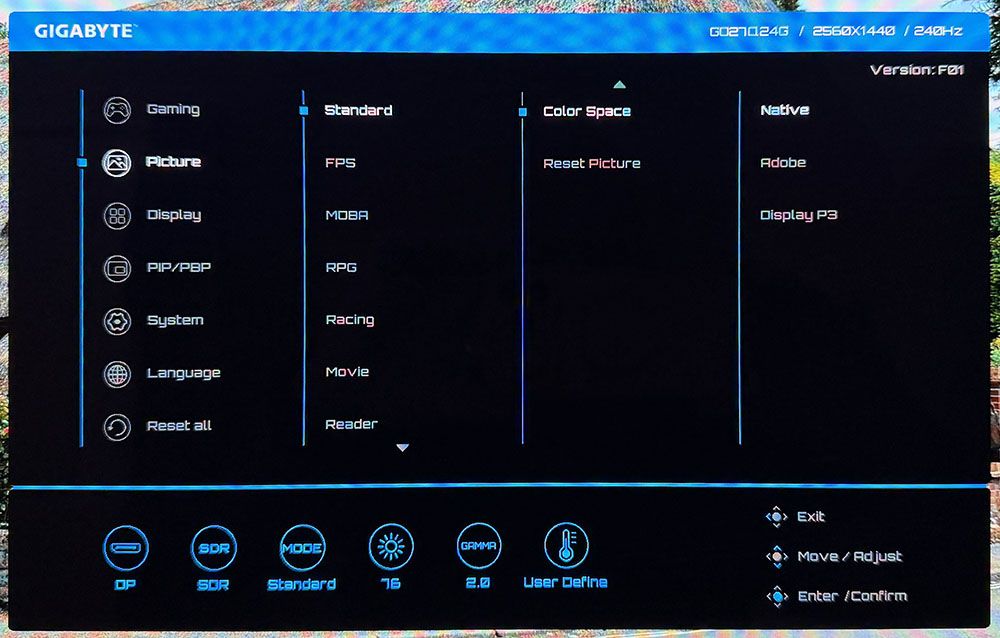
The Picture menu offers 10 picture modes, each with its own set of calibration options. Standard works well and leaves all controls available. There are gamma presets and color temps along with gamut selections. For sRGB, use the sRGB picture mode. The GO27Q24G has variable brightness, which you’d think would be here, but it isn’t. Read on to find it.
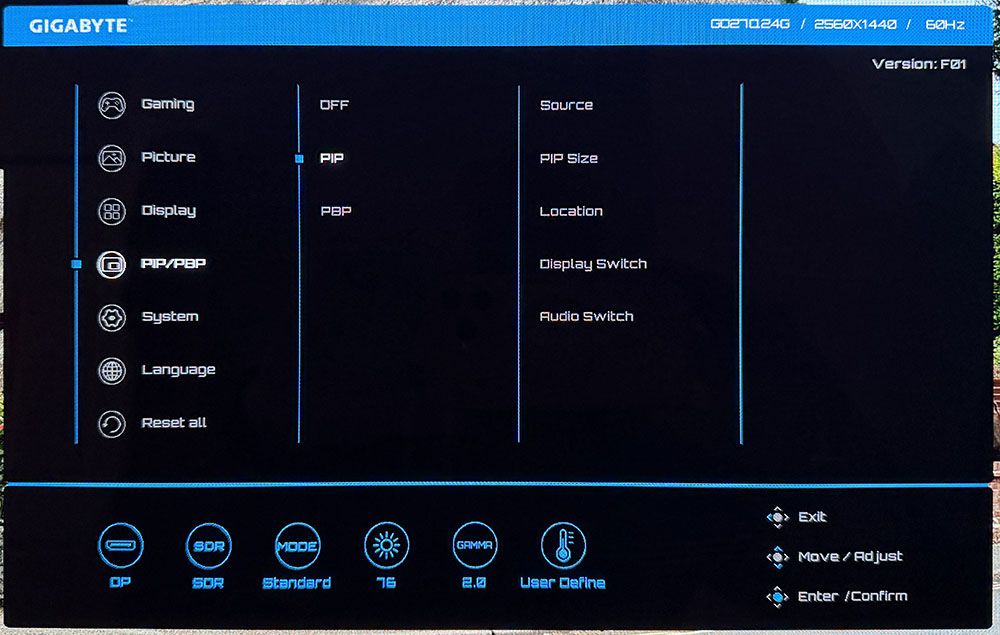
The GO27Q24G includes PIP and PBP options with full control of the PIP window’s size and location. You can also program the four joystick directions for quick access to commonly used settings.
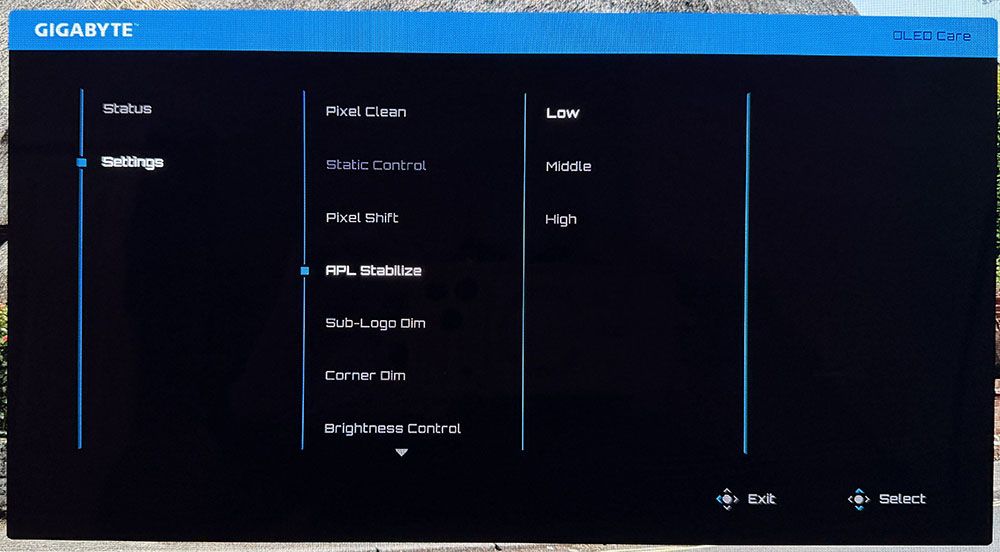
To find OLED Care, press the joystick and click left. There are many bits here, like pixel shift, cleaning routines that you can schedule, logo and corner dimming, and APL Stabilize. What is that, you ask? It’s the variable brightness option, which should be in the Picture menu. It has three levels which are termed counterintuitively. You’d think Low means the least stable, as in the most aggressive dimming. Nope, it’s effectively the off button. If you want constant brightness, choose that. High is great for HDR and watching SDR video. With it, you get very bright highlights and deep blacks for an impactful image.
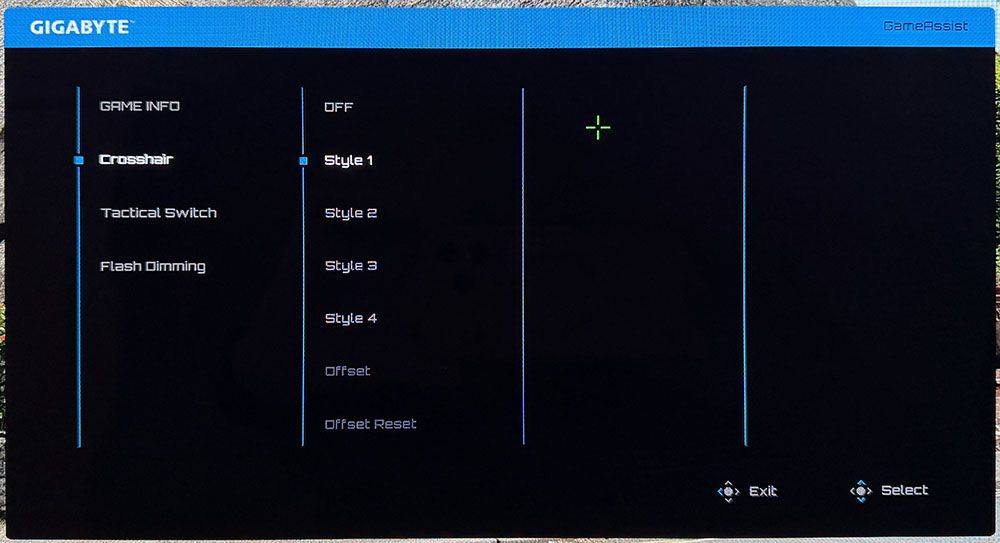
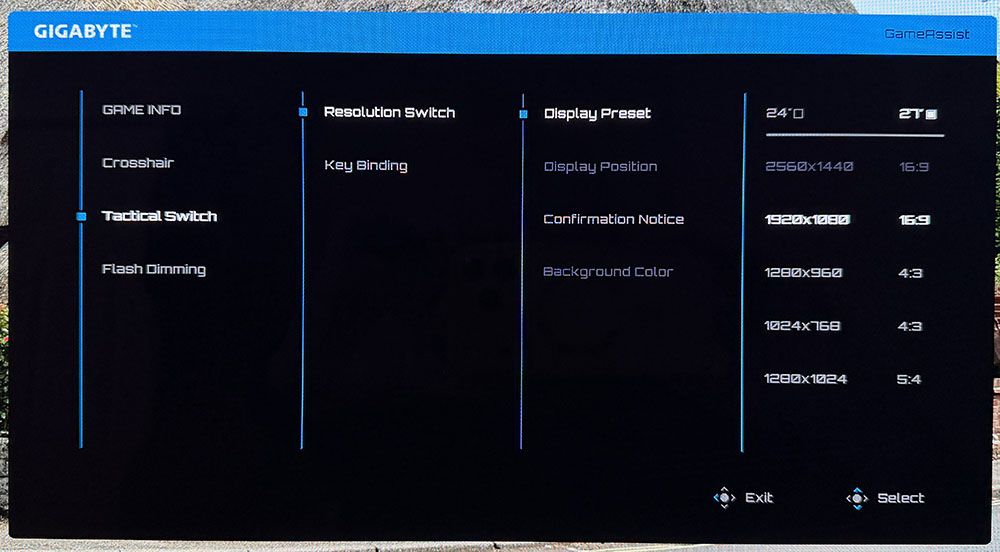
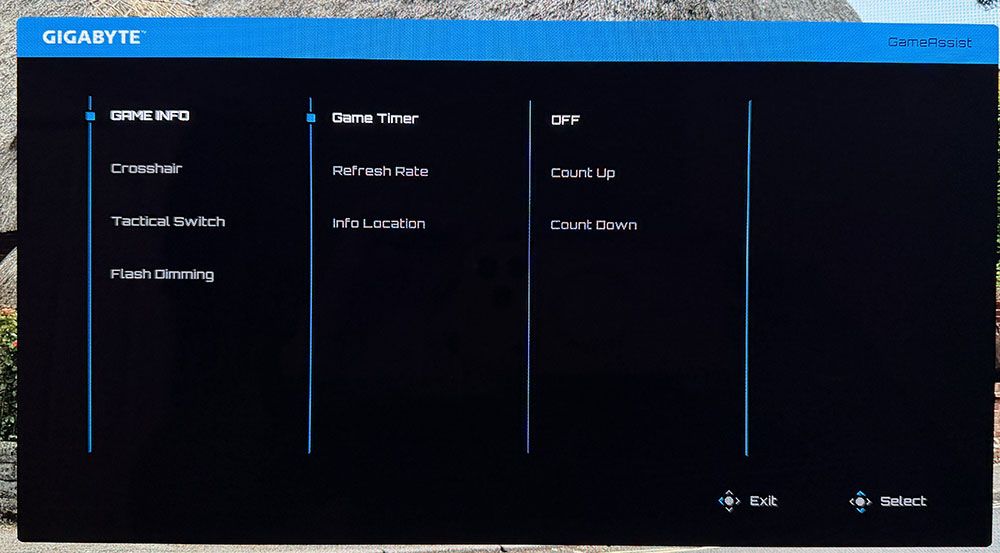
Press the joystick and click right for the Game Assist menu. It has crosshairs and the Tactical Switch. This is fancy-speak for the resolution modes. You can switch on the fly to FHD either full screen or in a 24-inch window. I recommend the latter because it pixel-maps 1:1, thereby avoiding the softness that comes with displaying FHD graphics on a QHD screen. You get black borders, but you can position the picture at the top, bottom, or center of the screen. The switch itself is the button on the right side of the joystick. Don’t press the left one unless you want to turn off the GO27Q24G.
Gigabyte GO27Q24G Calibration Settings
In Standard mode, the GO27Q24G measures OK out of the box but leaves room for improvement. Grayscale is a tad warm, and gamma is too dark, which makes the picture less lively. With a few tweaks to the RGB sliders and a change of gamma preset from 2.2 to 2.0, the picture is greatly improved. Color gamut coverage is nearly 100% of DCI-P3, so you can see a vivid picture in SDR or HDR mode. If you want sRGB, choose that mode from the 10 presets. It has only a brightness control available. My recommended settings are below.
For HDR signals, there are five specific modes. To get the brightest possible picture, choose Peak 1300. It has a lot of impact, but for the most accurate luminance tracking, HDR is the way to go. You can read more about this on page five.
Swipe to scroll horizontally
Picture Mode
Standard
Brightness 200 nits
76
Brightness 120 nits
41
Brightness 100 nits
33
Brightness 80 nits
24
Brightness 50 nits
12 (min. 24 nits)
Contrast
50
Gamma
2.0
Color Temp User
Red 95, Green 100, Blue 99
Gaming and Hands-on
You’ll see in the upcoming tests that the GO27Q24G delivers more brightness than any other OLED in its class. But does that translate to gaming goodness? I’m going to say yes. Because it’s one of the most precise monitors I’ve ever played on. Qualifier: you’ll need to keep the frame rate above 200fps. But that’s true of any OLED, regardless of resolution. I had no problem with that thanks to a GeForce RTX 4090. And when I say precision, I mean that I could pretty much not miss. The firing accuracy I enjoyed made me a bit overconfident, to the point where I was wading into hordes of enemies rather than taking my time picking them off one by one. I can’t promise that the GO27Q24G will make you a better player, but it is an absolute weapon. Pro competitors will surely want to give it an audition.
Picture quality was superb thanks to its high brightness. I tried both HDR and Peak 1300 modes for Doom Eternal and picked the latter as my favorite. You can see the technical differences between them in my test on page five. Quick spoiler: Peak 1300 is much brighter, almost double, in fact. And it has tremendous impact. The GO27Q24G has a bit less color volume than Quantum Dot or Tandem OLED monitors, but its extra light output makes up for that.
I noted from the get-go that the GO27Q24G has premium build quality. Though many OLEDs share this trait, I was particularly impressed with the all-metal stand. It’s sleek and slender, but supremely solid. The panel’s fulcrum is equally tight, which creates a monolithic package. And with nothing facing the viewer besides the screen, there are no distracting elements; no lights, no logos, no plastic trim, no nothing. I was amazed when I learned that the price is only $350.
If you want to make the GO27Q24G an everyday screen, it is more than up to the task. I recommend calibration, but it’s a simple matter. Just plug in my numbers above to see the same image I did. It has variable brightness, which you’ll find in the OLED Care menu. Choose Low for constant brightness and High for maximum contrast and impact. For those who need sRGB, that option is in the picture mode list. With 109ppi, there is enough pixel density to show a finely detailed and smooth image for things like Photoshop or YouTube.
Takeaway: The GO27Q24G is one of the best values I’ve seen in the OLED category. It offers all the performance of more expensive monitors while outpacing them in brightness. It also has the smoothness and response of the best gaming panels I’ve experienced. There are a few peripheral bits missing, like USB ports, LEDs, and internal speakers. But for the money, there isn’t a better 27-inch QHD OLED.
Christian Eberle is a Contributing Editor for Tom's Hardware US. He's a veteran reviewer of A/V equipment, specializing in monitors. Christian began his obsession with tech when he built his first PC in 1991, a 286 running DOS 3.0 at a blazing 12MHz. In 2006, he undertook training from the Imaging Science Foundation in video calibration and testing and thus started a passion for precise imaging that persists to this day. He is also a professional musician with a degree from the New England Conservatory as a classical bassoonist which he used to good effect as a performer with the West Point Army Band from 1987 to 2013. He enjoys watching movies and listening to high-end audio in his custom-built home theater and can be seen riding trails near his home on a race-ready ICE VTX recumbent trike. Christian enjoys the endless summer in Florida where he lives with his wife and Chihuahua and plays with orchestras around the state.
Roland Of Gilead
I'd be interested in that. Sooner or latter more of the likes of Gigabyte will bring out more budget orientated panels. There's a huge market I'm sure for OLED in a kinder price range.



 Like
0
Like
0
 Dislike
0
Dislike
0
 Love
0
Love
0
 Funny
0
Funny
0
 Wow
0
Wow
0
 Sad
0
Sad
0
 Angry
0
Angry
0









Comments (0)