

Gramado Film Festival Launches New Talent Drive
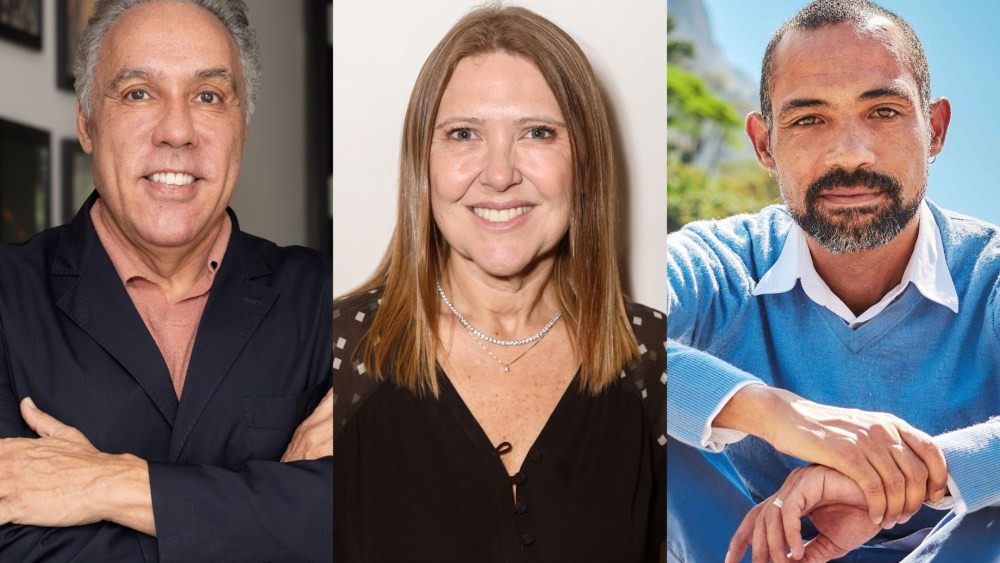
The first Residency for Young Filmmakers, a new feature of the Gramado Film Market taking place Aug. 17-19, will count with the participation of 60 filmmakers aged between 18 and 35, selected from more than 200 applications.
Participants are required to have work experience on at least one film, mostly in the fields of production, direction, acting, screenwriting, cinematography or sound. Rio Grande do Sul, where Gramado is located, is the state with most participants: 28. The remaining come from the states of Bahia, Goiás, Rio de Janeiro, São Paulo, Santa Catarina, Sergipe and Pernambuco, and the Federal District.
The intensive three-day program includes a total of 17 sessions in the mornings and afternoons, and the attendance of the Gramado Film Festival’s evening screenings. The first day features masterclasses on distribution, screenwriting and directing, covering subjects from narrative construction and creative choices to strategies for positioning films in different markets. The day’s program also includes a panel on public policies for the Brazilian audiovisual sector and an event dedicated to music scoring and sound recording.
Over Aug. 18-19, the focus is professional integration, production and changes in the audiovisual market, with panels on true crime, career internationalization, film societies and professional sustainability, as well as masterclasses on audiovisual production and post-production and a case study. The residency concludes with sessions on cinematography and environmental sustainability in productions.
Paris Filmes’ CEO Marcio Fraccaroli and Paris Entretenimento’s producer Veronica Stumpf will conduct the residency’s first masterclass, Distribution: Paths to Finding the Audience. São Paulo-based Paris is Brazil’s leading independent film distributor and a top producer of local pics.
“The purpose of this masterclass is to show that distribution goes far beyond screening a film in movie theaters. It’s a strategic stage that begins with decisions about how the work will be positioned, understanding the target audience, developing the communication campaign and choosing the best release window,” Fraccaroli told Variety. “The idea is to share some of our experience to demonstrate how each decision can directly affect a film’s reach, cultural relevance and commercial performance.”
Fraccaroli added he hopes to contribute to a conversation about the future of audiovisual distribution in a context of rapid changes in content consumption: “Understanding shifts in the market and developing increasingly intelligent distribution strategies will be essential to expand the reach of films and allow them to achieve their full potential.”
Stumpf celebrated the Gramado fest’s decision to launch the residency initiative.
“It is essential to discuss and encourage the training of new professionals in order to strengthen the Brazilian audiovisual sector,” she told Variety. “As it is constantly changing, the market increasingly demands knowledge, planning and strategic vision. Training filmmakers, producers and executives who are capable of understanding the entire audiovisual value chain is essential for Brazil to consolidate a stronger, more competitive industry that is prepared to engage with different audiences, both within the country and abroad.”
Actor, director, producer, screenwriter and playwright Silvio Guindane will teach the masterclass Directing: Choices That Build the Film. Guindane has starred in dozens of films, telenovelas and series. He broke through as a director with the film “Mussum, o Filmis,” a biopic about comedian and musician Mussum.
The feature premiered at the Gramado Film Festival in 2023, taking home awards for film, actor for Aílton Graça, supporting actress for Neusa Borges, supporting actor for Yuri Marçal, original score and the audience award.
“Training new filmmakers is fundamental for the market,” Guindane told Variety. “Film is an industrial art because it involves so many people, and a film set is a big thing. But it’s also a handcrafted art. The filmmaker has the role of a conductor, which is to orchestrate talent, to manage, to draw from each department, each person in each department, including and especially the actors, the best they have to give to the characters and to the film as a whole.”
What's Your Reaction?
 Like
0
Like
0
 Dislike
0
Dislike
0
 Love
0
Love
0
 Funny
0
Funny
0
 Wow
0
Wow
0
 Sad
0
Sad
0
 Angry
0
Angry
0








Comments (0)