

How to Film a Simple Music Video, From Start to Finish
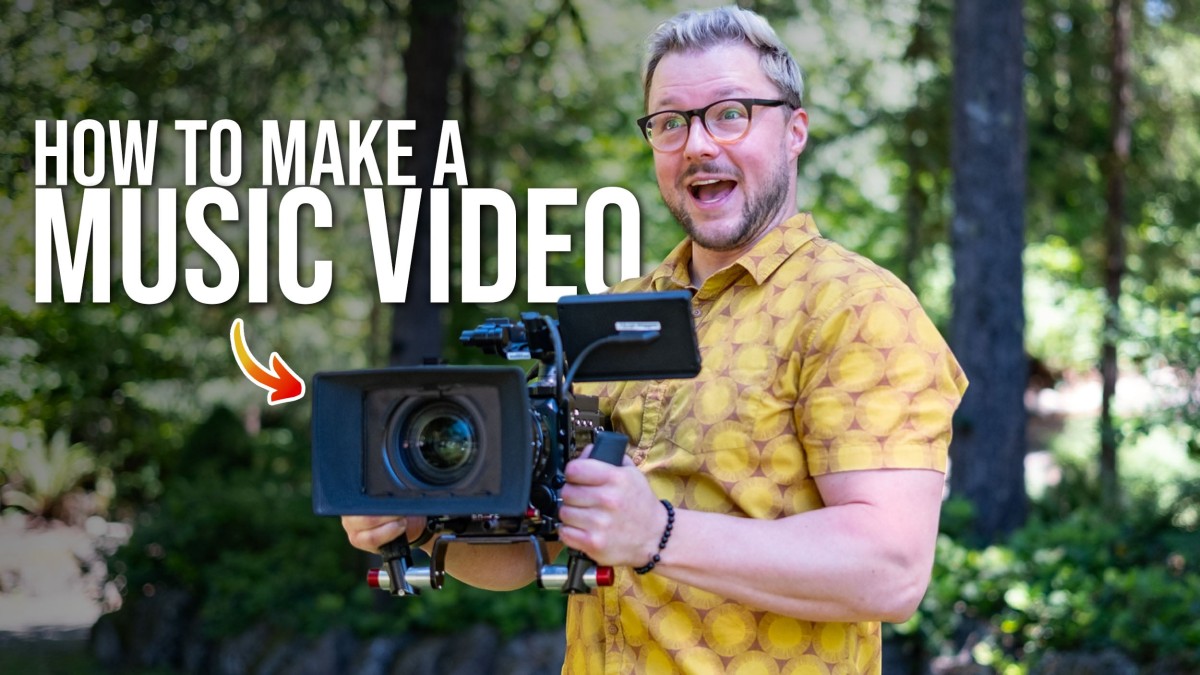
I’ve been thinking lately that it had been a while since I filmed a short form project. As in, actually directed the story, actors, and visuals. Right on cue, my buddy and amazing musician, Sam Plecker, reached out and said he wanted to film a music video for his upcoming track.
So I thought, why not use this endeavor to actually film a walkthrough of the entire process? With that in mind, this is how a music video actually comes together — at least how I do it — from the first conversation to the final cut.
Finding the Thread
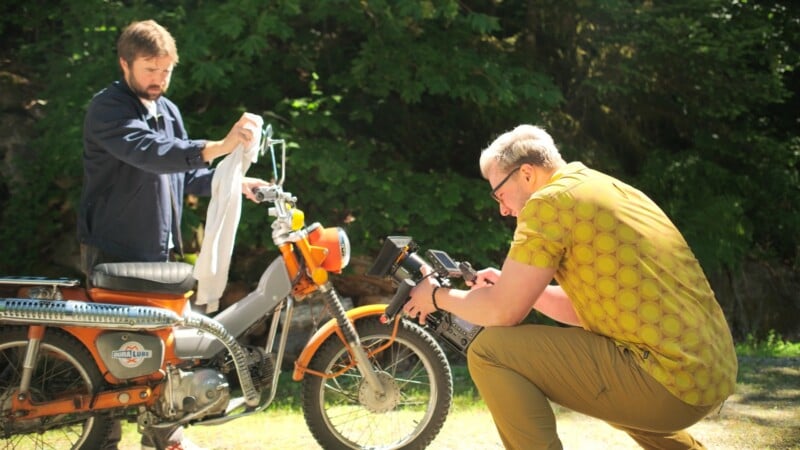
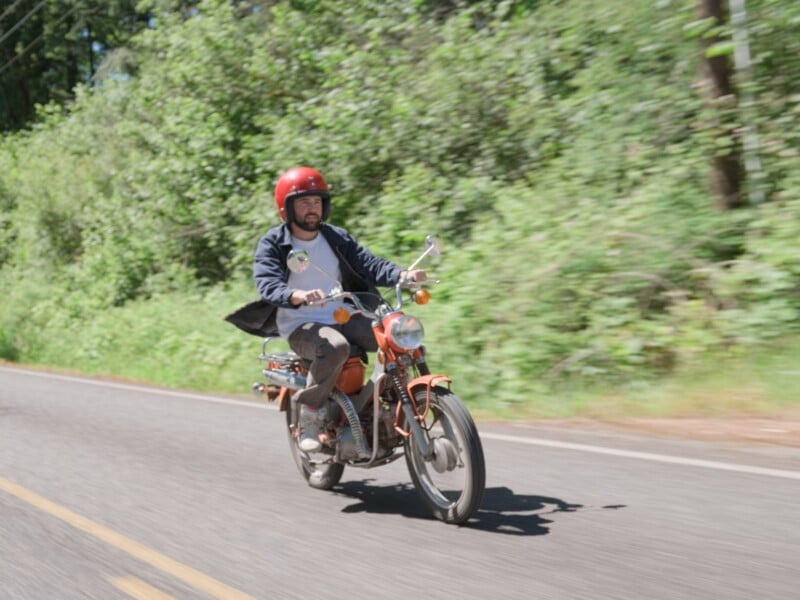
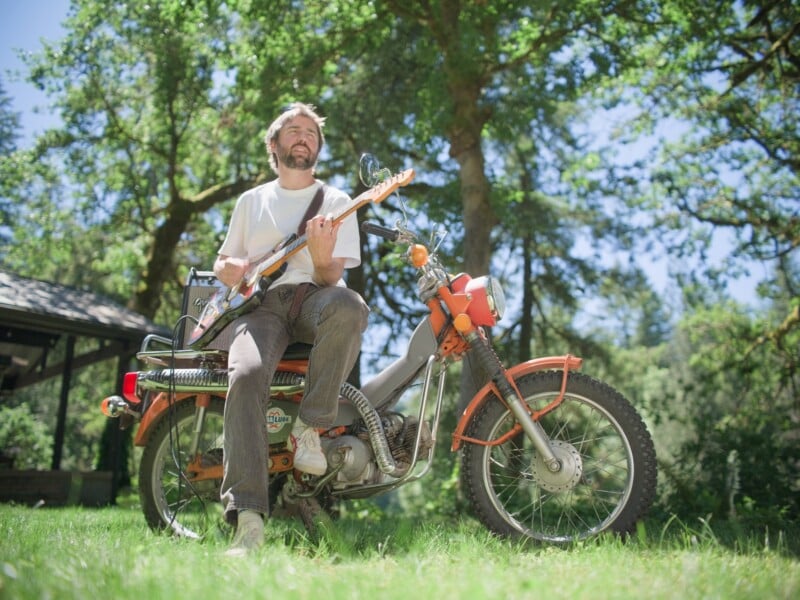
As soon as Sam sent me his track, I listened through it at least a dozen times. It had a lot of energy that felt warm, comfortable, and easygoing, so the visuals needed to reinforce that tone. The one thing he specifically wanted to feature was a vintage moped he’d been restoring for the better part of a year: a beautiful orange Honda.
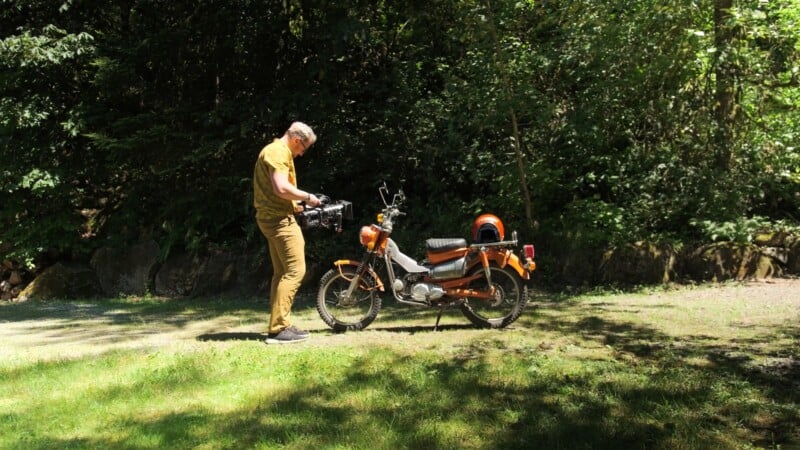
That’s exactly the anchor I thought we needed, so it worked perfectly. Anytime you make a video of any kind, you want to carry your audience from A to B, so you always have to ask yourself: what’s our thread? In this case, it’s the bike and also Sam’s attachment to it. We can make a story about an orange piece of metal, but we breathe life into it when we introduce the human element. With our subjects, Sam and the moped, and a location at Sam’s family cabin in Washington, we had everything we needed to start filming.
Building the Rig
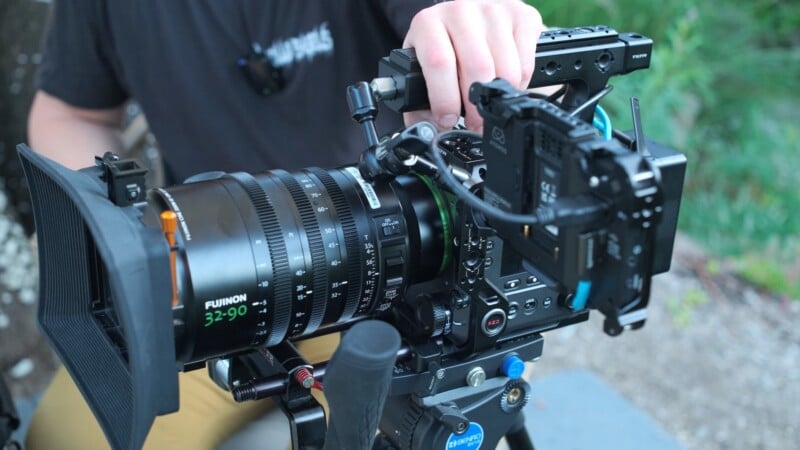
While you can use any camera you have access to, we chose to shoot on a Fujifilm GFX Eterna 55, rented through Fotocare in New York, and created our kit with some of my personal gear. I started with the camera and the included top handle so I could drive the variable ND, aperture, and start/stop function all from up top. The first real modification was pulling the PL mount that comes with the Eterna over to GF mount so I could run the GF 32-90mm f/3.5 Power Zoom that also arrived with the kit. That let me stay run-and-gun without swapping primes all day, although I kept my Vespid V1 primes and the PL converter on hand for anything that might call call for them.
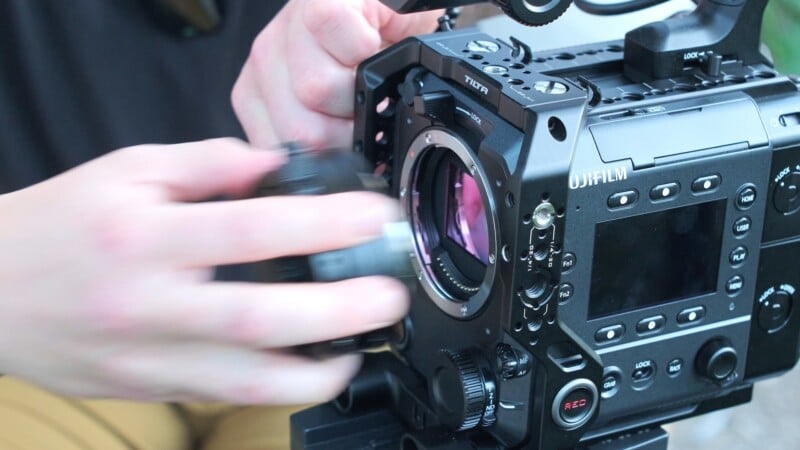
From there, I added short rods for extra handles and attacahed a V-Mount battery along with a spare Fujifilm 235 in-body battery (perfect for hot-swaps). Eterna has its own monitor, but I’m just used to my Atomos Shogun II, so I opted for that.
Lastly, I attached a Bright Tangerine matte box, mounted directly on the lens with no adapters. Since the camera has internal ND, I’m mainly using it for holding the eyebrow and controlling sun flares. Despite all this gear, the whole build is lighter than you’d probably expect.
Dialing in the Settings
On location at the cabin, I made sure to get all my settings locked before ever pressing record. Eterna handles high ISO well, but out in daylight, I set it to the lower native 800 ISO. I matched frame rates across all our cameras to keep editing painless, and shot 4K in 4:3 open gate to use the full sensor area, which is exactly what this camera is built for.
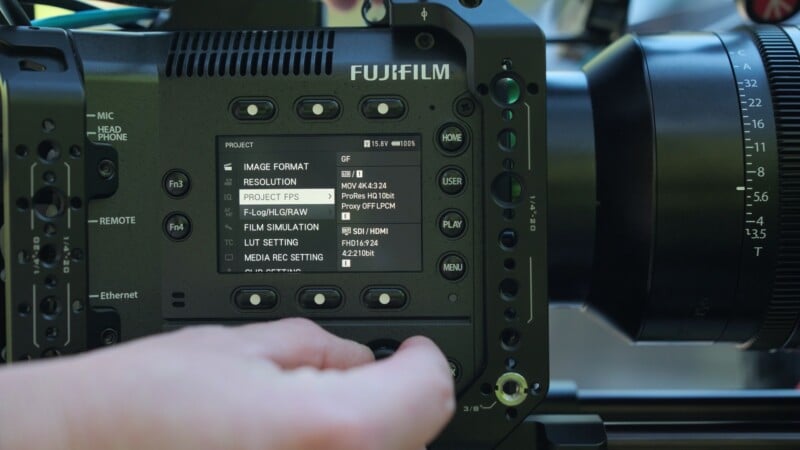
For the look, I recorded everything clean to the CFexpress Type B card in F-Log2C, and monitored through a LUT on the Shogun so that I had a graded reference on set while keeping the footage flexible. I chose to record the video files in ProRes HQ, the highest this camera records internally, which is more than enough for our purposes.
The one special setup we needed would support the high-frame-rate playback trick. We sped Sam’s track up slightly and variably, between 1.25x to 2x, then filmed at a higher frame rate corresponding to that multiplier. Then, when we stretched those frames back out in the edit (i.e. song at 1.25x, filmed at 29.97fps, stretched back to 23.976 base rate), his singing lands in sync with the song but plays back with a dreamy slow-motion feel without losing lip sync.
The Visual Strategy
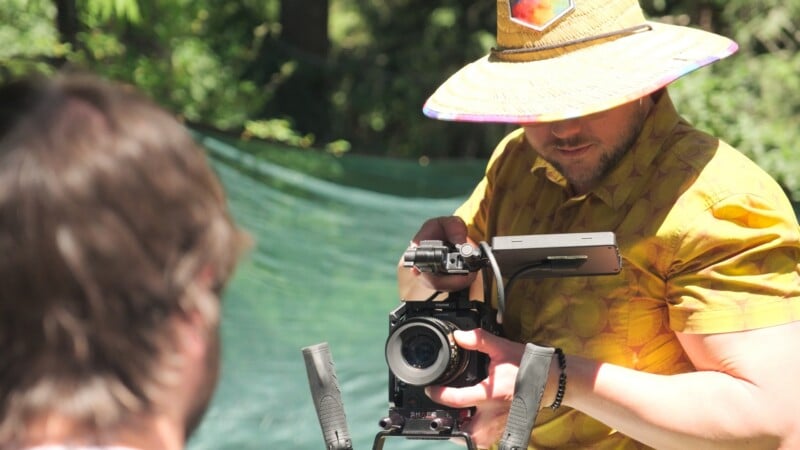
Filming our story and “B-Roll,” I wanted this to feel very visceral and textural, so that meant plenty of detail shots of the bike and environment for cutaways. For those, I used macro extension tubes, which move the lens away from the sensor: you lose infinity focus but gain the ability to get right up close, which was perfect for capturing all the details and patina of the bike’s features.
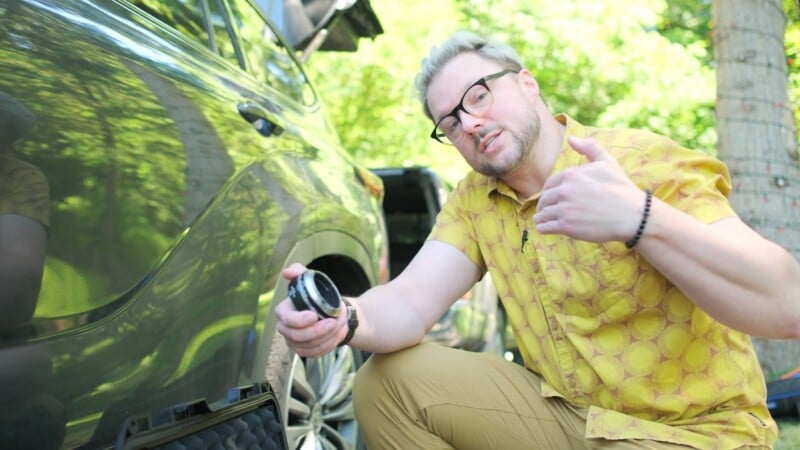
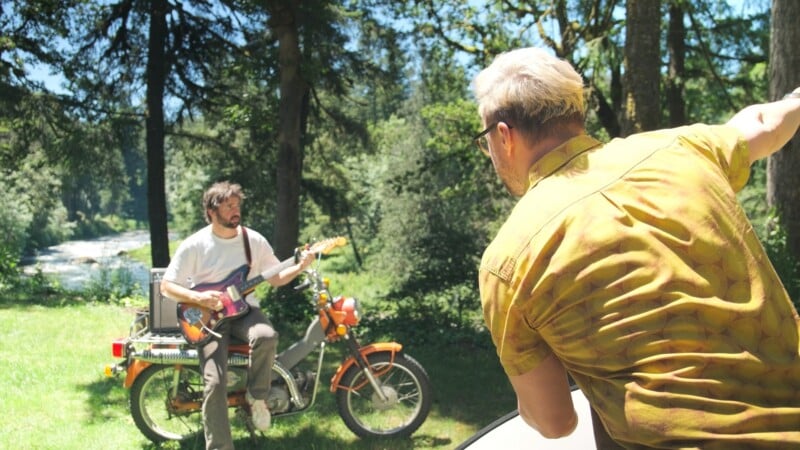
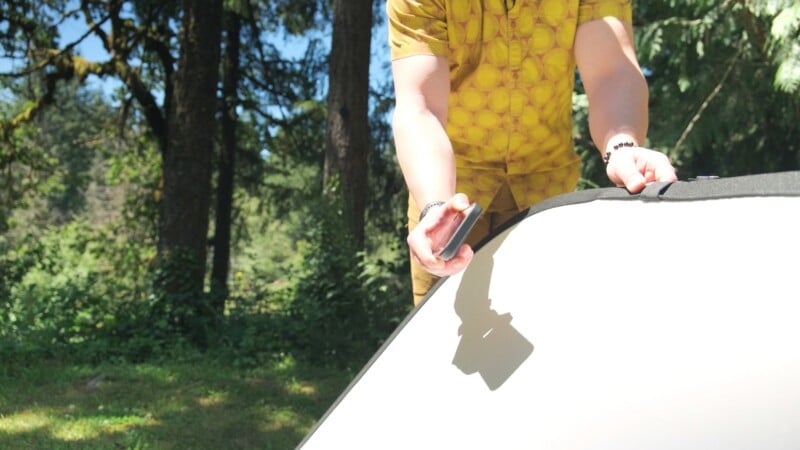
For Sam’s singing bits, I swapped to my Vespid V1 Primes, which opened up to f/2.1, helping separate him from the background even on wide shots. We used mostly natural light, but for select shots such as singing vignettes, I flew in a portable bounce to get some extra fill and eyelight.
Quick tip: if you’re aiming a soft reflector and can’t quite tell if it’s pointed in the exactly right direction, hold up a highly reflective surface (like a smartphone) right up next to it, bounce it in the exact direction you need, and that will give you the angle of your flat reflector surface, eliminating all the guesswork.
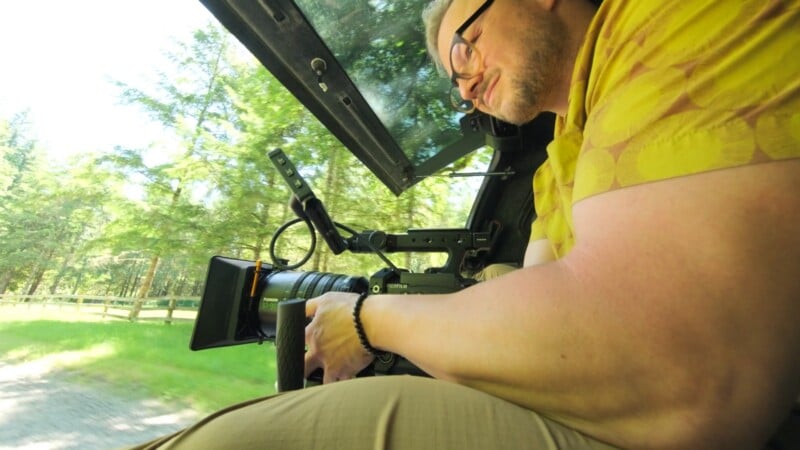
Then came our moped riding shots. In an ideal world, you’d be rigged into a car with a proper harness, but all we had at our disposal was a Tacoma truck with an open tailgate. I’ve done thousands of shots from moving vehicles in a wide range of safety protocols, so I feel pretty comfortable knowing how to position myself and where my safety threshold lies. So wedging myself in the back of that truck felt way safer than it might have looked, and for a quick series of shots, it was an effective method to wrap out the day.
All this said: “The stunts in this video were preformed by trained professionals, please do not attempt at home.”
Into the Edit
Going into the cut, my priority was letting shots breathe. If you cut too fast between them, everything starts to look the same and you feel the repetition. Sitting inside each setting and each environment added a lot to the piece and the visuals held up beautifully.
The Takeaway
Hopefully I have given you a framework of how to plan a shoot, set up scenes, prep the gear, and pull off a trick or two to make the visuals stand out. The biggest takeaway I hope you come away with, though, is simpler than any of that: go and make stuff with your friends. Collaborate. Share ideas. Build new ones. That’s the most fun part of filmmaking. Film something and don’t worry about making it perfect; just create.
What's Your Reaction?
 Like
0
Like
0
 Dislike
0
Dislike
0
 Love
0
Love
0
 Funny
0
Funny
0
 Wow
0
Wow
0
 Sad
0
Sad
0
 Angry
0
Angry
0






Comments (0)