

Inside the Unbelievable 50-Minute Single Take That Made "Adolescence"
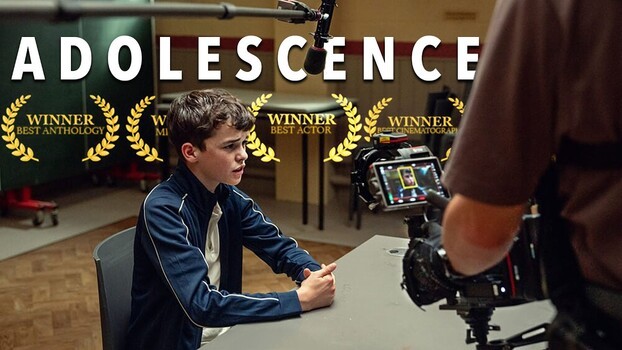
"Adolescence" pulled off something most productions only pretend to do: four episodes, each filmed as a single continuous take, no stitched cuts hiding in the shadows. The internet split over whether the show cheated, and the answer sits right in the gear the crew chose to carry.
That gear was the DJI Ronin 4D, a camera Netflix never put on its approved list, and in this interview, Matthew Lewis walks through exactly how he and camera operator Lee David Brown bent it to their will. Lewis, 29, became the youngest DP to win an Emmy for best cinematography off this project, which hit 144.8 million views and became Netflix's most watched series ever. He'd already shot two one-take projects with director Philip Barantini, including the feature "Boiling Point," so the format wasn't new to him. What was new was the footprint. "Boiling Point" used a large, cumbersome rig, while the Ronin 4D let the team hand the camera off, mount it, drone it, and run with it. The camera package dictated everything: how they told the story, whether they could add a second operator, whether a drone was even possible.
Episode one is a clinic in how many tricks can hide in plain sight. The show opens on a police raid, with the camera starting in Lewis's hands before clicking into a magnetic mount on a Fisher jib arm atop an electric tracking vehicle. While Brown and key grip Pat Gillespie run the camera up the hill, Lewis sprints through another car to beat the convoy and grab the camera again on the front lawn without ever stepping into frame. That single episode carries roughly 12 to 14 handoffs. The most telling detail isn't the acrobatics, though. It's a two-minute hold on Stephen Graham's face while his character's son is strip-searched off camera, forcing the audience to sit in the discomfort with no escape. That kind of restraint is why the camera work never once shoulders the story aside.
The technical find that reshaped the whole show came by accident. The Ronin 4D has a sport mode that locks pan and tilt while keeping 4D stabilization, toggled by holding the mode button. Lewis, a five-year owner, didn't know a double-tap kept it locked until he dug through the manual mid-prep. Once they found it, they used it everywhere. In the raid it makes the footage feel handheld without the roll you don't want. In episode two, Brown times the switch to land on the hit of a punch, then eases back into smooth gimbal motion so the audience feels the shift without ever clocking it. That one discovery ran through every episode, including the one that won the Emmy.
The whole "Adolescence" approach only makes sense when the camera stops being a passive recorder and becomes another actor in the blocking. Episode three drives that home. It's a single 50-minute take, no handoffs, shot entirely by Lewis inside a 14,000-square-foot studio built specifically to allow continuous movement. The lighting was the hardest part, with an estimated 40 DMX-tunable lights cued to specific lines of dialogue to simulate weather passing outside. As Lewis circled the interview table, gaffer Max Hodkinson's team dimmed and lifted the softbox levels quarter by quarter so faces stayed shaped and backlit through a full 360-degree rotation. They even hid an Aputure MC-style light inside a fake computer tower to keep a twinkle in an actor's eye through the overcast look. Every cue was pre-programmed, which means the operator gave up the freedom to improvise a single move. This is the tradeoff of the one-take method, and it's the principle any filmmaker can steal: plan so thoroughly that spontaneity happens on schedule.
The gear solutions kept coming. They ran the Tilta Float system to offload the Ronin 4D's weight across an hour-long take, padded to keep it from digging into Lewis's back. They shot on a single Cooke SP3 32mm prime across all four episodes, chosen partly because it was light enough to stay under the gimbal's weight limit. Since the Ronin 4D's mechanical ND isn't stepless, they retrofitted a Tilta Mirage wireless ND for four to five stops as they moved from exterior to interior without a visible exposure jump. And when vibration crept in on the vehicle sections, they strapped pound coins to the side of the head to balance it out.
Watch the full breakdown in the video above to see the drone handoff, the CG glass window trick, and the focus-pulling setup.
What's Your Reaction?
 Like
0
Like
0
 Dislike
0
Dislike
0
 Love
0
Love
0
 Funny
0
Funny
0
 Wow
0
Wow
0
 Sad
0
Sad
0
 Angry
0
Angry
0









Comments (0)