

Nikon's 35mm f/1.4 vs. the 35mm f/1.8 S: Which One Wins?
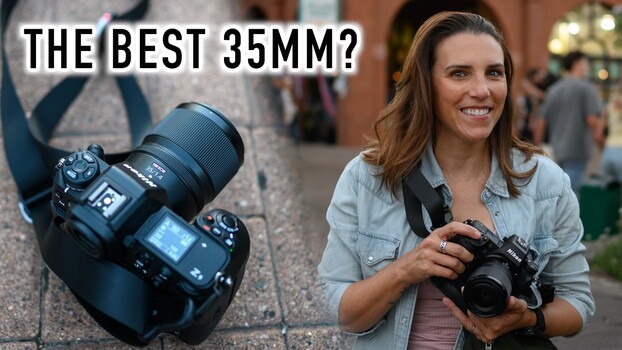
Nikon sells three different 35mm prime lenses for the Z mount, and picking between them comes down to details that specs alone won't reveal. The gap between the Nikon 35mm f/1.4 and the Nikon 35mm f/1.8 S is smaller than the labels suggest.
Leigh & Raymond Photography put both lenses through a downtown Flagstaff photo walk and a controlled studio test, and Leigh explains why the naming convention had her second-guessing Nikon's logic. The 35mm f/1.2 S runs close to $3,000 and carries serious size, so it sits in its own category. The oddity is that the f/1.4 costs less than the f/1.8 S while matching it in size and build, yet only the f/1.8 gets the premium S badge. Raymond, a self-described closet photojournalist, walked around with the f/1.4 on the Nikon Z9 and made the case that 35mm and f/1.4 form a genuine sweet spot for evening street shooting.
Leigh doesn't usually shoot test charts, and she's upfront about preferring to judge gear in real situations. Curiosity won out this time, so she built a scene using Lego Star Wars figures and shot both lenses at f/1.8, f/2.8, f/4, and f/8 on her Nikon Z7. In the center of the frame, there's no meaningful difference in sharpness, even with the f/1.4 wide open. The corners tell a different story, and that's where the S lens pulls ahead. Leigh walks through exactly how pronounced that gap is at each aperture and why the type of subject changes how much any of it matters.
The corner-sharpness question ties into a shift that's been reshaping how people evaluate lenses. Camera resolution has climbed past 40 megapixels on many current bodies, and that extra detail makes it possible to crop a 35mm frame down to a 50mm or even an 85mm field of view without a real penalty. Raymond leans on exactly that, letting his feet and crops handle composition instead of carrying more glass. High-resolution sensors also magnify optical flaws when you zoom to 100 percent, which is precisely why a corner-softness difference that vanishes at normal viewing sizes can look dramatic on a test chart. Understanding that distinction saves you from paying for sharpness you'll never actually see in a finished print or a full-frame web image. It also explains why so many working shooters now treat a fast, compact prime plus a big sensor as a substitute for a heavier zoom.
Leigh's verdict lands on the side of the cheaper lens. Even though the corner difference surprised her, she says it wouldn't push her toward the S lens, and if both had been available when she first bought into the Nikon Z 35mm range, she'd have taken the f/1.4. Same size, lower price, and two-thirds of a stop of extra light. The extra brightness kept ISO low during that Flagstaff evening, which matters more for walkaround work than a slightly cleaner frame edge. She's also clear that some shooters genuinely want that edge sharpness, and for them the S line is the right call.
For the full breakdown of Leigh's corner-sharpness findings and Raymond's take on the 35mm focal length, watch the comparison in the video above.
What's Your Reaction?
 Like
0
Like
0
 Dislike
0
Dislike
0
 Love
0
Love
0
 Funny
0
Funny
0
 Wow
0
Wow
0
 Sad
0
Sad
0
 Angry
0
Angry
0








Comments (0)