

This Photographer Built An App to Capture Perfect Solar Eclipse Photos
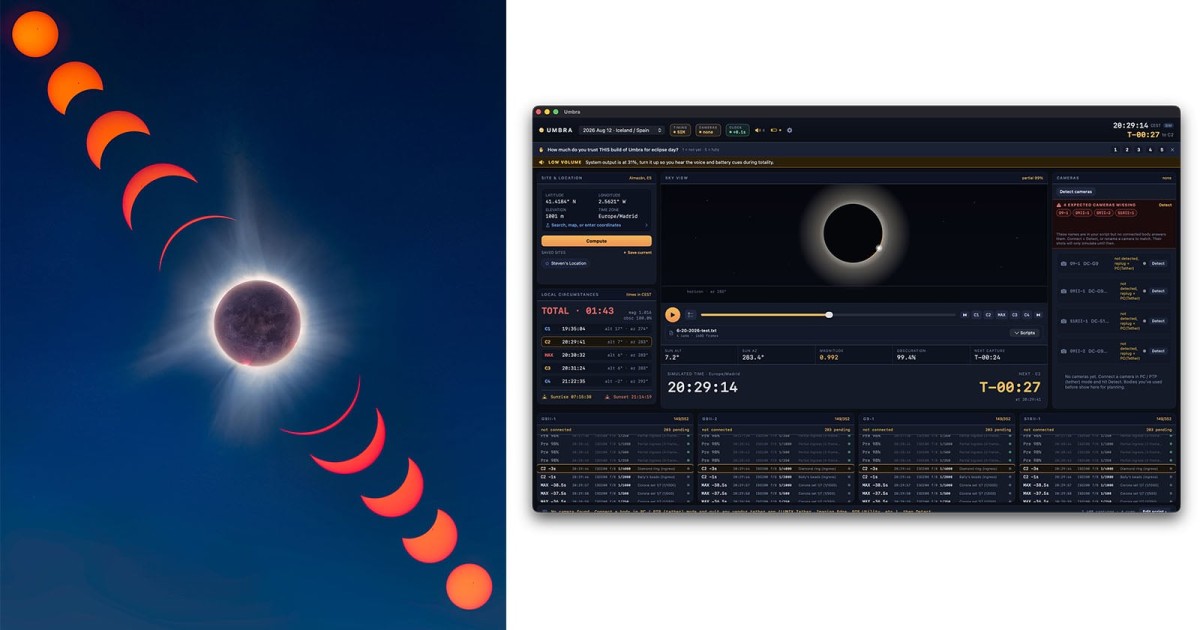
On August 12, 2026, a total solar eclipse will dazzle people in Greenland, Iceland, northern Russia, Spain, and a small part of Portugal, plus some lucky people on boats in the Atlantic Ocean. For photographers gearing up for the total solar eclipse next week, and others farther down the road, photographer Steven Madow has created an incredibly robust new solar eclipse automation app, Umbra.
This is not the first time Madow’s work has been featured on PetaPixel. Earlier this year, Madow made headlines after he brilliantly captured the historic Artemis II rocket launch using 14 cameras, including numerous remote ones he had programmed. It is this enterprising spirit and dedication to the artistic and technical aspects of photography that inspired Madow to create Umbra.
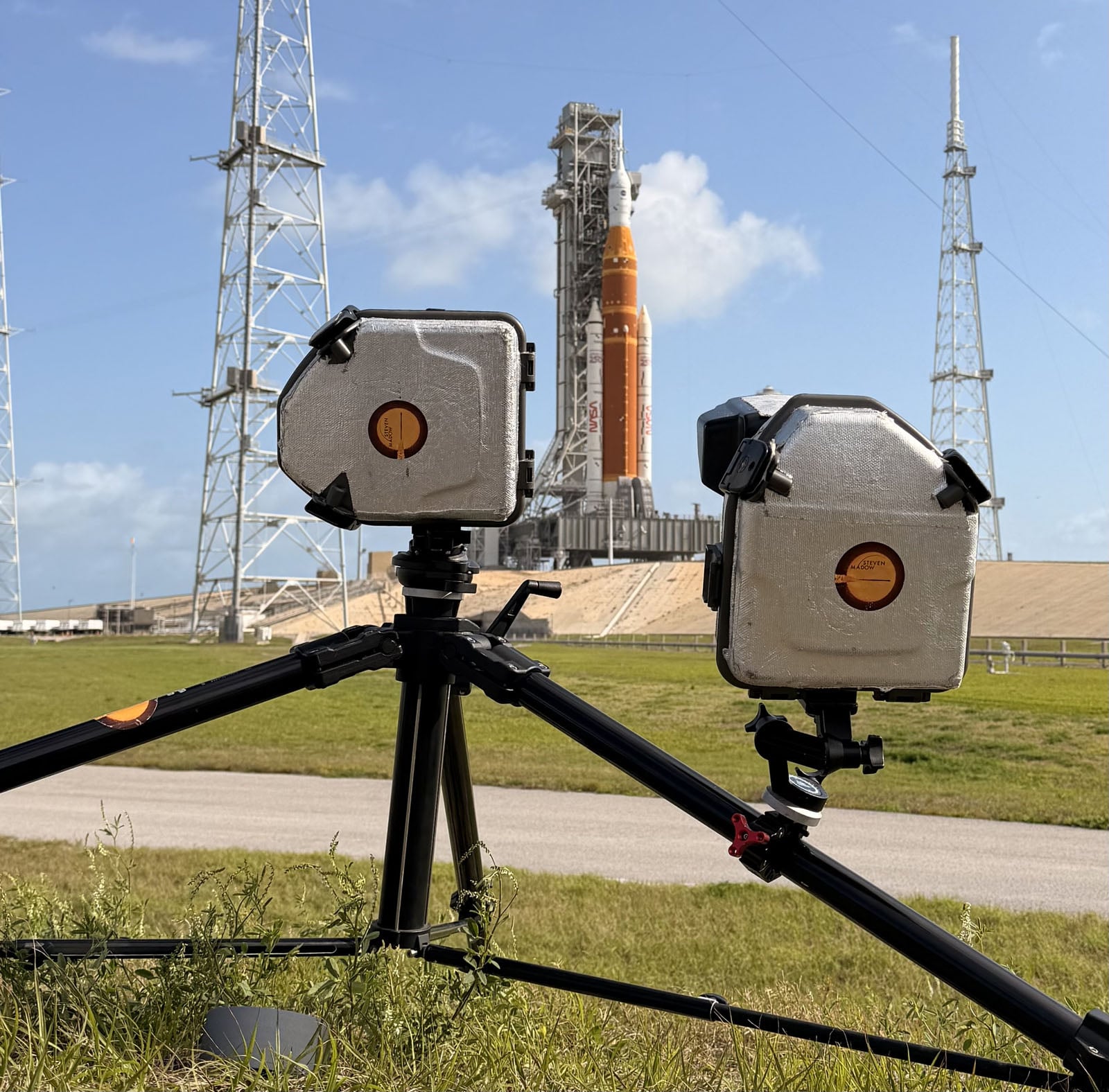
Taking the Chaos Out of Eclipse Photography
As Madow explains, totality lasts just a couple of minutes and photographers have just one shot at it. Umbra runs a photographer’s entire setup using scripts, handling common eclipse tasks like diamond ring, corona bracketing, and Earthshine. The app is highly customizable, has audio cues to keep photographers on schedule, and can control a wide range of cameras from all the major manufacturers.
Umbra takes the guesswork and tedium out of solar eclipse photography, letting photographers not only nail the shots they want but also allowing them to actually watch the total solar eclipse, rather than spend the very short window hunched over their camera.
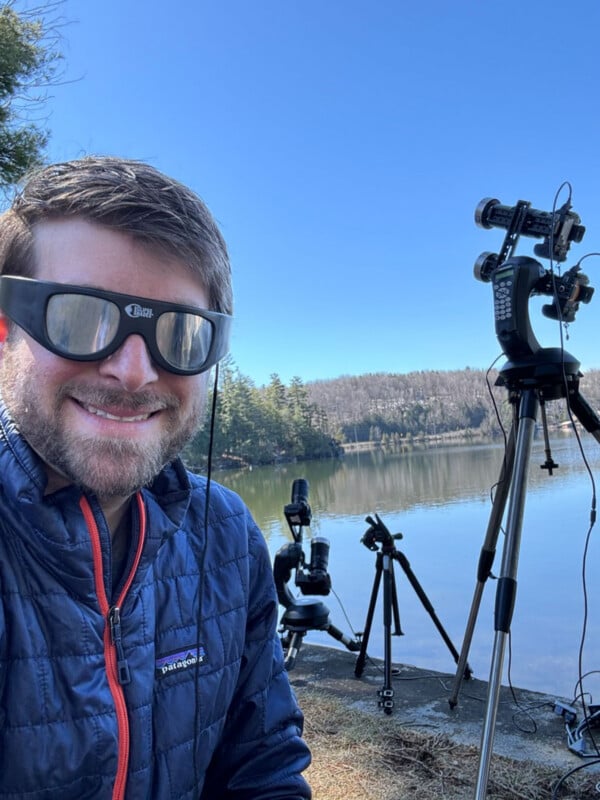 Madow during the 2024 Great North American Solar Eclipse
“Ask anyone who has photographed a total eclipse what they regret, and it is almost never a missed frame. It is missing the eclipse,” Madow says. “You plan for years, drive for days, and then spend the two minutes you came for with your head down, working a camera. A tester put it perfectly: after 2024 he swore off photographing eclipses entirely, because he was so busy with the camera that he never really got to look up.
“This is the whole reason Umbra exists. You design your photographic vision ahead of time, down to the exposure and the second. On the day, the app conducts every camera through it and calls the moments out loud. The cameras do the working. You do the witnessing.”
Specialized and Technical, but Approachable
Madow has been working on Umbra for a long time and accepts that ultimately, software like this is very niche. It’s a specific software solution for what is a relatively specialized type of photography. However, the photographers like Madow who really love all aspects of eclipse photography are the same types of photographers who are more likely to be technically inclined and willing to hook up their cameras to a software controller.
That said, while the inner workings of Umbra are very complicated, Madow has designed it to be accessible. The software calculates a bunch of things based on the photographer’s precise position and camera setup, and controls actual camera settings and shutter firing. Better yet, it can control multiple cameras simultaneously, so photographers don’t have to choose between one type of shot and another. For example, a diamond ring photo requires a different lens than, say, a wide-angle composite scene.
Although Madow has built Umbra to be accessible to a wide range of photographers, he is adamant that it is not just a set-up-and-go situation. Photographers who want to use Umbra should test their setup before the total solar eclipse next week. Fortunately, Umbra includes simulation functions, so photographers can test out every aspect of their planned shoot in advance. It’s essential to test the rig beforehand, so that photographers can trust it when the big show arrives.
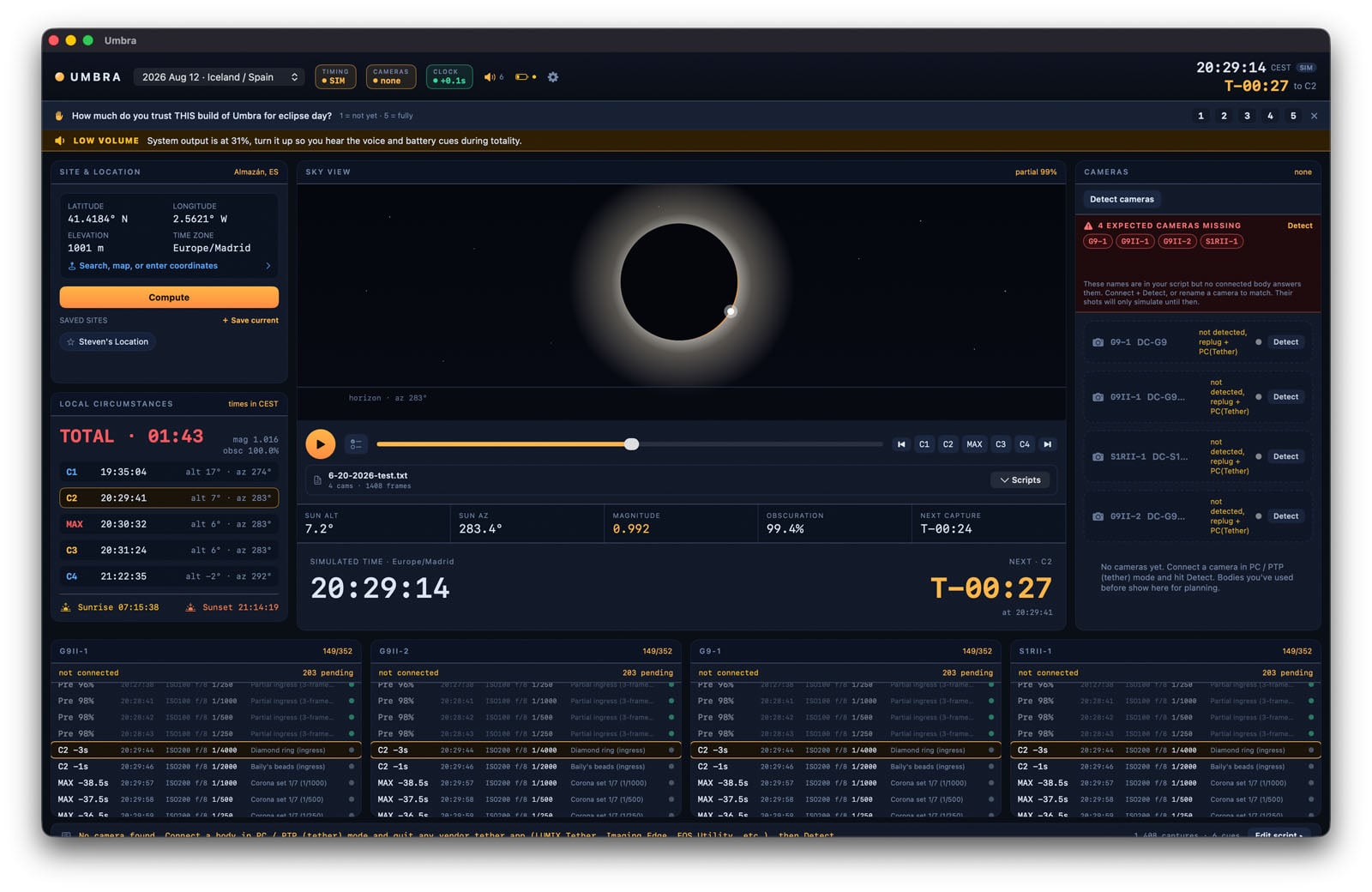
Madow fully expects a level of stress during the total solar eclipse, even if everything is rigorously tested, but hopes that for dedicated eclipse photographers, Umbra will offer them some peace of mind and enable them to not only capture their dream photos but actually enjoy the eclipse as it happens.
The photographer is not solely focused on the app to control one or many cameras during the actual eclipse, but on delivering all the tools and information photographers need. The Umbra website has an eclipse planner where photographers can find the perfect spot for the upcoming eclipse (and future ones for literally decades), a virtual simulator that doesn’t require a connected camera, detailed exposure calculators for different types of eclipse photos, 3D-printed files on to make a custom solar filter, and a step-by-step guide to experiencing “eclipse day success.” Umbra is quite literally a one-stop shop for eclipse photographers.
Umbra Is Totally Free
Well, if a shop had items for free, that is. For this upcoming total solar eclipse, Umbra is totally free to download and use, as are all its tools. While Madow will consider selling his software later, he wanted to get it into as many hands as possible now.
Many photographers have already been helping Madow test the app and ensure compatibility with a wide range of cameras, including verified models from Panasonic Lumix, Madow’s go-to camera system, Sony, Canon, Nikon, Fujifilm, and OM System (Olympus). In many cases, specific models have been tested. In many more cases, Madow is extremely confident that a camera will work based on how it communicates with apps like Umbra.
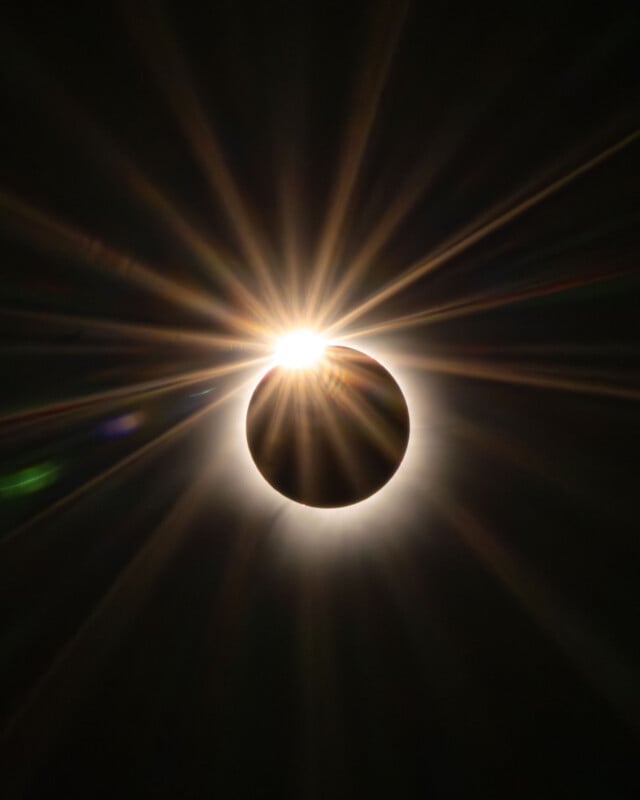 Umbra can control multiple cameras to capture photos like this Diamond Ring shot Madow captured in 2024.
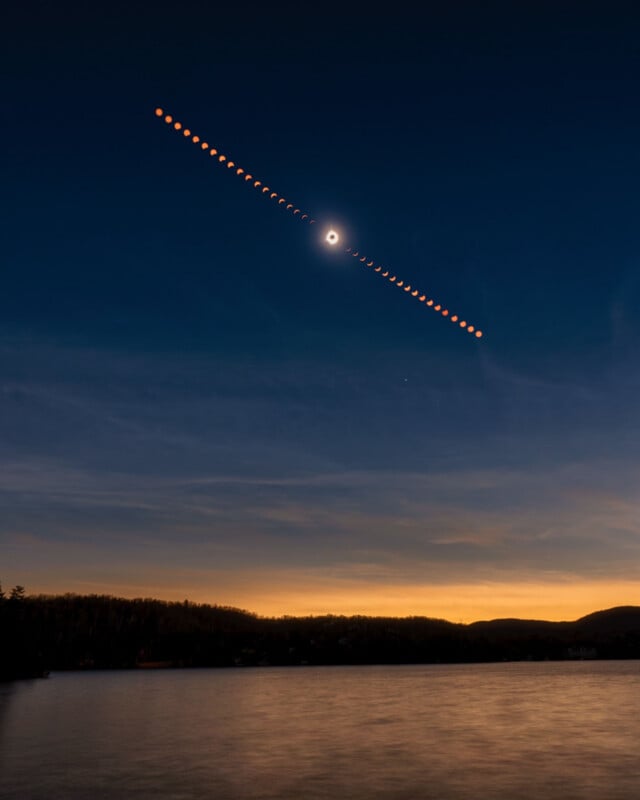 Or the frames needed for a composite, like this one Madow made.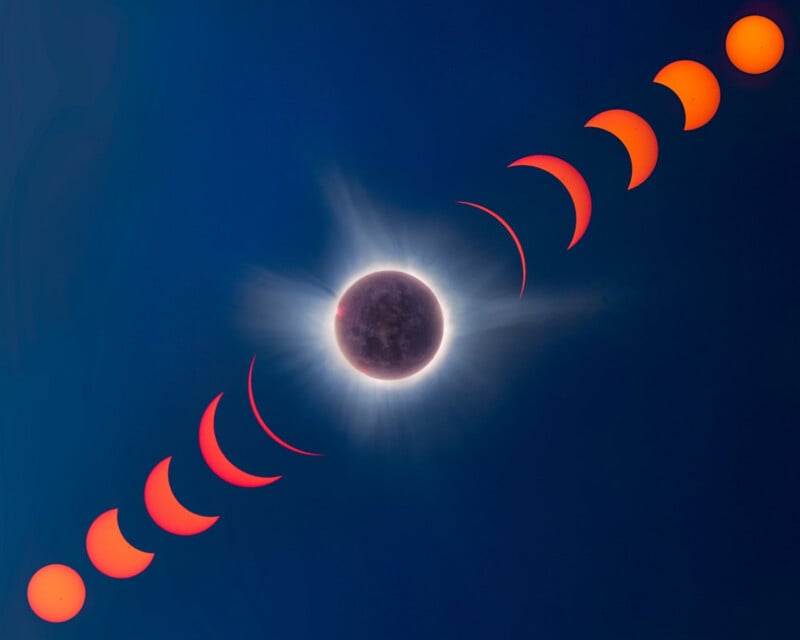
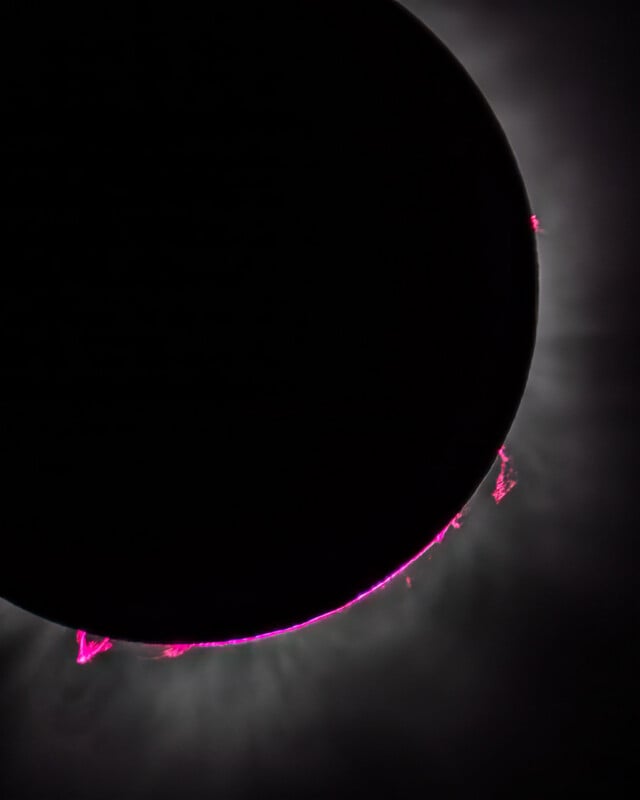
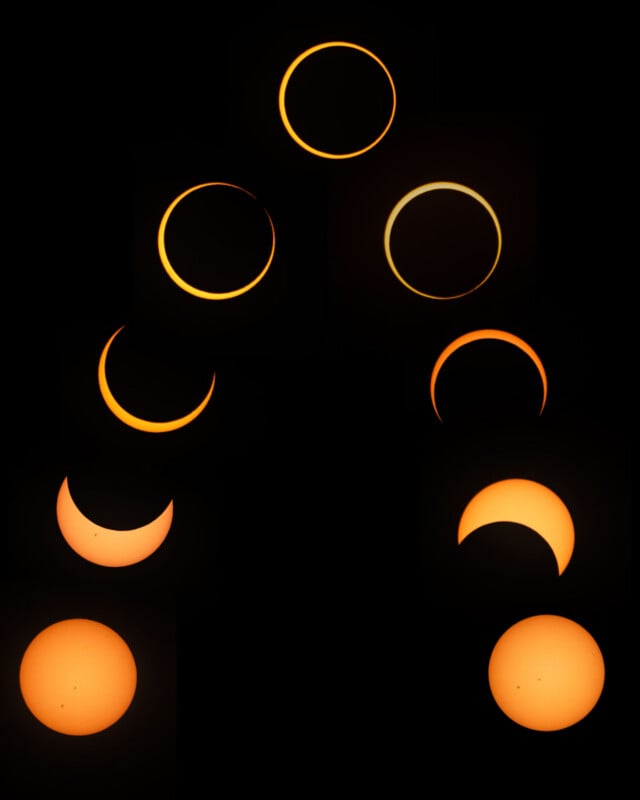
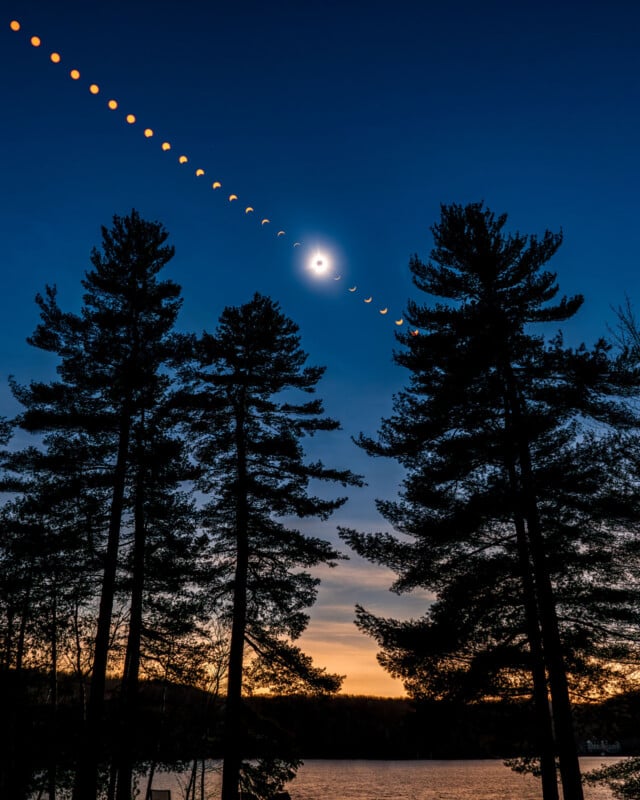
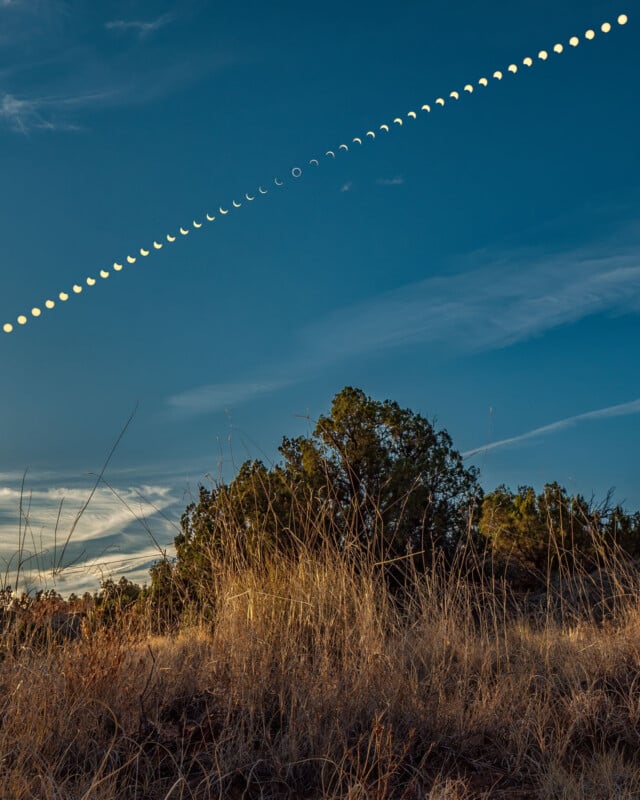
Again, Umbra is 100% free to download and use for the upcoming total solar eclipse in Europe. While Madow has plenty of great eclipse photography tools available, PetaPixel has additional resources available too, including “The Best Tips for Photographing the Total Solar Eclipse” and “How to Photograph the Total Solar Eclipse.” Professional photographer and Canon Explorer of Light, Keith Ladzinski, shared tips with PetaPixel ahead of the Great North American Eclipse in 2024, all of which are still applicable to the upcoming total solar eclipse.
If photographers were to listen to just one tip, though, it’s to very carefully plan exactly what they will do on August 12. Think about the shots you want and determine what you need to do to get them. Totality happens so fast, and those couple of minutes will fly by, so don’t forget to take a moment to experience it for yourself with your own eyes, not just through your viewfinder.
Image creditsSteven Madow
Affiliate Disclosure PetaPixel articles may include affiliate links; we may earn a commission if you buy through one.
What's Your Reaction?
 Like
0
Like
0
 Dislike
0
Dislike
0
 Love
0
Love
0
 Funny
0
Funny
0
 Wow
0
Wow
0
 Sad
0
Sad
0
 Angry
0
Angry
0







Comments (0)