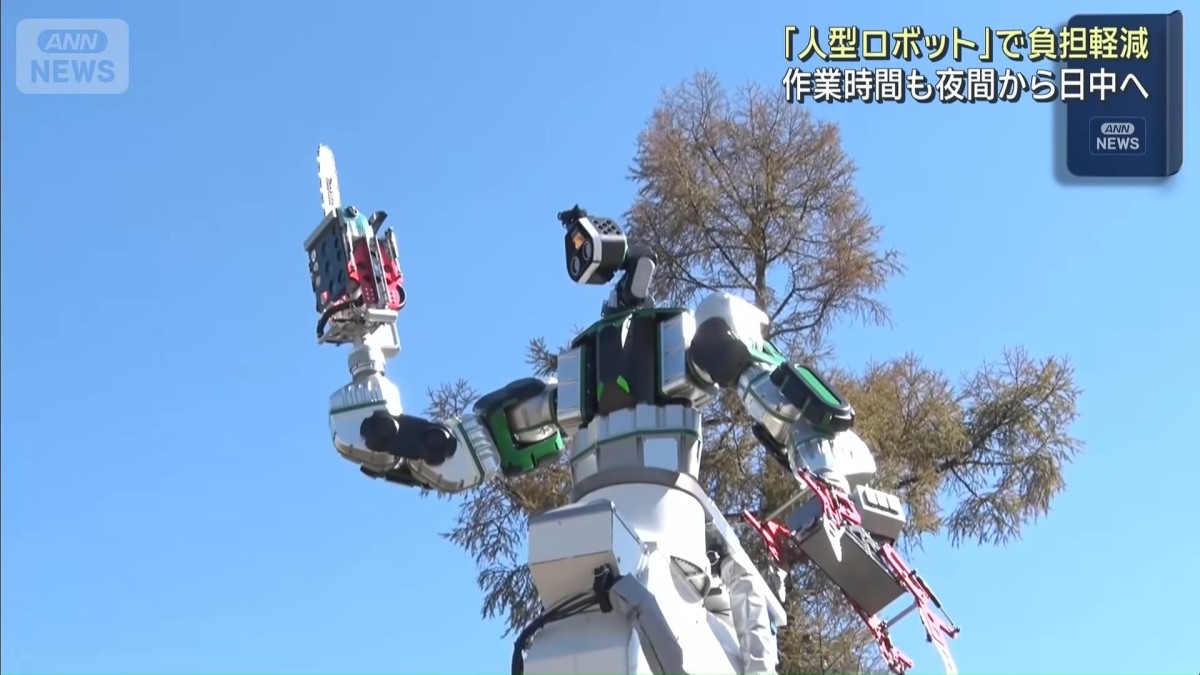
A scary-looking humanoid robot with a chainsaw arm was shown in action on Japan's ANN News recently. The rail truck-mounted mech was being used by Japanese railway firm JR East to clear tree branches that had begun to impede rail tracks. The unnamed heavy machinery robot’s chainsaw and grabber arms are remotely controlled by a human in this instance. However, JR East is broadly integrating AI and robotic technologies across its operations to enhance safety, efficiency, and round-the-clock maintenance.
In the future, this robot could become autonomous with AI-based image analysis for recognizing rail obstructions that need to be addressed. While they’re at it, why not dispose of the wheeled vehicle and add some legs and a jet pack?
JR East is the largest passenger railway operator in Japan. It is famous for operating the northern Shinkansen (bullet train) routes, but also has business interests/revenue from shopping centers, hotels, smart cards, and more. The firm has a reputation for quite aggressive AI adoption, including company-wide AI tools, designing AI programs for disaster recovery, and it is even using drones equipped with AI image analysis for rail infrastructure inspections (PDF).
The source video and report (machine translation) indicate that the chainsaw mech you see has been available to JR East engineers since March, but the TV crew took the opportunity to catch a rare glimpse of this heavy machinery in action. JR East is turning to robots like this due to labor shortages. Apparently, operating a robot like this requires some skill, but so does chainsaw work at height.
There’s also been a recent shift in rail building and maintenance work to the daytime – despite some inconvenience to customers – to the benefit of workers and safety. Perhaps that’s why we now have a video of the chainsaw-wielding truck-mounted robot for the first time.
The combination of labor shortages and advances in robotics and AI makes development of this kind of rail maintenance robot seem very timely. If the metallic humanoid can be made autonomous, it could save a lot of labor and promote safety. What could go wrong?



 Like
0
 Dislike
0
 Love
0
 Funny
0
 Wow
0
 Sad
0
 Angry
0










Comments (0)