

Microsoft wants to put a dollar value on AI’s work – but can you trust the math?
ZDNET’s key takeaways
- Microsoft’s new tool estimates the business value of AI agents.
- It compares AI costs against the value of human labor.
- Estimated economic value doesn’t necessarily mean real savings.
We all know AI can get expensive. But does that expense result in real business value? That’s the trillion-dollar question Microsoft aims to answer with today’s introduction of Agent 365 Business Analytics.
Also: Microsoft says its new AI coding model rivals Claude Opus 5.5 at 5% of the cost
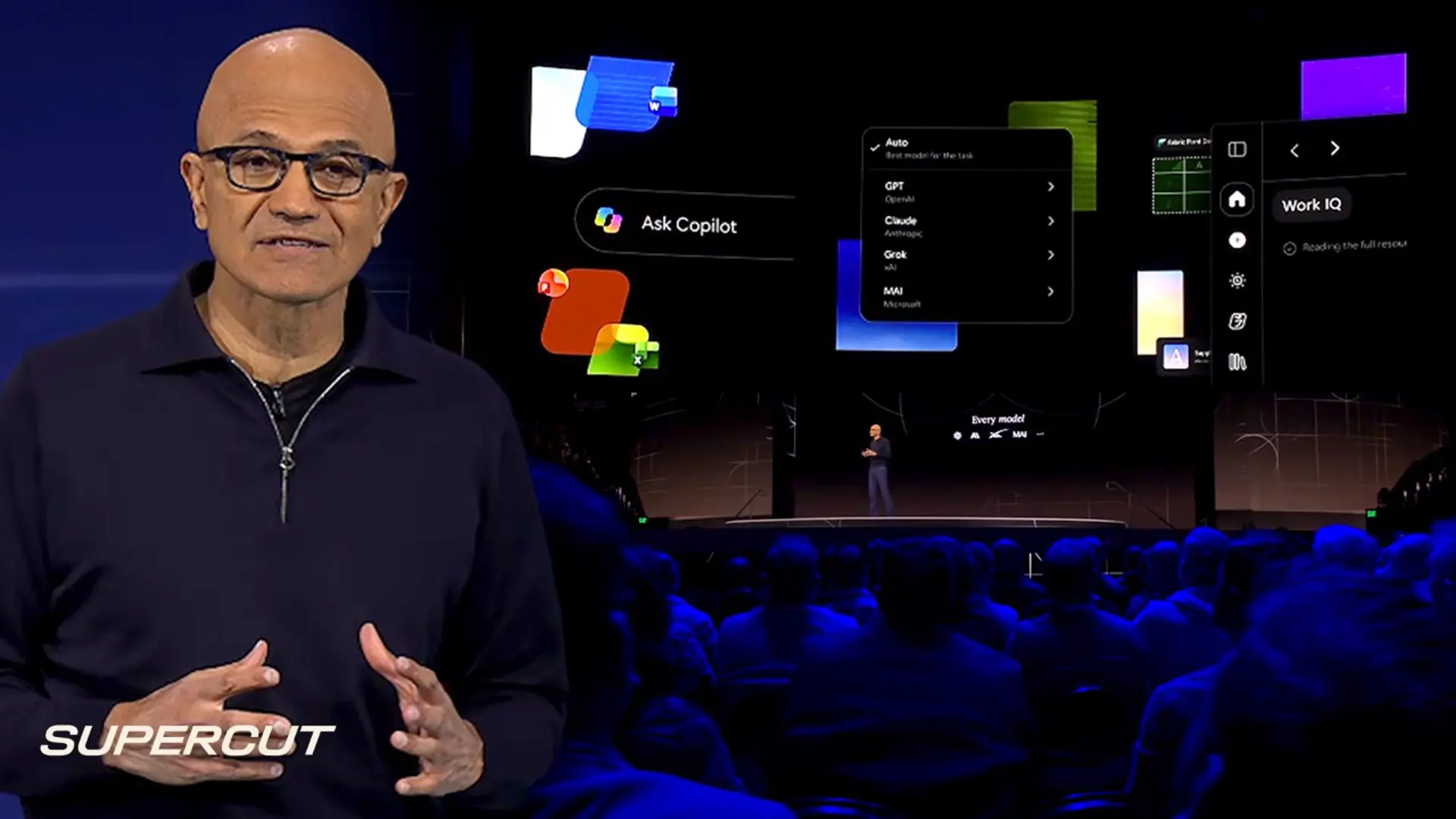
How much value in real dollars are your agents producing?
If it works, this is some very cool stuff. Microsoft is trying to map labor-market economics onto AI usage data to create value estimates.
Also: Work IQ is Microsoft’s big bet on agent-first enterprise IT, and I have questions
To do so, it uses real labor-costing information, including data from the US Bureau of Labor Statistics, the O*NET database from the US Department of Labor, and its own LinkedIn Occupational Graph.
This data, along with data gathered from Agent 365, is aggregated into analysis intended to answer:
- How much do individual agents, models, and users cost?
- What business activities is AI performing (across more than 6,000 defined use cases)?
- How much human work would those activities would ordinarily require?
- What is that work worth in dollar terms?
- Does increasing or reducing AI spending makes business sense?
The goal is to provide a comprehensive picture of AI spend against value produced.
Measuring AI as a labor/software hybrid
Software accounting is long established and straightforward. We measure subscription fees, cost per seat, compute costs, burden costs (like floor space and other infrastructure), and more. But AI work doesn’t fit that model, making it very hard to quantify value.
Instead, Agent 365 Business Analytics measures cost both relative to human labor and in terms of technological expense. For example, it might look at a task and determine how much human effort that task would normally take, and then price that effort based on prevailing common labor rates.
Then, it might factor in how much of the task was actually done by a human vs. how much was contributed by an AI, along with the estimated value of the AI’s contribution. Then it mixes in the actual AI processing cost (whether in subscriptions, tokens, on-premises infrastructure, and cloud support).
Also: These Claude Enterprise features let you track AI ROI – what’s new
What comes out is a hybrid labor estimate that combines human contribution, human-replacement savings, AI costs, and then potentially AI savings over human costs. It sounds positively Orwellian. But the bottom line is that companies really haven’t been able to understand the AI bottom line.
Ah, but estimated value isn’t realized savings
There’s a catch. All these numbers are estimates. In its blog post, Redmond specifically says, “Assisted hours are a directional estimate of work AI helped complete, not measured time saved or financial return.”
In other words, what Agent 365 Business Analytics estimates might not actually line up with real-world experience or expenses. It’s also possible that AI work might have been assigned because there was AI to do the work, not that the AI was saving company labor costs with every token processed.
In other words, Microsoft may be able to tell you the economic value of AI-assisted work, but it can’t demonstrate definitively that the company saved any real money.
Also: 5 reasons your company needs a chief AI officer in 2026
I find it particularly telling that this is from the company that makes PowerPoint. Because now, with Agent 365 Business Analytics, it’s entirely possible that you could produce economic dashboards that look really, really impressive, but are entirely irrelevant to real life.
That’s not to say the product is useless. But it does go to the idea that you will have to be quite disciplined in how you interpret the results and how much stock you put in them for decision-making. It is one source of possible truth, not the source of absolute truth.
Microsoft wants to be the control center for AI
Microsoft has been investing for decades to build out the core infrastructure of enterprise computing. AI isn’t any different when it comes to the company’s overall mission.
With Agent 365 and the company’s related offerings, Microsoft wants to help you:
- Monitor AI agents from multiple vendors.
- Manage their identities, permissions, and security.
- Track and limit AI spending.
- Evaluate whether agents are delivering value.
- Decide which AI systems deserve additional investment.
This means the company doesn’t necessarily have to provide you with the AI model to help you run your enterprise. With integration with offerings from OpenAI, Anthropic, Salesforce, Google, Databricks, Snowflake, and others, the company doesn’t even have to provide the apps or SaaS capabilities.
But if it can get in there and manage your plumbing, help you control costs, and be the HR operation for your AI workforce, Microsoft could own a central piece of your business’s operations.
You can follow my day-to-day project updates on social media. Be sure to subscribe to my weekly update newsletter, and follow me on Twitter/X at @DavidGewirtz, on Facebook at Facebook.com/DavidGewirtz, on Instagram at Instagram.com/DavidGewirtz, on Bluesky at @DavidGewirtz.com, and on YouTube at YouTube.com/DavidGewirtzTV.

David Gewirtz
Senior Contributing Editor
Computer science professor turned AI innovator David Gewirtz has spent over thirty years driving advancements at the forefront of artificial intelligence and is the recipient of the Sigma Xi Research Award in Engineering. He wrote a pioneering analysis that helped shape the early conversation around AI ethics. He was also a pioneer in the commercializing of AI products, including AI languages and knowledge-based systems. He is the designer of the Al Editor, an experimental artificial intelligence engine for parsing, classifying, and identifying news stories. David is a member of the Association for the Advancement of Artificial Intelligence. He currently serves on the Artificial Intelligence Threat and Mitigation Cross-Sector Council (AI CSC) for InfraGard, a partnership between the FBI and industry leaders for the protection of U.S. Critical Infrastructure. He is the author of Where Have All the Emails Gone?, as well as How To Save Jobs and The Flexible Enterprise. See full bio
What's Your Reaction?
 Like
0
 Dislike
0
 Love
0
 Funny
0
 Wow
0
 Sad
0
 Angry
0










Comments (0)