

Netflix Faked VHS, Nolan Shot Real Film: Digital Perfection Is Losing Its Appeal
Netflix just spent real engineering time making its biggest show look worse, on purpose. It's not the only surprising analog bet this summer — Christopher Nolan shot a $250 million blockbuster entirely on physical film — and neither is nostalgia. It's a signal about what audiences want that every photographer and videographer should notice.
Netflix Deliberately Made Its Biggest Show Worse
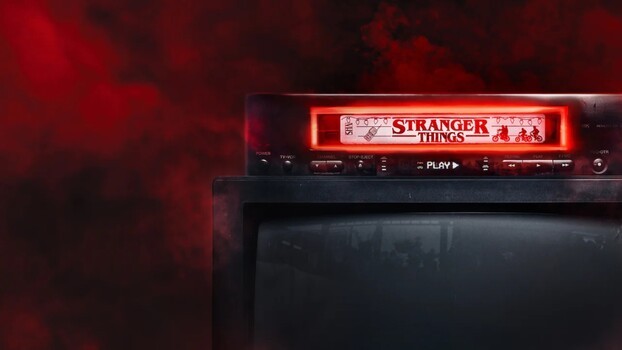
For Stranger Things's 10th anniversary, Netflix quietly released "Stranger Things: VHS Special Edition" — a full retro pass over the entire first season, complete with 4:3 pan-and-scan cropping, tracking glitches, and tape grain. "If Stranger Things existed in Hawkins, sitting on a shelf at Family Video, it would look just like this — complete with pan-and-scan," the Duffer Brothers said, adding: "if enough of you nerds watch it, maybe we'll do the rest of the seasons."
It's a stunt, but a telling one. A streaming company with unlimited 4K and HDR mastering at its disposal decided the intentionally degraded version was worth building and shipping for all eight episodes of Season 1. Fstoppers readers who spend real money chasing sharper glass and cleaner sensors might want to sit with that for a second.
Netflix isn't alone this summer, either. Christopher Nolan's The Odyssey — the first feature ever shot entirely on IMAX film cameras — hit wide release the same week, and IMAX built an entirely new camera just to make it possible. We covered that story in depth here; the short version is the same thread running through everything below: real money is chasing imperfection, not away from it.
Gen Z Is Buying the Camcorders Nobody Wanted a Decade Ago
The instinct isn't limited to studios with marketing budgets. A growing number of younger creators are tracking down old camcorders — Sony Handycams, JVCs, Panasonic units from the 1980s through the 2000s — specifically to shoot grainy, degraded video instead of clean phone or digital footage. Musicians including Sabrina Carpenter, $UICIDEBOY$, and PinkPantheress have used camcorder-style footage in their visuals. For anyone curious about working in motion after a career in stills, our Introduction to Video: A Photographer's Guide to Filmmaking covers the fundamentals.
Fortune reports that 35% of the roughly 42 million active film-camera users worldwide in 2025 were between 18 and 30, and that analog-photography searches were up 41% year over year. USC lecturer Rotem Rozental, who studies why students reach for this look, pushes back on the easy explanation: "I'm not seeing this as a trend rooted in a nostalgic yearning for the past." Her read is closer to an aesthetic rebellion — in an era of hyper-sharp, overproduced content, lo-fi is the new authenticity.
There's no clean retail link here — working vintage camcorders are strictly a secondhand market, typically running $18 to $300 depending on condition — but it's worth knowing this is where a chunk of your audience's visual taste is being formed right now.
Even the Microphones Are Going Warm Again
The same instinct shows up in audio. Engineers, podcasters, and musicians are deliberately reaching for vintage-style mics over clean modern digital condensers. The Royer R-121 ribbon mic is chosen specifically for a warmer timbre that offsets what engineers call the analytical nature of digital recording formats — it's a "desert island" mic for guitar amps, brass, and vocals. The Warm Audio WA-47 and WA-251 are tube-condenser reproductions of the vintage Neumann U47 and Telefunken ELA M251E, built to recreate that vintage tone at a fraction of the cost of an original, which can run $8,000 or more. Even the Shure SM7B — dynamic, not ribbon, but the classic warm-over-clean reference used on Michael Jackson's Thriller and now the podcast/streaming standard — has gently rolled-off highs that read as forgiving next to a bright USB condenser.
Instax Just Hit 100 Million Cameras Sold
Zoom out past creative pros entirely and the pattern holds. Fujifilm announced in April 2025 that it had sold 100 million Instax cameras and printers cumulatively since 1998, and Instax now accounts for more than half of Fujifilm's entire imaging-division revenue. Fujifilm's own framing of the appeal leans on "unique texture, and nostalgic analog feel" — a company built on some of the sharpest digital sensors in the industry is making most of its imaging-division money on a format engineered to look imperfect. The current Instax Mini 12 starts under $100.
Vinyl, Cassettes, and Film Are Still Having Their Moment, Too
We've covered vinyl's remarkable run and film photography's return in depth before — read that piece here — so we'll keep this part to the newest numbers only.
Vinyl just had its biggest year on record. The RIAA's 2025 year-end report puts vinyl revenue over $1 billion for the first time, up 9.3% year over year, with units climbing from 43.4 million to 46.8 million — the 19th consecutive year of growth, and enough to outsell CDs 46.8 million to 29.5 million. RIAA chairman Mitch Glazier credited "a resurgence of vinyl as both a listening experience and collectable art." If you're building a rig, the Audio-Technica AT-LP60X is still the standard entry-level recommendation.
Cassettes are having their own weird revival. US cassette sales hit 446,500 units in 2025, up 17.5% year over year and roughly five times the volume sold a decade earlier. Gen Z is now the top cassette-buying demographic, and resale prices on sought-after tapes have climbed as much as 1,000%. Taylor Swift's The Life of a Showgirl shipped on cassette, and Chappell Roan, Sabrina Carpenter, and Charli XCX cassettes have all been strong sellers. French startup We Are Rewind is capitalizing on the moment with new Walkman-style Bluetooth cassette players; founder Romain Boudruche says he wanted to "make something not plastic, something closer to the original TPS-L2 from Sony," and projects roughly 30% annual market growth.
Film stayed newsworthy on the manufacturing side, not just the shooting side. Harman, Ilford's parent company, made its largest investment in film manufacturing since the 1990s, commissioning new cassette-converting machinery to more than double its annual 35mm output — and still raised US film, paper, and chemical prices 11% in April 2025 due to tariffs and demand. Kodak Portra 400 rose 64% between 2019 and 2022 (from $7.80 to $12.80 a roll), and Ektar 100 rose 137% (from $6.75 to $16). The Pentax 17, Ricoh's first new film camera in about 20 years, exists because — in Ricoh's own words — the company is "responding to the growing popularity lately of film photography among younger photographers."
What This Actually Means If You Make Images for a Living
The instinct shows up in gear that has nothing to do with cameras or music, too. Brick-phone purchases among 18- to 24-year-olds rose 148% between 2021 and 2024. Psychotherapist Phil Lane has a name for a lot of what's driving this: "adaptive regression" — a deliberate, healthy retreat into tactile, single-purpose objects as a counterweight to constant digital overstimulation. It's the same impulse behind a craft retailer recently reporting a 1,200% jump in searches for yarn kits.
None of this means digital is bad, or that you need to go buy a camcorder. It means the appetite for texture, friction, and visible imperfection over frictionless digital polish is a mainstream cultural current right now, not a photography-world curiosity — showing up everywhere from a theatrical release that cost hundreds of millions of dollars to a cassette player that costs under $200. Whether or not you shoot a single frame of film this year, understanding why your audience keeps reaching for the unpolished, human version of things is worth paying attention to.
Images used with permission of Netflix, Fujifilm, Ricoh/Pentax, Warm Audio, Audio-Technica, and We Are Rewind.
What's Your Reaction?
 Like
0
Like
0
 Dislike
0
Dislike
0
 Love
0
Love
0
 Funny
0
Funny
0
 Wow
0
Wow
0
 Sad
0
Sad
0
 Angry
0
Angry
0





Comments (0)