

Payments giant Stripe is about to drop over $7 billion to become a gateway to AI token sales
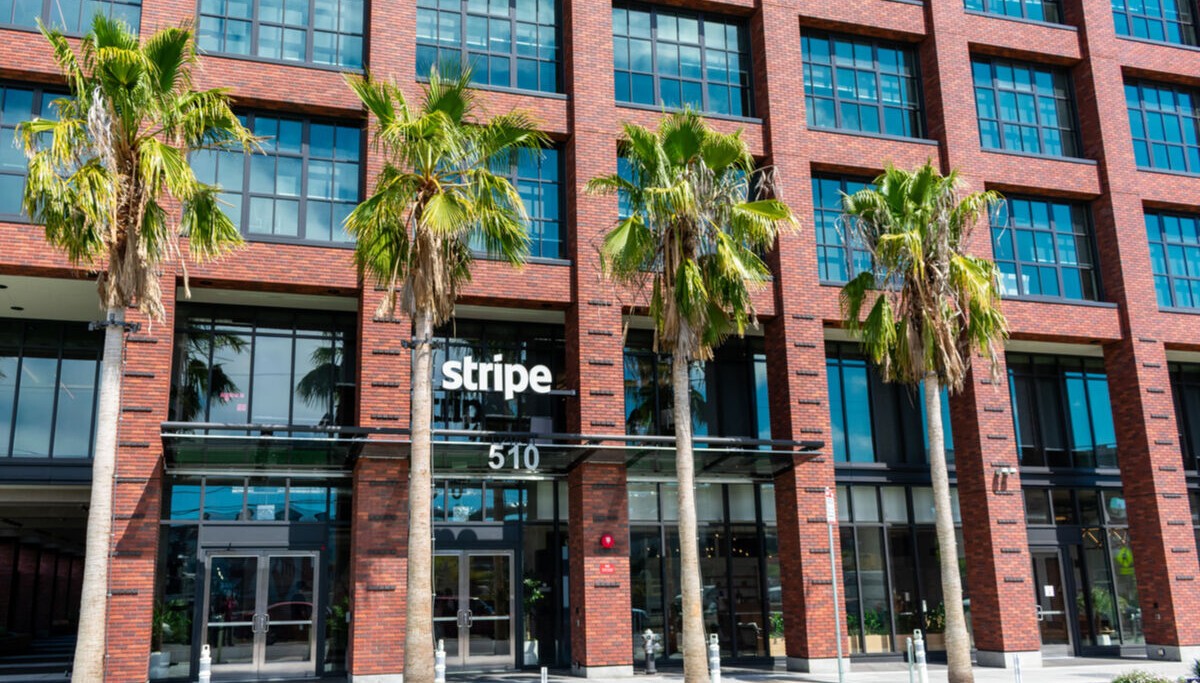
Payments biz Stripe has reportedly finalized an agreement to acquire OpenRouter for at least $7 billion, signaling a shift in focus for the AI industry.
OpenRouter provides a way for customers to integrate multiple AI models into their workflow and infrastructure and is, by Ramp's measure, the most popular of the gateway companies that have sprung up to simplify model integration. By acquiring the AI gateway service, Stripe would become a mediator of AI token sales, fitting its core business while gaining access to valuable data about AI model usage.
Stripe declined to comment, citing a policy of not addressing rumors or speculation. Prior to Bloomberg's report about the agreement, the Wall Street Journal said acquisition talks were underway.
Akhil Verghese, founder and CEO of Krazimo, a developer of AI software for businesses, told The Register in an email that he found the acquisition fascinating because OpenRouter is to AI models what Stripe has been to financial infrastructure.
"A key factor for me is the value," he said. "I won’t pretend to be smart enough to understand how these valuations work, but $7 billion for OpenRouter surprised me. They raised at a $1.3B post money valuation in May, and even if revenue has grown significantly since then and acquisitions often have an additional multiple, 5x in 3 months is nuts.
"There are ways this acquisition makes sense, though. [Stripe CEO] Patrick Collison recently said that metered pricing is the native business model of the AI era. In purchasing OpenRouter, Stripe, which already controls where the money is going, now sees where the tokens are going."
And there are a lot of tokens going around. An economics paper published last month, AI Premium, estimates total global LLM token consumption to be about 5 to 7 quadrillion per month, with about 2 percent of that being handled by OpenRouter.
While marquee model makers Anthropic and OpenAI have focused on building their own brands and steering customers toward their tooling, the reality is that business customers prefer options that avoid lock-in and maintain negotiating power. That expectation and the potential fees for gatekeeping have led to the proliferation of AI gateway firms and to $113 million in funding for OpenRouter back in May.
Verghese said rival AI gateways may find it more difficult to compete now that OpenRouter has access to so much funding.
Anthropic and OpenAI account for a substantial amount of the tokens processed by virtue of their subsidized flat-rate subscription plans – generally served directly rather than through a gateway or third-party provider. But as they push customers toward API pricing in preparation for going public, they risk driving business toward providers of more affordable, open weight models.
As of December 2025, OpenRouter reported serving more than 5 million developers to route traffic to more than 300 models from more than 70 providers. At the time, open weight models accounted for about 30 percent of tokens served. Today, the biz boasts more than 10 million developers and 80 providers.
OpenAI in October 2025 was serving about 8.6 trillion tokens per day, according to Andreessen Horowitz, and OpenRouter was serving more than 1 trillion tokens per day.
"The competitive frontier is no longer only about accuracy or benchmarks," said Malika Aubakirova and Anjney Midha from Andreessen Horowitz at the time. "It is about orchestration, control, and a model’s ability to operate as a reliable agent."
It's about AI gateways and adjacent services that sit above models in the technical stack.
According to Vercel, which offers its own AI Gateway, open weight models have seen their share of gateway token spend grow from 11 percent in April to 36 percent in July. Meanwhile, the token spend collected by the four largest frontier labs, which had not dipped below 93 percent in seven months, fell to 89 percent last month.
Much of that came at Google's expense, with Chinese AI labs Z.ai and Moonshot capturing the growth in open weight spending.
"GLM 5.2 and Kimi K3, both released in the last two months, are the first open-weight models running a meaningful share of the workloads historically owned by closed-weight labs," Vercel said.
Even so, the top four frontier labs in the US continue to capture the lion's share of spending. Vercel said those companies took 95 percent of spending through its AI Gateway in June.
"In July, Anthropic collected 65 percent of gateway spending on 30 percent of token volume, at 4.4 times the average price of every other lab's tokens," Vercel said.
Open weight models, which have occupied the low end of the market (cheap tokens), have seen their fortunes shift, Vercel said. After their share of gateway token volume almost tripled between April and June, from 11 percent to 29 percent, capturing only four cents for every gateway dollar, they saw spending more than double to nearly nine cents for every dollar.
Open weight models, in other words, are becoming better and are bringing in more revenue even as the average token price declined 13.6 percent in July. If the trend continues and AI usage drifts further toward open weight models and away from proprietary frontier models, the AI gateway business should prosper.
Verghese expressed concern about whether OpenRouter will be able to maintain its neutrality under Stripe's roof. The workload router isn't supposed to play favorites in terms of where it directs tokens based on requirements, but should it start doing so, he said, the resulting loss of trust could be harmful. ®
What's Your Reaction?
 Like
0
Like
0
 Dislike
0
Dislike
0
 Love
0
Love
0
 Funny
0
Funny
0
 Wow
0
Wow
0
 Sad
0
Sad
0
 Angry
0
Angry
0









Comments (0)