

Rocket Report: China may soon attempt booster landing; Rocket Lab does rapid response
All the news that’s fit to lift
Is SpaceX planning to end its Transporter program?
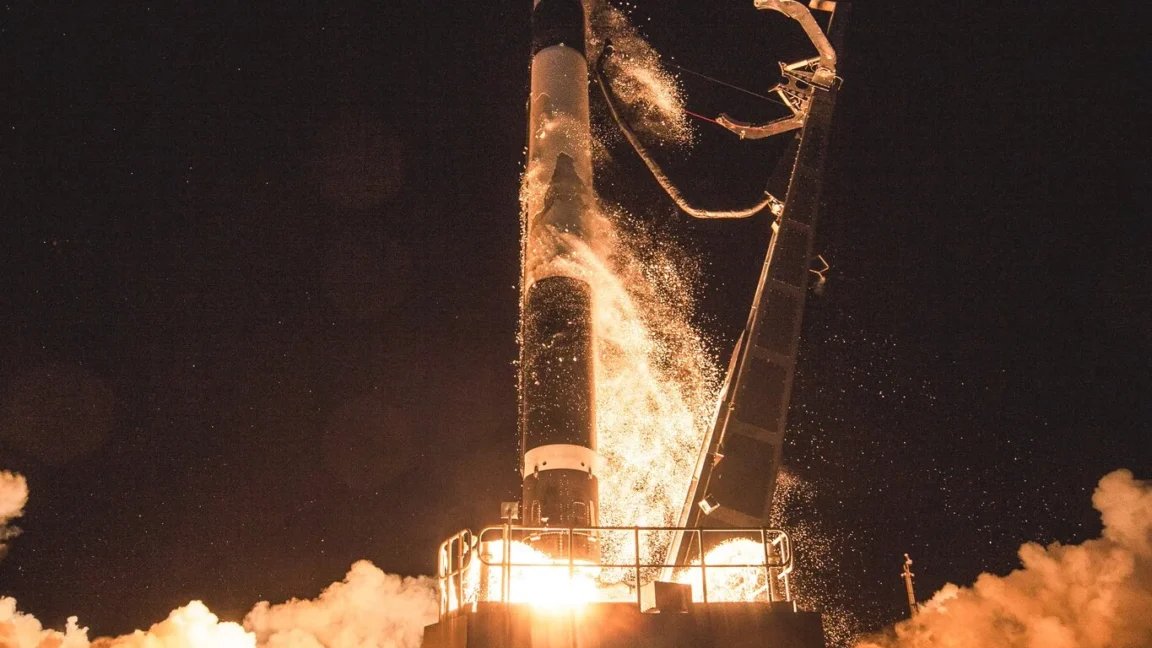
An Electron rocket launches the Victus Haze mission. Credit: Rocket Lab
Welcome to Edition 8.47 of the Rocket Report! We have now very nearly reached the midpoint of 2026, a year in which several new US rockets were advertised as potentially making their debuts. But now, we have to wonder whether any of them—Rocket Lab’s Neutron, Stoke Space’s Nova, Relativity Space’s Terran R, and Astra’s Rocket 4—will make it. I’d probably put the over/under at something like 0.5 of these launching. Please share your thoughts in the comments below!
As always, we welcome reader submissions, and if you don’t want to miss an issue, please subscribe using the box below (the form will not appear on AMP-enabled versions of the site). Each report will include information on small-, medium-, and heavy-lift rockets as well as a quick look ahead at the next three launches on the calendar.

Rocket Lab executes rapid response mission. Last Friday Rocket Lab launched the Victus Haze mission just 16 hours and 42 minutes after receiving the US Space Force’s Notice to Launch, beating the previous record by more than 10 hours, the company said. The launch was scarcely announced in advance, Ars reports. The only public indication of an impending launch was the release of a warning for pilots and sailors to steer clear of the rocket’s flight path. Rocket Lab did not provide a livestream of the launch, as it does for most of its missions.
Getting to orbit quickly … The Space Force announced plans for the mission in 2024 when it selected Rocket Lab and True Anomaly to build and launch two satellites into low-Earth orbit. At a high level, the idea was to launch a small satellite built by True Anomaly first, posing as a satellite from a potential adversary, like China or Russia. Rocket Lab was supposed to have a satellite on standby to go up and inspect True Anomaly’s spacecraft, ready to launch on short notice once military officials gave the order. The objective of the Victus Haze mission is to demonstrate how the military and its commercial partners might be able to quickly go up and assess a threat in orbit.
RFA parent company to raise serious funds. Publicly listed German space technology company OHB has announced plans to raise up to 510.7 million euros ($580 million) by issuing approximately 1.7 million new shares, European Spaceflight reports. In addition to its significant satellite manufacturing business, OHB is involved in two launch vehicle programs through its subsidiary MT Aerospace, a major supplier to the Ariane 6 program, and its stake in Rocket Factory Augsburg.
Strong interest in commercial space … Founded in 2018 as a spinoff of OHB, Rocket Factory Augsburg is working toward the debut launch of its RFA One rocket, which has an uncertain date due to a first-stage anomaly during a static fire test in August 2024. Of the funding to be raised, the publication estimates that about 14 percent, or $80 million, could flow to Rocket Factory Augsburg as it continues development. Separately, this week, the launch company revealed plans for two larger rockets.
The easiest way to keep up with Eric Berger’s and Stephen Clark’s reporting on all things space is to sign up for our newsletter. We’ll collect their stories and deliver them straight to your inbox.
Sirius Space claims pad in French Guiana. The French space agency, CNES, has selected Sirius Space Services to fill a vacancy at the Guiana Space Center’s new multi-user commercial launch facility, European Spaceflight reports. The space became available after MaiaSpace shifted its planned launch operations to the spaceport’s former Soyuz launch facility.
Three variants of small lift … Sirius Space is developing a range of three rockets based around common rocket boosters. The smallest is Sirius 1, a two-stage, single-stick rocket capable of delivering payloads of up to 180 kilograms to orbit. Sirius 13 adds two strap-on boosters, increasing payload capacity to 800 kilograms, while the largest vehicle, Sirius 15, features four boosters and tops out at 1,100 kilograms.
Pam Melroy joins Gilmour’s board of directors. Australian aerospace company Gilmour Space said this week it appointed former NASA deputy administrator, astronaut, and retired US Air Force Colonel Pamela Melroy to its board of directors. “I’m excited to join Gilmour Space at such an important stage of its journey,” Melroy said in a statement. “The team is building a genuinely critical sovereign capability for Australia, with ambitions that extend well beyond launch.”
Still working on Eris … Gilmour Space is building sovereign Australian capabilities across launch vehicles, satellites, advanced manufacturing, and spaceport operations to support commercial, government, and defense missions. The company operates Bowen Orbital Spaceport in North Queensland, Australia’s first licensed orbital launch site. A launch campaign for the debut flight of the company’s Eris rocket ended when there was a problem with its payload fairing during pre-launch testing a year ago.

SpaceX may be planning to shutter Transporter program. For years, small satellite manufacturers have built their business plans around the idea that SpaceX could launch their payload to space through its affordable Falcon 9 Transporter and Bandwagon rideshare missions. But now, Space News reports, these rideshare programs may be ending. At least nine SpaceX partners and customers told the publication that SpaceX is not accepting Transporter reservations beyond late 2028 or early 2029, and the manifest for the next couple of years is nearly full.
Companies now left scrambling … Some customers said they expect that SpaceX will extend Falcon 9 rideshares if its super heavy-lift Starship rocket does not come online as quickly as company leaders anticipate. But the lack of spots, potentially as few as half as many as in recent years, has left satellite companies scrambling to find a way to space. While secondary payloads can fly with many launch providers, none offer transportation as frequently or inexpensively as SpaceX rideshare. Will small launch companies be ready to step up?
Long March 10B debut coming soon. China is set for a debut flight of its Long March 10B rocket in July and attempt to recover the first stage at sea, Space News reports. Recently issued airspace and maritime warning notices indicate that the first Long March 10B reusable rocket, to launch from Hainan Commercial Space Launch Site, Hainan Island, now has a launch window opening July 10.
Will be interesting to see if it can land … The two-stage kerosene-liquid oxygen Long March 10B is a cargo variant of the Long March 10A, a rocket designed to launch a new crew spacecraft to low-Earth orbit. It has a capacity of about 11 metric tons to low-Earth orbit. China conducted a wet dress rehearsal of the Long March 10B back in April, with the launch initially expected in the weeks that followed. The debut flight of the 5.0-meter-diameter rocket was, however, delayed for unspecified reasons.
Falcon 9 may be used for rocket cargo program. A SpaceX Falcon 9 rocket lifted off on Tuesday to test a new reentry vehicle designed to deliver cargo anywhere in the world from low-Earth orbit, Ars reports. The company developed the new saucer-shaped reentry pod, called Starfall, under a veil of secrecy. Its purpose is to support the “transport and delivery of goods through space.” Most of what we know about Starfall comes from the FAA’s environmental assessment.
An option for lighter deliveries … In that document, the FAA writes that Starfall will “enable point-to-point delivery of critical cargo through space on rapid timelines” and provide access to space for commercial in-space manufacturing. Another potential use is the military’s Rocket Cargo or Point-to-Point Delivery, which would use Starship to deliver massive loads of equipment and supplies to far-flung locations in less than an hour. Starship is an enormous vehicle, nearly 20 stories tall and 30 feet wide, that must land at prepared sites. Starfall could prove to be a more versatile option for lighter deliveries.

SpaceX to develop ‘Starpipe’ for Starship. SpaceX plans to begin building an eight‑mile (13-km) natural gas pipeline called “Starpipe” to its Texas launch facilities next month, according to county filings, Reuters reports. Starpipe, which will end at SpaceX’s Texas company town of Starbase, is expected to be in service by next January. Designed to be fully reusable, Starship uses about 630,000 gallons (2.4 million liters) of liquid methane per launch, currently delivered by hundreds of tanker trucks in an hours-long process incompatible with Musk’s expansion plans.
Drill, baby, drill? … Although it is unusual for a space company to build its own natural gas pipeline for launchpad fuel, Starpipe might only be an initial step in a longer-term plan for SpaceX, which has spent years exploring its own drilling operations near Starbase and throughout Texas, according to a Reuters review of Cameron County land records. SpaceX President Gwynne Shotwell told CNBC on June 12, when the company went public, that SpaceX planned to build pipelines and process its own propellant, and was looking into drilling its own natural gas.
Kennedy not ready for super heavy rockets. NASA’s infrastructure at Kennedy Space Center, the crown jewel of US spaceports, is aging and approaching its limit due to increased demand from private companies, including SpaceX and Blue Origin, a new report from the Office of the Inspector General finds. Although the Space Force manages its own launch facilities nearby, the military works closely with NASA, and they share some responsibilities, Ars reports.
Too many launches, too little time … Most critically, there are problems with supply lines for helium and nitrogen, as well as 231 miles of paved roads and bridges that serve both Kennedy and Cape Canaveral. Additionally, the report cites serious concerns about a six-decade-old electricity distribution system for NASA’s launch pads. Officials are also concerned that the number of annual launches, in addition to major test firings, will reach or exceed the number of days in a year by late 2028 or 2029, placing “significant strain” on Kennedy’s spaceport systems.
Analysis details exorbitant SLS costs. On Wednesday, NASA’s Office of the Inspector General prepared a memorandum on the elements of the Artemis Program that NASA was canceling as its focus shifted to the Moon’s surface. For the Space Launch System rocket, these included the Exploration Upper Stage, the Universal Stage Adapter, and Mobile Launcher 2. The memorandum notes that each of these projects has experienced substantial cost increases and numerous delays over the last decade, Ars reports.
That’s an expensive adapter … The least expensive of the SLS contracts, for the Universal Stage Adapter, is perhaps the most illustrative. NASA contracted with Dynetics in June 2017 to design, test, and build this piece of spaceflight hardware. Made largely of composites, the adapter weighed 9,650 pounds (4.3 metric tons) and stood 33 feet (10 meters) tall. The original contract awarded to Dynetics totaled $131 million, to which NASA later added $9 million for a payload separation system. At the time the program was canceled earlier this year, the contract value had grown to $353 million, with a delivery date delayed to September 2028. The inspector general’s report projected that the project would likely cost $497 million and not be ready until May 2030.
Endeavour gets its due. It has taken four years to construct the new Samuel Oschin Air and Space Center, which is located at the California Science Center in Los Angeles. But now that it is largely completed, the facility has accomplished what many thought impossible: stacking a space shuttle orbiter with its external tank and twin solid rocket boosters without using a NASA facility intended for that purpose. This week, the science center offered a sneak preview to select media, Ars reports.
Shining a light on history … Space Shuttle Endeavour is configured so that from one angle, its payload bay doors appear closed, while from another, you can peer through an open door to see the payloads arranged as they would have been for a mission to the International Space Station. “For the most part, we still have to adjust the lighting in the payload bay,” said Dennis Jenkins, a former space shuttle engineer who led the preparation and delivery of the orbiters for their museums before becoming the project director for the science center. “Once that gets configured, then we have to latch the closed payload bay door and put a sheet of acrylic over the open crew hatch so that it stays clean inside Endeavour.”
Next three launches
June 27: Pegasus XL | Swift Boost Mission | Kwajalein Atoll, Pacific Ocean | 09:00 UTC
June 28: Falcon 9 | Starlink 17-40 | Vandenberg Space Force Base, California | 14:00 UTC
June 29: Falcon 9 | SiriusXM-11 | Cape Canaveral Space Force Station, Florida | 02:25 UTC

Eric Berger is the senior space editor at Ars Technica, covering everything from astronomy to private space to NASA policy, and author of two books: Liftoff, about the rise of SpaceX; and Reentry, on the development of the Falcon 9 rocket and Dragon. A certified meteorologist, Eric lives in Houston.
What's Your Reaction?
 Like
0
Like
0
 Dislike
0
Dislike
0
 Love
0
Love
0
 Funny
0
Funny
0
 Wow
0
Wow
0
 Sad
0
Sad
0
 Angry
0
Angry
0









Comments (0)