

Scientists have created a 3D-printed remote-controlled cyborg cockroach equipped with IR cameras — living insects fitted with flexible 'diving suit' can survive and move underwater for three hours
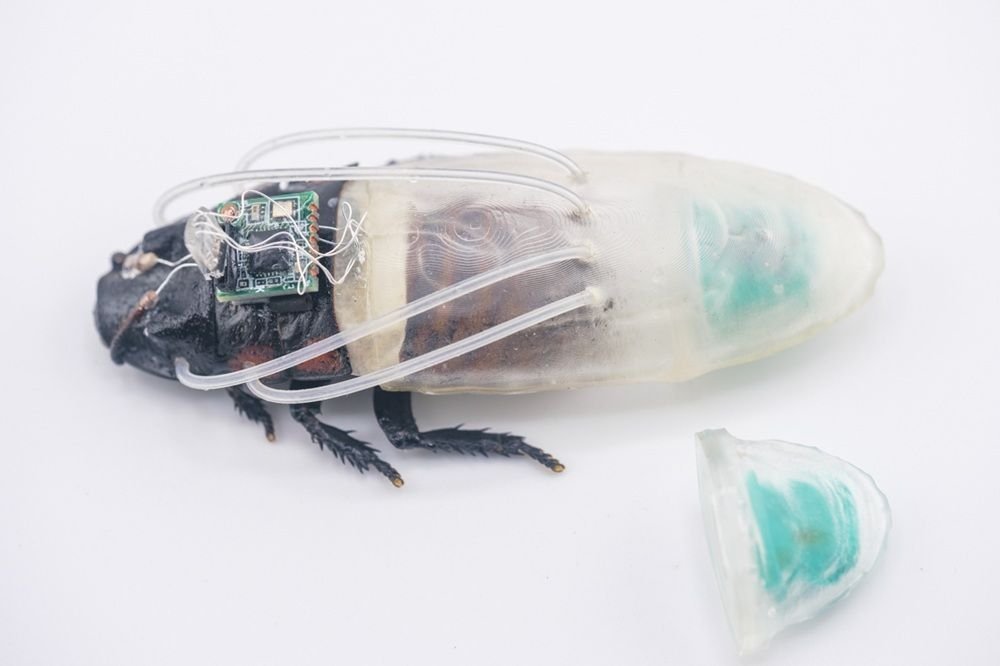
 (Image credit: NTU Singapore)
Two decades after DARPA first started playing around with cyborg insects in its HI-MEMS program, a team of Singaporean researchers is showing off the latest accomplishment in the area. The productive researchers are proudly presenting their potent new 3D-printed variant: a remote-controlled, cyborg cockroach equipped with IR cameras that can breathe underwater for hours on end.
Although that description sounds like the start of a sci-fi or horror movie, the team led by Hirotaka Sato at Nanyang Technological University has been working with the much-hated pest for a good while, outfitting them with infrared cameras in a bid to help rescue operations by steering the roaches in disaster areas to find survivors. To be clear, as the release notes, Cyborg insects are living insects that have been retrofitted with technology. Sato's team had already demonstrated an orchestrated swarm of the little beasties in 2024, but reportedly wasn't happy with the fact that they couldn't send them through water, and went back to the drawing board to fix that.
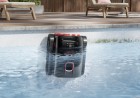
The result is an upgraded form that went underwater for three hours in stages, at a depth of 20" (50 cm); enough for most puddles and lightly flooded areas. Quite interestingly, the roaches' speed was only lightly affected, going from 3.5" (8.75 cm) per second on land to 3.1" (7.84 cm) a second while submerged in water. Cockroaches don't swim per se, but they can paddle-float, and are fine navigating water bodies in general, and it's possible they can go deeper than in the test.
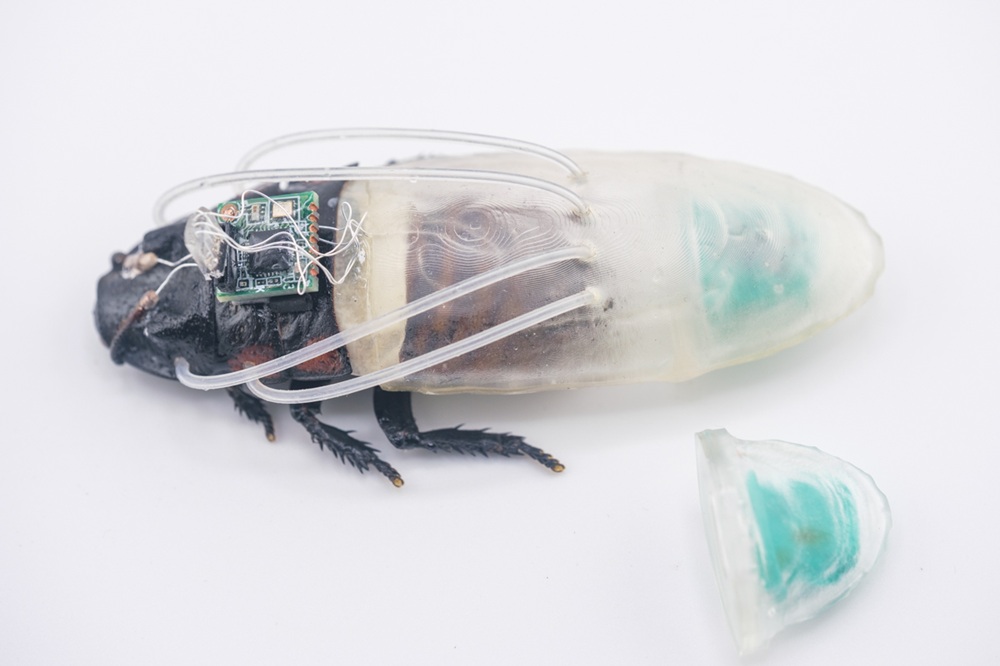
To achieve this, the animals wear a spiffy-looking bespoke 3D-printed scuba suit, complete with tubes that attach from the tank to their "nostrils," called spiracles. The tank has a sponge with both hydrogen peroxide and manganese dioxide, in a slow, carefully tuned reaction that outputs oxygen at a controlled rate. This choice was made to avoid the tricky task of providing a heavy, pressurized oxygen tank — though imagining a cockroach with a tiny tank backflipping into water from a tiny boat is amusing.
The cockroach is pretty much the ideal platform for this type of endeavor, as their legs are easy to control with electrical impulses, and their locomotion characteristics let them navigate almost every type of terrain, oftentimes better than many miniature robots. Their biological batteries theoretically last for weeks on end, too. One roach needs food only every few weeks, a mission-critical feature given that scientists working with miniaturization of any sort keep butting their heads against energy limitations. The IR cameras and wireless do use an actual mini battery pack, but the insects themselves can find sustenance on their own.
Sato's team aims to use swarms of submarine roaches in rescue ops, but is also looking farther on the horizon for the next challenge, namely harsher environments and extraterrestrial exploration, like the surface of Mars. After this latest result, such an endeavor seems plausible enough, considering that the cockroaches' build maxes out every survival skill, as attested by crestfallen homeowners who've had to deal with the insultingly invulnerable miniature tanks.
For starters, cockroaches can go without food or water for multiple weeks, and they function just fine in respiratory environments that would put a human to a slow death, like those with low O2 or high-CO2 concentrations. They can withstand enough radiation to microwave a human, and closing their spiracles lets them hold their breath for up to 40 minutes.
Get Tom's Hardware's best news and in-depth reviews, straight to your inbox.
A roach's diet puts even seagulls to shame, as the list of items they can consume for nourishment is essentially "yes," including human waste. Any wound, including loss of head, doesn't bleed and just clots closed, while their immune systems let them metabolize many pollutants and pesticides. Adding insult to injury, they evolve adaptations rather quickly, and their breeding rate puts that of rabbits to shame.
If you want your own remote-controlled cockroach, there's a ready-made ride-a-roach kit you can buy, complete with a phone app. The kit is pricey but readily available, and we're fairly certain you won't have issues procuring the animal for free. Cockroaches on Mars does sound exactly like a prologue to the Terra Formars manga/anime, and that's quite the scary prospect.

Follow Tom's Hardware on Google News, or add us as a preferred source, to get our latest news, analysis, & reviews in your feeds.
Bruno Ferreira is a contributing writer for Tom's Hardware. He has decades of experience with PC hardware and assorted sundries, alongside a career as a developer. He's obsessed with detail and has a tendency to ramble on the topics he loves. When not doing that, he's usually playing games, or at live music shows and festivals.
What's Your Reaction?
 Like
0
Like
0
 Dislike
0
Dislike
0
 Love
0
Love
0
 Funny
0
Funny
0
 Wow
0
Wow
0
 Sad
0
Sad
0
 Angry
0
Angry
0







Comments (0)