

Splatoon Raiders preview: Switch 2 shooter is messy single-player fun

Published Jun 30, 2026, 10:00 AM EDT
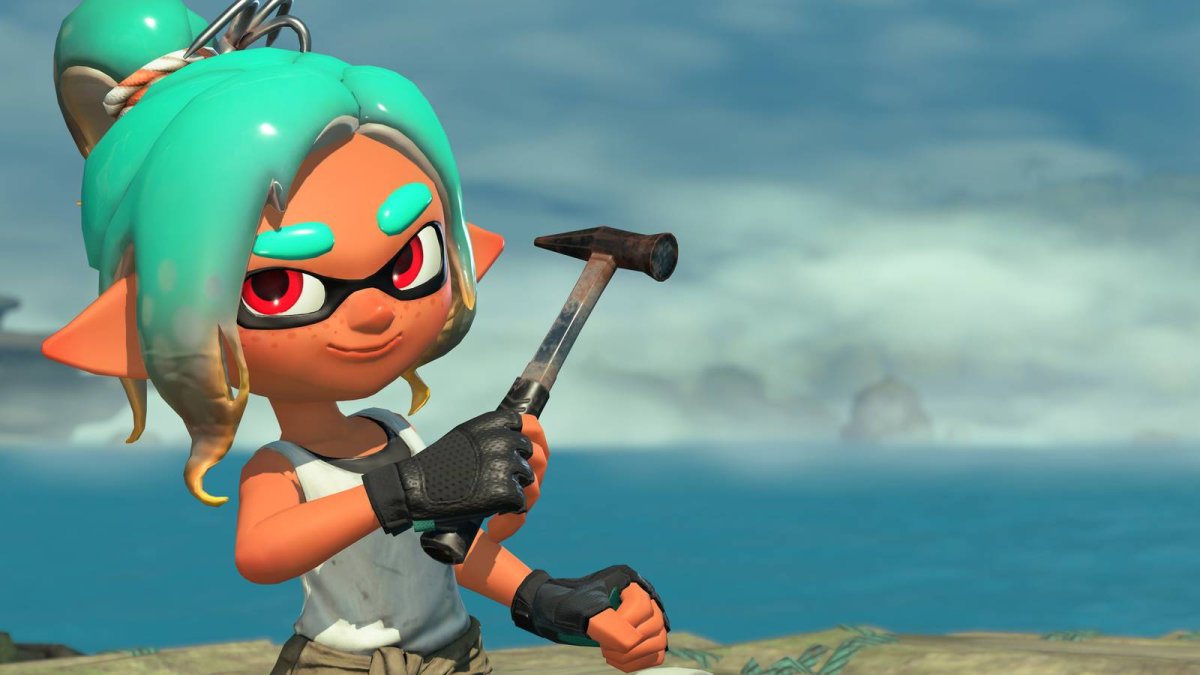
Splatoon's Switch 2 debut is the game solo players have been dreaming of
 Image: Nintendo
Sign in to your Polygon.com account
After riffing on the same ideas for three games, Splatoon Raiders is set to shake up Nintendo’s multiplayer ink shooter for the first time in a decade. It’s billed as the series’ first true single-player game, one that remixes some of the best ideas from modes like Splatoon 3’s PVE Salmon Run into something new. Based on that pitch, I thought I had a pretty good idea of what to expect when I sat down to play around 90 minutes of it.
It turned out that the version of Splatoon Raiders I had invented based off its first trailers wasn’t entirely accurate. My demo showcased a more straightforward, level-based single-player game than the dungeon-crawling treasure-hunting game I pictured. I have no complaints about that; Raiders puts Splatoon’s best qualities to good use while working in some enticing progression layers. You’ll just want to make sure to calibrate your expectations accordingly, because it’s easy to get the wrong idea about what Nintendo is going for with this Switch 2 exclusive.
The first chunk of my demo took me through the opening half-hour of Splatoon Raiders, from its tutorial to its first few levels. There weren’t too many surprises there; if you’ve played any Splatoon game, you’ll get your sea legs (tentacles?) quickly. The fundamentals of shooting colorful ink at surfaces and going into squid form to traverse through those puddles are still there. All the familiar weapons like Splattershots, Sloshers, Brellas, and Splat Dualies return, as do the Salmonid enemies that populate Salmon Run.
The main difference is that Raiders features some hefty character customization and RPG progression. That starts with your ink tank, of which there are three classes: Speed, Power, and Tactical. Each can be leveled up by using it in missions, boosting its stats on top of permanent skill upgrades you can get by spending tokens. Each tank comes with its own set of gadgets, your secondary powers that operate on a cooldown. The Tactical Tank has access to a stationary turret and a damaging tether, for instance, while Speed tank users can equip a jumping slam and a boomerang attack. (Booyarang, of course.) Two can be equipped at once, and more can be crafted with materials earned during missions.
 Image: Nintendo
Each gadget can also be outfitted with mods earned during runs, and those can make your extra attacks far more damaging. My favorite Power gadget I tried was Splattelites, which temporarily surrounded my inkling in a ring of damaging paintballs. I tinkered with that a bit to keep its duration up, ensuring that I could safely play a close-range strategy with my Slosher. On top of that, I could also set one of three ultimate attacks based on the members of Deep Cut, the pop band who assist in your treasure hunting mission. My personal pick was one that summoned a massive shark that could tear through enemies in a straight line.
Combine all of that with Raiders’ 100+ weapons, which can drop from enemies at different levels and with unique perks, and you’ve got a lot of mix-and-match potential here. Raiders feels like Splatoon’s version of a looter shooter, putting an emphasis on power growth and synergistic builds. That’s an exciting premise, especially for the four-player co-op potential; I can see working with a team to put together complimentary builds that let us breeze through the campaign’s bite-sized levels. The only thing that’s lacking is fashion: Players can only unlock a handful of full outfits, rather than individual clothing items. That’s a shame considering that crafting a fit is just as core to Splatoon’s ethos as picking the right gear.
 Image: Nintendo
The way that levels play out is also different from Splatoon 3’s great solo campaign. Splatoon 3’s missions are more about puzzle platforming, whereas Raiders’ are more combat focused. In the earliest missions, I hopped between islands looking for crystals to drill with my robot companion. To break one open, I usually had to clear out a wave of enemies first. There’s still some platforming as you make your way through specific levels — springing off of your robot, floating over gaps via wind gusts, shooting into the air from tall vines — but action was the focus in the handful of missions I played.
There was a lot of variety in that mission list, too. Some levels were linear treasure hunts. Others were a little more open, requiring me to freely explore a small map and gather a certain number of Power Eggs. One of my favorite levels played more like a weapon challenge, as I was given a specific loadout with an ink-turret gadget, and put through a gauntlet that walked me through all the ways I could use it in context. In all of those missions, I have the chance to pick up random weapons, scattered lore, experience points, and crafting materials.
Then there are raids, the mission type that’s most likely to mislead players. At a glance, it looks like an evolution of both Splatoon 3’s Side Order roguelite mode and Salmon Run, but it’s not exactly either. They’re straightforward levels where you jump between arena floors, splatting enough enemies and gathering enough Eggs within a time limit on each floor to move on. Focusing on bigger Salmonids like Steel Eels and Stingers will get you more Eggs, but you need to make sure you’re thinning out the Lesser Salmonid herds while inking the ground so you never get cornered.
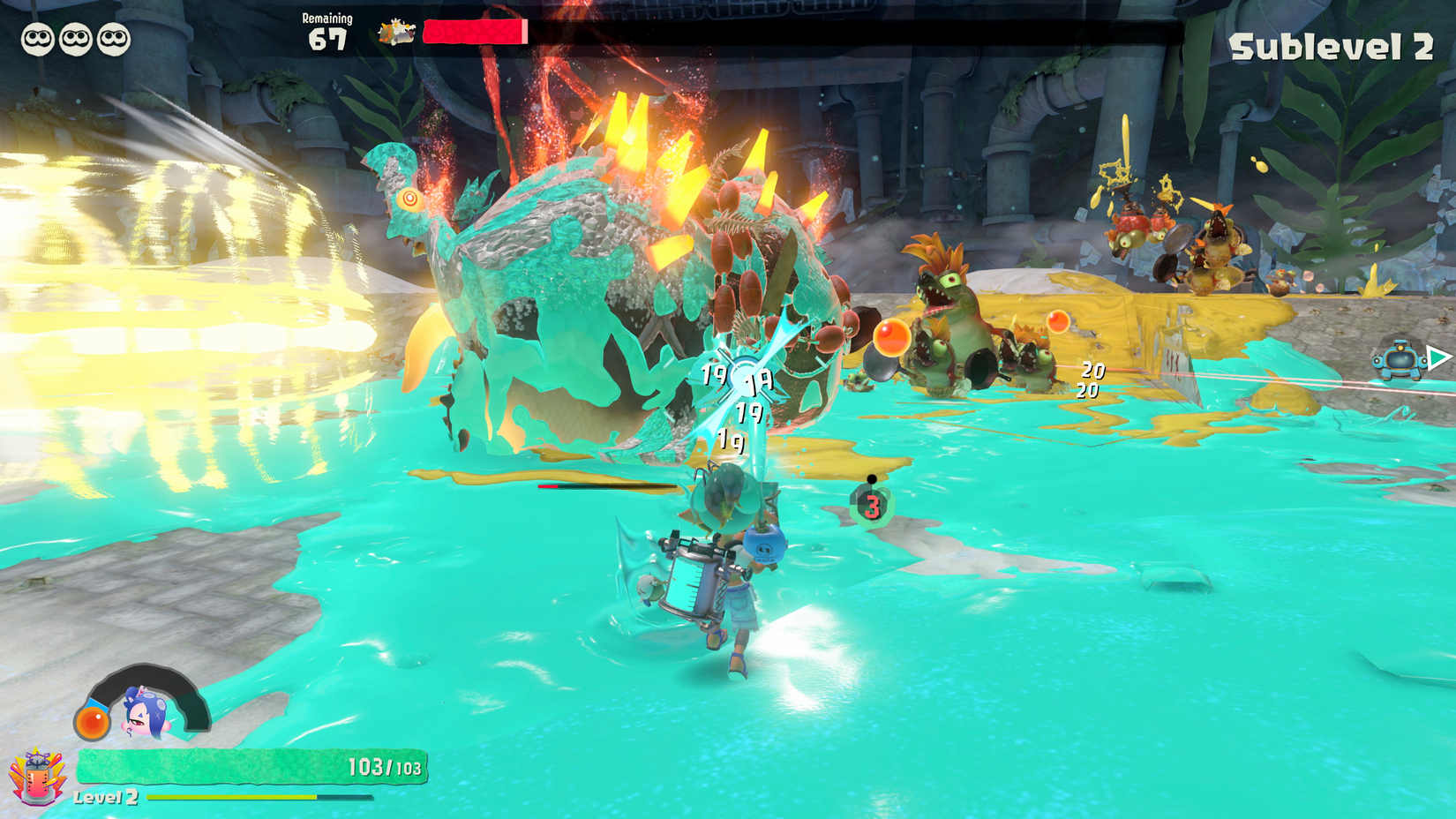 Image: Nintendo
If there’s a longer-form raid or any kind of procedurally-generated mode that players can grind away at like they would Salmon Run, I didn’t see it in my demo. I’m hoping something like that exists, because the levels I did play all felt too short to take advantage of the fact that the whole campaign can be played with up to four people. (There’s also a Help feature which allows you to jump into another player’s game and lend a hand in exchange for rewards.) Considering that I’ve put well over 100 hours into Splatoon 3, I’m sure I’ll be begging for more reasons to squad up with friends and grind for gear.
Maybe that’s asking for Splatoon Raiders to be something that it’s explicitly not, though. Nintendo is pitching this as a single-player version of Splatoon first and foremost, not as a solo mode tacked on to a long-tailed multiplayer service. The missions I played reflect that, offering a level-based campaign that feels perfectly substantial as a compact standalone game. For those who feel overwhelmed by Splatoon 3’s wealth of content, it might be a less intimidating way to get a feel for the series. No matter how it turns out, I wouldn’t be surprised if its buildcrafting ends up having a game-changing impact on Splatoon 4. The tinkering is too good to leave on the sidelines.
Splatoon Raiders will be released on July 23 for Nintendo Switch 2.
 Related
What's Your Reaction?
 Like
0
Like
0
 Dislike
0
Dislike
0
 Love
0
Love
0
 Funny
0
Funny
0
 Wow
0
Wow
0
 Sad
0
Sad
0
 Angry
0
Angry
0








Comments (0)