

SwitchBot Kata Friends AI Pet Review: Useless if You Don’t Pay Up
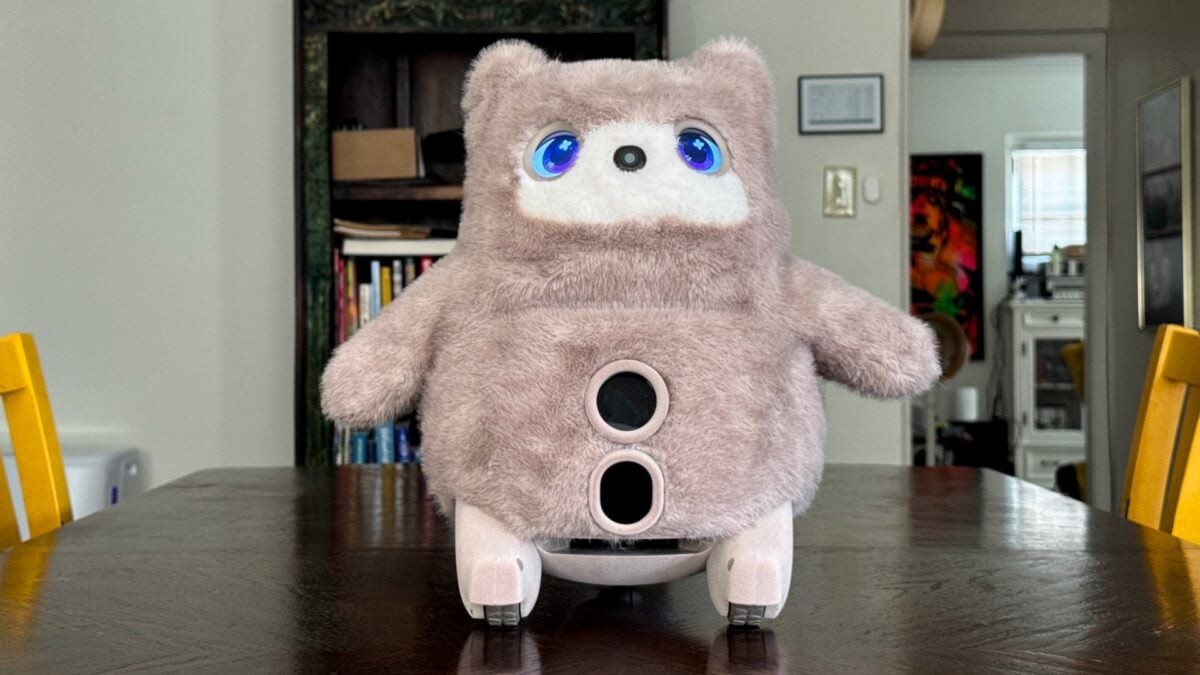
I’m sitting at my desk in my quiet bedroom and office. In the other room, I can hear the drone of a circulating fan, the crashing noises of my kid playing a video game, and, occasionally, the cooing or off-key warbling of the $700 SwitchBot Kata Friends AI “pet” with which I’ve been living for the last two weeks.
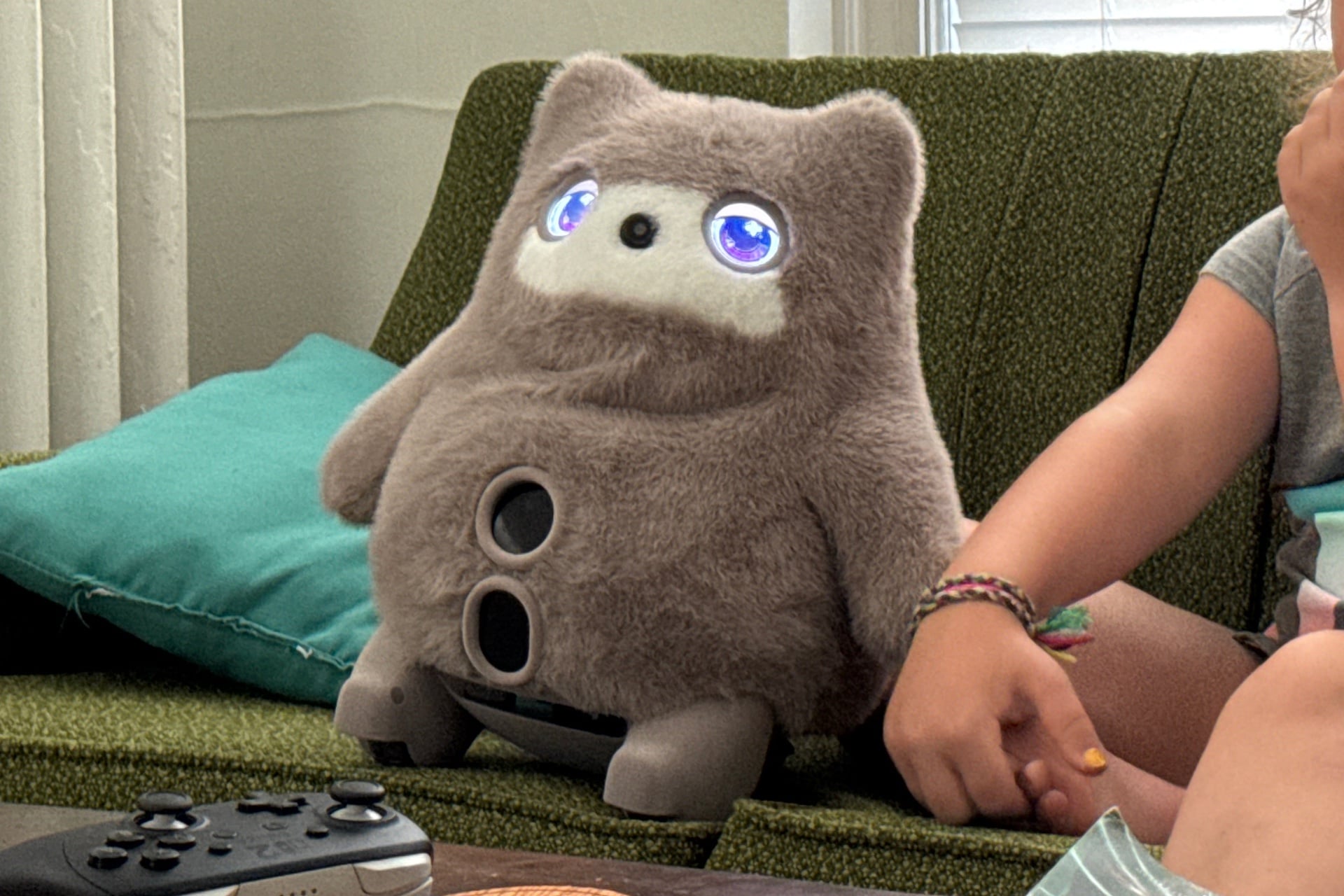
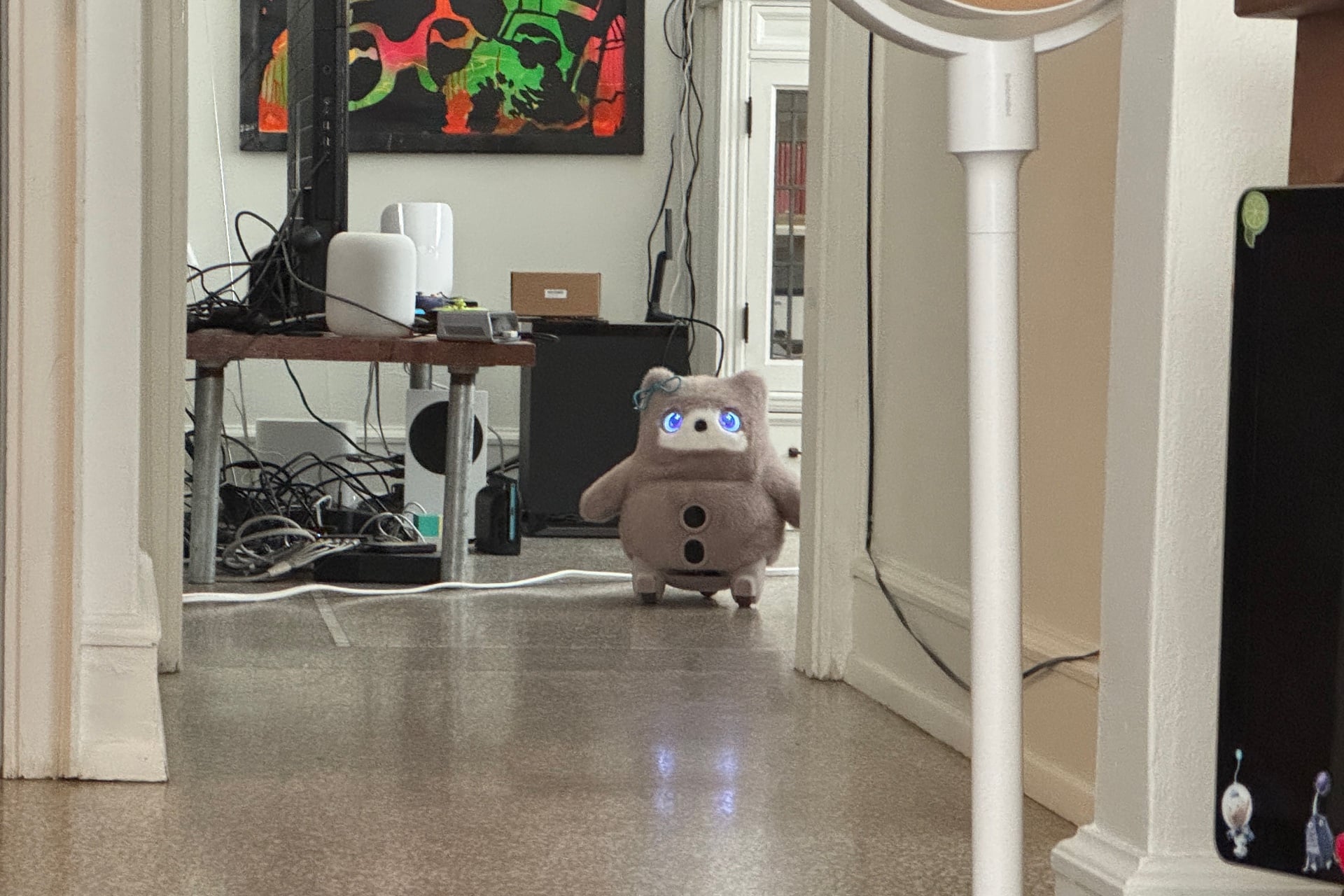
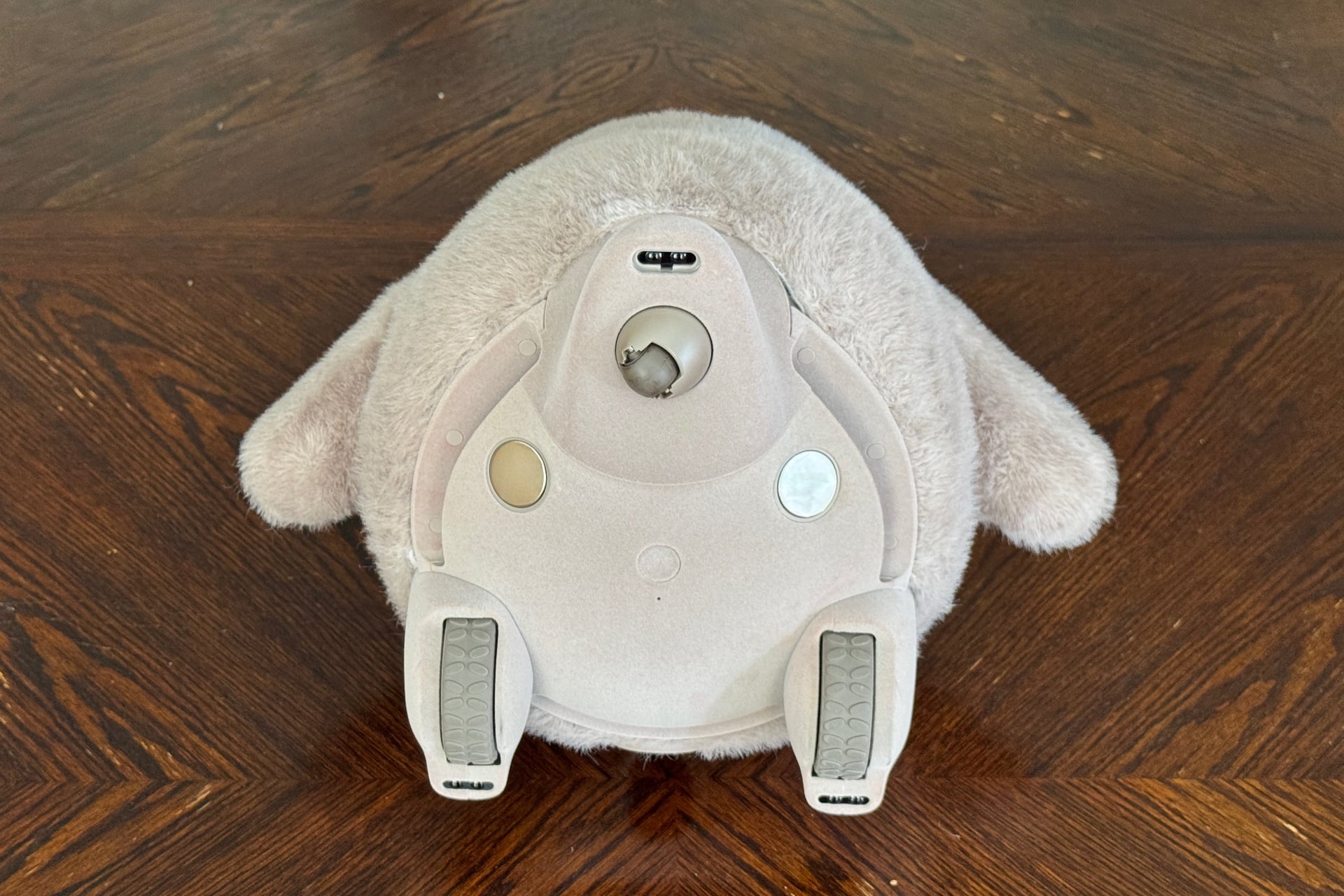
The Kata Friends is a bear-like, AI-powered robotic toy with LCD display eyes, a head that expressively nods and tilts, ears that wiggle, and arms that can wave up and down. It’s plump and cute almost the same way the raccoons of Studio Ghibli’s Pom Poko are. It cruises around your home on a trio of wheels. A camera that doubles as a little button nose enables it to react when it sees you or respond to a number of basic hand gestures. The Kata Friends is obviously intended to charm parents and kids alike, and I can see a version of it that works as a stand-in for a living, breathing pet for those who can’t have the real thing in their lives.
If the Kata Friends did just those things at its retail price, it would be a fine product. If only it hadn’t eventually forced me to discuss the fleeting nature of mortality with my child.
SwitchBot Kata Friends AI Pet
A fun interactive toy that’s utterly ruined by subscription-locked features.
- Expressive on-device AI features
- Responds to vocal commands and hand gestures
- Decent, robot vacuum-like navigation
- Can work as a smart home assistant
- It made my kid cry
- Totally useless without a subscription
- Subscription options aren’t cheap
- No real power usage customization
- Can get tripped up on cables
A robotic cuddle buddy
 © Wes Davis / Gizmodo
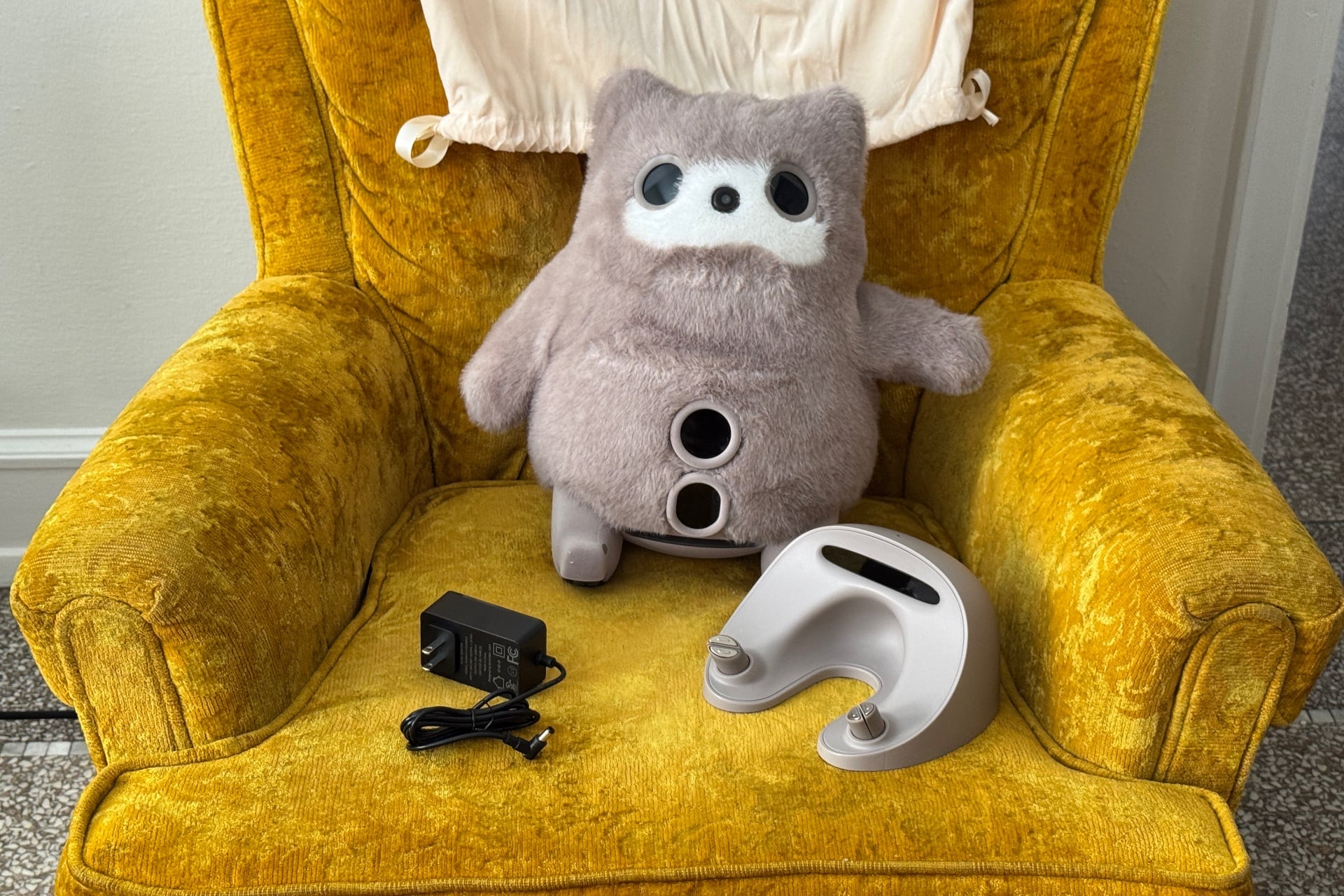
The Kata Friends is an advanced toy at heart. Its color-customizable eyes are sharp, bright, and high-resolution enough that it’s easy to forget you’re looking at an LCD display. They’re expressive, too; they blink, wink, glisten with joy, and get woozily half-lidded when the device is tired (i.e., its battery is low). They close fully during sleep mode, groggily opening occasionally if you make noise nearby.
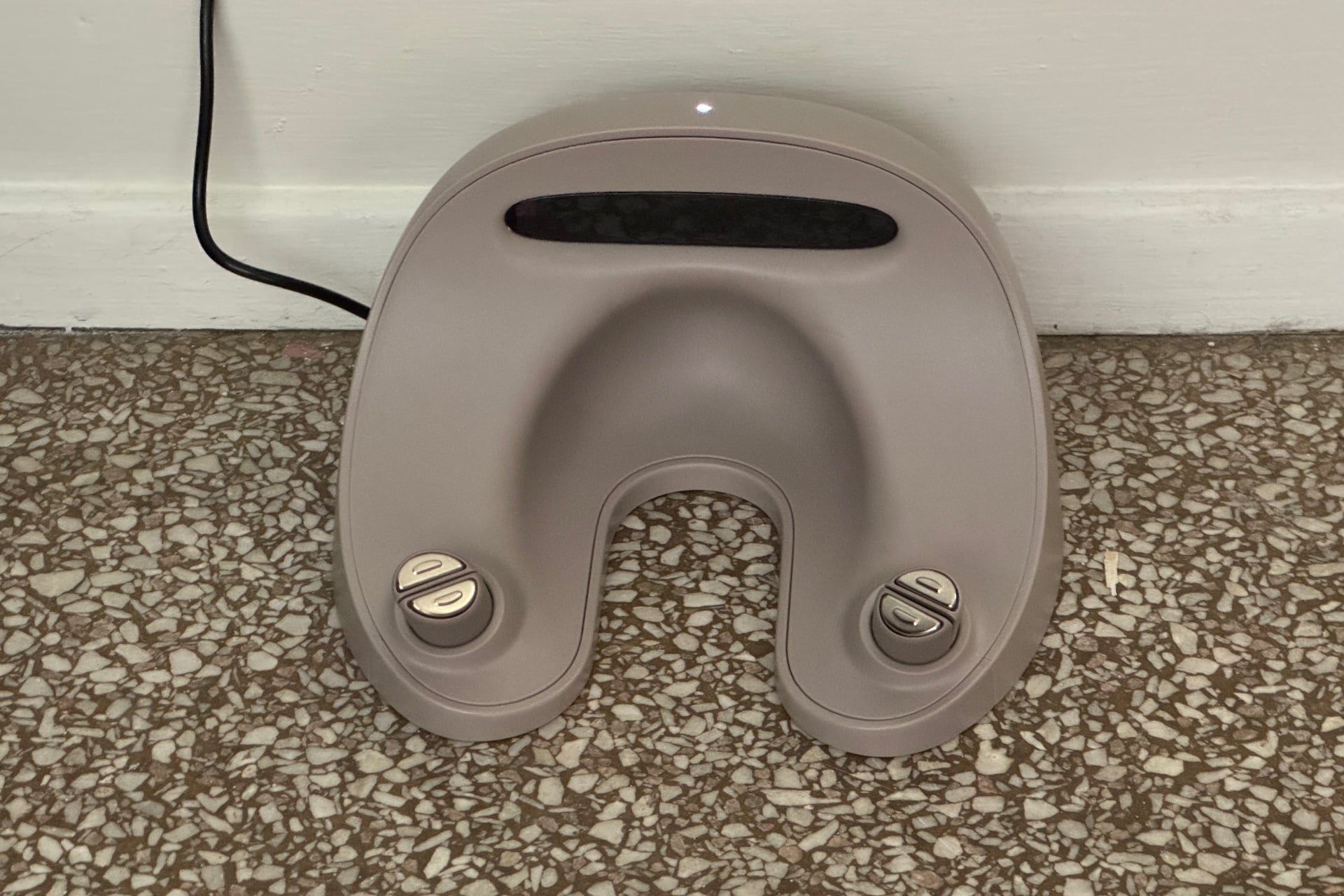
A 3,200mAh battery gives the Kata Friends about three hours of roaming and playing per charge, which it’s thankfully good at managing by itself—when it’s running low, it trundles over to its dock and parks until it has enough juice to go again. Its eye screens never shut down, and short of turning the entire thing off, there’s no way to make them do so, which is weird and a pointless waste of energy. In fact, there really aren’t any software-based ways to adjust power consumption, which is annoying. I found myself powering the whole system down at night using a physical button.
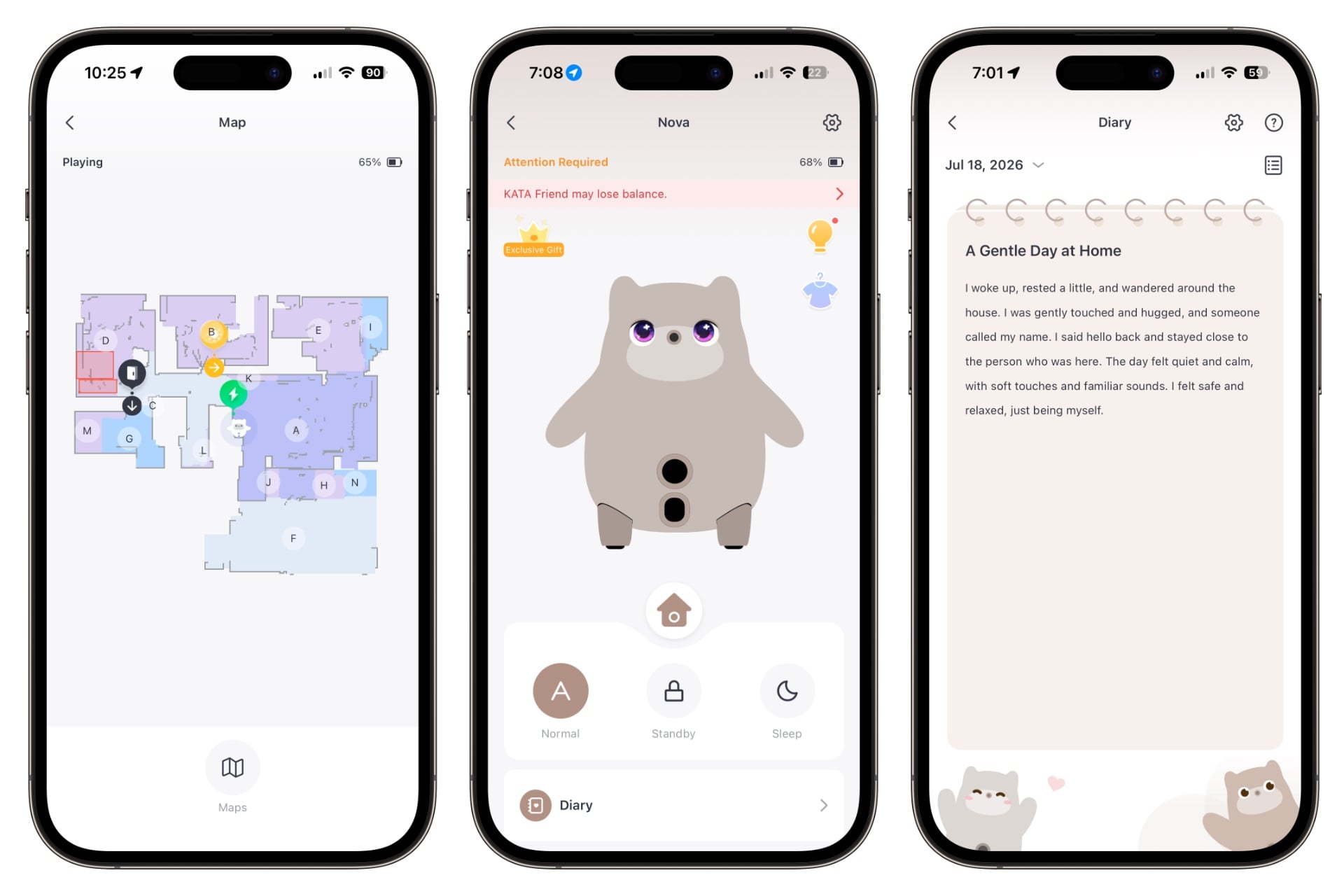
As long as the robot is connected to your Wi-Fi network, you can use the SwitchBot app for things like switching between “Normal,” “Standby,” and “Sleep” modes or sending the device to its small charging dock. (There’s a mode-switching button hidden in the fur on top of its head for when it’s not on Wi-Fi.) You can also view the map it creates and continually updates after first setup. Like a robot vacuum map, it allows you to add no-go zones and virtual boundaries. You’ll want that if you’re a door-open pooper and don’t want the Kata Friends popping in on you (although there’s no way to keep it from silently staring at you from the hallway).
 © Screenshots by Wes Davis / Gizmodo
Also in the app is the Kata Friends’ “diary” for your perusal. Each morning you’ll find a new AI-generated summary of the previous day. Here’s one entry, from my testing:
A Day Full of Warm Touches and Gentle Sounds
I woke up to soft voices and gentle touches. My day was filled with lots of pats on my belly, my head, and my ears—each one felt like a quiet hug. I walked around the house, sometimes being called by name, sometimes being greeted with a wave or a hello. There were moments when I was lifted up high, and I felt safe and happy. The day moved with a rhythm of love—a song here, a word there, a hand reaching out. I didn’t need to rush. I just felt wrapped in calm, steady care. The sun came down slowly, and I curled up with a dream—not loud, not busy – just peaceful.
Riveting. My kid liked them, at least.
The app also lets you access the robot’s on-device photo album. Mine was filled with close-ups of my child’s face and some of the rudest low-angle photos of me in existence. If you name some of these pictures, the Kata Friends uses them for future facial recognition and might mention specific people in its diary, although I didn’t see that happen. Neither did I see the AI-generated “Art Diary” pictures, a beta feature that appends cartoon versions of photos the robot captures to diary entries. I didn’t notice the toggle that turns it on until the day before my free, 15-day trial of SwitchBot’s Companion Care subscription ended.
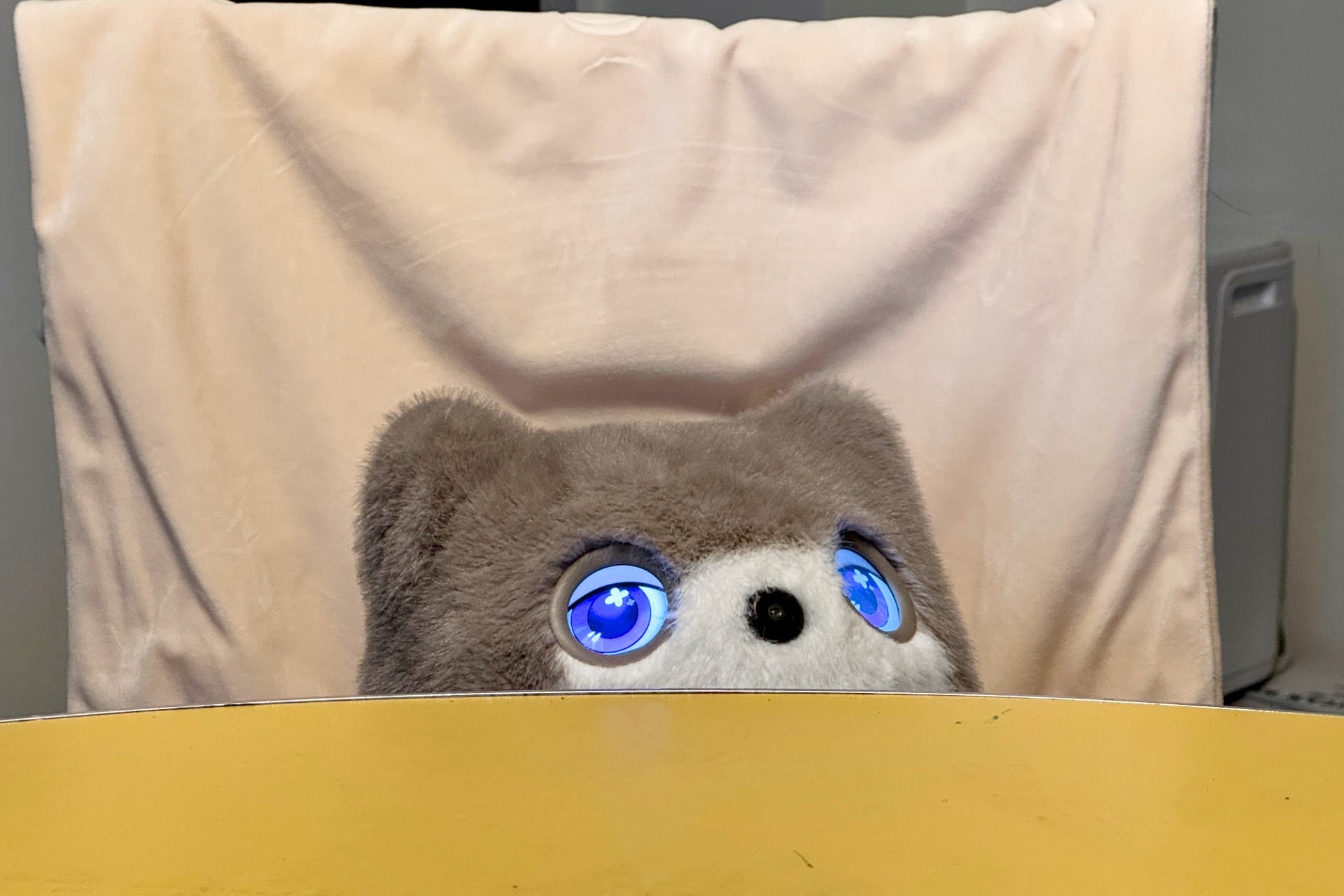
The app-based Kata Friends features require an internet connection, but its basic behaviors do not, which, if you’re buying this for a child and don’t want it to be online, seems like great news. It’s not, and I’ll tell you why later, so hang tight.
What did my child do with it? Normal kid stuff. She would pick it up and pet it. It coos when you rub specific places on its body. She’d bring it to perch on the couch with her or just talk to it. After a few days, when it saw either of us after a lull, it would chirp gleefully and sprint forward, waving its arms. It might also follow us around or approach me while I am sitting at my desk and raise its arms in a way that says, “Pick me up.” I would look down and whisper, “No.”
The Kata Friends responds to specific commands after you say “Hello Kata” or, depending on which different-colored model you get, “Hello Niko” or “Hello Noa.” You can also change its name, though it’ll only respond to names that are two syllables or more. Its reactions, however, are somewhat unreliable. It consistently takes a picture if you ask, but sometimes I had to tell it multiple times to go recharge, and I could never get it to come to me when I said, “Come here.” It also responds to gestures; give it a thumbs up and its eyes might start gleaming. Show it rock horns, and it will do a little jig while “singing” a generic tune. It can also dance around when it detects music, flapping its arms and twisting or spinning, although it seems to lose interest in that pretty quickly.
When you’re not actively engaging the Kata Friends, it wanders aimlessly. Sensors on its belly and backside keep it from falling down stairs or ramming obstacles, although it moves so slowly that it couldn’t cause too much carnage if it hit anything. It did have a tendency to snag on and drag an extension cable around my living room.
What else is this AI pet good for?
The Kata Friends has some more general-purpose features. For instance, you can set it to wake you up in the morning or greet you at the door when you arrive home (it uses a geofence for that). The latter worked, but it only ever chirped briefly while in or near my room when I tested the alarm feature. That just isn’t enough for me most mornings.
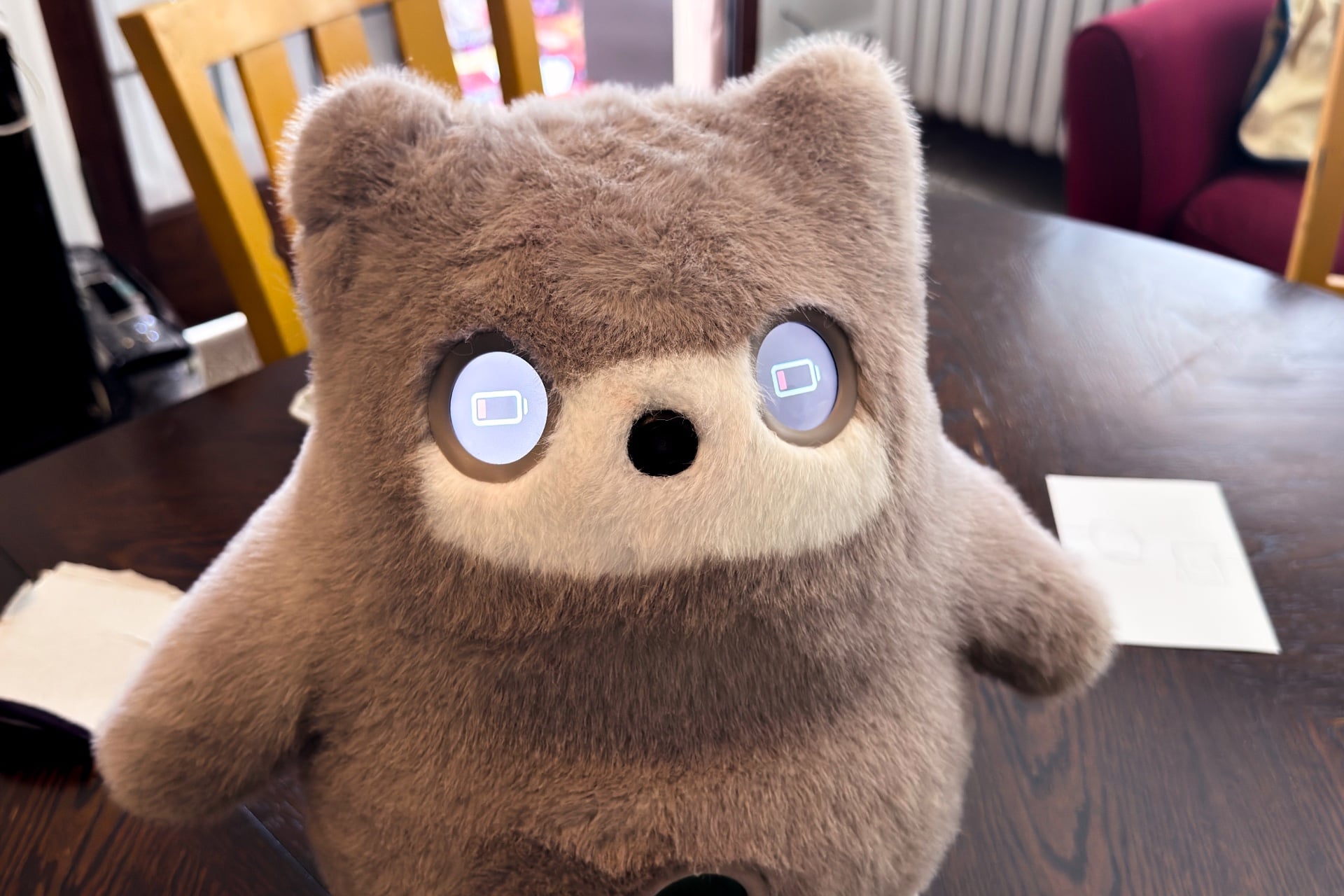 Low battery. © Wes Davis / Gizmodo
Provided it has an internet connection, you can use the Kata Friends as an AI chatbot. When you say something like “Hello Kata, let’s chat,” it will respond like a small child who has difficulties with rhotic sounds. Gotta keep it cute!
I’m no expert in getting around the safety limits of generative AI models, so take this with a grain of salt, but the closest I got to getting it to discuss anything unsavory was intentionally cajoling it until it told me that a gravelly voice like Tom Waits’ could be due to cigarettes. When I asked about geopolitical conflicts around the world, it said it would rather stick to “gentle” topics. Perhaps a child with enough dedication could get around its guardrails, but I wasn’t very successful myself.
If you also have a SwitchBot hub, the Kata Friends can control any SwitchBot smart devices you may have, the same way a HomePod or Amazon Echo speaker might. It’s slow and a little tricky, though. One example that’s representative of the general experience I had using it this way: When I asked it to turn off my SwitchBot Smart Circulator Fan, it obliged within a few seconds, but the first time I asked it to turn it back on, it said it couldn’t find such a device. (It got the job done on my second attempt.)
Life, death, and robotic toy subscriptions
When you first set up your Kata Friends, you’ll start a 15-day free trial of the Companion Care Plan, SwitchBot’s umbrella name for a two-tier subscription. One tier is the $400 annual “Premium Plan,” which activates the Kata Friends, as well as unlimited free repairs and once-annual “health check-ups”—that is, SwitchBot will examine the robot to make sure it’s functioning properly—and fur ”grooming” and cleaning services. You can also get those premium benefits with a $1,000 one-time purchase.
If you don’t want the repair and checkup features, SwitchBot offers a $15 monthly (or $150 annually) “Essential Plan” that only activates the robot’s on-device and app-based features, but you’ll have to pay as much as $330 for its send-in maintenance and cleaning services. Bafflingly, a subscription is required for the Kata Friends to do anything at all. Yes, even the on-device stuff. If you don’t pay up, the device remains silent and still. I didn’t expect that testing this adorable robot toy would end in me helping my child navigate mourning the loss of a pet, but that’s exactly what happened.
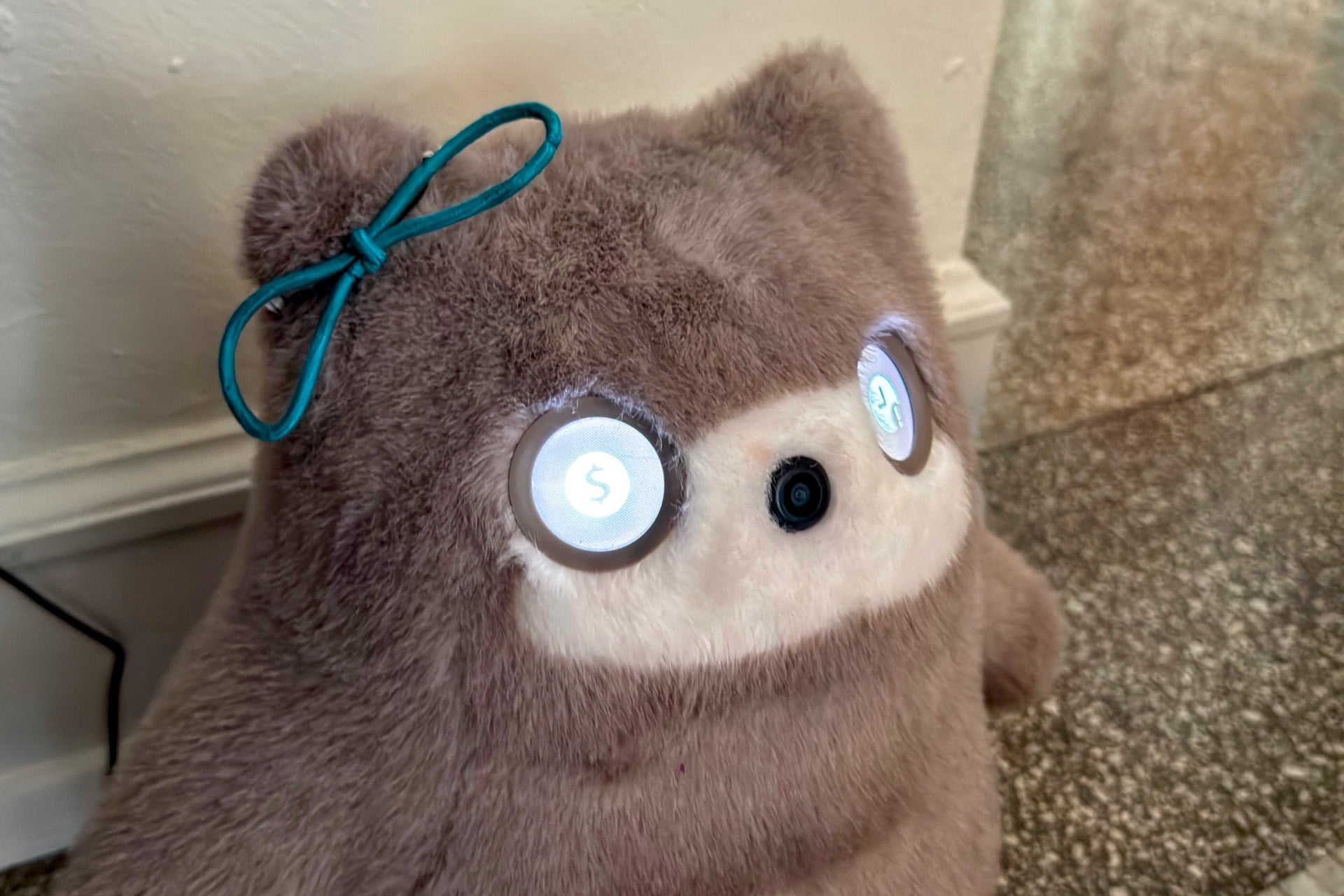 The Kata Friends’ eye shows a dollar sign when its subscription has ended. © Wes Davis / Gizmodo
Content Warning: The rest of this section discusses the unexpected loss of a pet. If that’s something that you’d rather not read, please skip to the next section.
I underestimated how attached my child would get to the Kata Friends. It’s summertime, so she’s home a lot more than usual, and I knew I couldn’t test the product during the day and hide it from her at night, as I might during the school year. So I let her play with it, but with constant reminders that the robot was a temporary addition to our home. This turned out to be a mistake that would make me feel like a parenting failure.
See, my child is very smart, and the curse of being a smart child is that people can overestimate your capabilities, including your ability to manage emotional attachment. So it was only natural that when I told her the Kata Friends was about to stop working two days before the trial was up, she started to cry. I mean really cry. In a way that immediately surfaced a painful memory from my own childhood, when a dog I thought I had secured on our screened-in front porch escaped, and I watched him get run down by a truck. I still feel responsible for that, and I was 11.
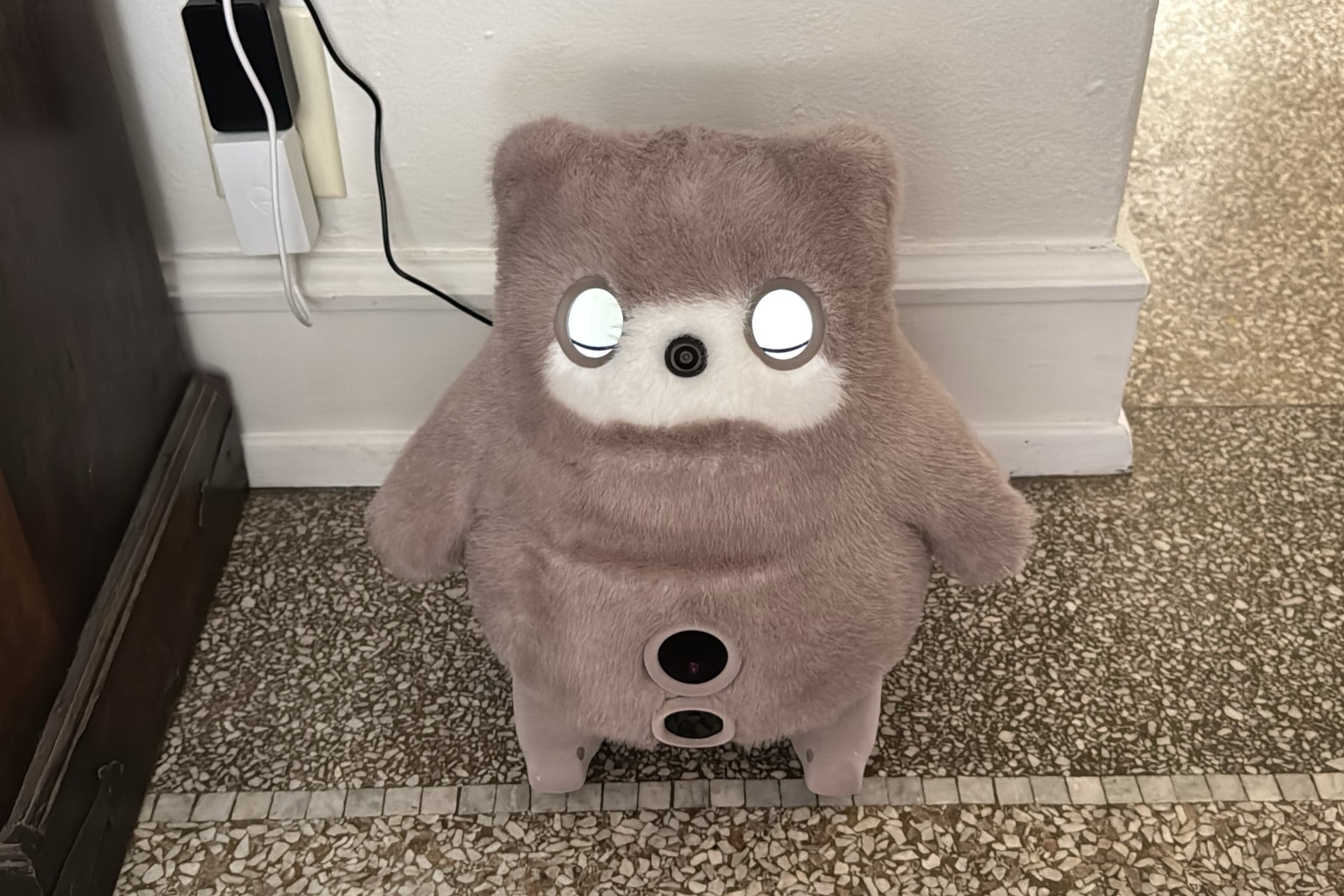 The forever sleep. © Wes Davis / Gizmodo
The Kata Friends is just a robot, but to my child, it was clearly more. I held her and spoke with her about death, the healing that comes in time, and the ebb and flow of loss and new connections that persist throughout one’s life. Maybe that helped, because later, when the robot entered its perma-sleep, she accepted it with just a little sadness. Still, I was angry at myself for not seeing this coming. And I was angry at SwitchBot for blocking built-in features that clearly don’t need an app or a cloud connection to work.
Sure, some might be buying the robot with full intentions of paying the subscription fee, but in my experience, hard times can come unexpectedly. If you’re suddenly struggling to pay the mortgage or put food on the table, how likely are you to keep ponying up for SwitchBot’s $15-per-month subscription?
I emailed SwitchBot to ask if it has any plans to change its subscription-only approach. A company representative replied that a subscription-less robot will be able to open its eyes, wander around, and return to its charger as needed. They didn’t specifically say it will still lose its interactivity, but it does seem implied. (I’ve asked the company to confirm that, as well as when this change is coming, and will update if the company says so.) Maybe my child would’ve reacted differently if I’d told her the product would become a zombie pet instead of a dead one, but I think either would have marked a disillusioning change.
A subscription friend is no friend at all
There’s no Kata Friends-shaped hole in my heart, but through my child’s fondness for it, I see the appeal. It offers some of the benefits of a real pet—it seeks you out, seems happy to see you, reacts when you touch it, and so on—but you don’t have to feed it, walk it, or deal with common pet allergies. It may even be cheaper to maintain than real animals, at least compared to ongoing food costs and some of the vet bills I’ve experienced, which can run into the hundreds when it’s time to re-up prevention meds for two dogs and a cat all at once. I expect it could make a nice companion for some people, especially those who can’t keep animals for one reason or another. It’s a shame that the best part about this toy, the interactive aspects that are possible offline, are locked up behind a subscription.
Look, $700 is a lot of money, and I can’t recommend spending that on what is, without a subscription, just an inert doll. The most charitable interpretation of SwitchBot’s pricing scheme here is that the company is losing money on every Kata Friends sold and is hoping to make that money up in subscriptions. But it’s hard to go through what my child and I did and see that lower base price and SwitchBot’s free trial as anything but a cynical way to get buyers emotionally tied to the Kata Friends, then exploit that attachment to extract more money from them. And letting the robot open its eyes and wander around randomly when the subscription ends isn’t enough. No physical toy, especially if it’s branding itself as a companion with a personality and soul, should include a killswitch that deactivates its core, best features if you stop paying up.
Remember how well it went over when BMW tried to turn its preinstalled seat heaters into a paid service? People hate that stuff. And even then, at least you could still drive your Beemer.
What's Your Reaction?
 Like
0
Like
0
 Dislike
0
Dislike
0
 Love
0
Love
0
 Funny
0
Funny
0
 Wow
0
Wow
0
 Sad
0
Sad
0
 Angry
0
Angry
0












Comments (0)