

The Canon EOS R6 V Has Active Cooling, IBIS, and Internal Raw for $2,500 — So What's the Catch?
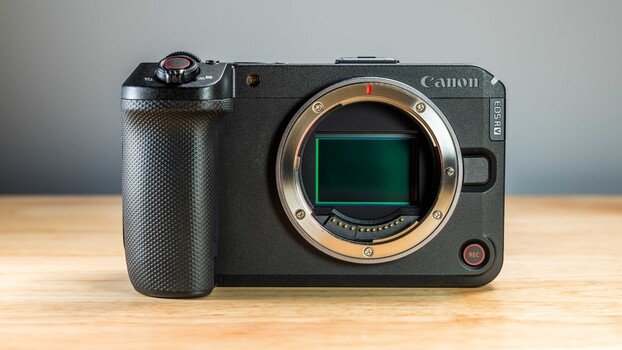
The Canon EOS R6 V lands at $2,500 with active cooling, IBIS, open gate 7K, and internal Raw — a spec sheet that would have cost you significantly more just a couple of years ago. The obvious question is how it actually performs against cameras like the Sony FX3 at $4,300 and the Canon EOS C50 at $3,900, and whether the gap in price reflects a meaningful gap in real-world image quality.
Coming to you from Josh Sattin, this detailed early review puts the Canon EOS R6 V through its paces alongside the C50, which shares the same sensor. Sattin shoots sample footage in 7K open gate using the XF-HEVC codec and tests 4K in both full frame and crop modes, including some wildlife footage using the Canon RF 100-500mm. The image quality comparison between the R6 V and the C50 is one of the more useful parts of the video. Sattin grades the R6 V footage and copies that grade directly to the C50, and the results are close enough that he says mixing the two as an A and B camera setup wouldn't be a problem. The window test for dynamic range tells a slightly different story, where the C50 holds a small but visible edge in the shadows, which Sattin attributes to a few specific factors worth understanding if you're deciding between the two.
One of those factors is IBIS itself. Sattin explains that in-body image stabilization generates heat even when it's turned off, which can introduce more noise compared to a camera without it. So the C50, which lacks IBIS, has a thermal advantage in that regard. The fan in the R6 V offsets some of that by keeping the sensor cooler than the Canon EOS R6 Mark III can manage without one, which means the R6 V likely sits somewhere between the R6 Mark III and the C50 in dynamic range performance. Sattin also touches on rolling shutter numbers (13.2 milliseconds in oversampled 4K at both 24 and 60 fps, and 6.6 milliseconds in 4K 120) and runs through autofocus performance, stabilization samples at 15mm and 20mm, and a body cap noise test confirming an informal second base ISO at 6,400 that behaves much like the C50's stated dual native ISO.
Sattin also spends real time on the new Canon RF 20-50mm f/4L IS PZ, which arrived as a surprise alongside the camera. At 20mm on the wide end with a power zoom switch built in, it's compact enough that Sattin says it may replace carrying both his Canon RF 15-35mm f/2.8L IS USM and Canon RF 24-70mm f/2.8L IS USM for travel and run-and-gun work. The f/4 maximum aperture is a real trade-off, but Sattin points out that at high ISO the R6 V handles itself well enough that it rarely becomes a practical limitation outdoors. The video also covers where the R6 V fits against the Nikon Z6R, the Panasonic Lumix S1 Mark II, and what C50 owners should realistically think about before considering a switch, along with Sattin's own honest take on whether he'd sell his C50 to get one. Check out the video above for the full rundown from Sattin.
What's Your Reaction?
 Like
0
Like
0
 Dislike
0
Dislike
0
 Love
0
Love
0
 Funny
0
Funny
0
 Wow
0
Wow
0
 Sad
0
Sad
0
 Angry
0
Angry
0









Comments (0)