

The Leica D-Lux 8 After 18 Months and 3,000 Shots
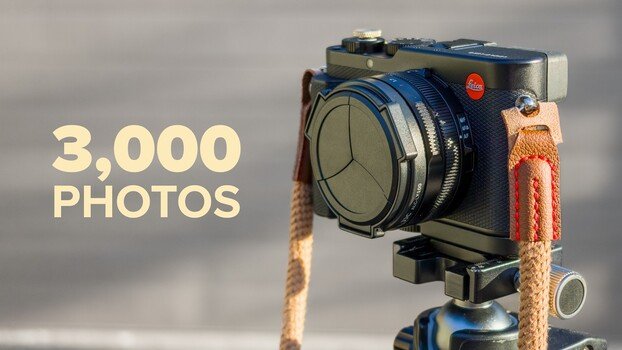
The Leica D-Lux 8 sits in an unusual spot: a Micro Four Thirds compact with a fixed zoom lens, priced like a premium tool, marketed as something you actually carry. After nearly 19 months and close to 3,000 images, Peter Fritz has moved well past first impressions, and his conclusions are more nuanced than the usual early review.
Coming to you from Peter Fritz | Life Behind Glass, this thorough long-term video covers everything from landscape and car photography in the Australian outback and Victorian high country to coastal architecture and casual documentary work. Fritz shoots the Leica D-Lux 8 alongside a Hasselblad X2D 100C, which gives him an unusually honest reference point. The D-Lux 8 offers 17 usable megapixels against the Hasselblad's 102, yet Fritz finds the raw files hold up well in post, with shadow recovery that genuinely surprised him. The color science is another consistent high point: greens, oranges, and blues that look rich without feeling processed, and sky gradations that hold smooth detail even in high-contrast conditions.
One thing that separates Fritz's take from a typical review is how he actually shoots the camera day to day. He runs several custom profiles: a default, one with face tracking for people, a high-contrast mono profile, and one for video. He shoots almost entirely in the 3:2 ratio to preserve the full sensor, aperture priority with auto ISO, and keeps a circular polarizer on the lens nearly all the time to manage reflections on cars, water, and foliage. The in-camera mono mode is something he returns to repeatedly, specifically because the Hasselblad X2D 100C can't simulate monochrome in-camera, and seeing a scene rendered in black and white through the viewfinder changes how he composes. He pairs the camera with a Leica grip and a hot shoe thumb rest to compensate for the compact body, which helps considerably with handling if you have larger hands.
Fritz is straightforward about the drawbacks. The power button sits directly in front of the custom dial, and he accidentally shuts the camera off regularly while reaching for exposure compensation. The aspect ratio switch and the autofocus mode selector on the lens barrel are both tight and require a fingernail to move. The camera has no in-body image stabilization, so shutter speed discipline matters, especially toward the 70mm end of the zoom range. Dust ingress is a real consideration with an extending zoom lens on a non-weather-sealed body, though Fritz has managed it in desert and coastal conditions with a simple wipe-before-retract habit. The fixed screen is a non-issue for him, but worth knowing if you shoot frequently from low angles. He's also candid that this isn't the camera he'd choose for a once-in-a-lifetime landscape shoot demanding maximum image fidelity.
Check out the video above for the full rundown, including the complete image gallery from Fritz, covering beach shacks, market gardens, outback landscapes, and car photography that shows exactly what this camera produces across different genres and conditions.
What's Your Reaction?
 Like
0
Like
0
 Dislike
0
Dislike
0
 Love
0
Love
0
 Funny
0
Funny
0
 Wow
0
Wow
0
 Sad
0
Sad
0
 Angry
0
Angry
0








Comments (0)