

The Lighting Techniques That Separate Consistently Great Wedding Photos From Lucky Ones
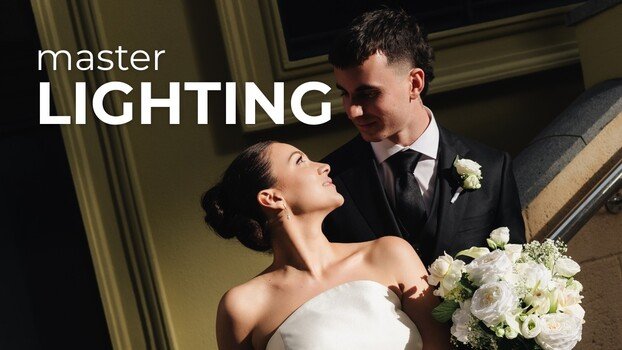
Lighting is the single biggest variable that separates wedding photos that look polished from ones that just look okay. Unlike studio work, weddings give you no guarantees: harsh midday sun, deep shade, candle-lit receptions, and everything in between can all show up in a single day.
Coming to you from Maria Julia Carneiro, this practical video breaks down exactly how to read and work with light on a wedding day, regardless of conditions. Carneiro starts by reframing what "good light" actually means, and it's not just soft light or shade. She identifies three qualities that make light work in a photo: shape, separation, and direction. Shape comes from shadows that add dimension to a face. Separation is the contrast between your subject and the background. Direction is simply knowing where the light is coming from and using that information intentionally. One of her most useful points is the difference between open shade and deep shade. Open shade is soft and flattering. Deep shade, like under dense trees or tucked against a tall wall, blocks the light so completely that it loses direction entirely, leaving images that look flat and muddy.
From there, Carneiro walks through four lighting techniques she returns to consistently on wedding days: backlight, sidelight, direct light, and pocket light. Backlight is her default, and she explains why it works even when the sun is high and harsh, not just at golden hour. Positioning your subject with the light source behind them eliminates squinting and harsh under-eye shadows while creating that edge glow that naturally separates the subject from the background. She also points out that backlight is her go-to for veil shots specifically because the light needs to pass through the fabric to create that luminous effect. Without a strong directional light source behind the veil, it just looks like fabric. Sidelight gets its own treatment too, with Carneiro explaining how the 45-degree angle rule keeps the nose shadow from becoming distracting while still giving the face real dimension.
The section on direct sunlight is worth watching closely. Most people treat it as something to avoid, but Carneiro lays out exactly how to position a subject's face relative to the sun to eliminate the harsh shadows and get a bold, editorial result. She also makes a specific point about how direct light reads differently on darker skin tones, where the added contrast tends to be an asset rather than a problem. Pocket light gets its own detailed breakdown as well, including how it differs from patchy light, which is one of the most common and most fixable mistakes in wedding photography. Carneiro's advice on scanning faces before group shots and watching for subjects accidentally shadowing each other is immediately practical.
The video also covers when to use flash during the day to fill harsh shadows or restore separation, and when to put the flash away entirely at receptions and let the ambient light tell the story. Her reasoning on that tradeoff is specific and honest, and it applies well beyond weddings. Check out the video above for the full breakdown from Carneiro, including her pocket light and direct sun techniques and how she handles the lighting situations you genuinely can't control.
What's Your Reaction?
 Like
0
Like
0
 Dislike
0
Dislike
0
 Love
0
Love
0
 Funny
0
Funny
0
 Wow
0
Wow
0
 Sad
0
Sad
0
 Angry
0
Angry
0











Comments (0)