

‘The minute I had success, I stopped taking drugs’: John Waters on 60 years of screen carnage
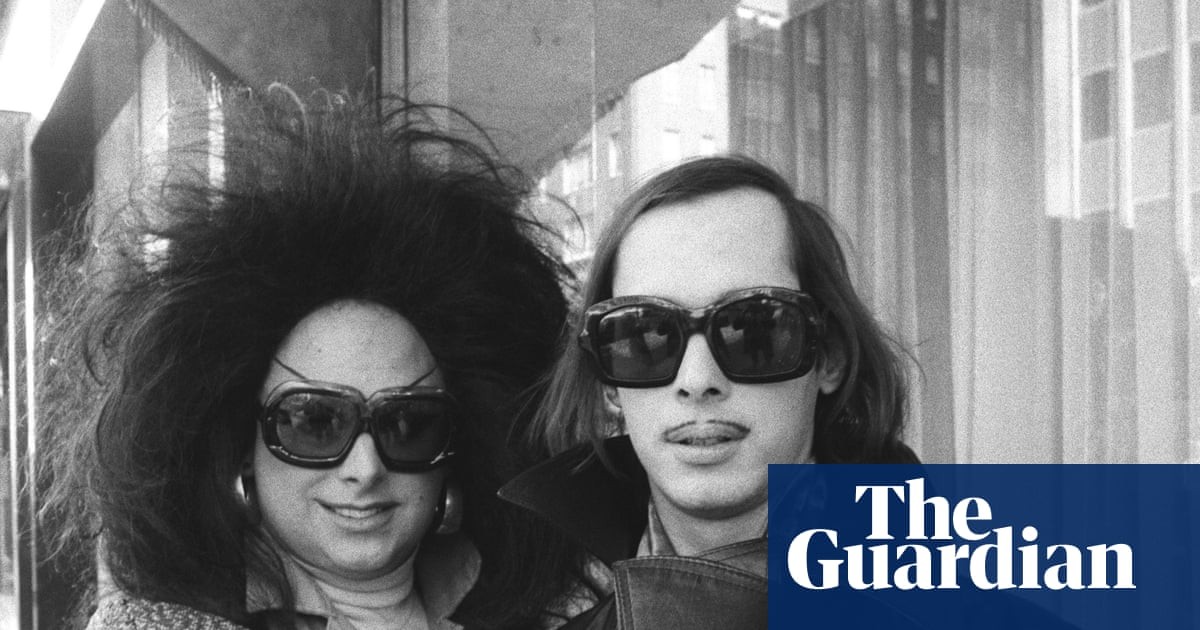
John Waters still remembers the day his 1988 comedy Hairspray was awarded a PG certificate. “It was horrible,” he says.
Until then, Waters, christened the “Pope of Trash” by the novelist William S Burroughs, was notorious for filming the unfilmable. In Eat Your Makeup, he recreated JFK’s assassination only five years after the event, casting the boisterous Divine in drag as Jackie Kennedy. He invented a blasphemous sex act called the “rosary job” in Multiple Maniacs, which also featured a rape-by-giant-lobster. Most repulsively, in Pink Flamingos, he persuaded Divine to scoff a fresh dog turd on camera.
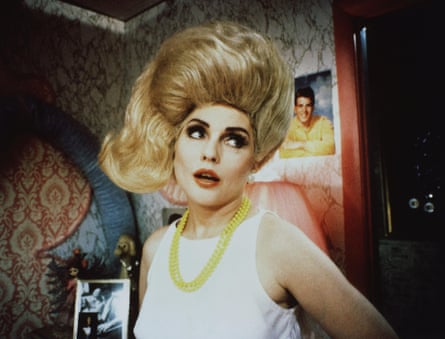
Now here he was making a bubblegum comedy about the teen heart-throbs on a fictional early-1960s TV dance show. Hairspray is not without its eccentricities: there are affectionate dabs of token ugliness (vomit on a fun-fair ride, a rat interrupting a moonlit tryst), the glorious sight of Debbie Harry smuggling a bomb under her beehive wig, and Divine in the dual roles of a Baltimore housewife and a racist TV boss. The result, in the words of Rolling Stone magazine, was a family film that “both the Bradys and the Mansons could adore”.
Speaking from his home in the seaside idyll of Provincetown, Massachusetts, Waters shudders at the memory of that first and only PG: “I was scared. I thought my fans were going to turn on me.”
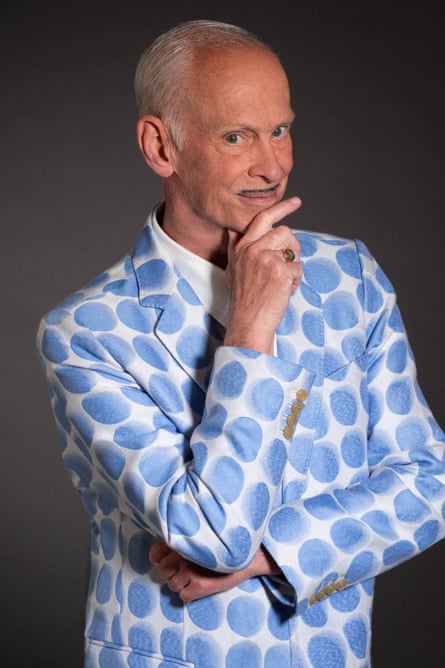
The 80-year-old provocateur has his camera switched off for our early-morning video call but the voice is sonorous enough to make it feel as if he is right here in the room: the languid drawl, the high notes of confected comic outrage, the disdainful purr suggesting an audible curling of the lip. I ask him to describe his appearance today, feeling a little like a phone-sex heavy-breather in one of his movies, and he helpfully obliges: “I have on a turtleneck, a pair of pants and Paul Smith socks”. Unmentioned but implied is the pencil moustache which he once said he hoped would give him the look of “a high-school principal who might be a child molester”.
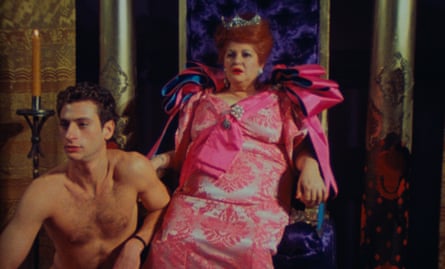
Though Waters has kept busy writing books and touring his spoken-word live show (which is coming to the UK in February), he hasn’t directed a film since A Dirty Shame, his 2004 comedy about small-town sexual hysteria. He failed to raise funding a few years ago for an adaptation of his feel-bad novel Liarmouth, even with Aubrey Plaza attached, and there are no new movies in the pipeline. Thank goodness, then, for the old ones: the boutique label Criterion has given the bells-and-whistles Blu-ray treatment to Hairspray and the gloatingly scuzzy 1977 adult fairytale Desperate Living, which is set in Mortville, a miscreants’ ghetto ruled by the crazed Queen Carlotta (played by the goofy, grandmotherly Edith Massey).
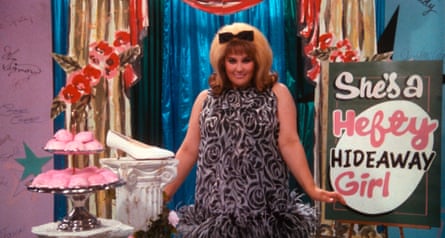
It’s an odd double-bill. Hairspray marked the start of Waters’ unlikely foray into mainstream Hollywood, paving the way for barbed but unthreatening comedies with actual stars: Johnny Depp (Cry-Baby), Kathleen Turner (Serial Mom), Christina Ricci (Pecker). It also spawned a multiple Tony award-winning Broadway musical in 2003 as well as a second movie version starring John Travolta in 2007.
Desperate Living, on the other hand, remains the runt of his filmography. “It didn’t do well when it came out,” he admits. The absence of Divine may have had something to do with that. Originally cast in the film as a snarling lesbian who undergoes both a phalloplasty and an abortion, he was tied up with theatre instead. “I think he also wanted to get away from me a little bit, to prove what a good actor he was,” says Waters.
Scandalously funny it may be, but Desperate Living feels heavier and less high-spirited than much of Waters’ other work. “It’s my angriest movie,” he says. “And my ugliest.” Gratuitously so. What about the moment when a car drives over a dog? “It wasn’t that disgusting,” protests Waters, who sourced the animal from the freezer at a hospital laboratory. “It was already dead. And it got to be in a movie.” I was thinking more of the fact that the dog wasn’t fully defrosted, so bits of it stuck to the axle and had to be painstakingly removed for a second take. “Oh yes, that’s true,” he concedes with a throaty chuckle. “The glamorous world of film-making.”
Desperate Living was also the first of his movies written without the aid of marijuana. “Most people when they have success, they become cocaine addicts or something. But the minute I had success, I stopped taking drugs.” Why? “I wanted to keep going and not be distracted.” He has tried it all. “I hated heroin. All that itching and scratching. Luckily, I’m not a jazz musician, so I didn’t need it.” Special derision is reserved for ecstasy. “A drug that makes you love everybody is not for me,” he scoffs.
Watched back-to-back, similarities emerge between these two superficially dissimilar movies. There is the obsession with rats and roaches: in Desperate Living, a cockroach scuttles over the naked body of stripper turned actor Liz Renay, and the opening credits show a skinned rat being served on fine china. Later, more dead rats are stirred into a cauldron; it’s a wonder the cast and crew didn’t come down with hantavirus. As well as the rodent cameo in Hairspray, that film also features a dance called the Roach, which the hero Tracy Turnblad (future chat-show host Ricki Lake) performs in a cockroach-patterned dress while pretending to squash bugs underfoot. “Why don’t we have gimmick dances today?” Waters asks, sounding peeved. “Why was there no Covid dance and no Covid novelty song? I miss novelty songs …”
His favourite rat moment crops up in Pecker, his comparatively sweet 1998 comedy about a young Baltimore photographer feted by the New York cognoscenti. “There’s a scene where rats are fucking in the garbage can,” says Waters. “We had a trainer but the rats wouldn’t do anything. I tried talking dirty: ‘Eat that rat dick, bitch!’ Then the prop master came over, grabbed the rats from below and shook them. It looked perfect.”
In 2019, President Trump dismissed Baltimore, Waters’ birthplace, as a “rat and rodent-infested mess”, earning a vehement response from the director: “Give me the rats and roaches of Baltimore any day over the lies and racism of your Washington, Mr Trump.” Little effort is needed now to draw parallels between the current US president and Queen Carlotta, who casually insults her subjects (“Hi stupid! Hi ugly!”) and issues capricious decrees: “Every word I ever utter is to be taken as a direct proclamation!” Carlotta’s plot to inject the people of Mortville with rabies even calls to mind the current administration’s cavalier attitude to public health. “That lunatic RFK Jr,” Waters huffs. “How did he ever get appointed?” He launches into a chant: “‘Hey, hey, RFK/ How many Covid kids d’ya kill today?’”
But one shouldn’t confuse the on-screen chaos and carnage of Desperate Living with moral anarchy. When I go to suggest that there are no rules in his movies, Waters stops me dead. “No, there are rules,” he says. “The rules are: mind your own business and don’t judge people if you don’t know the whole story. The people who win always follow that. The people who lose are jealous and judgmental. But there are definitely rules.”
Nor should the comedy in either film disguise their underlying seriousness. Hairspray may treat the Civil Rights era with a deft touch but its indignation is palpable. Both movies celebrate resistance in the face of racism, fascism and tyranny. What do these movies have to say about the US in 2026? “I think they say that anger can be good, but the way you change things is through humour.” Is there anything he wouldn’t joke about? “I’m certainly not going to go into Israel and that whole situation. It’d be a lose-lose for me to even try. But I’ve always walked the edge of what you can’t make fun of. In all my movies, I make fun of things I like, not things I hate. That’s why I’ve been getting away with this for 60 years.”
It feels unbelievable that nearly two-thirds of that time has elapsed since Divine’s death, three weeks after the release of Hairspray, at the age of 42. “I’m still shocked,” says Waters. “And he lives today in so many ways. I believe he changed drag queens. When we were young, they were very normal and square. Today, every drag queen has some kind of edge, and I think that’s because of Divine. Being overweight, wearing scars on his face, carrying a chainsaw – he was punk before there was such a thing.”
What's Your Reaction?
 Like
0
Like
0
 Dislike
0
Dislike
0
 Love
0
Love
0
 Funny
0
Funny
0
 Wow
0
Wow
0
 Sad
0
Sad
0
 Angry
0
Angry
0







Comments (0)