

The Odyssey ending explained: What happens to Odysseus after The Odyssey?
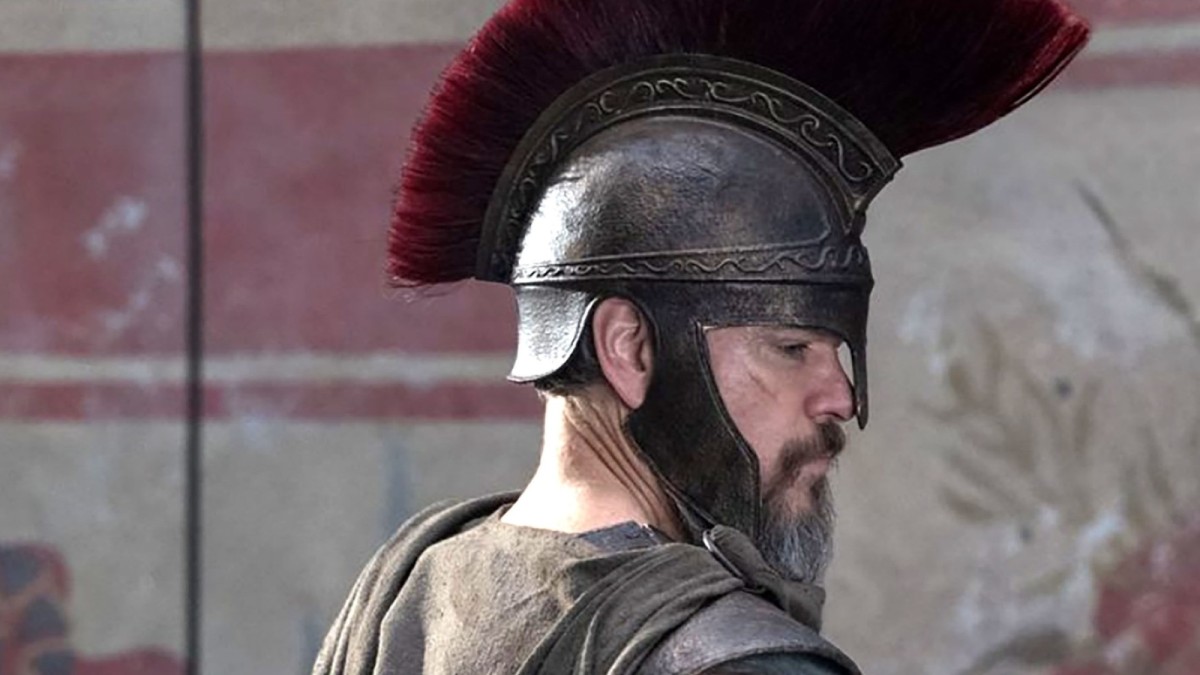
In some ways, The Odyssey’s ending feels inevitable and totally predictable. After all, in the 2,700 years since it was first written down, the title of Homer’s epic poem has become synonymous with any long, meandering journey home. The king of Ithaca spends 10 years trying to reach his palace after the end of the Trojan War, encountering all sorts of mythical beings along the way. But what happens after he arrives back in Ithaca?
[Ed. note: Light spoilers follow for Christopher Nolan’s The Odyssey follow.]
True to the source material, Matt Damon’s Odysseus does indeed make it home at the end of Christopher Nolan’s movie. Like in the poem, he’s unrecognizable to almost everyone and has to prove his identity to his wife and son, Penelope (Anne Hathaway) and Telemachus (Tom Holland). He also has to fend off and slay the many suitors looking to marry Penelope and assume control of Ithaca. As a mythical figure who probably never existed to begin with, debating Odysseus’ canonical ending is something of a moot point, and yet there’s plenty of historical literature out there that tells us what happens to him after The Odyssey ends.
Christopher Nolan’s The Odyssey ending explained
While Christopher Nolan doesn’t exactly shy away from incorporating gods and mythical creatures into the mix for The Odyssey, the movie is certainly a bit more grounded in realism. In the original poem, after Odysseus slays the suitors, a civil war erupts on Ithaca. The families of the slain suitors seek revenge against Odysseus. Only because the goddess Athena forces peace is the bloodbath prevented — and the tale ends. Nolan offers no such divine intervention, but he also skips the potential the civil war entirely.
Instead, Nolan’s aesthetics seem to echo what happens at the end of The Lord of the Rings: Return of the King. At the end of his long adventure, Odysseus takes his wife and sails off into the unknown west, leaving Telemachus as the unchallenged king of Ithaca. It effectively communicates the end of an age and the beginning of the next, one in which the magic of the gods is less present in the world than it once was. This is somewhat in-line with prophecies Odysseus hears in the epic, namely that even after he returns home, his travels are far from over. However, plenty of other storytellers have put their own spin on the tale of Odysseus.
Alfred, Lord Tennyson’s “Ulysses” — a poem written in 1833 and published in 1842 — sees Odysseus bored by domestic life on Ithaca, so he leaves Telemachus to govern while he sets sail with his fellow mariners: “To sail beyond the sunset, and the baths / Of all the western stars, until I die.” He also speaks of a plan to “seek a newer world.” That certainly aligns with Nolan’s vision.
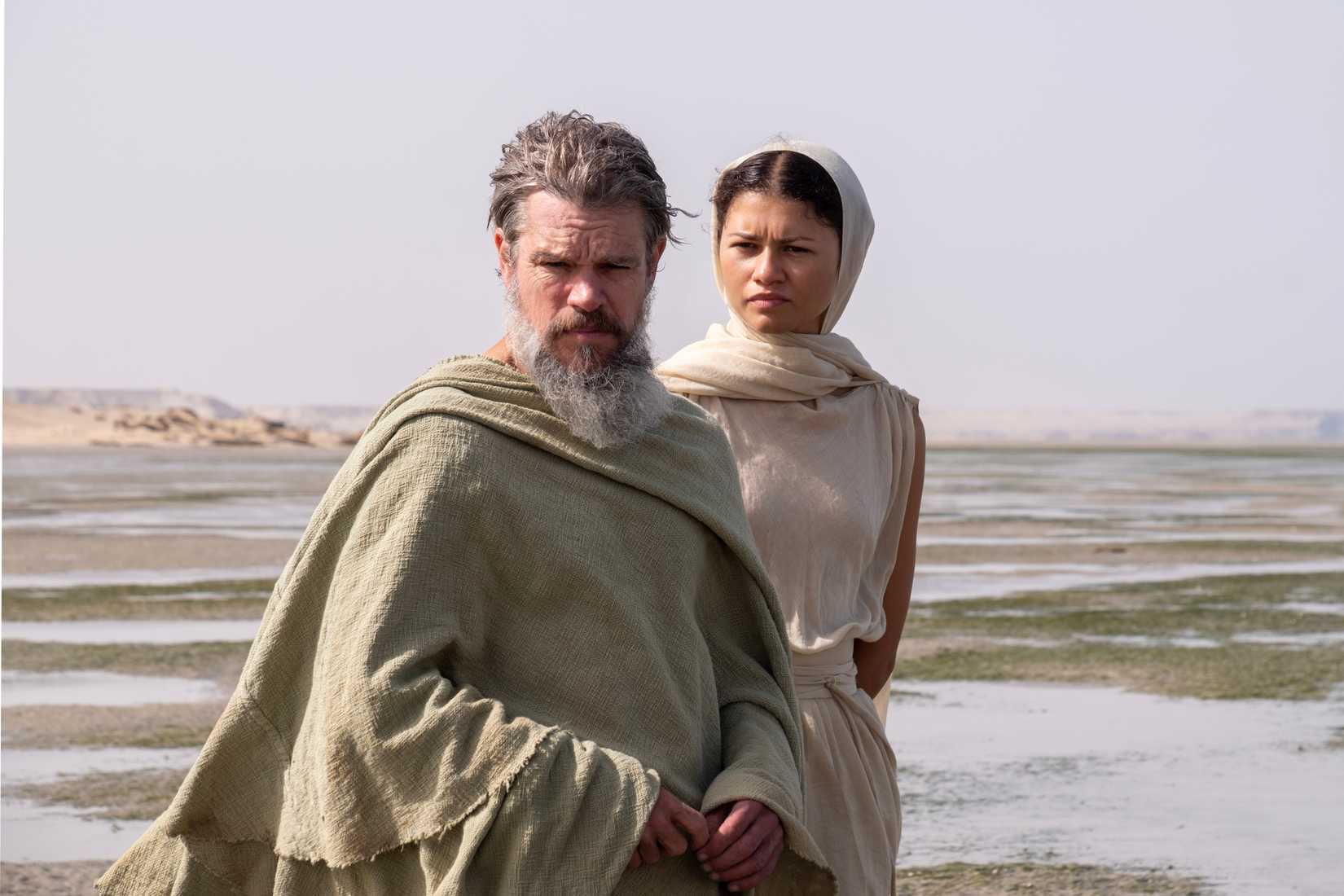 Image: Universal Pictures
Nikos Kazantzakis’ The Odyssey: A Modern Sequel is an even more ambitious 20th-century continuation of that same sort of story. After growing bored, Odysseus embarks on yet another adventure across the entire world in which he meets fictional characters modeled after Buddha, Don Quixote, and Jesus Christ. His final journey in Antarctica ends with an iceberg overturning his small boat, causing him to sink into the sea.
Perhaps the most accurate — and closest to canonical — sequel to The Odyssey, however, is very different.
The Telegony completes the Epic Cycle with another odyssey
Another major deviation from the source material in Nolan’s The Odyssey has to do with Odysseus’ relationship with the enchantress Circe. In Homer’s tale, the two have a sexual relationship, and that plot thread is picked up later in a lost epic written about two centuries after The Odyssey called The Telegony. (While the ancient text was lost at some point, portions of some summaries survived — enough to piece together the story.)
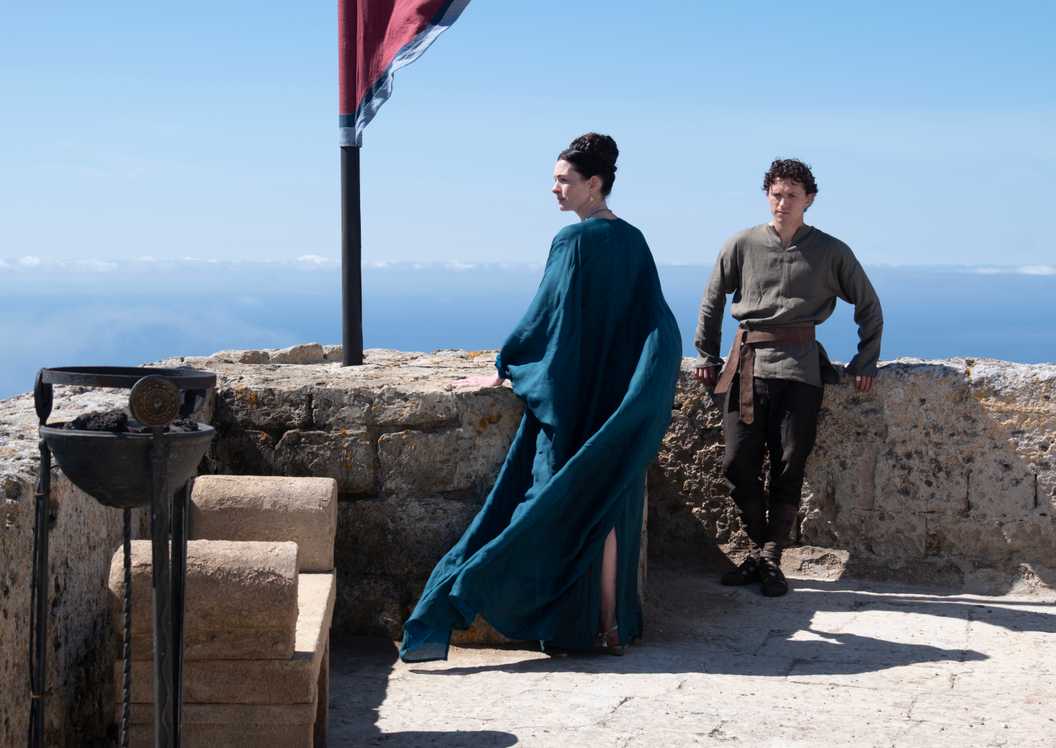
The Odyssey never suggests that Odysseus and Circe had a child, but The Telegony introduces their son Telegonus, whom Circe raises on the island of Aeaea after Odysseus leaves. Before he enters the story, however, his father embarks on yet another journey.
In Nolan’s film, the wandering hero encounters Tiresias (James Remar), who delivers a prophecy about the perils Odysseus will face on his journey home. In the original poem, Tiresias had a lot more to tell Odysseus. He explained that after retaking Ithaca, Odysseus would have to travel far enough away from home where he could make the proper sacrifices to Poseidon. Only then could he truly return, eventually dying a gentle death “from the sea” at an old age surrounded by prosperous people.
In The Telegony, Odysseus travels to Thesprotia. There, he marries queen Callidice, and the two have a named Polypoetes. Then he fights in another war. After Callidice dies, he leaves their son to rule Thesprotia and finally returns to Ithaca.
Meanwhile, Telegonus grows up and sets out to find his father. He winds up on Ithaca after a storm and begins stealing the island’s livestock, not realizing where he is. Odysseus confronts the stranger, and the two fight. Telegonus kills his father with a spear tipped with the venomous spine of a stingray. It’s ironic since Tiresias’ predicted that Odysseus’ death would come “from the sea,” although translations of the original Greek differ on whether it should instead read “away from the sea.”
After learning the truth, Telegonus brings Odysseus’ body, Penelope, and Telemachus back to Circe’s island. Circe makes the survivors immortal, Telegonus marries Penelope, and Telemachus marries Circe. Each of Odysseus’ sons marries the other’s mother. It’s the kind of vaguely incestuous and deeply uncomfortable symmetry that only Greek mythology can produce.
You can’t really call The Telegony canon in the Homer-verse since it’s generally attributed to the poet Eugammon of Cyrene, but it still offers the most prominent example of what happens to Odysseus after his infamous odyssey. Other ancient texts — namely Pseudo-Apollodorus’ Bibliotheca, Hyginus’ Fabulae, and Sophocles’ Odysseus Acanthoplex — also dramatize Odysseus’ death at the hands of his son with a stingray-tipped spear.
Dante sent Odysseus straight to hell
Written in the early 14th century, the first part of The Divine Comedy finds Dante traveling through Hell alongside the Roman poet Virgil. In Canto 26, they encounter Odysseus — called Ulysses in the poem — in the eighth circle, where those guilty of fraud are punished.
Ulysses is imprisoned inside a flame alongside the Greek warrior Diomedes, his accomplice during the Trojan War. Their intelligence made them legendary, but Dante presents that cleverness as dangerous when it is used to manipulate others — especially when used to infiltrate and destroy a city with a big wooden horse, leading to the death of an entire civilization of people.
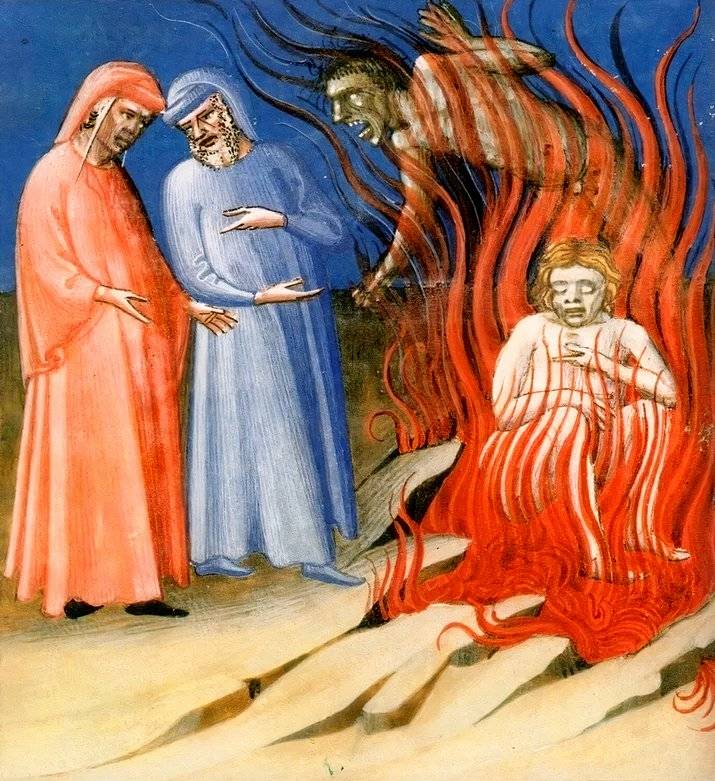 Dante and Virgil meet Ulysses and Diomedes, as depicted in the early 15th-century manuscript known as Yates Thompson MS 36.Image: Priamo della Quercia, Dante and Virgil meeting Ulysses and Diomedes, illustration for Inferno Canto 26
When Dante speaks with Ulysses, he learns that after leaving Circe’s island, Ulysses instead abandoned his journey home to sail westward. He uses his cleverness and gifts of persuasion to convince his remaining crew to go on yet another dangerous journey, one that ends with their ship destroyed and them all dead.
In Dante’s mythology, they sail so far that they eventually see Mount Purgatory in the distance. Yet the ship is spun around and pulled into the sea, killing them all.
Scholars have theorized that Dante may not have had access to Homer’s full poem in Greek, which explains why he didn’t follow the ending of The Odyssey that we know today. Instead, Ulysses used his intelligence to manipulate others all to satiate his own selfish curiosity and lust for adventure. To Dante, that intellect and curiosity becomes synonymous with pride, and wielding it to bring others harm is the worst kind of fraud. Beyond that, Ulysses also completely abandoned his family to give into that pride. Hence why Dante puts him in Hell.
Nolan’s ending more closely resembles this story than The Telegony. Odysseus survives, and Penelope accompanies him (a narrative choice that seems unique to Nolan’s telling), but the image of an older king giving Ithaca to his son so he can sail west echoes Dante’s version of the character. Unlike Dante, however, Nolan doesn’t judge Odysseus for this. Instead, the hero’s final voyage becomes a romantic one that feels like the peaceful passing of the old world into legend.
The Odyssey is in theaters now.
What's Your Reaction?
 Like
0
Like
0
 Dislike
0
Dislike
0
 Love
0
Love
0
 Funny
0
Funny
0
 Wow
0
Wow
0
 Sad
0
Sad
0
 Angry
0
Angry
0







Comments (0)