

The original Moana: did a 1926 documentary give birth to a 21st century Disney blockbuster?
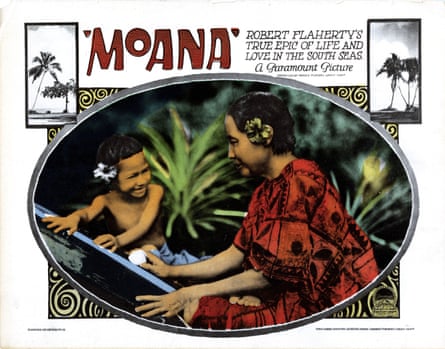
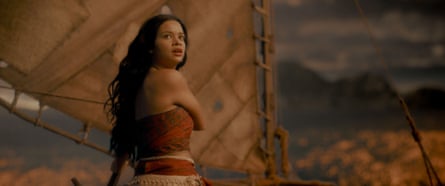
Next week sees the release of Moana, the live-action remake of the 2016 Disney animation smash – again starring Dwayne Johnson. But that was not the original Moana. That honour goes to a Moana released a full century ago: a glimpse of Polynesian life now largely forgotten but none the less offering some inspiration to the makers of today’s iteration.
“Someone at Disney picked the bones of the 1926 Moana to make their movie,” believes film historian Bruce Posner.
The 1926 Moana was a silent documentary by American film-maker Robert Flaherty, who had cemented his reputation a few years before with Nanook of the North, a pioneering portrait of Inuit civilisation. Its epic sequences of walrus hunting and kayaking in icy waters had lit up the box office. So, for his next feature, Flaherty had carte blanche to go anywhere. He chose Samoa.
“He had a vision of this great sea monster story,” says Posner, who oversaw a digital restoration of Flaherty’s Moana in 2014. “But when he arrived, there was no sea monster. There was this island life where everybody was happy.”
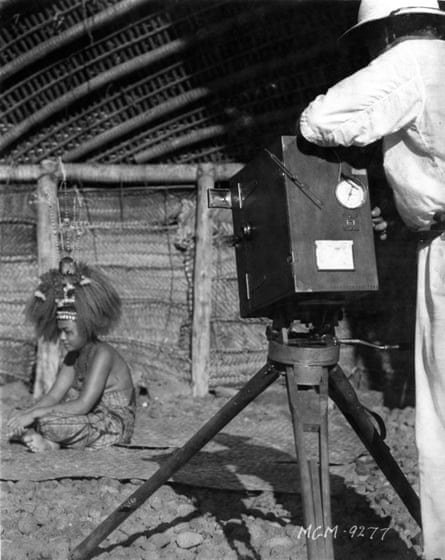
With no peril to capture, Flaherty instead crafted a pastoral picture of Samoan life, centred on a young man named Moana and his family. He spent over a year filming, in a groundbreaking example of on-location moviemaking.
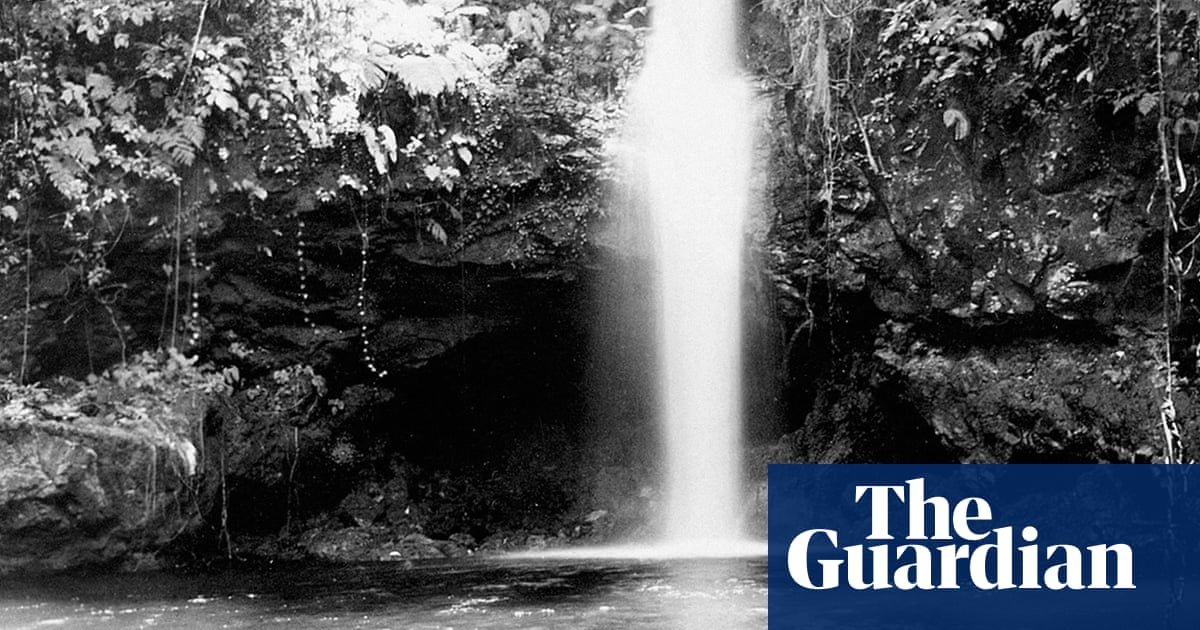
“It remains a major milestone,” Posner says, noting the challenges Flaherty faced with his primitive equipment in Samoa’s equatorial climate. To process his film, Flaherty had to set up a lab in a freshwater cave. When he drank the water, he accidentally poisoned himself. “He spent several months near death,” Posner says.
When Flaherty finally brought his film home, it was not what the studio had been expecting. Instead of terrifying sea monsters, there were harmless sea turtles. There was no plot either – only gentle scenes of Moana and his family gathering taro roots and coconuts.
Despite this, Moana broke box office records during trial screenings in New York. But when the film went on wider release, it flopped. One reviewer summed it up: “Instead of entertaining, it interests.”
Although the film wasn’t a hit, its legacy was secured by another reviewer. Critic John Grierson stated that the film had “documentary value”, coining a new word for an emerging genre. Moana therefore earned a place in movie history as the first film to be labelled a “documentary”. But that classification is also responsible for the controversies that linger around it today.
“A lot of the elements that Flaherty depicted were not being practised anymore,” says Dr Dionne Fonoti, a senior lecturer at the National University of Samoa. “By the 1920s, Samoan dress and ideas about modesty had evolved significantly. Flaherty comes along and reverts that,” she explains, noting that women appear topless throughout the film.
Indeed, Flaherty’s documentary was entirely staged. Moana and his “family” were not related – Flaherty cast each role based on appearance and acting abilities. Even the name Moana was selected by Flaherty.
Although Flaherty has been criticised for his flexibility with the truth, Posner argues that he was working before the rules of documentary film-making had been established. “For better or worse, the word ‘documentary’ got hung on Flaherty. But to me, he is a film poet, as opposed to a film documentarian.”
Likewise, the film has attracted postcolonial critiques for its idealised portrait of an island community “unspoiled by the sham of civilisation”. But Fonoti says the film is not considered controversial in Samoa today.
“In academic circles, we have conversations about this film being staged. But most people here aren’t really concerned about that. Most Samoans appreciate it for what it is, which is a snapshot into the past.”
The daughter of one of the film’s stars gave her perspective in a 2011 documentary. “In my opinion there was nothing wrong with the film,” she said. Another interviewee from the village where the film was shot echoed that viewpoint. “This film is our film,” he said. “It belongs to this village.”
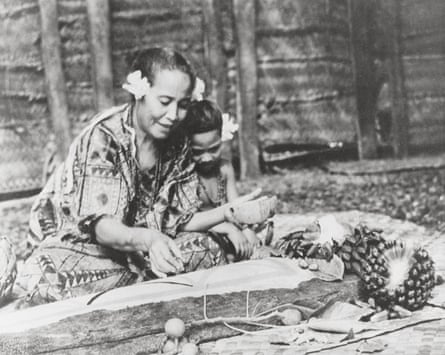
Indeed, although Moana unfolds through Flaherty’s western lens, its staged scenes were produced in collaboration with the local people. And rather than capturing Samoa as it was in the 1920s, they purposely tried to recreate an older way of life before it passed from memory.
Flaherty’s wife Frances (who was also Moana’s co-producer) later explained how the community was “making the film with us”. She described screening the rushes for village elders “who still remembered the old forgotten ways and could help us to recapture them and tell us if our film was true”.
In this way, Fonoti argues there is “a significant link” between Flaherty’s film and the Disney franchise.Before Moana, several Disney productions had drawn on Indigenous and non-western cultures without consultation. This resulted in notorious scenes such as the What Made the Red Man Red? musical number in Peter Pan. But for Moana, the company assembled experts from across the Pacific Islands to advise on all aspects of the film.
“It’s been a good experience,” says Fonoti, who has been a member of the advisory group since the franchise began. “Pacific Islanders have been part of the history of western cinema since the beginning. So to see it evolve to where it is today is amazing.”
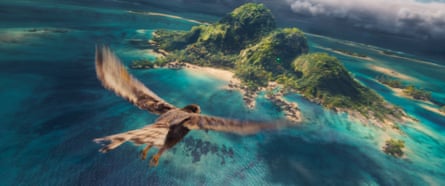
Fonoti suggests that Flaherty’s film was a stepping stone on that journey of Samoan representation onscreen. “There is a thread that goes from the 1926 Moana to where we are now as active participants in crafting these stories.”
As for any further connections between the Disney and Flaherty films, Posner remains convinced the silent movie was an inspiration. “It’s just not an accident,” he says, pointing to the shared Pacific Island setting and title (albeit transposed from a male in Flaherty’s film to a female in the Disney franchise).
In any case, Posner hopes the forthcoming Disney remake can bring greater attention to the silent original as he prepares a new 35mm film negative for its centenary year. “To me, this film is about beauty, grace and humanness,” he concludes. “It’s a gem.”
What's Your Reaction?
 Like
0
Like
0
 Dislike
0
Dislike
0
 Love
0
Love
0
 Funny
0
Funny
0
 Wow
0
Wow
0
 Sad
0
Sad
0
 Angry
0
Angry
0








Comments (0)