

The Production Design of ‘Cape Fear’ Hangs Dread in Its Spanish Moss
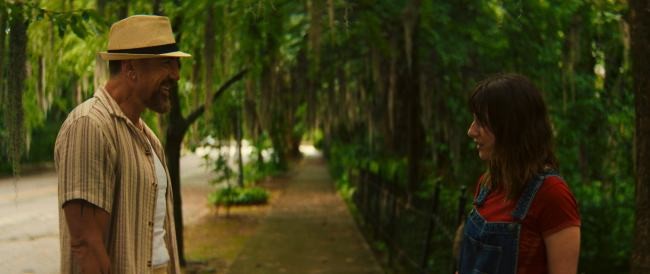
One of the pleasures of Apple’s new series adaptation of Martin Scorsese‘s “Cape Fear” (itself a remake of a 1962 film directed by J. Lee Thompson) is its rich sense of atmosphere; as cinematographers Eben Bolter and Celiana Cárdenas have discussed in earlier interviews with IndieWire, the idea behind the show was to create a feverish sense of a nightmare drenched in southern heat — this is the sweatiest, hottest piece of filmmaking since “Body Heat” and “Do the Right Thing” in the 1980s.
The show’s attention to detail when it comes to its Savannah, Georgia setting is key, as showrunner Nick Antosca and his collaborators make constant references to the city and its textures in both the writing and directing. The specificity and the completely convincing sense of place that the show evokes are exceptional — and all the more astonishing given that the series only shot for one actual day in Savannah. The rest of the time, Atlanta stood in for the “Hostess City of the South.”


Doubling Atlanta for Savannah was the primary challenge for production designer Jamie Walker McCall, who quickly realized the two cities were very different in their physical characteristics. “Savannah is very lush, and has a lot of live oaks with Spanish moss,” McCall told IndieWire. “My first crew phone call was to a greensman that I’ve worked with before in South Carolina.” Once McCall felt secure that she could get enough Spanish moss trucked in to Atlanta, she tackled the problem of finding Atlanta locations that could convincingly replicate Savannah’s unique topography.
One issue was that Savannah is extremely flat compared to Atlanta; another was the sheer scale of the two cities. “Atlanta’s huge, and we had to make the locations feel small and homey and a little bit haunted everywhere, which is the vibe of Savannah,” McCall said. Luckily, the street that was used for the neighborhood where the Bowden family resides was one where the decor (like all that Spanish moss!) could stay up. “We didn’t have to take it down and put it back up every time we shot there.”
Then there was the task of making sets like the Bowden family home both homey and unsettling. “I had to tap into my darker side,” McCall said. The exterior of the Bowden house was found in Atlanta, and then McCall built a set for the interiors that was intended to convey the history implied in the script.
“According to the story, the house has been remodeled for years,” McCall said. “It was important to make the family feel small in this Italian Renaissance revival home.” In order to make the house feel lived in, McCall put a lot of the Bowden kids’ art around the set, and also incorporated items inspired by her discussions with the actors.
 ‘Cape Fear’Apple TV
“In Anna and Tom’s rooms, we have all these medals on the wall,” McCall said of the awards displayed that represent Patrick Wilson’s character’s triumphs in various marathons. “Those were Patrick’s actual medals.” When Wilson works out with weights, those were also chosen in collaboration with the actor, which is in keeping with McCall’s philosophy that the actors should feel like their surroundings are extensions of the characters. “We create backstories that open up a door into who these people are, putting in little touches that might help their character, and then they can choose to use them or not. A lot of the time they do, which is nice.”
On the latest episode of “Cape Fear,” we meet the family of antagonist Max Cady (Javier Bardem), who live in North Carolina under circumstances far less plush than those of the Bowdens. McCall tried to create a contrast between the locations, with the Cady clan’s surroundings having an overgrown quality reflecting the uncontrollable insanity at the heart of the family. “The location for Max’s father’s home has so many textures,” McCall said. “We brought in dog kennels and redressed the porch, but there was already so much lushness to all these overgrown areas that was really inspiring.”
McCall also found inspiration in Scorsese’s 1991 movie for one specific scene, in which we see Bowden’s daughter Natalie (Lily Collias) in her room at her birth father’s house, where she is sent to hide out as Cady terrorizes the family. “That bedroom is practically a replica of the teenage bedroom Juliette Lewis has in the original movie,” McCall said. “We just needed a quick shot, and it was a three-wall set, so I decided to pay homage in that way.”
For the most part, however, McCall took her cues not from earlier iterations of “Cape Fear” but from Antosca’s writing. “When something’s that beautifully written, it really paints a picture for me,” McCall said. “Nick did such a great job describing everything that it was easy to design for these characters.”
“Cape Fear” is currently streaming on Apple TV.
What's Your Reaction?
 Like
0
Like
0
 Dislike
0
Dislike
0
 Love
0
Love
0
 Funny
0
Funny
0
 Wow
0
Wow
0
 Sad
0
Sad
0
 Angry
0
Angry
0










Comments (0)