

This 67-Year-Old Sci-Fi Masterpiece Is Bookended By Two Perfect Lines
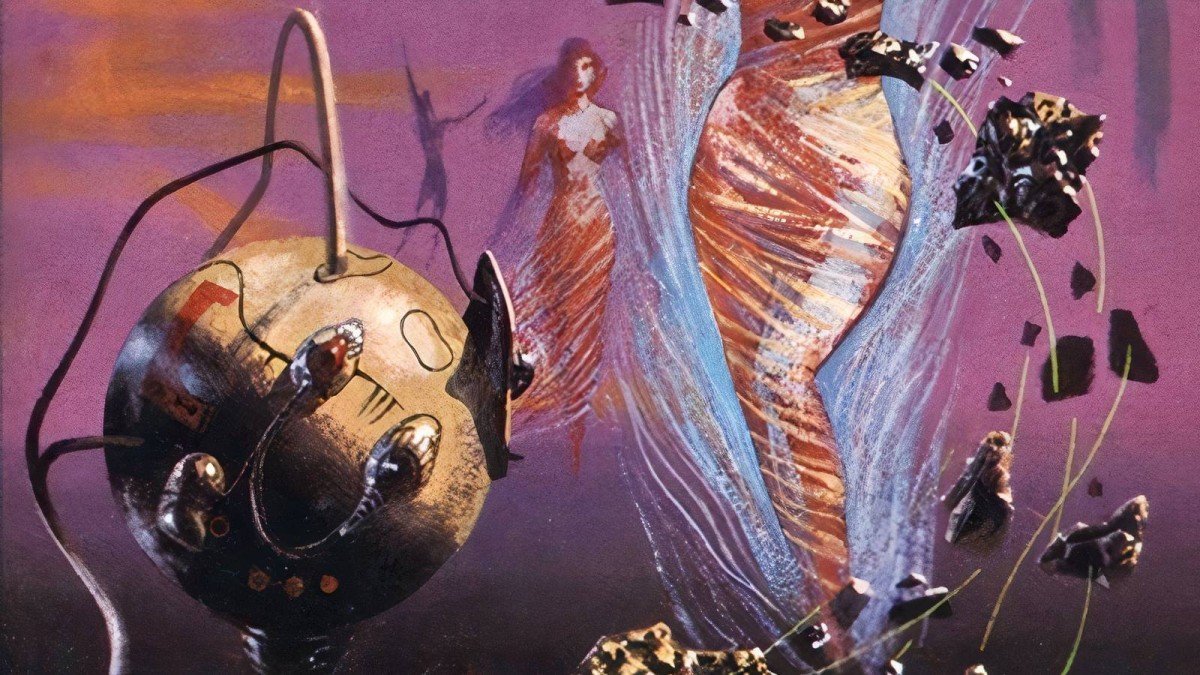

Published Sep 18, 2026, 8:55 AM EDT
Nicholas Becher is a gaming journalist with an MFA in Creative Writing from FAU. With extensive experience playing video games, he covers all forms of gaming content at Screen Rant, from breaking news to the latest fan theories. Most-played games range from Clair Obscur to Civ to Elden Ring to Halo 2 and beyond.
One of the most influential and important voices of the 20th century, Kurt Vonnegut built a literary career around his signature dark humor, sharp social criticism, and an unmistakably unconventional approach to storytelling. Works like Slaughterhouse-Five, Cat’s Cradle, Breakfast of Champions, and Mother Night helped establish Vonnegut as a writer who could tackle war, politics, religion, concepts of free will, and the absurdities of modern life without ever losing his distinctive wit.
Science fiction eventually became one of Vonnegut's most effective tools, though just like his other more literary work, he never treated it in a "conventional" way, nor did he follow any "rules" that were somewhat standard among his contemporaries. Vonnegut utilized his absurdist approach to delve into stories with aliens, time travel, distant planets, and other genre conventions that examined humanity from strange and often deeply cynical perspectives.
Few of his novels demonstrate that approach better than The Sirens of Titan, his sweeping 1959 science fiction masterpiece and one of the defining works of his early career, and one that is bookended by the perfect opening and closing lines.
The Sirens Of Titan Wastes No Time Setting The Stage
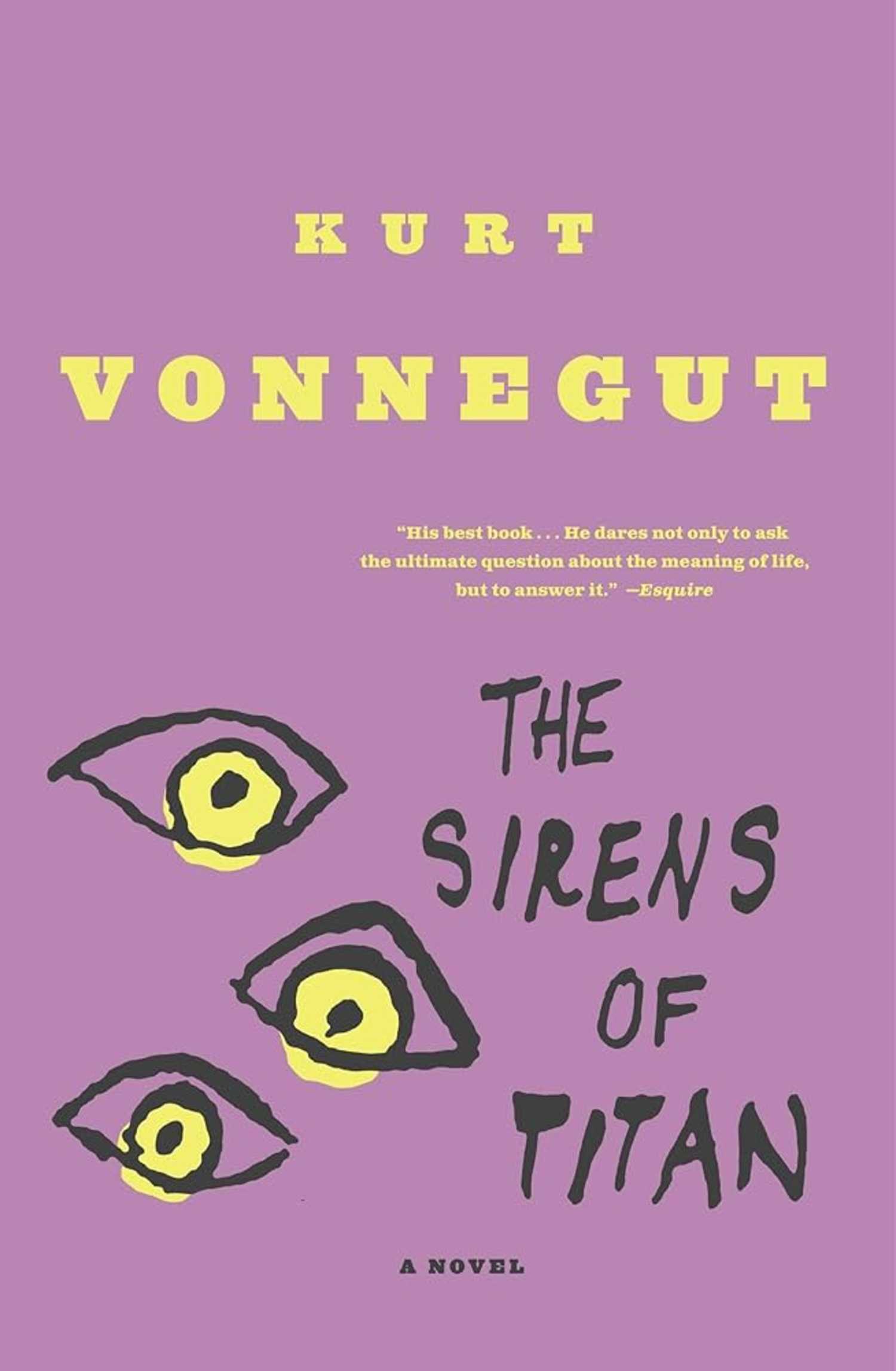
Kurt Vonnegut kicks off his most important work of sci-fi with a brief and perfectly succinct epigraph at the top of Chapter 1: Between Timid and Timbuktu. It's a short and sweet quote from the protagonist himself, Malachi Constant, and without any context, appears to be just another of Vonnegut's signature witticisms:
"I guess somebody up there likes me."
What initially reads like a throwaway joke eventually becomes one of the most meaningful lines in The Sirens of Titan. Early in the novel, Constant uses the expression often, explaining his extraordinary financial luck to Winston Niles Rumfoord. At that point, it perfectly captures the arrogant, carefree man Constant has become. He's been blessed with wealth beyond imagination and can offer no better explanation than the possibility that some higher power simply wants him to succeed.
The rest of the novel systematically tears that idea apart, as Constant loses his fortune, his identity, his freedom, and nearly everyone around him as he is shuffled across the Solar System. More importantly, he discovers that supposedly random human events have been manipulated by forces far beyond Earth, turning the idea of divine providence into one of Vonnegut's cruelest cosmic jokes. Yet Vonnegut somehow manages to reclaim the sentiment by the final pages.
By the end, we know that Stony Stevenson was Constant's closest friend during his time as Unk in the Martian Army, helping him resist the mind-controlling antenna implanted in his skull and piece together the truth about what's happening. After another memory wipe, however, Unk is unknowingly forced to strangle Stony in a public execution. Constant spends much of the story unaware that the friend he hopes to find again is already dead by his own hand, one of the great ironies of the story.
Constant's Fate Is Written In The Stars

Decades later, after Beatrice dies on Titan, the elderly Constant asks Salo to return him to Earth. Before dropping him off in snowy Indianapolis, Salo hypnotizes Constant so that something comforting will happen in his mind when he dies. As Constant freezes to death waiting for a bus, he imagines Stony arriving in a spaceship to take him to paradise, where Beatrice is waiting. When Constant wonders why someone like him would be allowed there, Stony answers:
"Don't ask me why, old sport," said Stony, "but somebody up there likes you."
It brings Vonnegut's story to an almost impossibly neat full circle moment that's truly unmatched in sci-fi history. That initial boast of a privileged and cocky young man ends up being the final reassurance to an old man who has lost everything. And in typical Vonnegut fashion, there really is somebody "up there" looking out for him: Salo, the alien machine who gives Constant one last act of compassion before he dies.
That perfect symmetry is also a reminder of how Vonnegut was such a master storyteller. Vonnegut never needs to over-explain the connection, and he trusts the reader to recognize how completely Malachi Constant has changed and how much has been lost along the way.
In just a handful of words, the ending ties together the novel's ideas about fate, free will, cosmic absurdity, friendship, and grace in a heart-wrenching callback to the story's beginning. It is equal parts funny, sad, strange, and deeply human all at once, which is about as perfect a summary of Vonnegut's storytelling as you could ask for.
What's Your Reaction?
 Like
0
Like
0
 Dislike
0
Dislike
0
 Love
0
Love
0
 Funny
0
Funny
0
 Wow
0
Wow
0
 Sad
0
Sad
0
 Angry
0
Angry
0










Comments (0)