

Tony Jones: ‘I’m very far from being an activist’
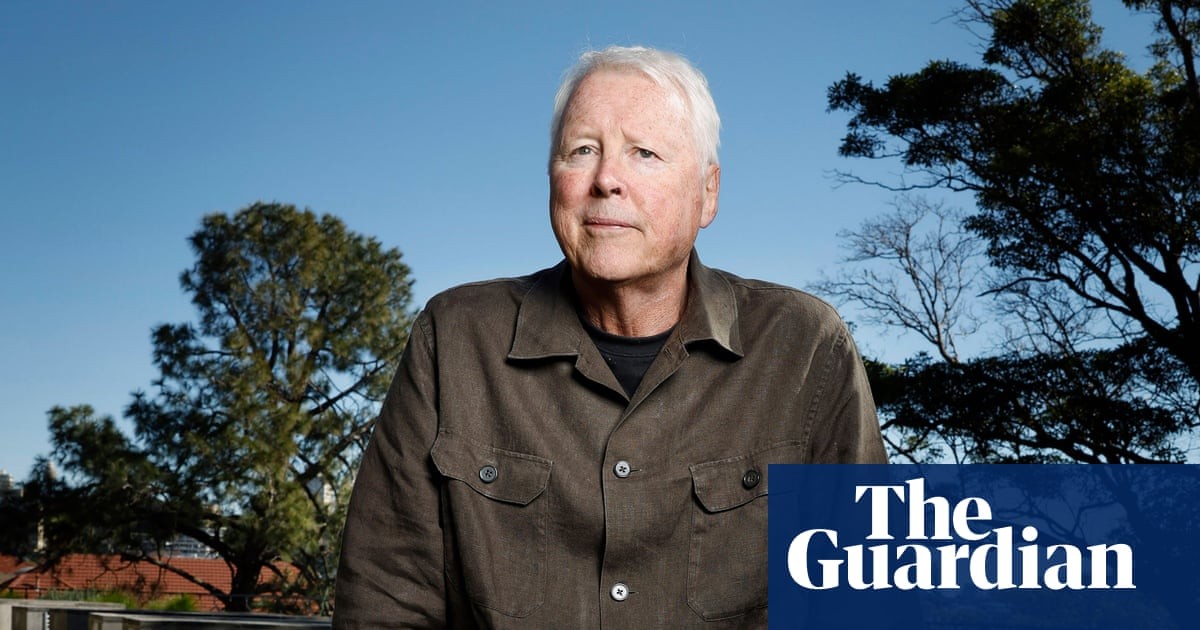
The journalist turned film-maker on empathy, his investigation into animal testing, and life in one of Australia’s most enduring media power couples
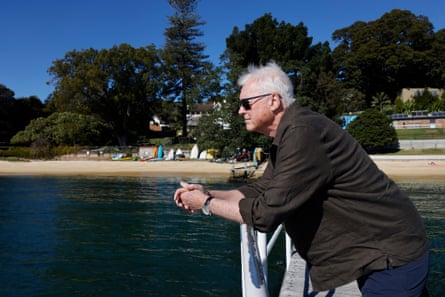
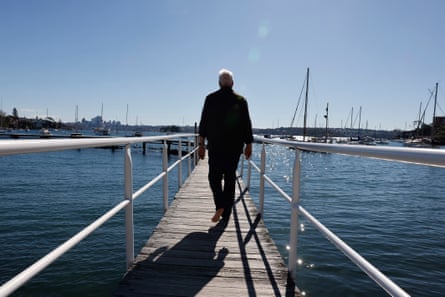
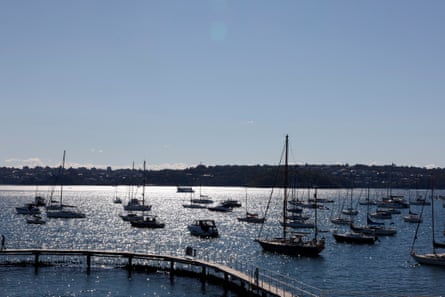
It’s a blindingly bright day in Sydney. Sunlight glitters on the calm harbour waters, and moored sailboats gently sway beyond the boardwalk at Murray Rose Pool in Double Bay, known by most as Redleaf.
The harbour pool is where journalist and former Q+A host Tony Jones likes to swim when he’s not doing laps in the heated Prince Alfred Park pool, or at the jewel-like waters of Shark beach in Vaucluse.
“These harbour beaches are quite unusual in the world,” he says, meeting me at the pool’s quiet cafe overlooking the empty beach. “They feel like national treasures.”
It’s unseasonably warm, and the sprightly, sun-kissed 69-year-old Jones suggests a walk along the pool’s boardwalk then up the steep stairs to Woollahra Gallery at Redleaf, where he wrote his first novel, The Twentieth Man, back when the building was a library.
Before we leave the beach, Jones sheds his puffer jacket and drops it on one of the benches. I notice later it has a Sundance film festival logo, and he says proudly: “They give it to directors.”
Jones went to Sundance in January to premiere his documentary Sentient, which he co-wrote and directed. His wife, ABC’s 7.30 host Sarah Ferguson, executively produced it. It’s not the first time the couple have worked together, having met on the job in Paris in the early 90s when Jones was a European correspondent and Ferguson was a researcher.
“That was the beginning of a beautiful friendship,” he says, smiling. They now share three adult sons, Felix, Cosmo and Lucien. “And we’re still together so something’s going right,” he says, laughing.
As we circle the pool, Jones says swimming is “a way of repairing my shoulder”, after he fell and hurt it not too long ago. “It’s a beautiful place to swim. The only time you can’t is after rain, but I have a little app that tells me if the water is clean today.”
Jones started research for Sentient while living in Washington DC with Ferguson, who was reporting from the United States for the ABC. It was 2020, and like for many of us, the year hadn’t gone to plan. Jones had initially left Q+A to join Sarah in Beijing where she was due to begin her role as the ABC’s China bureau chief.
“We were ready to go, then the Chinese ambassador said, ‘Maybe make other plans.’ He was, I guess, being very diplomatic,” says Jones. “But it wasn’t Covid that triggered the expulsion of many international journalists from Beijing. It was more a tightening of the regime.”
Instead, the next year, the couple wore full PPE on their flights from Sydney to Los Angeles then Washington DC, where their first task was reporting on the January 6 attack on the Capitol. “I was asked to produce Sarah, and all the way over on the plane we were looking at tonnes and tonnes of citizen journalist videos that the Four Corners people had put together for us … we hit the ground running and we made, I think, a really powerful program about it.”
Jones and Ferguson have been married for three decades. Do they find it easy to balance their personal and professional relationship? “Remarkably easy,” says Jones. “It’s not to say there are not moments of tension – pulling together scripts, trying to decide which direction a story will go – but I think we’ve collaborated really well, and obviously that reflects a deep commitment to each other.”
How often does he tune into 7.30? “Every night. I’m one of the most assiduous viewers.” The Guardian photographer joins us at the beach and conversation turns to Ferguson’s recent viral interview with Barnaby Joyce yelling at his dog off camera.
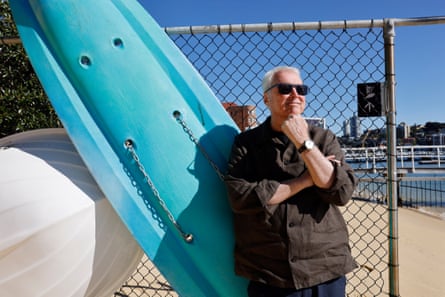
“I heard Sarah saying the other day that not a single thing she’s done as a journalist has had such an immediate viral impact,” he says, laughing. “She is incredible. But that was a moment of incredibly unscripted weirdness.”
The couple’s recent film collaboration is a whole lot more serious: it’s a robust and moving examination of the ethics and consequences of animal testing. Sentient’s central character is Dr Lisa Jones-Engel, a primatologist who has worked with chimps at New York University’s Laboratory for Experimental Medicine and Surgery in Primates (which closed in 1998), at the University of Washington’s National Primate Research Center, and in the field conducting research into zoonotic pathogen transmission – diseases that travel between humans and animals.
What’s fascinating about Jones-Engel, and indeed others interviewed in Sentient, is that she “had worked on both sides of the fence”, says Jones. “She worked as a scientist and she worked trying to stop the science, or at least stop the use of animals in the science.”
After 30 years of working with primates, Jones-Engel became an animal rights activist – a position Jones hasn’t adopted on this subject “or any subject for that matter”, he adds.
“I’m very far from being an activist,” he says, now scaling the steep steps up to the car park without running out of puff. “It was very important that people could make up their own minds as to whether these practices should continue, whether we should double down on our efforts to get alternatives to this. As we can see, there are alternatives.”
It was ethicist Peter Singer, a guest on Q+A, who first planted the seed for Jones on animal testing. Singer had commented during the long-running ABC show that in the future we will come to look at the way we treat animals today in the same way we now look back at slavery, “which is quite a controversial thing to say”, says Jones.
Sentient was initially planned as a six-part series looking at how humans treat animals across a number of industries. In the end, the documentary focused on macaques and the vast supply chain that brings them from the wild to laboratories in the US and other undisclosed locations. It features undercover footage of the primates being captured and transported in “coffin-like” containers then kept in cages no bigger than a telephone booth.
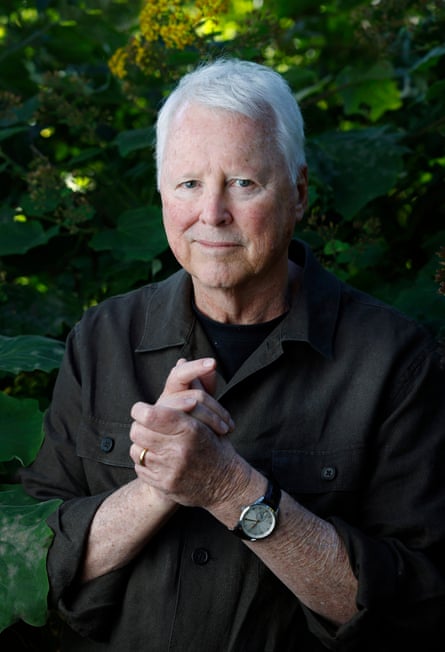
The documentary spends equal time on both sides of the debate, where one argument to continue animal testing is the life-saving medicine we have because of it, including vaccines for polio, cancer drugs and antiretroviral therapy for HIV. What’s upsetting, though, is the film’s revelation that 95% of drugs tested on animals successfully fail in human trials.
“I mean surely that’s an argument for finding something that works better, that gives you better outcomes,” says Jones. “I often talk about empathy as the guiding principle [for the documentary] … empathy for the animals and empathy for the people dealing with the animals … We don’t actually show the worst things inside these testing labs, but what you do see triggers emotions.”
Jones poses for photographs in the gardens of Woollahra Gallery, where it’s cooler and shaded under an old Moreton Bay fig tree. We chat about living in the US under Bill Clinton’s presidency, then later under Joe Biden. He’s tactically careful about revealing his opinions.
After walking past sunbathers on the lawn by the beach, and taking a few photos on Seven Shillings beach, where Jones points out the old Fairfax property metres from the sand, we take a seat on the ledge by the water. Jones ponders a question he has heard a lot during the promotion of Sentient, which is whether his behaviour has changed – if at all – since making the documentary?
The answer he has landed on is: “I’m a work in progress.” He still eats meat, but less than he used to, and this isn’t a film about veganism, he stresses. “I do understand the logical extension,” he says. “I’m still in the questioning phase, I’m not in the resolution phase.”
He says he has always avoided sharing his opinion on matters such as this, even during the heyday of Q+A when Twitter was a place where viewers would discuss the live show like it was a football match, sending in their questions from the couch.
“The truth is I don’t like the idea of putting online everything I do or think or say, and especially not on what used to be called Twitter … I have such a deep abhorrence to everything that Elon Musk stands for that I would not want to add one cent to his trillion-dollar revenue.”
Coming back to the documentary, Jones says it has been challenging to convince the streaming services to show the film after its limited cinematic release. “Whilst they looked at our film and praised it, [Netflix and others said they] were not going to run it because ‘we don’t think our audience is prepared for a film where something bad is happening to animals’.
“In a weird way people are more prepared to look at terrible things happening to humans than they are happening to animals.”
-
Sentient screens at Melbourne international film festival on 11 and 13 August. Tony Jones will appear at special screenings in Canberra, Sydney and Brisbane from 17–21 August. The film screens in select Australian cinemas from 27 August.
What's Your Reaction?
 Like
0
Like
0
 Dislike
0
Dislike
0
 Love
0
Love
0
 Funny
0
Funny
0
 Wow
0
Wow
0
 Sad
0
Sad
0
 Angry
0
Angry
0





Comments (0)