

Trump's plan to redesign every .gov website leads to AI-designed horrors
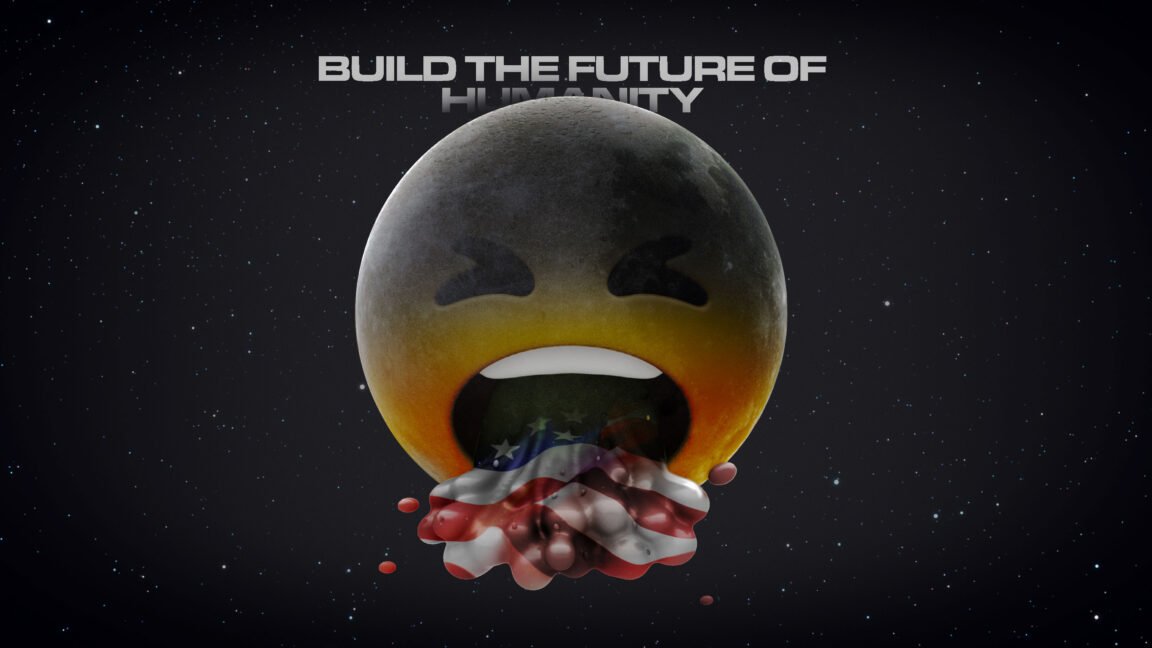
A year in, National Design Studio delays plan to update government web standards.
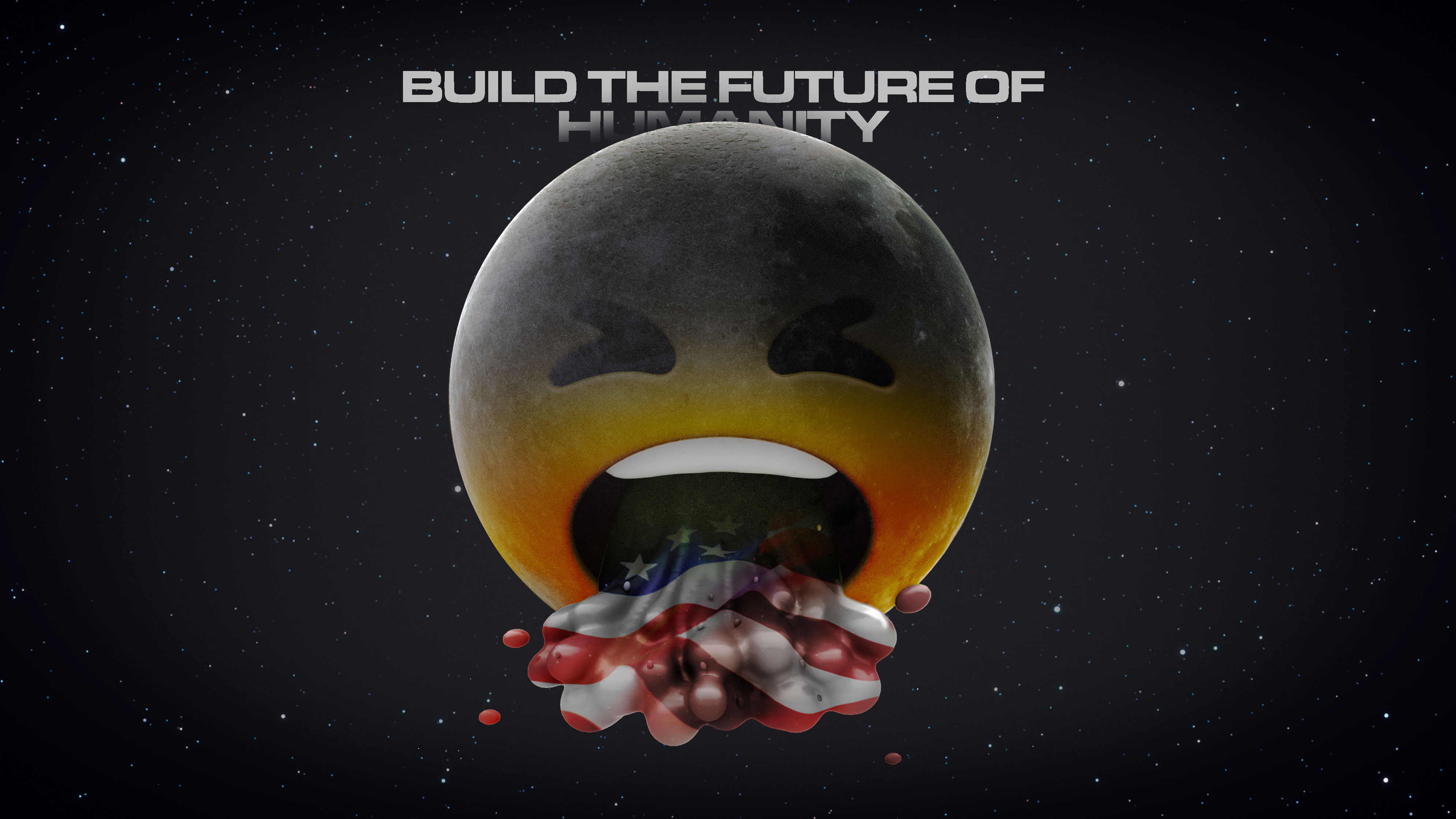
Credit: Aurich Lawson | Getty Images
Credit: Aurich Lawson | Getty Images
President Donald Trump’s plan to “fill the digital potholes” and use AI to quickly redesign every government website isn’t going very well.
Last August, Trump created the National Design Studio, or NDS, by executive order. A temporary DOGE-like entity that answers only to the president, NDS was tasked with creating new standards to update the US Web Design System (USWDS) and overhaul 27,000 dot-gov websites in just three years. At the end of this so-called “America by Design” initiative, the government’s “design language” would supposedly be more usable and beautiful, Trump expected.
However, that monumental task—assigned to a small team under a short timeframe—was seemingly made harder by DOGE’s deep cuts to agencies previously responsible for improving government websites, including dismantling the 18F technology unit and restructuring the US Digital Service into DOGE.
Those teams knew exactly how hard it can be to get every government agency to adopt new web standards. They had spent years trying to push agencies to update their sites to comply with USWDS standards, yet “only 30 percent of government websites used them as of mid-2023,” NextGov reported. Notably, the USWDS team—which was created in 2015 to ensure government websites were accessible and mobile-friendly—was reduced to one full-time employee after Trump took office.
Most people agree that updating government websites is a worthwhile and necessary endeavor. But about a year into NDS’s existence, the team hasn’t accomplished much.
Its biggest achievement has been modernizing the federal retirement system. However, former government workers have accused the Trump administration of claiming “false victories and overstated credit,” noting that the project was underway before NDS was created.
The group’s other output has been meager, with few launches and substantial backlash from design experts, who argue that the team relies too heavily on AI and has failed to test sites for compliance with the Americans with Disabilities Act. As scrutiny of NDS has intensified, most agencies are now resisting connecting with the team about adopting new web standards, Ars has learned.
Single-page launches, odd redirects
Ars conducted a comprehensive review of launched sites to assess NDS’s progress so far.
Most of the few dozen websites NDS has launched consist of a single page, where visitors can do little more than fill out a sign-up form. The most useful offering may be TrumpRX, which includes a search tool for comparing drug prices. For anything else, visitors must visit a legacy site.
There are also many newly registered domains—like live.gov, onlyfarms.gov, aliens.gov, and why.gov—which currently redirect to legacy sites. Some of those old sites may be updated with NDS’s signature flair, but the ones that don’t look as pretty remain the primary resource for Americans seeking government information or assistance online.
At least one website, 250.gov, which celebrates 250 years of US history, curiously redirects to a dot-org rather than a dot-gov, which is unusual for a government site and could erode visitor trust.
Among the few larger sites that NDS has launched is its own, ndstudio.gov. Currently, that site catalogs the team’s launches, shares a brief timeline of US design achievements, discusses the team’s AI and accessibility efforts, and encourages talented designers to “apply now.”
It also briefly hosted a store marketing a $47 limited edition MAHA poster and a $400 “collector’s edition” with Secretary of Health and Human Services Robert Kennedy, Jr.’s autograph, NextGov reported. The store disappeared after the White House faced questions about where the profits from sales would go. A White House spokesperson told NextGov that the posters were never “actually for sale,” as the store’s items did not include a “purchase button.”
The only other site of similar scope is merrychristmas.gov, which, beyond the homepage, includes one page for each of the 12 days of Christmas. An apparent vanity project rather than a government resource, the site is also a celebration of NDS designs and culminates on Christmas with a page praising the group for building sites reflecting “a belief that thoughtful design can strengthen democracy and improve civic life.”
These sites are supposed to “delight” Americans, Joe Gebbia, the Airbnb cofounder serving as Trump’s chief design officer, told NextGov in February. The next month, he told Fox News he wanted visiting government websites to feel like “an Apple Store-like experience.”
However, the rush to launch sites that look as slick as iPhone ads has not always gone smoothly.
On TrumpRX.gov, for example, NDS was mocked for using AI to generate an image that “showed a child with six toes running towards an American flag without any stars on it,” NextGov reported. (That seemingly contradicts a directive from former President Joe Biden that agencies should never update websites to “alarm or frighten your users in ways that erode trust.”)
A design for CIO.gov was abruptly pulled after critics on LinkedIn panned it as inaccessible and discovered that NDS had seemingly exposed its design system by accident. On X, an NDS staffer boasted that it was “one of our first deployment[s] that is almost entirely generated by our internal AI agent system” end to end.
But commenters pointed to odd coding choices, such as “inconsistent” color labels, as evidence of a rushed rollout, with one LinkedIn user writing, “it’s as if they used an AI with a hangover to generate it!”
Another commenter lamented, “this is clearly a design system for AI agents to replicate the look of vs. for humans to implement or understand. It doesn’t have to be this way though.”
Currently, that page redirects to councils.gov, but the Wayback Machine still has an archived screenshot of the yanked page as of this writing.
Commercial trackers, accessibility concerns
Perhaps even more concerning to the public are the projects NDS seemingly completes and never ships. The Drey Dossier, a YouTube investigative outlet, investigated whether the Trump administration may have ulterior motives with the redesign—like surveilling Americans, generating propaganda (most NDS sites explicitly praise Trump), or abusing data access. They have questioned the status of potentially sensitive but unlaunched domains, like vote.gov or passport.gov.
This weekend, the Guardian published an investigation corroborating some of the Drey Dossier findings, including that NDS had “built versions of services legally assigned to other agencies,” including passport.gov and vote.gov. Regarding the latter, the Guardian reported that “under the studio’s design, voters would be required to verify their identity through Login.gov, the federal sign-in gateway, and to have their citizenship checked against a database run by the Department of Homeland Security.”
Any plan for data retention policies remains troublingly unclear, and there’s seemingly been no privacy impact assessment weighing the privacy implications of centralizing so much sensitive data in the White House, the Guardian reported. Notably, “the commission Congress put in charge of vote.gov has not decided to formally participate in the initiative,” the Guardian reported.
The Guardian’s reporting also confirmed that four federal sites built by NDS—ndstudio.gov, trumprx.gov, realfood.gov, and trumpaccounts.gov—run “commercial visitor-tracking software” that’s “configured to evade the privacy tools many web users install.”
None of those sites “carry the public filings federal privacy law requires under laws including the Privacy Act of 1974 and the E-Government Act of 2002,” the Guardian reported.
The trackers were apparently removed after the Guardian contacted the White House. Liz Huston, a White House spokesperson, told the Guardian that “all National Design Studio personnel comply with all legal requirements in their important work to improve how citizens interact with their government.” But she did not comment on what happened with the data that “was collected from users of the government websites while the tools were live, whether it was retained, and who has custody of the data,” the Guardian reported.
NDS has also seemingly abandoned projects, such as an unlaunched website for the FBI’s Charlie Kirk tipline.
Additionally, NDS has faced ethical questions about why it posted, and then removed, corporate logos and links to websites promoting companies like X and Cloudflare, NextGov reported. Unlike the 250.gov site, which permissibly highlights partners for a community event, displaying corporate logos on a government site “reeks of both corruption and incompetence,” Emily Peterson-Cassin, a policy director for the advocacy group Demand Progress, told NextGov.
Following its investigation, the Guardian concluded that questions remain about who oversees NDS and how it’s funded, noting that “a search of USAspending returns no record of the National Design Studio either as a paying agency or as a recipient of funds.”
However, while criticisms of NDS are widespread, many former government workers have maintained that the biggest concern is NDS sites that do not appear to comply with laws requiring usability and accessibility. The heavy load of some sites could make them harder to access on mobile, for example.
One former federal designer, Ethan Marcotte, criticized an NDS site as an “overbuilt, too-heavy website” that the design-focused Architect’s Newspaper reported “not only fails basic ADA web compliance but ships close to three megabytes of code to boot. For those unfamiliar with web design, this technical cost is comically outsized. Three MB is the kind of payload you’d expect from an image-heavy editorial feature or an interactive map, not from a single page featuring a single style of text.”
NDS’s standards matter, especially when it takes on bigger projects and websites. It’s suspected that NDS may be planning to redesign Recreation.gov, one of the most widely used government websites. And Barbaccia told NextGov that he plans to “build a ‘digital front door’ to the government for taxpayers, among other priorities.”
The design studio also reportedly plans to use Salesforce AI tools to personalize government websites by “creating tailored web experiences using real-time and historical data with AI-driven content and product recommendations.” Imagine veterans visiting VA.gov and the content dynamically adapting to their prior interactions.
Those plans may not offer the best usability, though, as it’s easy to imagine a user becoming frustrated if they can’t reliably pull up the same information.
NDS aims to use AI for everything
NDS did not make a spokesperson available to discuss their work with Ars. However, at a recent panel, Gregory Barbaccia, the federal chief information officer, said NDS is experimenting with AI to produce “complete website redesigns” using NDS guidelines in an effort to accelerate work on the tens of sites still to be updated in the next two years.
Former government workers told NextGov that using AI to launch sites could “theoretically” work, but only with “careful monitoring”—something the six-toed kid image on 250.gov calls into question. Without that oversight, government sites risk more than the embarrassment of publishing an obviously AI-generated image; sloppy AI code could also introduce cybersecurity risks.
It remains unclear if NDS could use AI to create more complex websites. The risk of disrupting critical government resources appears to already be stalling NDS efforts to prioritize “improving websites and physical sites that have a major impact on Americans’ everyday lives,” as Trump’s executive order directed.
For agencies, it’s hard to trust NDS when it doesn’t appear to follow any brand standards across its launched sites.
The purported aim of the “America By Design” initiative is to bring consistency to the government’s online information ecosystem. Yet NDS sites vary radically in appearance. Compare moms.gov to nasaforce.gov or earlycareers.gov, and you’ll find wildly different fonts and font sizes. And while sites like realfood.gov and freedom.gov open with flashy animations, TrumpAccounts.gov and TrumpRX.gov look much more like traditional government sites.
Some critics suggest that any consistency in NDS designs could be an artifact of the group’s reliance on AI. Add in concerns about usability and accessibility, and it’s easy to understand why NDS appears to have no plans to update the USWDS standards any time soon.
Agencies resist working with NDS
NDS’s unimpressive output has reportedly made agencies hesitant to work with the group. Trump gave agencies until July 4, 2026, to share the “initial results” of discussions with NDS to create new USWDS standards. Earlier this month, however, a GitHub page tracking USWDS noted that none of the agencies involved in implementing the standards had responded to repeated USWDS outreach about complying with Trump’s deadline.
Rather than quickly reaching a consensus on standards, the requirement that NDS work with agencies to revise the USWDS appears to have been dropped, at least temporarily, from Trump’s order.
Without those standards, it’s unclear how the sweeping redesign project, whose core goal is to unify the look and feel of government websites, will proceed.
A message posted in the USWDS public Slack channel and shared on the GitHub news page confirms that USWDS was “notified that there’s been a change in direction” and that the section of Trump’s order requiring updates to USWDS is “no longer a requirement.” The Slack message added that the team would work with Trump’s chief design officer to adapt if anything changes.
The White House declined to comment on the update to Trump’s executive order reported on the USWDS GitHub. Instead, a spokesperson shared a statement praising NDS for “doing outstanding work modernizing federal digital and physical services, improving both usability and design across platforms like the Trump Rx, Eat Real Food, and Trump Accounts websites. President Trump has consistently prioritized innovation and efficiency, and he will continue to ensure federal services deliver results and meet the needs of the American people.”
It seems likely that the July 4 deadline will pass without any major launches or announcements, apart from the official July 4th rollout of Trump Accounts, including an app which has already generated complaints from users. Those wanting to monitor NDS’s output can always follow this Bluesky account, which posts an update any time a federal domain is registered or removed.
NDS can’t force agencies to update sites
Unlike DOGE, which seemed unstoppable as it wreaked havoc across the federal government before disbanding, NDS appears largely powerless to direct agencies to update their sites.
The 21st Century Integrated Digital Experience Act and a Biden administration memo are perhaps the only tools NDS has to get agencies on board with “America By Design.”
The law doesn’t mention NDS, of course, instead directing agencies to coordinate with the director of the Office of Management and Budget to assess digital needs and costs and standardize government websites only to the extent practicable. The Biden memo also encourages agencies to use the USWDS standards, which NDS hasn’t appeared to rely on. Most glaringly, the standards the law requires have not taken effect, so agencies do not yet have to comply with them, especially if they don’t have the budget or resources after DOGE’s cuts.
It’s possible that NDS could finish drafting new standards and begin phasing out old systems sometime in the next two years. But even if AI could simplify that transition, migrating thousands of websites from different teams and managers would likely be like herding cats. NDS might need substantial follow-through to get every agency on board once new standards are required, and the design team’s siloed way of working and failure to collaborate with the one staffer left at USWDS don’t inspire confidence that NDS would put in that kind of grunt work.
Right now, NDS’s top priority appears to be recruiting, with a Tech Force site advertising efforts to build “a two-year, White House–backed engineering corps.” Former government workers still bruised from sudden cuts likely aren’t rushing to join NDS or Tech Force, which both dissolve in two years.
In a blog post, the former administrator of the US Digital Service mocked Tech Force as seeking “a silver-bullet solution to all the government’s technology problems.”
Some former staffers who formed a group called We the Builders have warned that anyone looking to rejoin the government should prepare for potential ethical dilemmas, such as projects that may be co-opted for surveillance, invade Americans’ privacy, or extract data without oversight.
“Tremendous amounts of institutional knowledge and work has disappeared, meaning less opportunities to learn from and with seasoned leaders,” We the Builders further warned. And “the environment may be hostile to civic tech values, as we’ve seen decimation of the ideologies behind best practice around user experience, specifically accessibility, language access, and well-researched design systems.”
There’s also uncertainty about what will happen if NDS goes away, as there appears to be no plan to continue updating what, optimistically speaking, could be thousands of websites subject to AI-driven redesigns.
If USWDS survives NDS, that gutted team could be rebuilt under a future administration to continuously evolve the federal web design system. Unlike NDS, that team had been prioritizing updates on the most-visited government sites, and many former government workers have defended the USWDS as a system that deserves to be maintained. On its website, the USWDS stated its primary objective was to use “human-centered design to support human-centered design teams.”
Tossing USWDS would be a waste of taxpayer funds, some critics have said, achieving the opposite of what the Trump administration claimed its goals were when rebranding the USDS as DOGE.
“USWDS is solid,” Charles Hall, an accessibility expert, wrote on LinkedIn. “It represents a significant investment and was created by top talent in 18F and contributed to by top talent via open source. Not using it is already a waste. Making something else is exponential waste.”

Ashley is a senior policy reporter for Ars Technica, dedicated to tracking social impacts of emerging policies and new technologies. She is a Chicago-based journalist with 20 years of experience.
What's Your Reaction?
 Like
0
Like
0
 Dislike
0
Dislike
0
 Love
0
Love
0
 Funny
0
Funny
0
 Wow
0
Wow
0
 Sad
0
Sad
0
 Angry
0
Angry
0











Comments (0)