

Why a Two-Decade Full Frame Shooter Switched to Micro Four Thirds
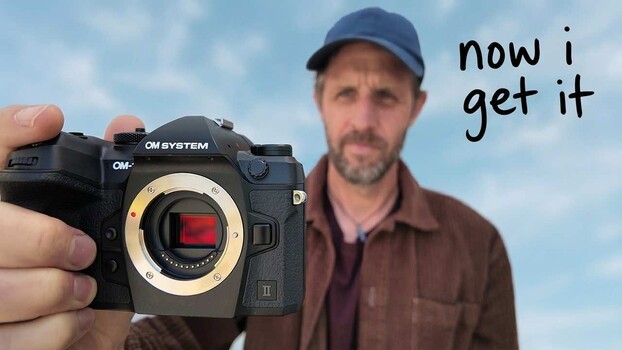
Twenty years behind a camera can lock you into fixed ideas about what gear delivers the results you want. A long-held bias against Micro Four Thirds is exactly what gets challenged here, and the reasons have less to do with specs than with how you actually shoot.
Working through misty woodland conditions he'd chased for five years, Ian Worth walks through a shift in thinking after starting on film, moving to digital, shooting full frame for years, then dropping to APS-C to cut weight. The turning point came from real use in the field rather than a chart. Weight and portability start to matter more as you rack up years and miles, and Worth admits he's left gear behind on long hikes simply because it felt like too much. When the barrier to carrying your camera drops, you shoot more, you overthink less, and you're actually present when something like a rare misty morning finally shows up.
Reach is the second pull, and it's a strong one for landscapes as much as wildlife. Worth shoots a lens that gives a 400mm full frame equivalent on the OM-D Mark II, letting him isolate details, compress scenes, and combine landscape and wildlife in a way he'd always struggled to do with other systems. He's honest about the limits too. Low light and hard dynamic range push situations expose the gap against a larger sensor, and a very shallow depth of field is harder to reach. For outdoor shooting in changing conditions, those tradeoffs rarely surfaced in his images.
Anyone eyeing Micro Four Thirds purely for a lighter pack should price and weigh the specific lenses they plan to use rather than assume the format guarantees a smaller kit. A full frame body with a modest prime can end up lighter than a small sensor body with a fast telephoto zoom. The format wins on portability in some kits and loses in others, and that nuance decides whether this move makes sense for how you shoot.
Worth lands on a point worth sitting with, which is that the better question stopped being whether one system beats another and became how a system changes the way you work. He's thinking less about the gear and more about making the photograph, and that mental shift is what he credits for shooting more freely.
Watch the full field report above to see the images Worth pulled from that morning and hear where he thinks the system falls short.
What's Your Reaction?
 Like
0
Like
0
 Dislike
0
Dislike
0
 Love
0
Love
0
 Funny
0
Funny
0
 Wow
0
Wow
0
 Sad
0
Sad
0
 Angry
0
Angry
0







Comments (0)