

‘A songbook for protest movements’: how did this secret mission to smuggle antifascist music out of Spain ever get forgotten?
In the summer of 1961, four Italians crossed the Pyrenees into fascist Spain. Unknown to the border guards, their car was loaded with microfilm, a tape recorder and, tucked in the pocket of a writer and musician named Sergio Liberovici, a book of matches – each split in half, etched with the addresses of Spanish antifascists in miniature and glued back together, a hairline fracture concealing secrets that, if discovered, could result in jail or worse.
Along with Michele Luciano Straniero, Emilio Jona and Margherita Galante Garrone, Liberovici was a member of a leftwing collective named Cantacronache. Formed in 1958 and counting Italo Calvino and Umberto Eco among their collaborators, the collective was repulsed by the superficiality of Italian pop music and hoped to revitalise culture with Brechtian realism. At the time, Italy was fiercely divided into leftwing and rightwing political camps, and it was a record label, Italia Canta, linked to the Italian Communist party, that financed the trip. Its goal: to secretly document the resistance songs of the anti-Franco underground. It was a perilous task for all involved, but especially so for Cantacronache’s contacts.
Throughout their month-long journey, Cantacronache collected dozens of antifascist songs from workers, intellectuals, musicians and poets. Some were mournful laments that described the hardships under fascism; others called Franco a bastard. All painted a groundswell of resistance that embarrassed the dictator and caused an international scandal on the publication of a 1962 songbook, Canti della Nuova Resistenza Spagnola (Songs of the New Spanish Resistance).
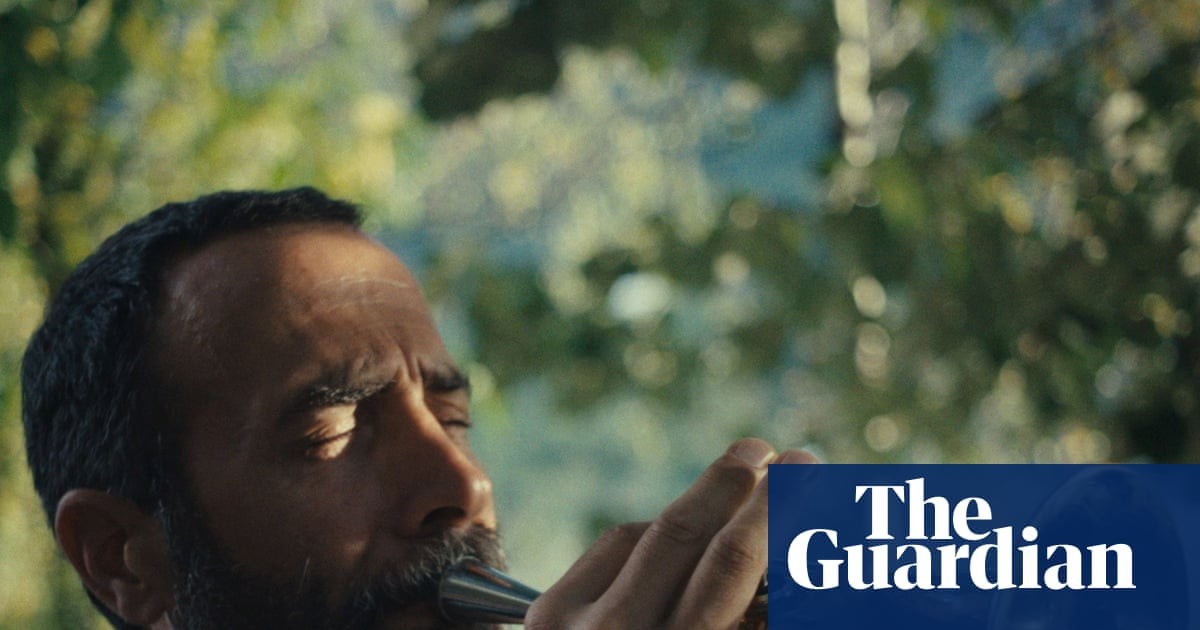
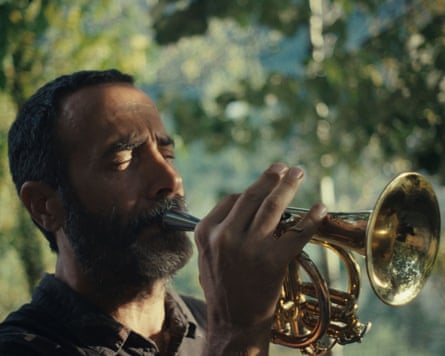
Yet Cantacronache’s work was forgotten until academics stumbled upon it in archives. Now, film-maker Pablo Gil Rituerto, who discovered the songbook by chance in a Barcelona shop, retraces the group’s 1961 journey in a documentary premiering in the UK this month: La Marsellesa de los Borrachos (The Drunkmen’s Marseillaise). “I realised there was a sound archive and I kept searching until I found it in Turin, where it had remained unpublished for 60 years,” says Rituerto.
In the film, Rituerto meets figures from that clandestine trip. In Barcelona, Asunción Carandell, widow of Catalan poet and writer José Agustín Goytisolo, listens to her husband sing again in a recording she’d never heard before. “When she recognises the voice, her gaze changes,” says Rituerto. “That moment stayed with us.” Ex-miners gather in Asturias, linking arms and belting out Santa Bárbara Bendita, the anthem of a 1962 miners’ strike. Contemporary musicians including Nacho Vegas offer reinterpretations, a nod to the fact that many songs adapted old folk standards – like the transformation of an elegy for a vinegar-carrying donkey, El Tururururú, into a song anticipating Franco’s demise.
Spanish dissidents had much to protest. After Franco’s coup defeated the Republic in 1939, thousands were disappeared; women were subject to extreme patriarchal violence and control; political prisoners toiled in overcrowded labour camps; and civilians suffered strict rationing and famine. The Catalan, Basque and Galician languages were banned from public life. By the 1960s, Spain began to modernise, but state repression continued behind the curtain of the so-called economic miracle.
Franco felt music was important to cultivating a strong national identity. Folk and pop songs were played widely, provided their messages were apolitical or in line with Franco’’s. “Expressing opposition to the dictatorship or celebrating the Republic attracted censorship and repression,” says Marco Antonio de la Ossa Martínez, a professor at University of Castilla-La Mancha. So when Cantacronache met the young Chicho Sánchez Ferlosio in Madrid, who later wrote Gallo Rojo, Gallo Negro – a protest anthem that travelled throughout Europe and Latin America – his life was in real danger. “Meeting hundreds of people who lived for 20 years under a ruthless dictatorship – yet resisted and did not give in, risking years of prison for the slightest thing – was the most moving experience I have ever participated in,” says Cantacronache’s Jona, who is now 98.
Cantacronache wanted to challenge the culture of the time, says Chiara Ferrari, author of Politica e Protesta in Musica (Politics and Protest in Music), and felt that music could be a vehicle for spreading ideas with social and political significance. That impulse proved correct.
On their return, they recorded an album of protest songs, featuring artwork by Picasso – but it wasn’t until publication of Canti della Nuova Resistenza Spagnola that Franco exerted pressure on Italy and the Vatican. The songbook provoked an intense backlash, including a highly publicised trial in Turin. Books were seized and neo-fascists bombed Cantacronache’s publisher, Einaudi. So flustered was Franco’s regime that it sought to pulp all copies. Fascist Spain countered with its own pamphlet, after which the film is named, dismissing the songbook as the ravings of tavern drunks, rather than reflecting popular opposition.
The collective was charged in Turin under obscenity laws for their inclusion of a satirical copla featuring colourful language about Jesus Christ’s phallus. Jona, a lawyer, defended the collective’s work as ethnomusicology; they were acquitted on appeal to Italy’s supreme court. “The legal action made our cultural initiatives more visible and successful,” says Jona.
Undoubtedly, the songbook helped to spread antifranquista music far beyond Spain’s borders. When the trial concluded, Einaudi made the book freely available. Covers appeared in Uruguay and Chile, where Victor Jara and Rolando Alarcón sang La Hierba de los Caminos and Nubes y Esperanza. Mexico’s Óscar Chávez dedicated an album to Spanish civil war songs, while folk singers in Sweden, France and Germany recorded their own versions. “It became a songbook for protest movements,” says Ferrari. “Cantacronache’s research remains an extraordinary source of understanding for how song can be a collective force for struggle and solidarity.”
What's Your Reaction?
 Like
0
 Dislike
0
 Love
0
 Funny
0
 Wow
0
 Sad
0
 Angry
0








Comments (0)