

A Wildlife Photographer Starts Over Underwater With the OM System TG-7
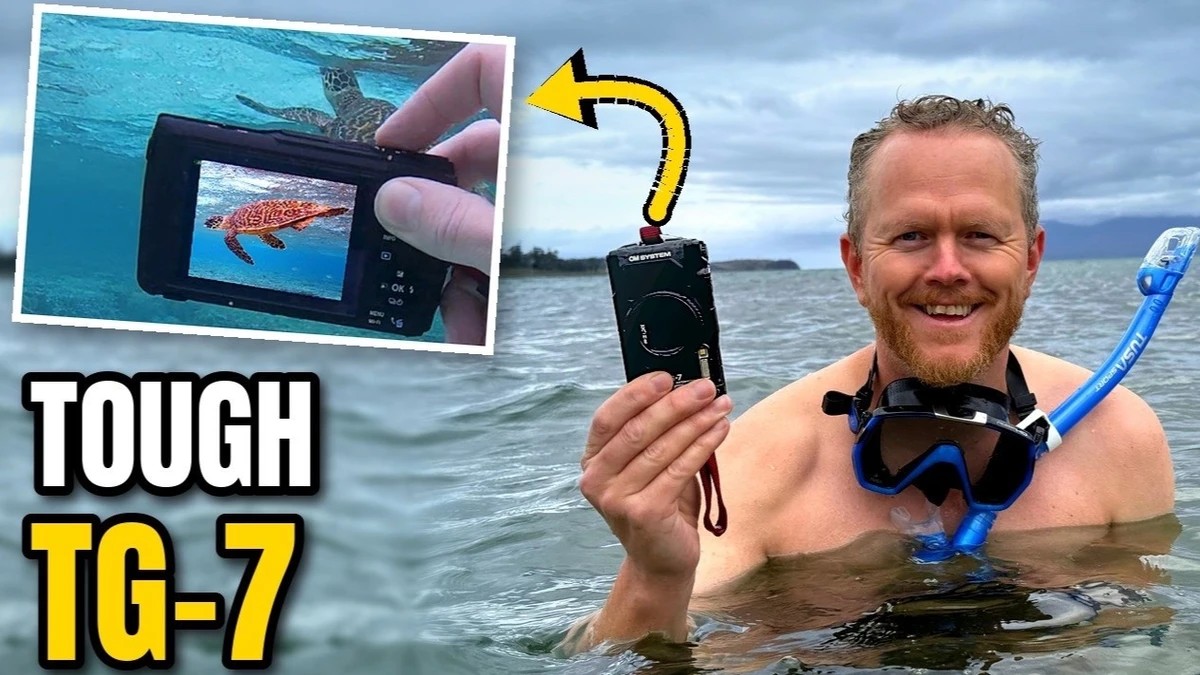
Underwater photography takes away most of the habits that make you good on land, since you can't lie still, brace a lens, or creep up on an animal the way you would in a field or forest. A rugged compact like the OM System Tough TG-7 is built to take the equipment worries off the table, which leaves only the hard part: learning how to see and move in water.
Years spent photographing black grouse at their lek, Borneo's orangutans, and musk ox in Norway's mountains still left Espen Helland feeling like a beginner the moment he put his face in the water. He took the $650 OM System Tough TG-7 to Lady Elliot Island, a small protected coral cay at the Great Barrier Reef's southern end. The surrounding water holds more than 1,200 marine species, and Lonely Planet voted the island the best place in the world to snorkel in 2025. The camera is waterproof to 15 m with no housing, and it's also shockproof, dustproof, and freezeproof. That means you can toss it in a bag, take it snorkeling, and stop worrying about it.
The size hides more capability than you might expect. At its widest zoom, the lens opens to f/2, and the camera records 4K video and raw files. Its microscope mode focuses just 1 cm from the subject, which suits the tiny creatures living on a reef. Even so, a beginner camera doesn't make good underwater photos easy, and he realized he'd need to put up with being bad at it for some time before he improved. His first snorkel, past lined butterflyfish, bridled parrotfish, Pacific sailfin tangs, and his first turtle, produced plenty of shots of fish swimming away and too many frames looking down on animals from above. He also found that the dedicated underwater modes, though capable, didn't always fit what he was trying to do, so he built a custom mode to take back some control over his settings, which he plans to share in a separate video.
On the second morning, a southeast wind had picked up overnight, so Helland and his partner walked to the northwest side of the island, where visibility was more likely to hold. Both entry points on the western shore have a basket where you swap reef shoes for fins, which lets you enter the water without trampling the coral. The waves still made shooting difficult, so once the tide came in, they moved to the calmer lagoon on the other side, where the sun was out and the water cleared. There, his approach started to shift. Rather than swimming toward fish, he tried floating along with them, letting the animals settle instead of fleeing, and the difference shows in what he came away with.
Floating with the fish paid off. In the lagoon, a big blacktip shark swam past going the other way, which he found amazing and a bit scary, though he only got a little footage of it and no photo. After three days on Lady Elliot, he says he's hooked on exploring life underwater, and he calls the TG-7 an ideal little camera for getting started.
The turtles, reef fish, and that brief shark sighting are all in the video.
What's Your Reaction?
 Like
0
 Dislike
0
 Love
0
 Funny
0
 Wow
0
 Sad
0
 Angry
0








Comments (0)