

Steven Spielberg Officially Fills The Biggest Void In His 55-Year Career With Exciting New Release

Published Nov 28, 2026, 11:30 AM EST
Simon Gallagher has worked in movie and TV journalism for more than 17 years. He has written more than 6000 articles and reviews, and edited thousands more. He is an expert in the entertainment industry, particularly in the golden age of screen superheroes. Simon is also a Rotten Tomatoes approved critic.
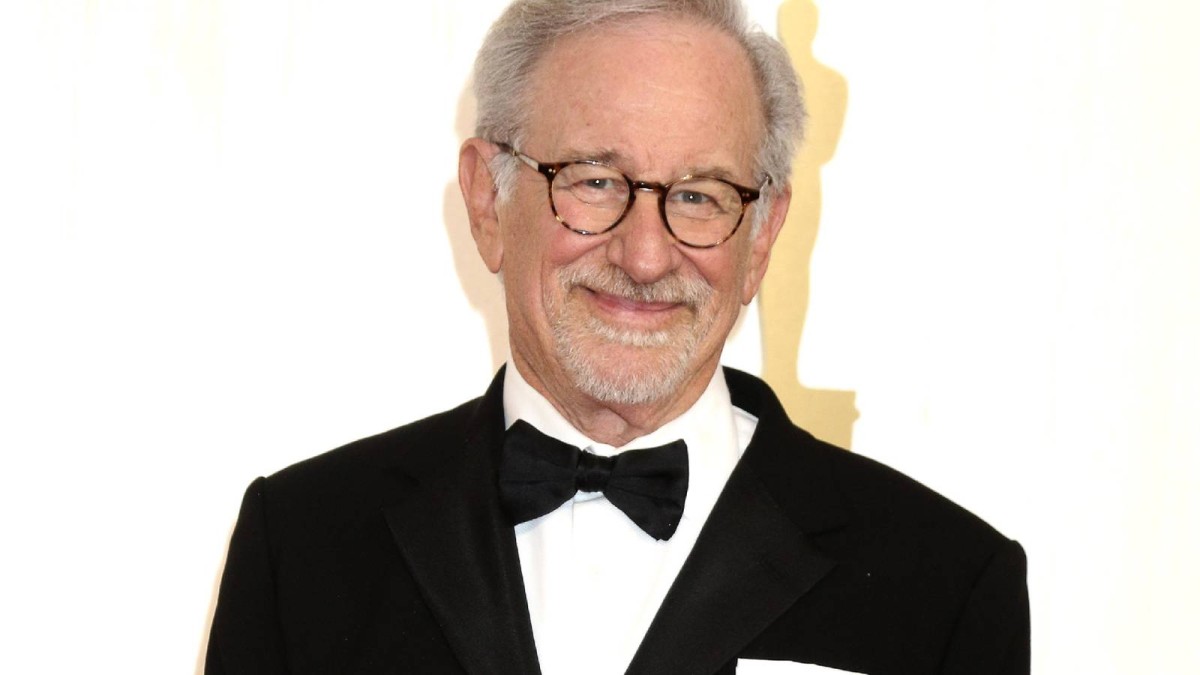
For more than five decades, Steven Spielberg has built a filmography that's almost unrivaled and reads like the encyclopedia of modern cinema. He's merrily hopped through genres, and while the name Spielberg tends to be closely tied to sci-fi movie brilliance, he started with thrillers. He announced himself with the dread-filled genius of Jaws, filled hearts with the wide-eyed wonder of E.T., broke them with Schindler's List, and captivated everybody with the mournful spectacle of Saving Private Ryan.
That one man made all of those movies and more besides is simply preposterous. Through multiple genres, Spielberg has consistently redefined the boundaries of mainstream filmmaking; he is one of the pioneers of blockbuster cinema as it exists now, and regardless of which sandbox he chooses to turn his hand to, few directors can rival Spielberg for his command of visual language, world-building, and, of course, the emotional core that has been so much of a part of his work.
Spielberg has conquered thrillers, blockbuster sci-fi, swashbuckling adventure, historical biographies, war movies, and sweeping family dramas, and a lot more besides that. Yet, across those 55 years, one incredibly important American genre has remained conspicuously absent from his resume. Now, with the official announcement that Spielberg is set to adapt Kevin Barry's novel The Heart in Winter, he is finally filling the biggest void in his career.
Steven Spielberg Is Finally Making A Western: What To Know About The Heart In Winter

After some speculation about what Spielberg would be doing after his return to sci-fi with Disclosure Day, Spielberg has now locked in his next project with an adaptation of Barry's acclaimed 2024 novel. Set in the rugged copper mining boom town of Butte, Montana, in 1891, The Heart in Winter follows Tom Rourke, a self-destructive opiate-addled Irish ballad writer, and Polly Gillespie, a devout newly married woman fleeing her violent husband. Their desperate, doomed romance sparks a cross-country flight through an unforgiving frontier as they're pursued by a posse of ruthless gunmen.
Despite the fact that it reads like classic frontier storytelling, Spielberg has already made it clear that he has zero interest in retreading familiar ground, explicitly saying that the movie will avoid all tropes. To achieve that, he can rely on the talent of Paul Thomas Anderson, who's penning the screenplay, marking a monumental collaboration between two of modern cinema's greatest talents.
The cast he's assembled is equally impressive, with Cillian Murphy taking on the role of Tom Rourke, alongside Jesse Buckley as Polly Gillespie and the brilliant Mark Rylance rounding out the main trio.
Why Spielberg's First Western Is So Exciting
 Cover Images
Spielberg hasn't exactly been quiet about his affinity for the Western, which has always made the 55-year gap in his resumé a little more intriguing. He has brushed up against it as a producer, most notably on 2005's mini-series Into the West, Back to the Future 3, of course, and also genre mashup Cowboys and Aliens.
He famously also came close to directing Arkansas, an unmade Western project that was set to star Tom Cruise in the early '90s. Seeing him finally step behind the camera on the frontiers means we get to see a master tackle a completely fresh set of cinematic rules, with the provocative caveat that he intends to ignore them all.
Alongside Spielberg himself, the raw materials here are simply astonishing. Paul Thomas Anderson is one of the most gifted storytellers of all time, and with Murphy, Buckley, and Rylance, The Heart in Winter has incredibly strong bones in front of the camera, too. He's also reteaming with visionary cinematographer Janusz Kamiński, who revealed how he intends to shoot the film:
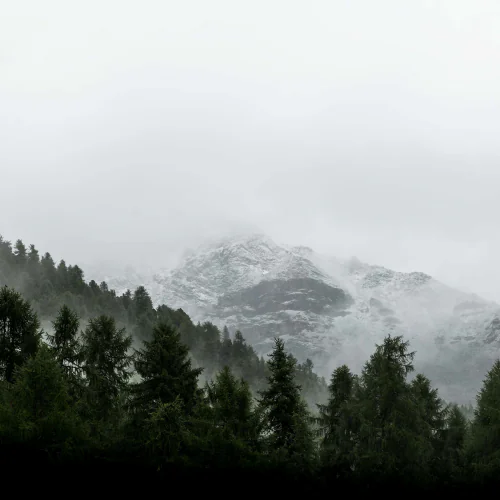
We used to go to this region in the Sudeten Mountains, where it was just beautiful, rolling hills, looked like parts of Montana. The lay of the land, the snow on the ground, the fog. Those who shoot American movies tend to come from somewhere else, and we see these same things differently. That’s why there’s room in this profession for men and women from different countries who bring different aesthetics to American movies.
On top of that, the natural ingredients of great westerns align very well with Spielberg's strengths as a filmmaker. He has an almost unrivaled grasp of scale, and his eye for visual storytelling makes the Montana wilderness feel like a great canvas. He also, of course, does an excellent line in flawed human characters, and they are the most important part of Barry's tragic narrative.
The Heart In Winter Brings Spielberg's Career Full Circle

As well as almost making Arkansas and his executive producer roles another Western project, Spielberg has a greater connection to the Western genre. In effect, directing The Heart in Winter is almost a homecoming for the director and will bring his entire artistic journey full circle.
Long before he ever picked up a camera himself, his understanding of framing, horizon lines, and mythic storytelling was shaped by the Westerns of John Ford, whom he has proclaimed as one of his greatest influences. He's openly spoken for decades about how Ford's masterpieces, and particularly The Searchers, laid the foundation for his own filmic education. We actually have evidence of this, of course, in dramatized form in the closing moments of The Fabelmans, when Sammy Fabelman learns a crucial lesson on horizon placement from Ford himself.
Even though he's never made a Western himself, Spielberg has added the genre's DNA into his filmography since the beginning, not only in terms of the visual language of John Ford's work, but also in more specific terms: His first movie, Duel, plays out like a frontier showdown on a deserted highway. Jaws plays on the classic trope of townsfolk versus monster villain of high-stakes Westerns, and Quint is almost the archetypal out-of-town bounty hunter.
And, of course, there's the Indiana Jones movies - a franchise that wears its love for classic serials and frontier adventure on its sleeves so clearly that it dressed an archaeologist like a cowboy, complete with a bullwhip. Tackling The Heart in Winter means Spielberg ironically will stop borrowing from the genre's playbook and write his own chapter within it.
Other Genres Spielberg Still Needs To Tackle
 Cover Images
As Spielberg advances into what might be the twilight of his career, his choices become even more fascinating, and there are actually some other notable gaps in his otherwise exhaustive filmography. Although he delivered a technical marvel with the motion-capture adventure The Adventures of Tintin, he hasn't made a pure animation in the vein of Pixar or DreamWorks (and apparently intends never to do so because it feels so far outside his natural wheelhouse).
Outright horror is another lane he has dipped his toe into but has never fully committed to. Jaws, Duel, and Jurassic Park deliver white-knuckle terror and share some genetics with horror to the degree that people often confuse them, but they are in fact suspense thrillers, and Jurassic Park is a sci-fi movie. He came closest as producer and creative support on Poltergeist, but he has never made a horror outright.
Likewise, he's never made a traditional sports movie, which feels less appropriate for his approach, and he's never stepped into the underworld of a proper gangster epic, other than brief flashes in 1941 and Indiana Jones and the Temple of Doom.
Perhaps the most intriguing omission, and the one he was likely asked about the most, is the superhero genre. Spielberg was actually approached by producers Alexander and Ilya Salkind to direct 1978's Superman off the back of Jaws, but he ultimately passed in order to make Close Encounters of the Third Kind. Decades later, he then developed a Blackhawk film for DC centered on a World War II ace pilot Squad, which would have brought together his love for historical aviation with comic book spectacle, but that project has long since stalled.
Watching him check a Western off his bucket list obviously proves Spielberg has some eagerness to surprise audiences, but this marriage of director and genre has always felt like it was just over the horizon. We can all be happy that it's happening before Spielberg winds his career down.
What's Your Reaction?
 Like
0
 Dislike
0
 Love
0
 Funny
0
 Wow
0
 Sad
0
 Angry
0






Comments (0)