

‘Carrie’ Review: Mike Flanagan’s Teen-Drama Take on a Horror Classic Is Too Gentle for Its Own Good
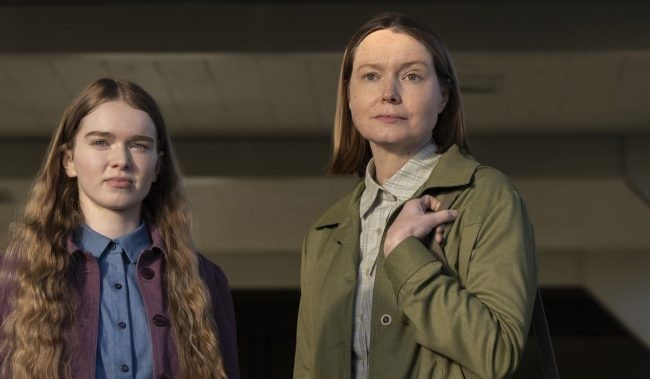
The horrors of modern high school loom large in Mike Flanagan’s “Carrie,” a series adaptation of Stephen King’s 52-year-old novel that’s keen to speak to today’s youth.
When Carrie White (Summer H. Howell) first enters Ewen P.H.S. after a lifetime of homeschooling, she’s greeted with metal detectors at the front doors, zombified students staring at their phones, and intrusive parents eager to contort curriculums on behalf of their kids. (Surprisingly, entitled adults aren’t even the most intrusive example of a damaged American psyche). On top of all that, she still has to handle classic teenage hardships like a tyrannical mother (although with this hormonal 16-year-old, any claims of having a certified wackjob for a mom would be accurate), nerd-induced ostracism (she loves to quote books that nobody but her teachers have read), and bullying — live in-person and via social media.


Entering a new school can feel like a lot to anyone, whether they’re raised in a traditional education system surrounded by friends, or learning math from Bible verses while isolated with doomsday-prepper parents. But Carrie stands out. She is, as a social worker says, “stunningly uninformed” — living her entire life without access to the internet, libraries, phones, or a community of disparate voices. Yet she’s also defiantly openhearted, even after her father dies at the start of our story. When the police arrive to break the news — finding Carrie and Margaret (Samantha Sloyan) hiding in a “prayer closet” — her mother’s irate fear is all but erased by Carrie’s elated smile. She’s not like her mom, and she’s not like the rest of us. She’s closer to an alien discovering Earth, as eager to explore as she is to turn strangers into friends.
But she’s also not like the rest of us — and kind of like some people’s idea of aliens — in that she can crush a car with her mind.
Within the genre staples and character beats familiar to fans of King’s novel (and Brian De Palma’s Oscar-nominated 1976 film), the 2026 version of “Carrie” loses its way. Carrie’s telekinesis leaks out in drips and drabs, as if Flanagan is as embarrassed by his lead character’s abnormality as a teenager trying to hide an acne flare-up. She rarely talks about her burgeoning ability, and aside from the inevitable, overdrawn, and underwhelming meltdown at prom, her superpower struggles to manifest into resonant frights.
But the horror is also hemmed in by one of the new “Carrie’s” core strengths: sympathy. Despite an opening montage in which a slew of witnesses debate whether Carrie is a victim or a bully, a hero or a monster, the series only sees her one way. It’s too timid to embrace evil, even as a temptation, and that limits its capacity to explore the human condition beyond mourning our collective lack of compassion.
As if there was any doubt, Flanagan’s adaptation extends an understanding embrace not just to Carrie, but her classmates, too. There’s Sue Snell (Siena Agudong), a friendly popular girl who’s dating “the hottest guy in school,” Tommy Ross (Joel Oulette), when she’s not hanging out with her best friend, Chris Hargensen (Alison Thornton). While Tommy is Sue’s soulmate in kindness (quiet, sensitive, and unafraid to speak up for the unjustly maligned, he’s almost too good to be believed), Chris is a self-described “bitch” who promises to “never apologize for it.”
She never does, but she also doesn’t have to. “Carrie” does the apologizing for her, saddling Chris with a douchebag dad (Michael Trucco) so one-note he feels teleported in from a different show. While all the other characters show glimmers of decency, Mr. Hargensen’s disdain for his own daughter provides all the motivation Chris needs to vent her frustrations on the weird new girl, while every so often regretting how far her misplaced fury takes her. A locker room incident breeds resentment and mockery, before ballooning into further disputes that should prove familiar to anyone who attended a sizable school.
 Matthew Lillard in ‘Carrie’Courtesy of Robert Falconer / Prime
Chris is an instigator, but “Carrie’s” only real villains are adults. The series posits American society is letting down our kids and more specifically calls out parents for repressing, manipulating, and otherwise contaminating their natural nobilities. Unfortunately, the main representative of those messages is a mess.
Margaret White is a misanthrope and a hypocrite. She speaks down to everyone as if they only comprehend single-syllable words and rails against teachers for pushing an agenda in the same breath she uses to demand they enforce her will across the entire school. Her flaws are obvious, which makes her easy to root against, but her virtues, as few as they may be, don’t distinguish Margaret from Chris’ soulless father. She’s more controlling, sure, but she’s just as monotonous and predictable, which makes Carrie’s growing distrust in her own mother a tension-free wait for a foregone conclusion. With a little more development, Margaret could’ve been a complex, charismatic, and challenging force. Instead, she’s just a representative.
While “Carrie” lands closer to “The Midnight Club” than “Midnight Mass” in its showrunner’s oeuvre, it makes the most of Flanagan’s mesmeric monologues (even if some prove redundant), moves through its story smoothly (when it’s not planting seeds to extend beyond the book, the details of which I’m embargoed from bringing up), and features a slew of solid performances.
Some clunky plot maneuverings spare Howell the tricky heel turn you’d expect for the finale’s extended prom-tastrophe, but they allow the actor to settle into her affecting innocence. This version of Carrie could easily prove grating in the same way she does to her cynical tormentors — too oblivious, too sincere, too nice — but she’s always endearing, thanks in large part to Howell’s nuanced commitment to drawing out her awakening. Thornton is equally effective on the other end of the spectrum. As Chris succumbs to her worst instincts, you can appreciate her hesitancy as well as her relish, sometimes at the same time.
In scenes big and small, Flanagan’s trademark empathy is moving and earned, creating timely interpretations of age-old conflicts and eloquent emotional beats between characters in conflict. But it’s also flattening, for Carrie and for “Carrie.” The first season (of an intended three) is attuned to its allegory about the horrors of high school, but it would never be confused with a horror show — not without its franchise baggage — and the imbalance makes for a teen drama that’s blunt, preachy, and broad.
Despite earnestly engaging with its younger characters while throwing the olds to the wolves, the series ultimately feels like it’s told from a parent’s perspective. It’s a plea instead of a roar, and the modern world, with all its problems, calls for screams.
Grade: C+
“Carrie” premieres Wednesday, October 7 on Amazon Prime Video. All eight episodes of the first season will be released at once.
What's Your Reaction?
 Like
0
Like
0
 Dislike
0
Dislike
0
 Love
0
Love
0
 Funny
0
Funny
0
 Wow
0
Wow
0
 Sad
0
Sad
0
 Angry
0
Angry
0







Comments (0)