

Club Soko is cartoonishly dark and splattered with beer - and it's a wonderful puzzler, too
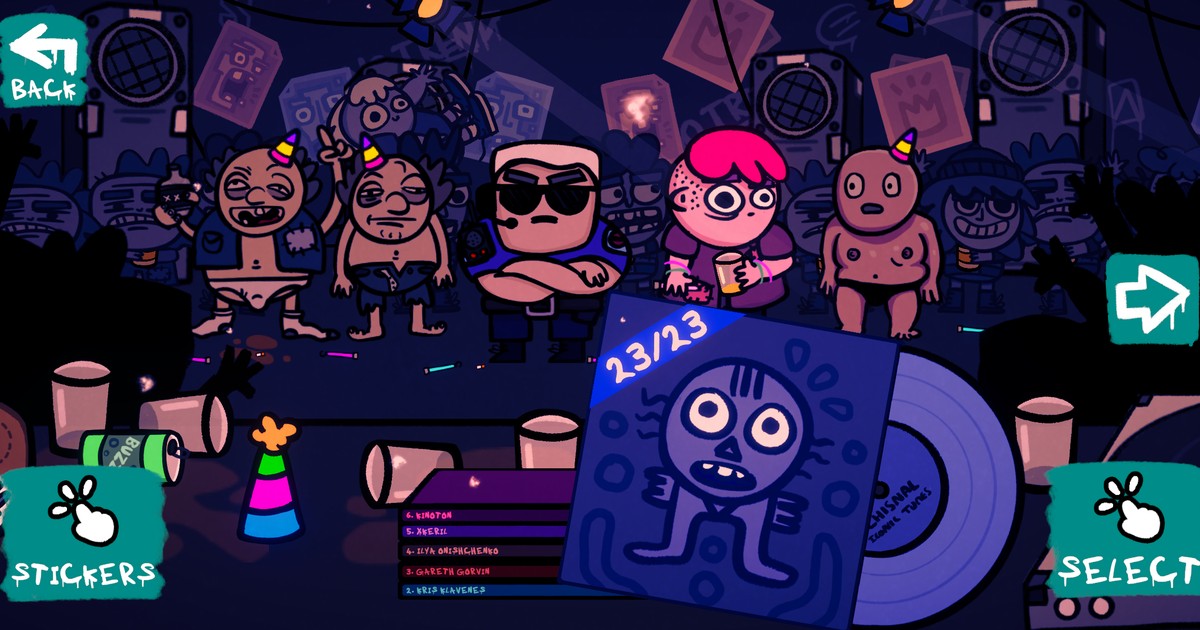
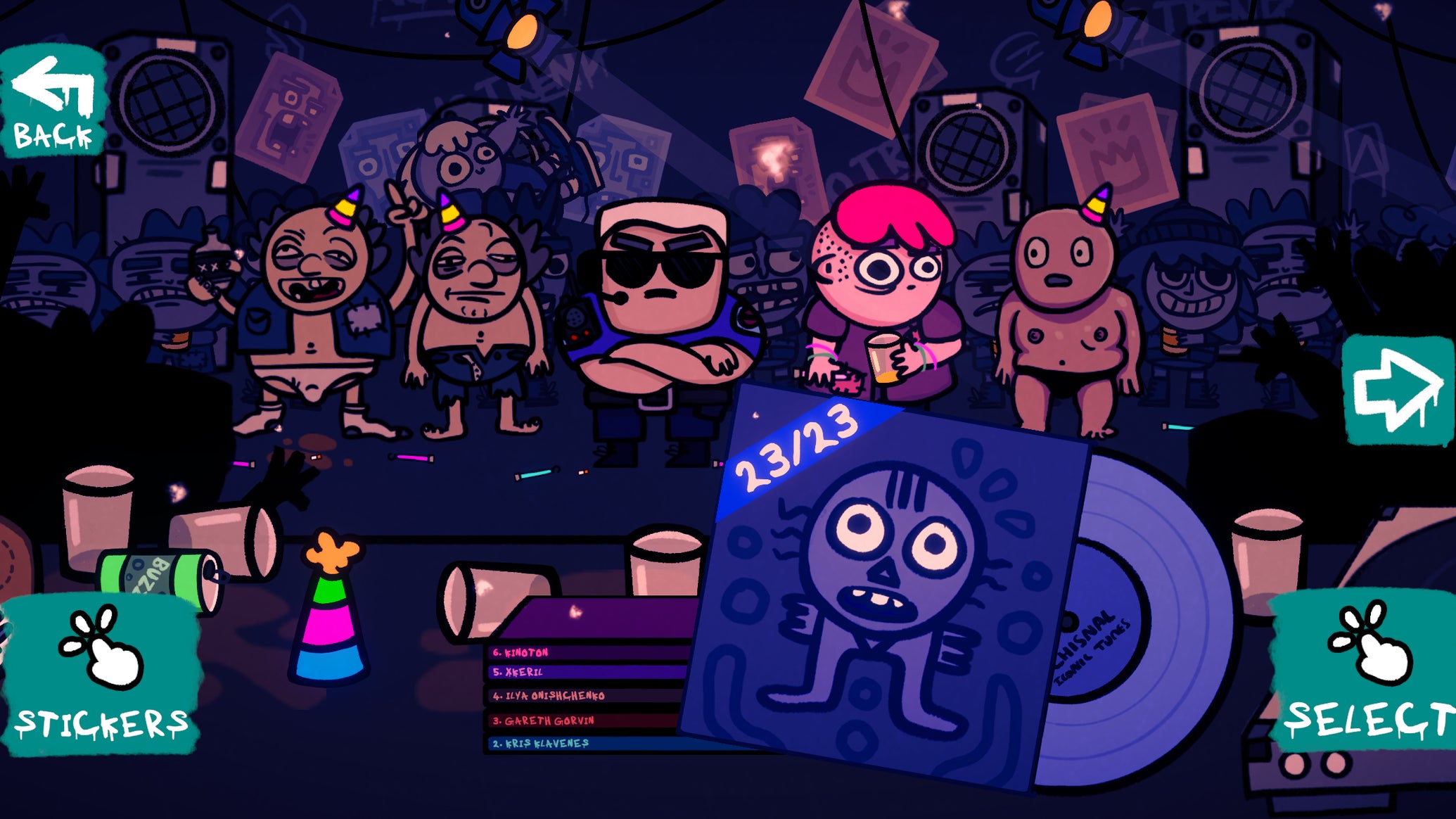 Image credit: Miracle Tea / Eurogamer
Sokoban games are those puzzlers that are all about pushing blocks around. They're spatial challenges at their most fiendish. I gather that the original Sokoban took place in a warehouse, and you were shifting crates back and forth. The latest iteration I've played is set in a nightclub, and that turns out to be a truly inspired choice of location.
There are a couple of reasons why Club Soko has clicked with me quite so well. The first is just the sheer thrill of delivery. This is a nightclub delivered through goofy cartoon characters with thick felt pen outlines, and you can hear the expectant thud of music echoing through walls from the loading screen. Each suite of challenges sees you navigating a series of dance floors, with success leading you to a trap door that takes you deeper down into this dark, sticky complex. There's something gloriously oppressive at work, in other words: the crowd pushes close, you feel the building and its tiers of dance floors stacked high above you. All of Club Soko kind of leers in at you with a goofy grin as you play.
But it's not just the presentation. One of the things I often struggle with in the information-rich worlds of Sokoban games is remembering what the various parts of each level do. You're basically given a grid in these games, and you need to clear a path through it. Because this grid is a dance floor in Club Soko, most of the obstacles are other dancers or members of staff. For some reason, this oddball personification makes it easier for me to keep track of how everything works.
So bouncer types will push you away from the squares immediately next to them. A certain kind of clubber will grab you and move you one square to the left, while another will move you one square up. Later on you get metallers who will collide with you when you enter their row and rush you all across the screen until you reach an obstacle and stop. Learning how to navigate worlds filled with combinations of all these people is the main event here.
And because there's always a hatch square that you're aiming for, a good starting strategy is to work backwards. I know that hatch square is guarded by a bouncer, so I'm going to need to push an obstacle into position on the other side, so the bouncer can't push me away. But that obstacle is guarded by another bouncer, or one of the metallers... Onwards and outwards, I plan approaches, working my way around the grid, remembering that core rule of Sokobans in general: you can push obstacles but cannot pull them.
Compact levels means that I'm never too overwhelmed by the challenges I face, and the pushing and shoving that makes up the game is delivered with some wonderfully rubbery animation. It's a game of being jostled relentlessly by a crowd that sort of doesn't know that you're trying to be a part of it. Sokoban games often have an intellectual fingerprint in the way that they like to arrange their specific challenges, but this one has a genuine feel to it as well, a sweaty, elbowy texture.
All of this is great, but what really sells me each time I play is the amount of secrets the game contains. If you can get off the grid of the dancefloor, you can often pick a path through the crowd and find a secret exit leading to a secret level. Some of these are wildly challenging - the ones with the mimes who mirror each move you make are particularly brutal.
But these secrets also tie into the theme so beautifully. You're exploring this weird, dark club, with music pulsing through the walls and glow sticks crushed underfoot. Who knows what kind of hidden spaces a place like this might contain?
What's Your Reaction?
 Like
0
Like
0
 Dislike
0
Dislike
0
 Love
0
Love
0
 Funny
0
Funny
0
 Wow
0
Wow
0
 Sad
0
Sad
0
 Angry
0
Angry
0








Comments (0)