

Data center construction spending in US surpasses airports, ports, and transit combined
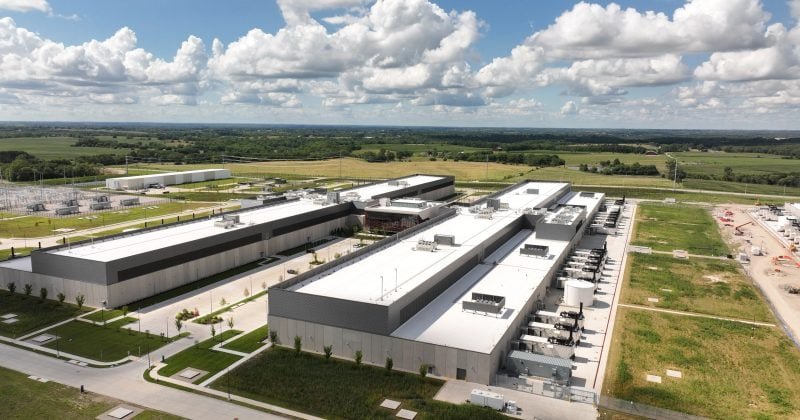
For the first time in recorded history, the US is pouring more money into data centers than into airports, ports, and mass transit combined.
According to US Census Bureau data, data center construction hit a seasonally adjusted annual rate of $50.7 billion in April 2026. Transportation infrastructure spending, which covers airports, marine terminals, and mass transit (but not highways), came in at $49.3 billion.
A 344% surge since 2020
Private data center construction has increased 344% since 2020. Year-over-year growth was running at roughly 28-30% as of April 2026. Data centers now account for 2.3% of total US construction spending.
The driving forces are familiar by now: artificial intelligence and cloud computing. Hyperscale operators, the Microsofts and Amazons and Googles of the world, are in an arms race for compute capacity. Training large language models and running inference at scale requires physical infrastructure on a staggering level.
What transportation spending tells us
It’s worth being precise about what’s being compared here. The $49.3 billion transportation figure covers airports, ports, and mass transit. It does not include highways and streets, which are tracked separately and represent a much larger category of public infrastructure spending.
Transportation infrastructure spending has historically been one of the largest categories of public construction. It’s funded by government budgets, subject to political negotiations, and constrained by the slow pace of bureaucratic approval. Data center spending, by contrast, is overwhelmingly private. When a hyperscaler decides it needs another campus of server halls, the timeline from decision to groundbreaking is measured in months, not decades.
Why crypto investors should pay attention
Data centers are among the largest consumers of electricity in the country, and their explosive growth is already reshaping power markets. Bitcoin miners have long competed with data centers for cheap energy access. As hyperscalers lock up power purchase agreements and drive new generation capacity onto the grid, the dynamics of that competition shift. In some cases, mining operations have already pivoted to offering AI compute services because the economics became more favorable.
When private capital reallocates at this scale, at 344% growth over six years, it reshapes entire supply chains. Semiconductor demand, fiber optic cable production, cooling system manufacturing, and land prices near power substations all get pulled into the orbit of this buildout.
Disclosure: This article was edited by Editorial Team. For more information on how we create and review content, see our Editorial Policy.
What's Your Reaction?
 Like
0
Like
0
 Dislike
0
Dislike
0
 Love
0
Love
0
 Funny
0
Funny
0
 Wow
0
Wow
0
 Sad
0
Sad
0
 Angry
0
Angry
0











Comments (0)