

Kodak Posts Its Fourth Straight Quarter of Growth, and Film Is Carrying the Load
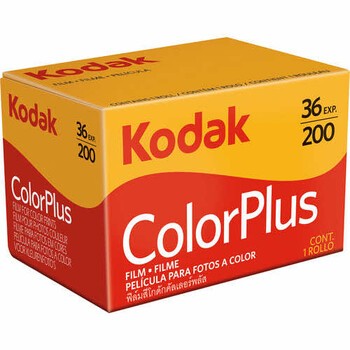
Kodak returned to a profit in the second quarter of 2026, with revenue of $311 million and net income of $17 million, up from a $26 million loss a year earlier. The company's film and specialty-chemicals unit grew 40 percent, faster than any other part of the business.
The numbers come from Kodak's second-quarter earnings release, filed alongside its 10-Q. Kodak reported consolidated revenue of $311 million versus $263 million in Q2 2025, an 18 percent jump. Gross profit jumped 61 percent to reach $82 million, pushing the gross margin up to 26 percent from the prior 19 percent. Operational EBITDA, a non-GAAP figure the company relies on, rose to $36 million from $9 million. The Advanced Materials and Chemicals segment, which includes film, brought in $105 million, a 40 percent increase, while the larger Print segment grew 10 percent to $195 million.
That is a sharp reversal from a year ago. In its Q2 2025 filing, Kodak disclosed that its finances raised "substantial doubt about the company's ability to continue as a going concern," because it had roughly $500 million in debt coming due and no committed financing to cover it. Kodak framed that language as a required accounting disclosure tied to loan timing, not a sign it was shutting down, but the stock still fell hard on the news. Executive Chairman and CEO Jim Continenza later told CNBC the company "could have done a better job" explaining it, calling the disclosure a "timing issue." The company resolved that going-concern language by November and, in December, completed the reversion of its overfunded U.S. pension plan, which released more than a billion dollars in excess assets and returned a large chunk to Kodak. That cash is what let it pay down debt.
Kodak has been doing exactly that. It made $100 million in term-loan principal repayments in the first half of 2026, cutting long-term debt to about $108 million from $208 million at the end of 2025. The quarter closed with $290 million in cash on hand and a net cash position of $180 million. Continenza described the quarter in one phrase, "stability and growth," and said the company is "entering a new phase in Kodak's transformation where we have the operational and financial leverage to focus on growth." He also credited the revival in motion picture film, noting that recent major releases were shot on Kodak stock. Multiple 2026 Oscar-recognized films, including "One Battle After Another" and "Sinners," used it.
According to CineD, the clearest signal on film did not come in the earnings release itself but in a capital-allocation document published alongside the call, in which Kodak commits to "continue to maximize film volumes by investing in product innovation and expanding capacity" for what it calls its highest-growth segment. CineD's reporting is careful about what that actually is. There is no dollar figure, no hiring plan, and no specific project attached, so you should read it as stated intent rather than a funded commitment. That distinction matters because capacity, and the lead times that come with it, has been a recurring frustration on sets and at labs for years.
The context around this is a genuine, measurable comeback for analog. Kodak has said consumer film demand roughly doubled over five years, and it ran a five-week Rochester plant shutdown in late 2024 to upgrade its film-sensitizing equipment in the dark, work it framed as an expansion. Much of the hiring and bottleneck has been in film finishing, the labor-heavy step that turns wide master rolls into the canisters you load. So the growth is real, and the demand is real, but the constraint is physical and skilled: people who know how to make and finish emulsion are not easy to hire, and Kodak has spent years retraining for it. The other caution sits inside the results. The Print segment is still the majority of revenue and remains a mature, slow-growing business, and Kodak flagged that elevated aluminum and silver prices are pressuring margins and inventory costs, while pension income will run below prior-year levels through 2026. If you want more film, the encouraging news is that the company now has the balance sheet to fund it. Whether it converts that leverage into actual coating and finishing capacity is the thing to hold Kodak to.
What's Your Reaction?
 Like
0
Like
0
 Dislike
0
Dislike
0
 Love
0
Love
0
 Funny
0
Funny
0
 Wow
0
Wow
0
 Sad
0
Sad
0
 Angry
0
Angry
0







Comments (0)