

Folarin Balogun addresses red card suspension controversy during World Cup
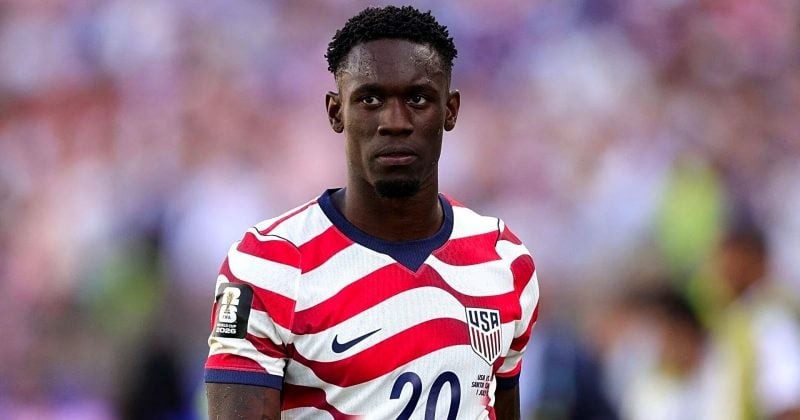
Folarin Balogun knew the moment the card went up that things were about to get complicated. What he probably did not anticipate was just how far the complications would reach.
The 25-year-old USMNT striker received a straight red card on July 1, 2026, during a round-of-32 match against Bosnia and Herzegovina in Santa Clara, California, after a foul on defender Tarik Muharemovic. Under standard FIFA rules, that red card carries an automatic one-match ban. Simple enough. Except what happened next was anything but.
The ruling that changed everything
FIFA’s Disciplinary Committee intervened with a decision that had no real precedent at a World Cup: the one-match suspension was placed under a one-year probationary period, effectively suspending the suspension. Balogun was cleared to play in the round-of-16 match against Belgium.
The legal mechanism used was Article 27 of FIFA’s Disciplinary Code, which does allow for sanctions to be conditionally suspended.
In a July 14 interview, Balogun acknowledged the obvious. He said he knew the ruling would generate controversy and that he could sense tension building within the squad as scrutiny intensified around the decision. His word for it: “a bit of nerves” among his teammates.
Who actually made the call
Here is where the story gets genuinely uncomfortable for FIFA. Reports emerged suggesting the decision was not made by the full 18-member FIFA Disciplinary Committee. Instead, the ruling reportedly came from a single official: FIFA Disciplinary Committee Chairman Mohammad al Kamali.
Reports also surfaced suggesting that U.S. political entities, including alleged influence traced back to the White House, may have played a role in shaping how the committee approached its review. FIFA has not confirmed those reports, and the specifics remain disputed.
What this means beyond the pitch
The 2026 World Cup, co-hosted by the U.S. for the first time since 1994, is the largest in the tournament’s history. That scale amplifies every questionable call, and a disciplinary ruling that benefits the host nation’s most marketable forward is exactly the kind of thing that generates lasting reputational damage regardless of its technical legality.
If a single committee chair can unilaterally suspend a red card ban at a World Cup, under pressure that may or may not have originated from a government, then the integrity of FIFA’s disciplinary process is not a procedural guarantee. It is a preference.
Disclosure: This article was edited by Editorial Team. For more information on how we create and review content, see our Editorial Policy.
What's Your Reaction?
 Like
0
Like
0
 Dislike
0
Dislike
0
 Love
0
Love
0
 Funny
0
Funny
0
 Wow
0
Wow
0
 Sad
0
Sad
0
 Angry
0
Angry
0









Comments (0)