

France and Germany agree to disagree, ditch joint next-gen Euro fighter
bootnotes
Aircraft at core of the Future Combat Air System canned as parties could not decide who leads on the work
One of Europe’s two major next-gen fighter aircraft programs has been hit hard by differences between France and Germany, the two main participants, leaving the UK-Italy-Japan's Tempest as the main contender.
Reports say that the Future Combat Air System (FCAS, or Système de Combat Aérien du Futur – SCAF – in French) has been shelved by German Chancellor Merz and French President Macron.
The program dates back to at least 2017, and was expected to produce a test flight of a technology demonstration airframe by 2026 or 2027, with the aircraft coming in to operational service by 2040.

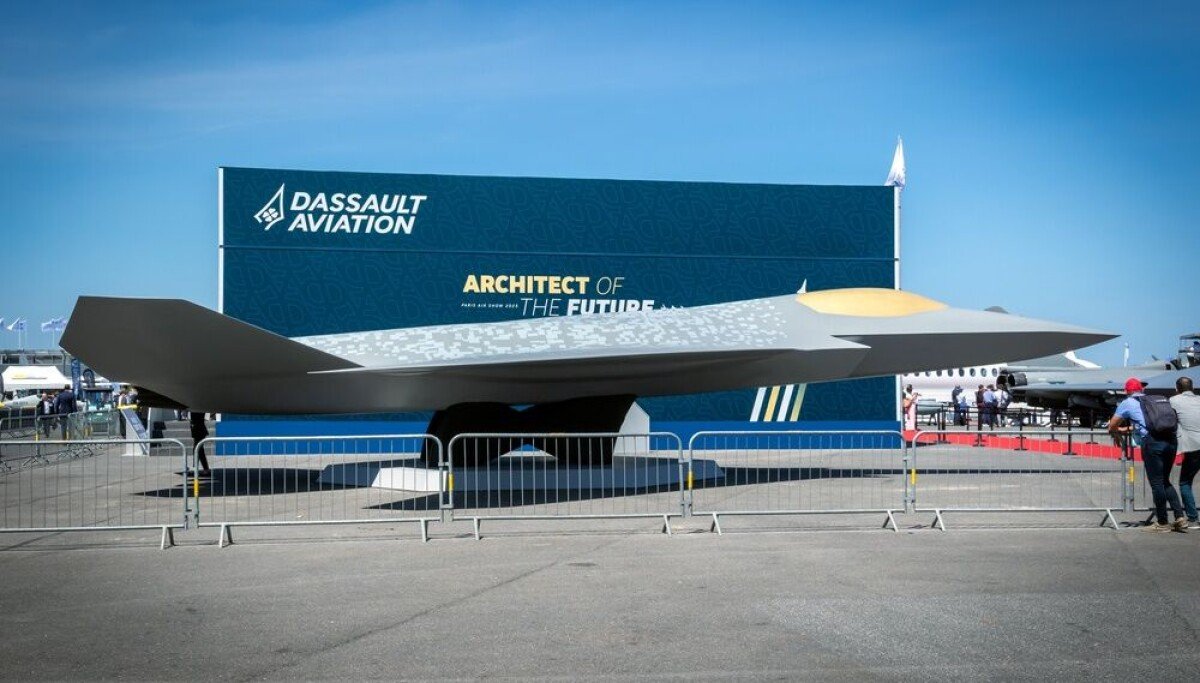
A full-scale mock-up of the Future Combat Air System (FCAS) next-generation fighter is displayed outdoors at the Paris Air Show in June last year Pic credit: VanderWolf Images/Shutterstock
According to German publication Der Spiegel, the French firm Dassault and the European Airbus group could not agree on how to divide up the work on the project, nor on the patent rights for new developments.
However, it is also understood there were differences in the requirements, with France needing a replacement for the Rafale jet that must be capable of operating from an aircraft carrier, while the Germans were beginning to question the need for any crewed fighter aircraft in light of drone developments.
French publication Le Monde says Merz and Macron "reached the shared assessment that the companies will not be able to come together on building a joint combat aircraft.” It goes on to say that other parts of the wide-ranging project will continue.
This refers to FCAS being more than just about a single aircraft; the program also envisioned drone aircraft to accompany the crewed fighter, and a communications system "combat cloud" to link them together, described as a "nervous system that networks aircraft, drones and other components into an integrated whole."
The program also drew participation from other European nations, such as Spain and Belgium, and it isn’t clear what these nations will choose to do next. It is likely that France will pursue its own next-gen aircraft that meets its own requirements, as happened with Rafale, while the Financial Times reports that Airbus is keen to lead a consortium to develop a new pan-European fighter jet to replace FCAS.
We asked both Dassault and Airbus to comment for this article.
There is another next-gen combat aircraft project already underway: the Global Combat Air Program (GCAP), which is a tri-partite effort between the UK, Italy and Japan. This aims to replace the Eurofighter Typhoon in service with the British and Italian air forces, and the Mitsubishi F-2 operated by Japan. The British version of the jet is currently known as Tempest.
GCAP was proceeding well, but the current UK prevarication over defense spending is proving to be a roadblock to ongoing development, as a long-term multinational contract for the project cannot be signed until the Starmer government pulls its finger out and publishes its delayed defense investment plan.
If all goes well, GCAP/Tempest is expected to enter service by 2035, but the planned 2027 date for a demonstrator aircraft to fly is already looking unlikely.
Elsewhere, the US is developing its own sixth-generation fighter under the Next-Generation Air Dominance (NGAD) program, to be built by Boeing as the F-47 and expected to enter service possibly as soon as the early 2030s.
Questions have been raised over whether this will be chosen by European air forces, however, President Trump previously warned that the capabilities of any exported aircraft would be deliberately downgraded.
This follows issues with the in-service F-35, which has seen long delays in key software upgrades, preventing the RAF and Royal Navy from using European-made weapons with their aircraft. ®
What's Your Reaction?
 Like
0
Like
0
 Dislike
0
Dislike
0
 Love
0
Love
0
 Funny
0
Funny
0
 Wow
0
Wow
0
 Sad
0
Sad
0
 Angry
0
Angry
0









Comments (0)