

Freelance Photographers Balk at New Wall Street Journal Contract
The Wall Street Journal says it is keeping pace with technology and protecting its photography archive. But hundreds of freelancers — anxious about intellectual property ownership — object to the Journal’s new contract and are withholding their services.
“It is perhaps the most unified and the most angry I have ever seen the photojournalism community, and may be a bellwether for the visual-media industry,” says freelancer Daniella Zalcman in an article with her byline published July 8 by Columbia Journalism Review.
Background
In November, the Journal informed freelance photojournalists about its revised standard contractor agreement. Freelancers objected to several points. Since then, the Journal has increased its day rate.
Freelancers are opposed to other provisions: “A change in the ownership terms for images produced on assignment, and language that allowed the Journal to sublicense images with no restrictions and no exclusion for companies developing AI technologies,” wrote Zalcman.
Zalcman, a documentary photographer based in New Orleans, is a Catchlight Fellow, a multiple grantee of the National Geographic Society and the Pulitzer Center on Crisis Reporting, a fellow with the International Women’s Media Foundation, and the founder of the nonprofit Women Photograph.
She said 650 freelance photographers have signed onto a protest organized by a group called Your Visual Colleagues, which describes itself as an anonymous collective representing freelance photographers.
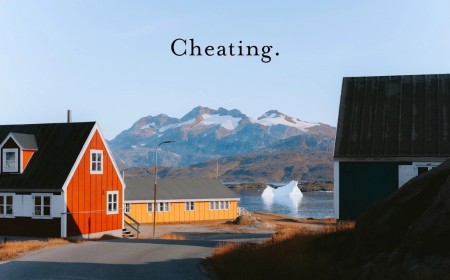
Your Visual Colleagues, which has more than 2,000 followers on Instagram, posted this image and message:
Withholding services from the Journal is a tough choice, say protesting freelance photographers, because they need the work but feel compelled to take a stand.
Zalcman’s article quotes California-based photographer Brian Frank and New Orleans-based Annie Flanagan.
Frank, who has worked for the Journal nearly two decades, told Zalcman: “The whole trade-off when I got into this business is: if you’re going to freelance, you’re going to own your own work outright. Now they want to own the work and we don’t get job security. It’s completely insane.”
American Society of Media Photographers (ASMP) on the Controversy
Thomas Maddrey, CEO of the American Society of Media Photographers and its former Chief Legal Officer, says contractual language is controlling, “verbal assurances are not enough.” He points out that corporate representatives who make verbal assurances can leave their positions. Maddrey provided a detailed quote to PetaPixel, presented in full below.
These issues are important and these photographer’s voices should be heard. Works made for hire (WMFH) agreements target the only provision in U.S. copyright law that strips the ownership of the images created from the photographer—this should be a last resort, not an opening gambit. And when the alternative to signing is to simply not be hired, there is no negotiation at all, just an top-down edict. WMFH is a truly binary option — either I own the intellectual property (the copyrights) or I don’t. That is a threshold matter. And it is from that point that all the other rights, including the right to offer back a “joint copyright,” stem.
The “balance and bargain” that freelancers have relied upon is upended with an agreement like this. In exchange for the lack of steady work, the lack of security, the lack of benefits, the lack of employee protections… at the very least the offset for that was that the freelancer owned their copyrights. Here not only do they have no protections for all of the above, they also do not have the single most important assets any creator can have, their copyrights. The disrespect towards photographers and the devaluing of their work and craft is deafening.
The aims of WSJ can be met in a manner that is far more fair to the photographers and creators, but those avenues for mutual benefit were never given a chance. As the Your Visual Colleagues group notes, peer organizations like the New York Times face the same pressures that the WSJ do, but NYT were able to find a more fair path forward. Photographers are not asking for the moon, or even what most would consider truly “fair”. At a minimum, they are asking for what other publications have already established as a viable option.
But the AI licensing deals that many media groups are entering into are a double-edged sword. First, it is an unequivocal priority of ASMP that photographers be consulted (and compensated) when their work is used in an AI training library or licensed or sublicensed to AI companies. However, as long as the photographers are part of the conversation, we want companies to be properly licensing their work for this so that photographers can benefit and have a voice.
This is not (and should not be) a “head in the sand” moment. The overt theft of images we’ve been facing in the past five years is a worse outcome than an AI licensing deal. But an AI licensing deal that photographers have no say about, no choice in, and no benefit from is no positive at all. Yet, at least in the most recent agreement from WSJ we read, AI is not specifically mentioned in this agreement — just the ability for the company to unilaterally sublicense the works without consulting the photographer. That leaves a massive AI-shaped hole in the contract, and for photographers and contributors who do not have these potential outcomes in mind when they read the agreement, they may not realize just what they are giving up. There needs to be more transparency and more clarity across the board.
Ultimately, there is a significant imbalance of bargaining power between a media giant like WSJ (and parent company Dow Jones) and a freelance photographer, and we would encourage the WSJ and other media companies to work with ASMP, NPPA and similar groups to engage this community when they are developing these new agreements so that they can create something that is fair to creators from the get go. We are here to talk, because a creative ecosystem that is fair to photographers is the only path that allows for growth, and not contraction, of the visual industries.
The Wall Street Journal Position
WSJ says contract revisions were “essential for protecting the integrity of The Wall Street Journal’s online archive and ensuring the historical permanence of these important photos that we commissioned.”
Further, The Journal will assign a joint copyright to photographers who can “participate in the financial market for their work.”
NPPA: The Big Picture
Mickey Osterreicher, longtime general counsel at the National Press Photographers Association, says the freelancer/Wall Street Journal dispute points to broader issues.
“I think the debate is less about any single provision and more about a fundamental question: Who controls the future use of journalistic work, and who benefits from that use?” Osterreicher told Zalcman.
“That is a conversation that extends well beyond The Wall Street Journal and one that is like to become increasingly important as technology continues to evolve.”
About the author: Ken Klein lives in Silver Spring, Maryland; he is retired after a career in politics, lobbying, and media including The Associated Press and Gannett in Florida. Klein is an alumnus of Ohio University and a member of the Dean’s Advisory Council of the Scripps College of Communication. Professionally, he has worked for Fort Myers News-Press (Gannett), The Associated Press (Tallahassee), Senator Bob Graham, and the Outdoor Advertising Association of America (OAAA).
Image creditsHeader image created using an asset licensed via Depositphotos.com.
What's Your Reaction?
 Like
0
Like
0
 Dislike
0
Dislike
0
 Love
0
Love
0
 Funny
0
Funny
0
 Wow
0
Wow
0
 Sad
0
Sad
0
 Angry
0
Angry
0









Comments (0)