

Ghost in the Shell directors explain why the new anime is the most faithful adaptation yet

Published Jul 8, 2026, 10:00 AM EDT
Masamune Shirow's seminal manga comes to life onscreen like never before
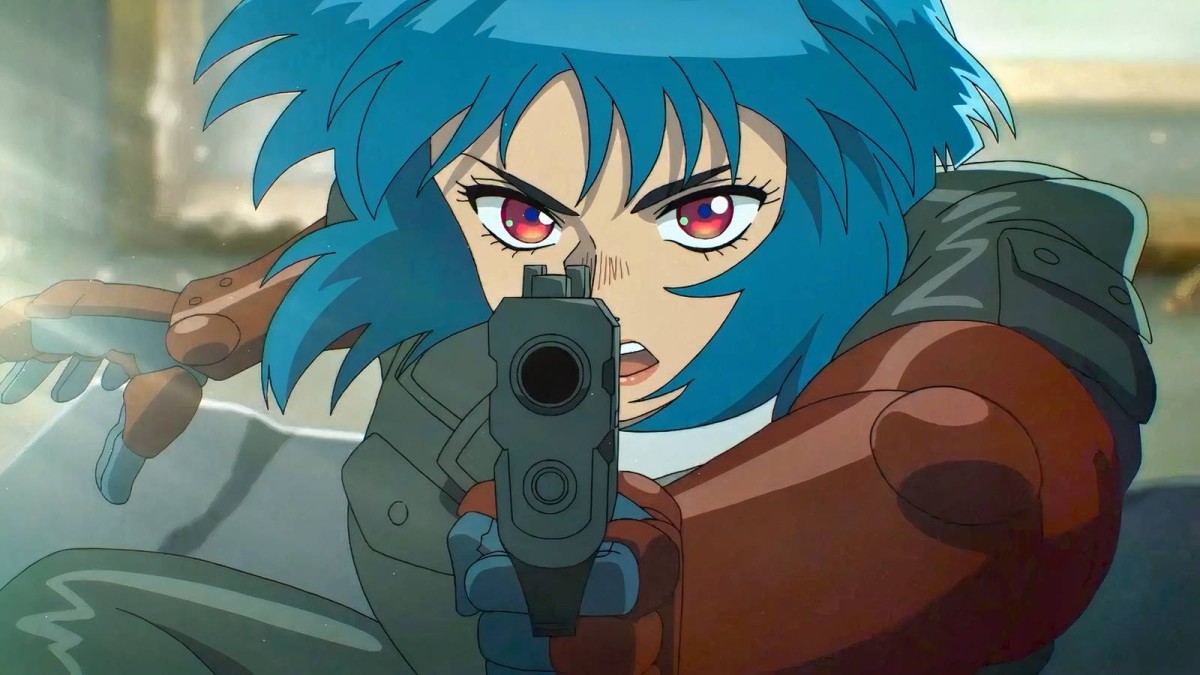
 Image: Science Saru/Prime Video
Sign in to your Polygon.com account
After more than three decades of films, television series, and reinterpretations, The Ghost in the Shell has become a franchise that's constantly evolving. Mamoru Oshii's 1995 film redefined cyberpunk animation. Stand Alone Complex leaned into police procedural storytelling. SAC_2045 retooled Motoko Kusanagi’s background. Every adaptation has found a different way to reinterpret Masamune Shirow's seminal manga.
Science Saru’s new anime, which premieres July 7 on Prime Video, is taking a markedly different approach. Rather than asking what The Ghost in the Shell should become this time, director Mokochan says the production asked: what if they stopped trying to reinterpret it altogether? Speaking with Polygon through an interpreter at Anime Expo, Mokochan and character designer Shuhei Handa said the guiding philosophy behind the series was to approach Shirow's original manga "one-to-one" — not as inspiration, but as the blueprint.
"For this new series, we completely based it on the original manga," Mokochan said. "The previous series all developed their own different styles and interpretations, but this time we wanted to return directly to the original. Even people who have never experienced Ghost in the Shell before can naturally understand the original work through this series."
That philosophy extended far beyond the script. For longtime fans, one of the most immediately noticeable changes is the show's visual identity. Where previous adaptations embraced increasingly realistic character designs, Mokochan said the new series intentionally returns to the language of Shirow's pages, evoking this wonderfully colorful, neo-1980s vibe in everything from background art to characters’ fits. "Ghost in the Shell anime, especially Stand Alone Complex, has always leaned toward a realistic art style," he said. "This time, our concept was to make it feel like the manga."
Handa echoed that approach, explaining that the team's goal wasn't to redesign Major Motoko Kusanagi for a new generation but to recreate Shirow's original vision as faithfully as possible. "We tried very hard to completely portray the Major in the same way as Shirow Masamune did in the original manga," he said, and it shows. Motoko is far more lively, funny, spunky, and expressive in the new series, drawing out Shirow’s comedy quite beautifully.
Perhaps the biggest surprise, though, came after Mokochan returned to the manga himself. Preparing for production meant rereading Shirow's work repeatedly, not simply to refresh story details but to better understand the author's thinking. What struck him wasn't just how many ideas the manga anticipated decades before they entered the mainstream, but Shirow's attitude toward them.
"When I reread the original manga, I was surprised by how accurately it understood technologies like AI," Mokochan said. "It was written more than 30 years ago, but it foresaw many of the technologies we have today."
The prediction itself wasn't what stayed with him. According to Mokochan, Shirow approached emerging technology with remarkable restraint. "He didn't think about new technology in a positive way or a negative way," Mokochan said. "He viewed it very neutrally." That perspective became one of the production's guiding principles. "I wanted to face today's technology in the same way as the original creator."
 Image: Science Saru/Prime Video
Despite adapting one of sci-fi’s most defining stories about artificial intelligence and cybernetic bodies, the team at Science Saru avoided relying on cutting-edge production techniques. Much like Yoshitaka Amano’s ZAN, The Ghost in the Shell called for a very different kind of animation style to match Shirow’s original project. "We didn't use so many new technologies," Mokochan said. "We mainly used traditional hand-drawn techniques."
Instead, the artists focused on something a little more natural (and, perhaps, exciting). "Our concept was based on the human body," said Handa, who also served as the show's Executive Animation Director. "We wanted to capture real human movement and all of its details. The human-analog style was the best way to express this." Fans will agree, the human body is definitely on full display in the series — especially Motoko’s posterior, a side of the character Shirow wasn’t afraid to capture often, in full detail at that.
 Image: Prime Video
Handa said that philosophy even extended into the compositing process. Rather than polishing every frame into digital perfection, the staff intentionally embraced visual imperfections, preserving noise and distortions created during production because they added character to the final image. "It's probably not the newest technology," he said, "but when we layered the compositing, we intentionally kept the errors and the noise. That became something very interesting."
Asked whether it was difficult to balance Shirow's work with their own creative instincts, Mokochan said they removed that question from the process almost immediately. "We decided from the very beginning not to add anything new," he said. Mokochan believed originality would emerge naturally if the staff remained committed to Shirow's work. "If we always kept the originality that we promised at the beginning," he said, "everything would come out naturally."
 Image: Science Saru/Prime Video
It's a surprisingly humble philosophy for a franchise that has inspired so many bold reinterpretations over the past 37 years. Rather than competing with previous adaptations or trying to modernize Shirow's ideas for the AI era, Science Saru’s The Ghost in the Shell argues that the original manga still has plenty to say on its own, which even extends beyond its lessons on technology and its role on humanity.
While revisiting the manga, Mokochan said one lesson resonated with him more than any prediction about artificial intelligence: the realization that even someone as capable as Major Motoko Kusanagi gradually discovers there are limits to what she knows. He said the experience of adapting Shirow's work reinforced the idea that people make decisions with incomplete knowledge every day — a perspective he believes feels just as relevant today as it did when the manga first debuted.
 Image: Science Saru/Prime Video
For a series that helped define the modern conversation around artificial intelligence, that may be its most enduring insight. The Ghost in the Shell never insisted that technology would save humanity or destroy it. It simply invited readers — and now viewers, nearly four decades later — to confront the future without assuming they already know the answer.
Watch The Ghost in the Shell on Prime Video starting July 7. New episodes are released every Tuesday at 10:30 a.m. ET.
What's Your Reaction?
 Like
0
Like
0
 Dislike
0
Dislike
0
 Love
0
Love
0
 Funny
0
Funny
0
 Wow
0
Wow
0
 Sad
0
Sad
0
 Angry
0
Angry
0






Comments (0)