

Hasselblad X2D II vs. 907X 100C: Same Sensor, Very Different Cameras
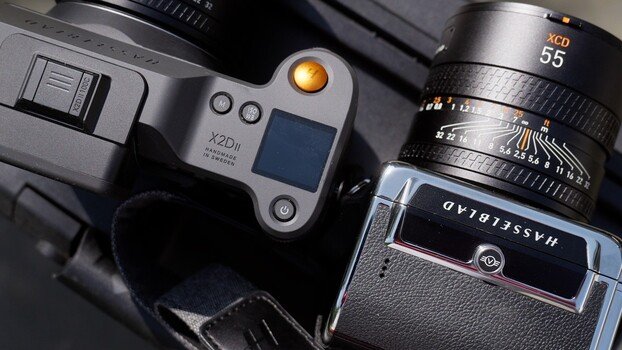
Choosing between the Hasselblad X2D II and the Hasselblad 907X 100C is genuinely difficult, and not just because both cost the same and share the same 100-megapixel sensor. The decision comes down to something more personal than specs, and getting it wrong at this price point is an expensive lesson.
Coming to you from Kai W, this candid, hands-on video skips the usual "do you need medium format" preamble and goes straight at the actual decision. Wong already owns a Hasselblad 500cm and brings that context to bear when assessing the 907X 100C's retro appeal. The 907X is built around waist-level shooting with an LCD, and Wong is direct about the tradeoffs: fewer buttons, a single non-customizable dial on the body, no in-body image stabilization, no continuous autofocus, and a screen that's harder to read in bright sunlight than the X2D II's. Longer or heavier lenses, including zoom lenses, feel front-heavy and unbalanced on the gripless 907X body. You can add an optional grip that also brings extra buttons and two dials, but Wong's take is blunt: if you're going to use the grip most of the time, you might as well buy the X2D II.
The X2D II handles more like a conventional mirrorless camera, with a viewfinder, a tilting screen, and a proper grip. Its LiDAR-assisted autofocus is faster than the 907X's and, more usefully, more reliable in low-contrast and poorly lit situations. Wong notes that the AF speed difference between the two isn't dramatic in good light, but the X2D II also adds subject detection for vehicles, cats, and dogs that the 907X 100C lacks. The stabilization on the X2D II matters more than you might expect at 100 megapixels, where even a 1/60 sec handheld shot can show shake. The 907X, by contrast, requires you to get creative: Wong describes using a neck strap under tension and resting the camera against his chest to steady it at slower shutter speeds.
Street photography is where the comparison gets interesting. Wong uses both cameras for it, and his read on the 907X for street work is more nuanced than a simple dismissal. Waist-level shooting means you're looking down rather than pointing a camera at people, which changes the dynamic with subjects on the street. The 907X also pushes you toward a slower, more deliberate process, and Wong finds that manual focus with the focus aid on the V-series prime lenses suits the camera's character. The 907X rewards patience and a particular shooting style. The X2D II rewards versatility and speed. Wong covers specific lens behavior with each body, including which lenses don't support continuous autofocus on the X2D II, and he gets into the real-world feel of using each camera across different shooting scenarios.
Check out the video above for the full rundown from Wong, including his take on which camera he'd recommend depending on how you actually shoot.
What's Your Reaction?
 Like
0
Like
0
 Dislike
0
Dislike
0
 Love
0
Love
0
 Funny
0
Funny
0
 Wow
0
Wow
0
 Sad
0
Sad
0
 Angry
0
Angry
0










Comments (0)