

How Many Photos Should You Take in a Day?
Burst shooting costs nothing per frame, so after a big day in a new place, it's easy to come home with thousands of files and an evening of culling ahead. That math feels free until you notice how much of your attention went into pressing the shutter and how little went into looking at the place you traveled to see.
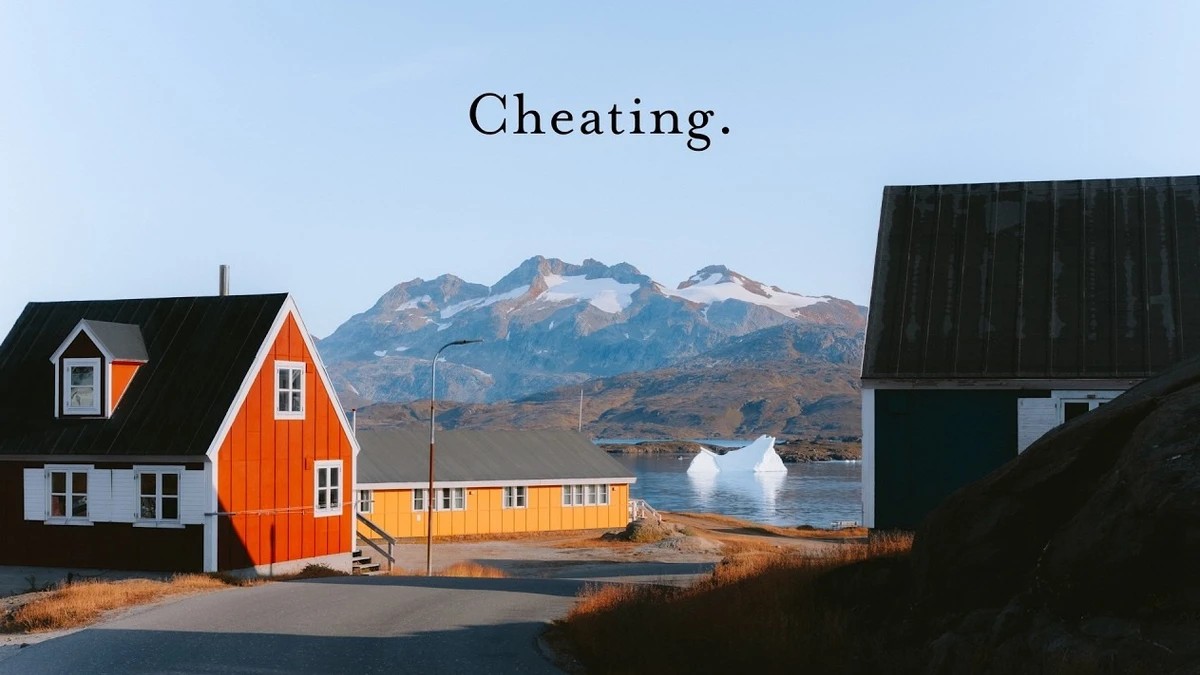
James Popsys used to treat 1,000 to 2,000 frames a day as normal on trips, sometimes more, especially when a penguin was waddling across Antarctica or a moped needed to land in exactly the right spot on a street in Vietnam. He always figured the volume was harmless, since a digital frame costs essentially nothing. Over the past couple of years, he started asking himself whether that habit amounted to cheating. He took the question to the east coast of Greenland, around Tasiilaq, an area he first visited about eight years earlier and remembers as the first place that felt like another planet. Places that remote make him want to overshoot, and this time he deliberately held back. His average dropped to around 250 frames a day. That's still a lot, he says, but the trip felt better and he's happier with what he brought home.
Time is the first cost he identifies. Culling thousands of images every night after a full day outside is its own job, and anyone who has done it on a trip knows how fast it eats the evening. Popsys goes further and separates taking photos from photography. Pressing the shutter sits in the middle of a longer process, with curiosity, anticipation, and inspiration on one side and pride or, more often, despair on the other. The longer your eye stays glued to the viewfinder, the less time you spend scanning a scene for something more interesting than what you're already pointed at. You also lose time to simply be somewhere remarkable. A comment he read under a filmmaking video sharpened this for him: a teacher who tells students they can make any decision they like, as long as the viewer believes they did it on purpose.
Camera makers have spent the last few years pushing in the opposite direction. Electronic shutters on many current mirrorless bodies reach 30 frames per second or more, and pre-capture modes buffer frames before you finish pressing the shutter button, so one press can produce dozens of files. Those tools earn their place in wildlife and sports, where a wingbeat or a peak moment lasts a fraction of a second. In landscape, street, and travel work, the deciding factor is usually where you stand and what you include, and frame rate has no answer for that. You can borrow the discipline Popsys describes without changing any gear. Switch the drive mode to single shot for a walk, or give yourself a fixed number of frames per location, the way a roll of 120 film gives you somewhere between 8 and 16 exposures depending on format. Medium format film shooters work this way by default, and Popsys says film taught him that he concentrates harder, stays more present, and enjoys a scene more when each frame counts. A budget moves the decision to before the exposure, while you can still walk 10 steps to the left. Without one, the choice tends to happen later at a laptop, picking between 40 nearly identical frames.
Shooting less didn't make him immune to mistakes, and he pulls up a couple of his own frames to prove it. In one, a roof line sits far too close to the ridge line behind it, a collision he missed while concentrating hard on everything else in the scene. He points out that this is exactly the kind of detail he'd miss far more often while firing frame after frame, and that the whole point of slowing down is to leave room to catch it in the moment. He walks through a second near miss involving the rule of odds, then moves on to the Greenland frames he likes most, including several built around the bold color of the settlements and an abandoned World War II U.S. air base whose leftover equipment still litters the landscape.
The rest of the Greenland frames are in the video above.
What's Your Reaction?
 Like
0
Like
0
 Dislike
0
Dislike
0
 Love
0
Love
0
 Funny
0
Funny
0
 Wow
0
Wow
0
 Sad
0
Sad
0
 Angry
0
Angry
0









Comments (0)