

Sigma Shrinks the f/2.8 Telephoto Zoom for APS-C Cameras
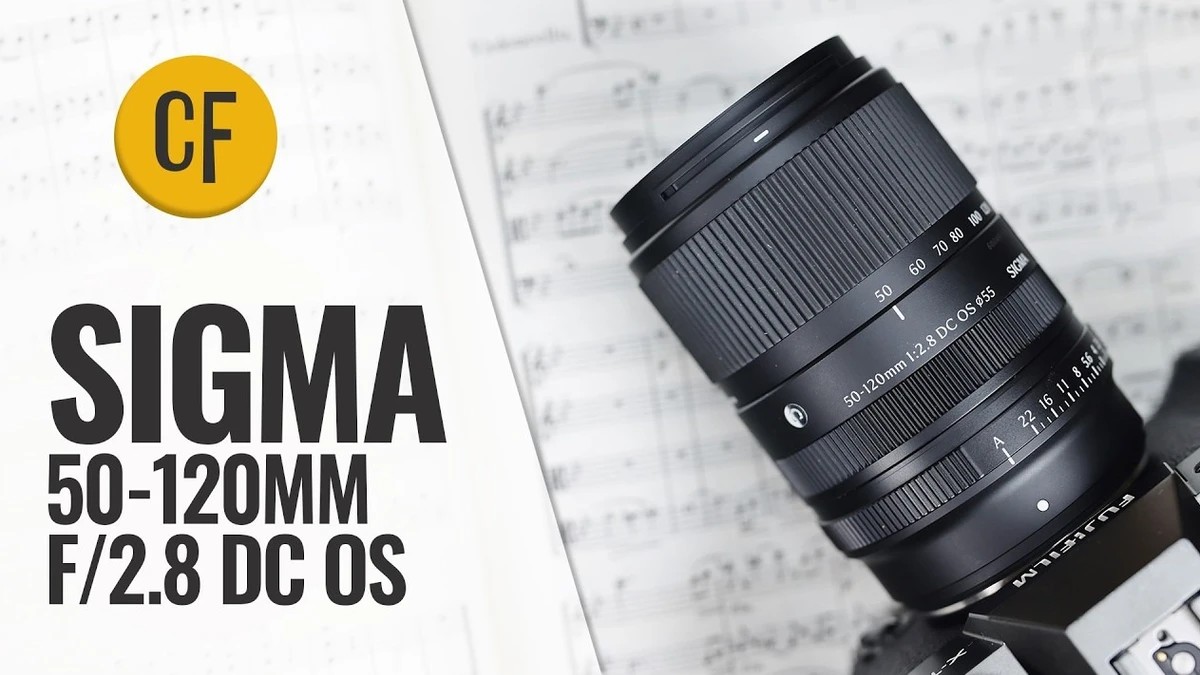
An f/2.8 telephoto zoom is usually the heaviest lens in an APS-C bag, and the Sigma 50-120mm f/2.8 DC OS Contemporary is built to change that. If you shoot Fujifilm, Sony, or Canon crop bodies, a stabilized fast zoom at this size fills a spot that has mostly gone to much bigger glass.
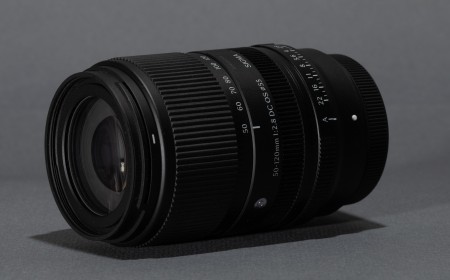
Sigma made the Sigma 50-120mm f/2.8 DC OS Contemporary smaller than the Canon RF 70-200mm f/4 L IS USM, which already counts as compact for its class. It sells for $799 in Fujifilm X, Sony E, and Canon RF mounts. Christopher Frost tests it on a Fujifilm X-T50, whose 40-megapixel sensor asks far more of a lens than the 24- to 26-megapixel sensors in most crop cameras. The body is plastic, the mount is metal with a weather-sealing gasket, and the lens weighs about 400 g. The stabilized elements rattle when the lens isn't on a powered-up camera, which Frost finds unnerving even though nothing is actually wrong. Once it's running, the stabilization makes a dramatic difference in handheld footage, and you toggle it in the camera menu since there's no switch on the barrel.
There's no autofocus/manual switch either, but you do get a plastic aperture ring with third-stop clicks. That ring has a habit of slipping out of the A position and over to f/22 when you don't mean to move it. Video shooters come out well elsewhere: focus breathing is nearly absent when zoomed in and stays very low zoomed out, and the rubberized zoom ring turns smoothly with almost no stickiness. Autofocus is fast and silent, though Frost saw roughly 4 to 5% of his X-T50 frames land slightly off. The lens isn't parfocal, yet it recovers focus so quickly as you zoom that you'd rarely catch it. The included hood is on the shallow side, likely so it still works when reverse-mounted for storage.
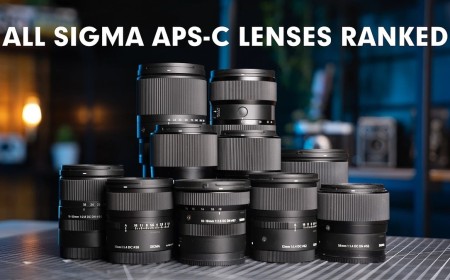
Fast telephoto zooms for APS-C have mostly meant lenses built on the same scale as full frame glass. Fujifilm's own Fujifilm XF 50-140mm f/2.8 R LM OIS WR weighs close to 1 kg, more than double this Sigma, and Sony crop shooters have often been pointed toward full frame 70-200mm lenses that wipe out the size advantage of a small body. Sigma's recent APS-C lineup goes the other direction, designing f/2.8 zooms around the smaller image circle so the lens fits the camera. Pair this one with the Sigma 18-50mm f/2.8 DC DN Contemporary, which shares its 55mm filter thread, and on a Fujifilm or Sony body you have a two-lens kit covering roughly 27-180mm equivalent at a constant f/2.8. That's a kit you'll actually take on a trip where a 70-200mm would stay home. Sensor resolution is the other piece to think through. A 40-megapixel APS-C sensor packs its pixels more densely than a 61-megapixel full frame sensor, so a lens that looks merely good on an X-T50 or a 32-megapixel Canon EOS R7 can look plenty sharp on a 26-megapixel X-T30 II or a 24-megapixel Sony a6400.
At 50mm and f/2.8, center sharpness is good, and f/4 turns it very sharp and punchy. Corners at that end stay softer with some color fringing until about f/5.6, and by f/8, diffraction starts eating into detail on the 40-megapixel sensor. The 80mm setting is the standout, nearly razor sharp in the center wide open, with corners that hold up better than you'd guess from a lens this size. Frost also pushes the lens at 120mm, where wide-open contrast drops and stopping down changes the picture considerably. He then looks at what happens to distortion and vignetting when you shoot raw without corrections, and at a close-focus ability that reaches 1:3 magnification at 50mm while staying sharp from f/4.
The rest of Frost's tests are in the video above.
What's Your Reaction?
 Like
0
Like
0
 Dislike
0
Dislike
0
 Love
0
Love
0
 Funny
0
Funny
0
 Wow
0
Wow
0
 Sad
0
Sad
0
 Angry
0
Angry
0






Comments (0)