In a world where SSDs with up to 256TB capacity are about to enter the scene to compete against hard disk drives that store over 40TB, magnetic tape storage may seem archaic. However, the 25-year-old Linear Tape-Open (LTO) format continues to evolve at a rather impressive pace.
The current LTO-10 generation stores up to 40TB of uncompressed data per cartridge, while HPE, IBM, and Quantum — the companies behind the LTO Program — now envision LTO-14 cartridges with up to 365TB of native capacity. But capacity is not the only advantage of LTO. In fact, the consortium has deliberately slowed its capacity roadmap in a bid to prioritize reliability, cost per terabyte, and manageable backup and recovery times over the previous goal of doubling capacity with every generation.
LTO began in 2000 with the LTO-1 format, which stored just 100GB of data natively and transferred it at 20 MB/s. Since then, capacity increased to 200GB with LTO-2, 400GB with LTO-3, 800GB with LTO-4, 1.5TB with LTO-5, 2.5TB with LTO-6, 6TB with LTO-7, 12TB with LTO-8, and 18TB with LTO-9.
The original LTO-10 media introduced in 2025 increased native capacity to 30TB, whereas an extended-length LTO-10 cartridge announced later increased it further to 40TB.
LTO cartridge capacity has increased by a factor of 400 in about 25 years without changing the form-factor itself. For comparison, the capacity of 3.5-inch hard drives increased by roughly 585 times over the same period, from around 75GB in 2000 to as much as 44 TB today, so tape has evolved at a slower pace. However, LTO has evolved without dramatic changes in internal complexity.
Two scaling vectors
The 40TB LTO-10 cartridge is noteworthy because its additional capacity is enabled by higher recording density and literally longer tape. The LTO-10 format uses 15,104 data tracks (enabled by the new barium ferrite recording layer), up 68.5% from 8,960 tracks with LTO-9, and combines them with higher linear density. To make this possible, LTO-10 uses a redesigned high-bandwidth servo system with a low-mass mechanism that enables the head to follow increasingly narrow tracks accurately, including in environments subject to shock and vibration.
Both 30TB and 40TB LTO-10 media use a strontium-doped barium ferrite (BaFe) recording layer, but the 40TB version uses a new Aramid base film that is thinner and smoother and therefore enables manufacturers to put more tape into the same cartridge. According to MagStor, the thinner substrate increases tape length from approximately 1,035 meters with the 30TB cartridge to around 1,335 meters with the 40TB version. Meanwhile, the 40TB cartridge works with the same LTO-10 drives as the existing 30TB media.
Therefore, modern LTO has at least two major scaling vectors: manufacturers can record more bits on a given area of tape, and can put more tape into a cartridge. Meanwhile, with LTO-10, the consortium had to drop backwards compatibility, which we will detail further within this article.
There appears to be plenty of room left on the tape front. Back in 2020, IBM and Fujifilm demonstrated a strontium ferrite tape technology with an areal density of 317 Gb/in², which they said could theoretically enable a cartridge capable of storing 580TB. The prototype used tracks only 56.2nm wide and a 29nm TMR read sensor, which proved that magnetic tape could reach capacities vastly beyond commercially available LTO products.
Capacity is not everything
Ironically, despite considerable technological headroom, the LTO Program has recently made its roadmap considerably less aggressive.
When HPE, IBM, and Quantum extended the roadmap through LTO-14 in 2022, they expected capacity to roughly double every generation. The plan envisioned 72TB for LTO-11, 144TB for LTO-12, 288TB for LTO-13, and a whopping 576TB native — or 1.44PB compressed — for LTO-14. But that changed in November 2025, when the three companies introduced the new roadmap for LTO that significantly slows down capacity scaling. The current roadmap targets 70TB native for LTO-11, 120TB for LTO-12, 210TB for LTO-13, and 365TB for LTO-14.
While the new roadmap is somewhat less impressive, it does not necessarily indicate that tape technology has encountered a physical scaling wall. The developers claim the revised targets are intended to prioritize reliability, affordability, efficiency, and cost per terabyte. The consortium also specifically says that lowering maximum cartridge capacities should help reduce the amount of time required to store and recover data, which is a legitimate argument even though it looks like an attempt to make a 'feature' out of a limitation.
"AI has turned archives into strategic assets," said Stephen Bacon, Vice President, Data Protection Solutions Product Management, HPE. "The new 40 TB LTO-10 cartridge will help enterprise-class organizations — across healthcare, financial services, media, research, manufacturing, the public sector and beyond — consolidate petabytes efficiently, strengthen cyber resiliency with true offline air-gapping, and keep long-term retention affordable and sustainable."
Bandwidth is becoming one of tape's more obvious limitations. LTO-8 offered 360 MB/s of native bandwidth, LTO-9 increased this to 400 MB/s, and LTO-10 remains at 400 MB/s, although hardware compression can boost effective throughput to as much as 1,200 MB/s when data can achieve the assumed 2.5:1 compression ratio.
As a result, while maximum native cartridge capacity increased from 12TB with LTO-8 to 40TB with LTO-10 — a 3.33X increase — native transfer performance improved by only around 11%. At 400 MB/s, writing 40TB sequentially would theoretically take around 28 hours (without the overheads). Future LTO generations will likely increase performance, but the consortium has not yet published transfer rate targets for LTO-11 and its successors.
No backwards compatibility
One thing to note about LTO-10 is that it has broken a long-standing LTO tradition, which is backward compatibility. Up until LTO-7, new drives could generally read cartridges from two generations earlier and write media from one generation earlier. LTO-8 and LTO-9 reduced compatibility to one previous generation. However, because LTO-10 redesigns its head, its backwards compatibility disappears completely: an LTO-10 drive reads and writes only LTO-10 media, although the 30TB and 40TB cartridges are of course interchangeable.
This creates a natural problem for operators that need to maintain archives for decades. Once they adopt LTO-10, they either must migrate all their archives to the new format from LTO-8 or LTO-9 cartridges, or keep the old drives in their fleet, which may be increasingly difficult.
Demand remains strong
Perhaps counterintuitively, the AI boom could strengthen demand for tape. AI infrastructure produces enormous datasets, but not every training dataset, checkpoint, model, log, or generated asset needs to remain indefinitely on expensive SSDs or HDDs.
LTO capacity shipments reached 160.3 exabytes in 2025, down 9% year-over-year. However, shipments in the first quarter of 2026 jumped 57% YoY, according to figures reported by the LTO consortium. The organization attributed the increase to AI-related data growth, traditional archival demand, cyber-resilient backups, continued LTO-9 adoption, and the beginning of the LTO-10 transition.
"We are seeing unprecedented data growth combined with increasing cost, energy, and cyber resilience pressures across the industry," said Hugues Meyrath, CEO, Quantum. "As organizations adapt to this new reality, tape is increasingly viewed as a strategic component of modern data infrastructure, delivering predictable economics and resilient long-term data retention at scale."
Indeed, tape has a number of fundamental advantages that are not going to disappear any time soon. Tape provides vast capacities at a low cost per terabyte, cartridges consume virtually no power while sitting offline, hardware encryption protects data, and physically removing a cartridge from a drive provides a genuine air gap against network-based attacks. LTO also supports the LTFS file system, which maintains indexing information on tape and makes archived files considerably easier to manage.
Meanwhile, tape's disadvantages are equally fundamental and are not going away: tape is sequential and therefore cannot provide anything resembling the random-access performance of HDDs or SSDs. Although nobody expects something similar from it.
LTO isn't going anywhere
25 years after LTO-1 offered 100GB per cartridge, LTO-10 can store as much as 40TB, and the roadmap calls for 365TB with LTO-14 several years down the road. Perhaps more importantly, laboratory demonstrations indicate that magnetic tape itself has considerable scaling potential beyond today's commercial products. Meanwhile, instead of pushing capacity as quickly as technologically possible, the LTO consortium is now deliberately balancing density with reliability, performance, and cost.
For a storage technology which demise has been predicted repeatedly for decades, LTO not only continues to evolve at a predictable pace, but its adoption is growing, while its relevance remains on a high level. Only time will tell whether it remains relevant for another quarter of a century, but its steady progress certainly increases this possibility.
Anton Shilov is a contributing writer at Tom’s Hardware. Over the past couple of decades, he has covered everything from CPUs and GPUs to supercomputers and from modern process technologies and latest fab tools to high-tech industry trends.


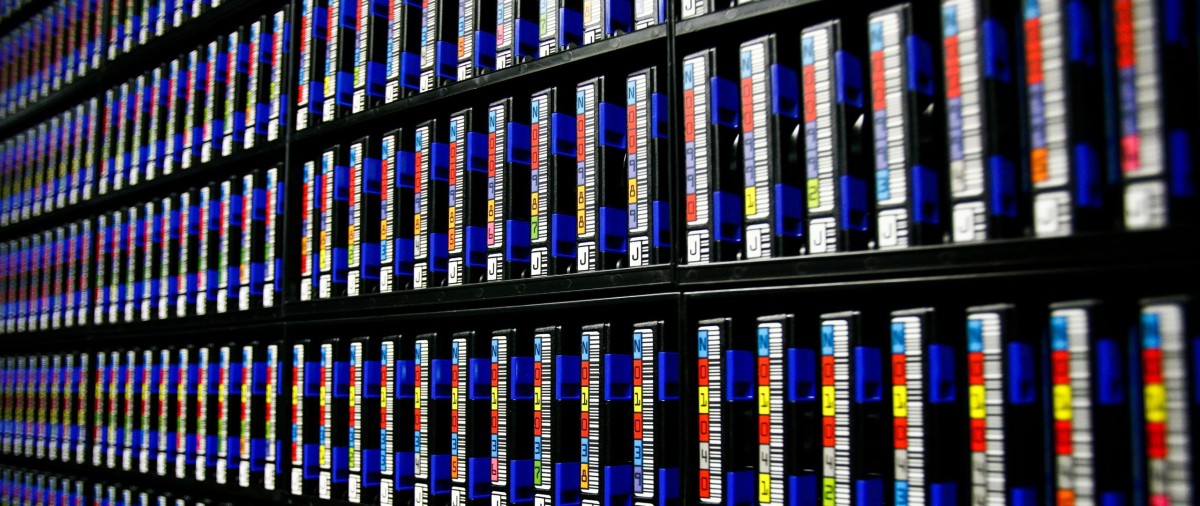
 (Image credit: Getty Images / Houston Chronicle / Heart Magazines)
 Like
0
 Dislike
0
 Love
0
 Funny
0
 Wow
0
 Sad
0
 Angry
0







Comments (0)