

Meta putting up tents across the US to house AI servers, like ‘a scene out of the movie Mad Max’ — structures take three months to build and use jet engines for power
 (Image credit: Meta)
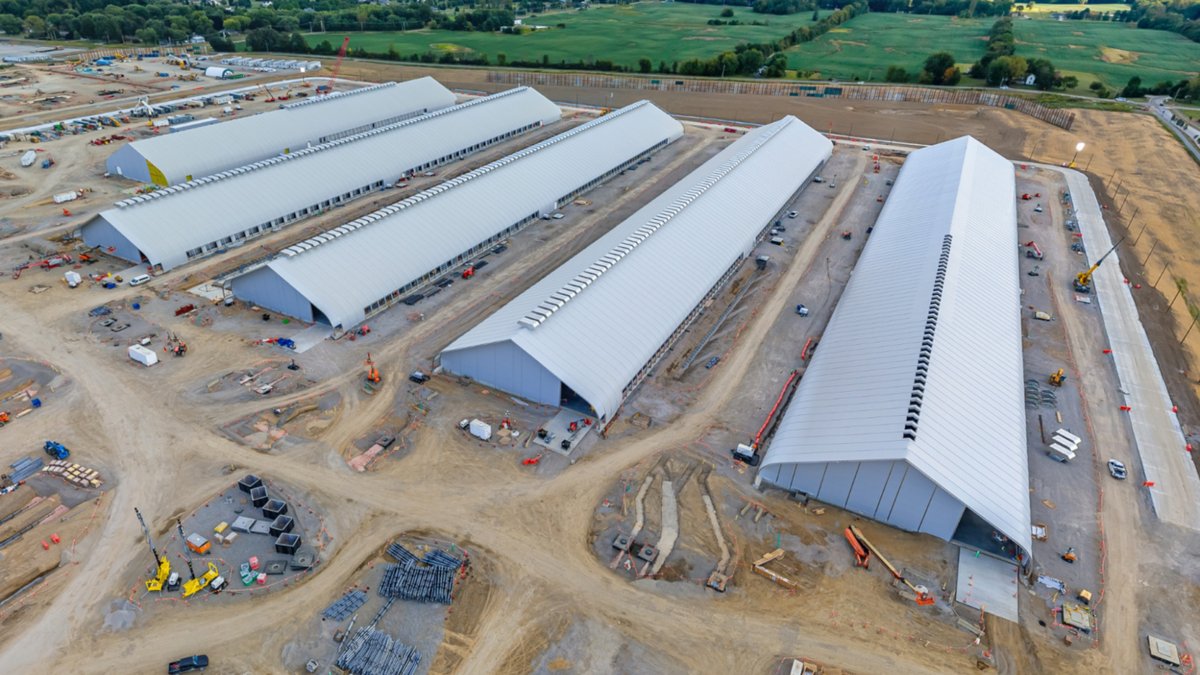
Meta has moved from building traditional structures for its data centers to putting up tents across the U.S. and sticking AI servers inside them. Michael Thomas, founder of market intelligence and data center tracking firm Cleanview Energy, said on X that the AI tech firm has already built or is in the process of constructing three data centers that use the strategy.
Go deeper with TH Premium: AI and data centers
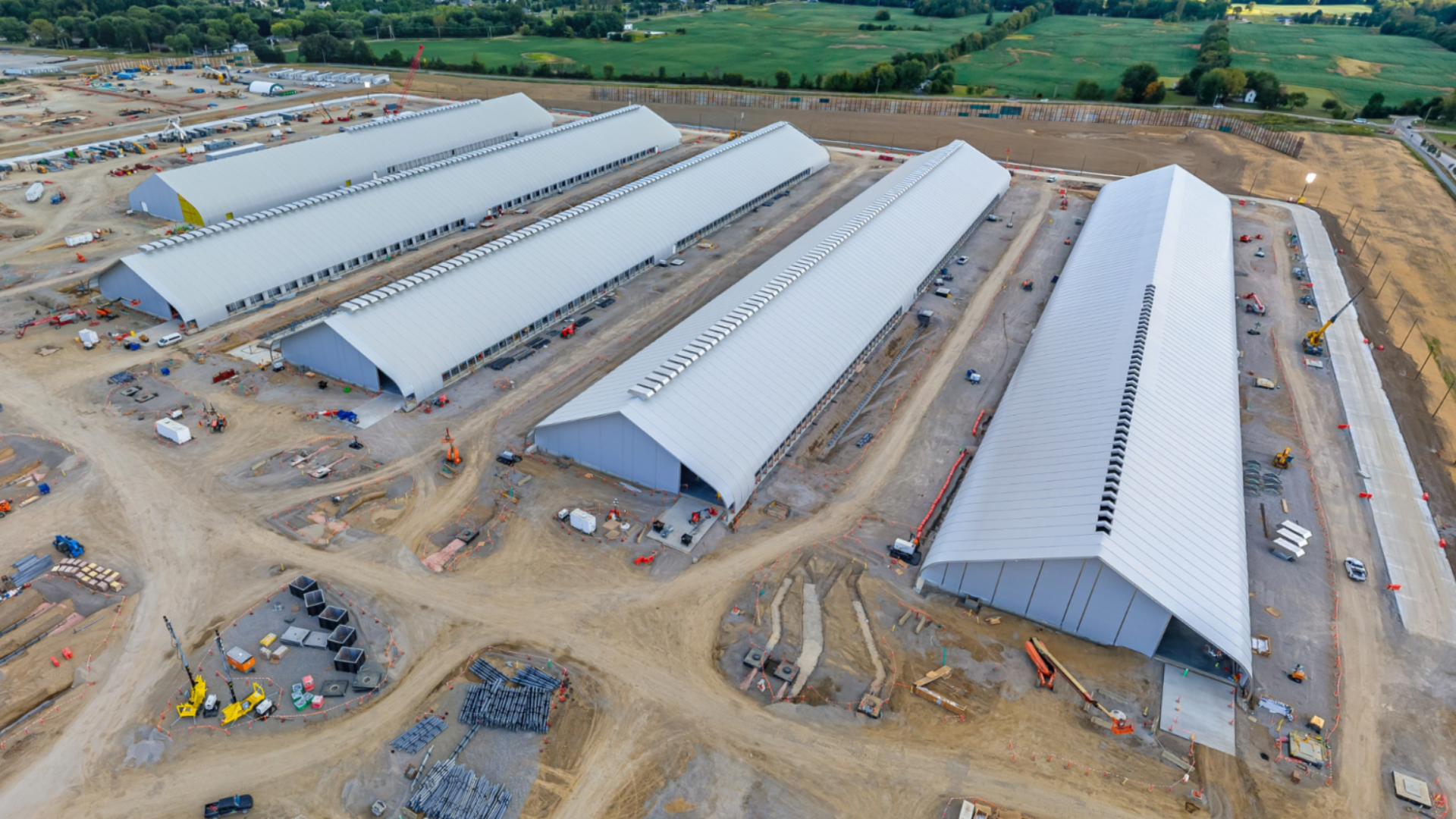
One site, located in New Albany, Ohio, already has five buildings that took approximately two to three years to complete. The company then started putting up five tents, with an area of around 125,000 square feet each, in the area. City permits seen by Cleanview Energy say that the construction started in April 2026, while recent satellite images show that the structures have already been completed.
Meta CEO Mark Zuckerberg first announced the strategy of pitching tents and filling them with AI servers last year. It seems that he wanted the infrastructure to come online quickly while demand for compute is increasing exponentially. It’s said that Meta is inspired by Elon Musk’s feat with xAI, which built a 100,000-strong AI data center in just 19 days in 2024 — something which usually takes four years, according to Nvidia CEO Jensen Huang. The technique is apparently quite effective, and it’s now being applied to two other sites, including one in Tennessee.
Putting AI servers inside tents, officially called “rapid deployment structures,” is one of the more unique approaches to the AI build-out, Thomas said. They’re certainly not as sturdy as physical buildings made from steel and concrete, with one commenter comparing it to the “classic $10k racing bike with a $9 lock” situation. Nevertheless, the company has probably weighed the pros and cons of such a setup and has decided that it was worth taking the risk to gain an advantage in the AI infrastructure race.
Another factor that allowed Meta to bring its data centers online at a much faster pace is its use of “behind-the-meter” power, in which the company installed its own turbines to produce power on-site rather than relying on grid power. This is similar to what Musk did with his Memphis Supercluster, which he initially powered with portable power generators. However, Meta’s turbines would be a permanent feature on the Ohio site, as it’s designed to run independently of the power grid.
Thomas said that there’s about 2GW of capacity available from behind-the-meter data centers, with an extra 1GW expected to go online this year for a total of 3GW. If on-going projects stay on schedule, the Cleanview report says that the total capacity could hit 13GW by the end of 2027 — about the same amount of power generated by 13 nuclear power plants and more than enough to power NYC.
This combination of seemingly temporary structures and jet engines strapped to the ground is certainly an interesting combination. As one reporter said, “It’s like a scene out of the movie Mad Max.”
Get Tom's Hardware's best news and in-depth reviews, straight to your inbox.

Follow Tom's Hardware on Google News, or add us as a preferred source, to get our latest news, analysis, & reviews in your feeds.
Jowi Morales is a tech enthusiast with years of experience working in the industry. He’s been writing with several tech publications since 2021, where he’s been interested in tech hardware and consumer electronics.
What's Your Reaction?
 Like
0
Like
0
 Dislike
0
Dislike
0
 Love
0
Love
0
 Funny
0
Funny
0
 Wow
0
Wow
0
 Sad
0
Sad
0
 Angry
0
Angry
0










Comments (0)